 flip
flipAmazake, sweet nectar of fermented rice
Amazake, sweet nectar of fermented rice
Why this dish? Hakuin, who wanted to bring Zen out of the elite circles and to the common people, welcomed wandering monks and villagers at Shōin-ji. Amazake — rice fermented with kōji, naturally sweet and non-alcoholic — was the warm drink offered to tired pilgrims and shared at temple and shrine festivals, from the humblest to the greatest.
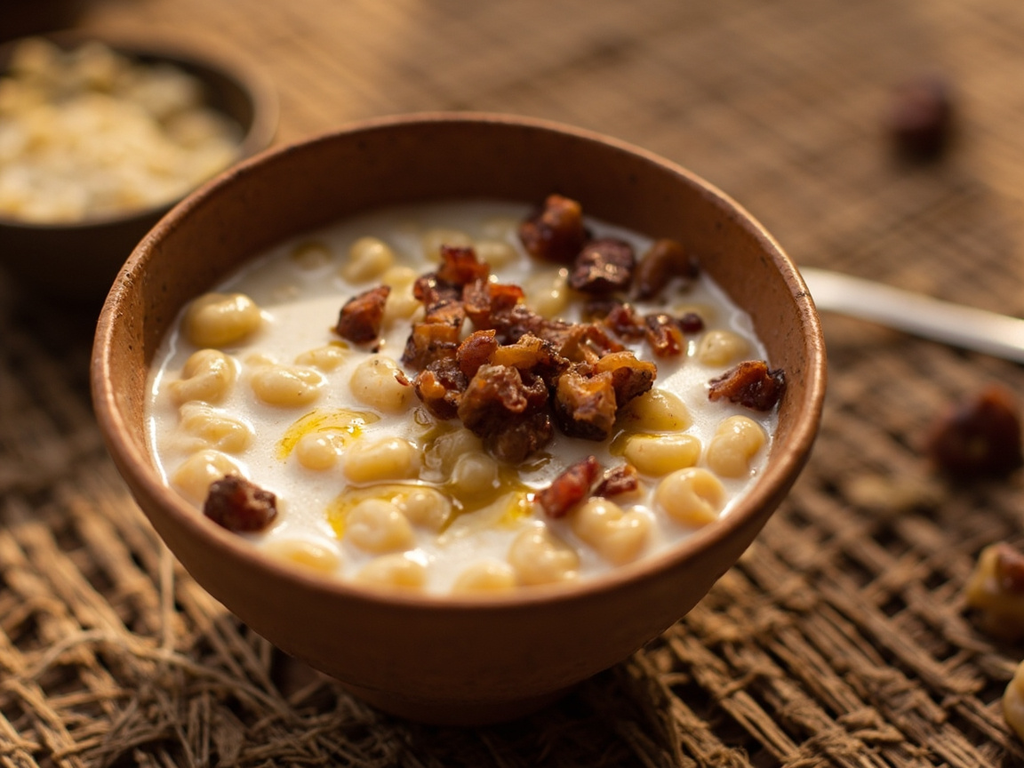
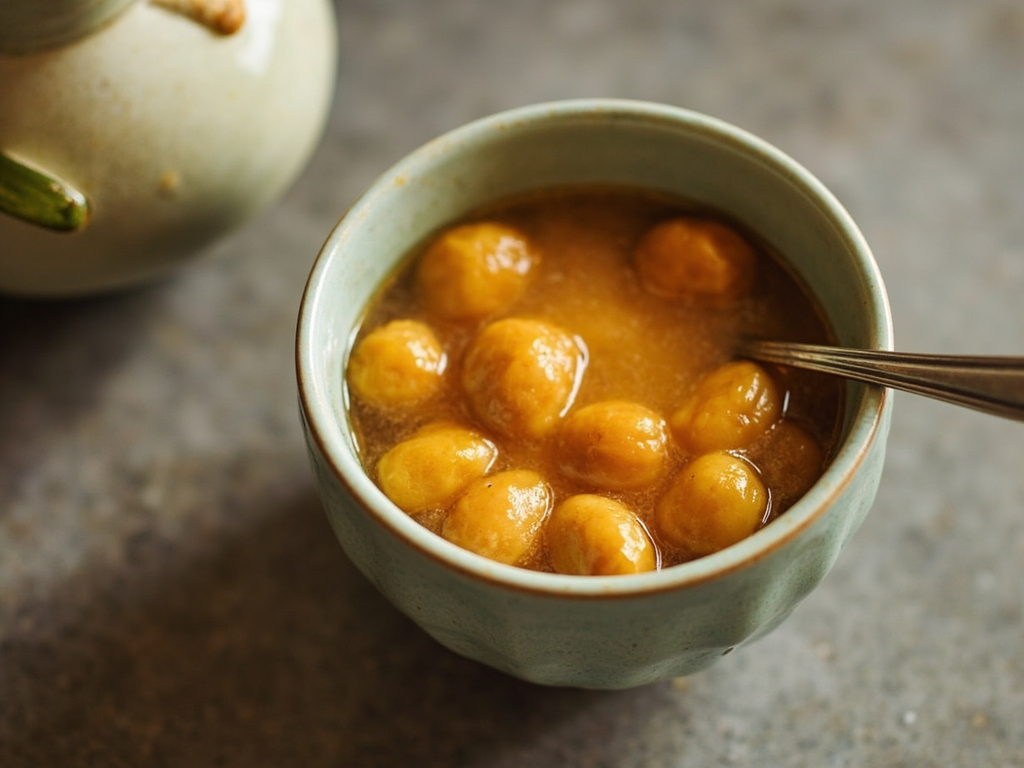
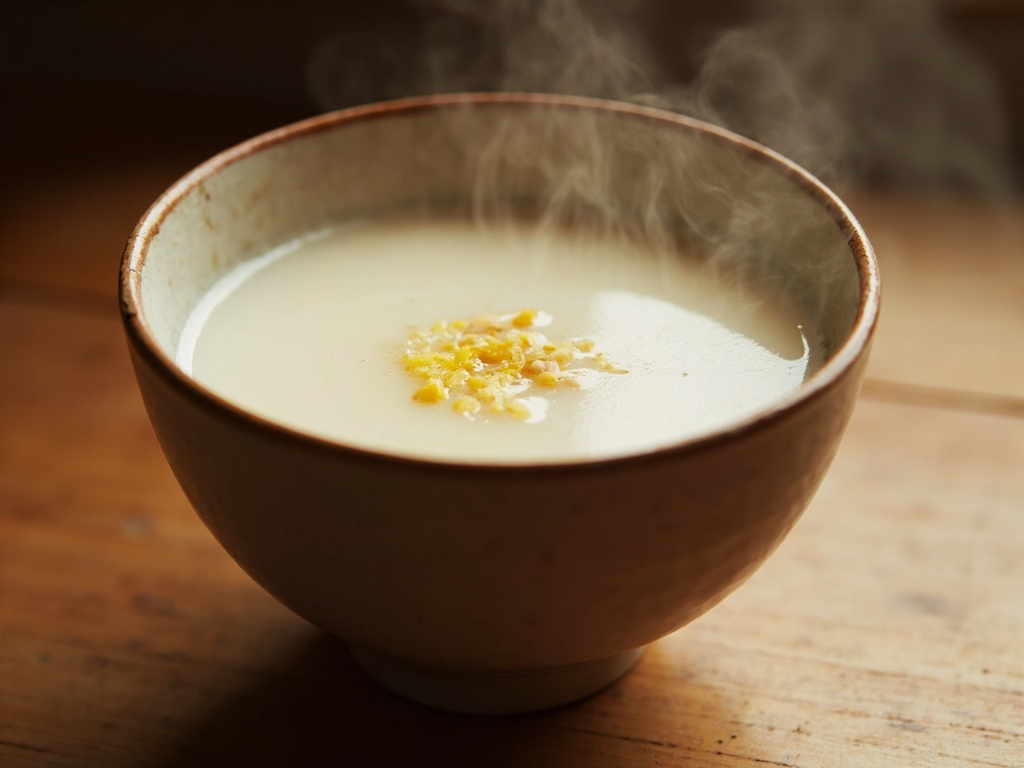
Cooked rice mixed with rice seeded with kōji, kept warm for hours: the enzymes of the ferment transform starch into sugar, yielding a thick, milky, naturally sweet and nourishing drink, without a drop of alcohol.
The pilgrim who knocks at Shōin-ji's gate with bleeding feet, I do not send him away with a sermon on an empty stomach! I hand him a bowl of steaming amazake. The kōji works the rice all by itself, gently, all night long, and changes bland starch into sweetness — without saké, without drunkenness, just strength returning. Zen is not reserved for lords: what sweetens the poor man's rice awakens as well as great sermons.
- •Cooked rice — one bowl (base starch)
- •Rice kōji (kome-kōji) — a good handful (sweetening ferment)
- •Hot water — to desired consistency (liquid)
- •Pinch of salt — one pinch (enhances sweetness)
Amazake, sweet nectar of fermented rice
Cooked rice mixed with rice seeded with kōji, kept warm for hours: the enzymes of the ferment transform starch into sugar, yielding a thick, milky, naturally sweet and nourishing drink, without a drop of alcohol.
Why this dish? Hakuin, who wanted to bring Zen out of the elite circles and to the common people, welcomed wandering monks and villagers at Shōin-ji. Amazake — rice fermented with kōji, naturally sweet and non-alcoholic — was the warm drink offered to tired pilgrims and shared at temple and shrine festivals, from the humblest to the greatest.
The pilgrim who knocks at Shōin-ji's gate with bleeding feet, I do not send him away with a sermon on an empty stomach! I hand him a bowl of steaming amazake. The kōji works the rice all by itself, gently, all night long, and changes bland starch into sweetness — without saké, without drunkenness, just strength returning. Zen is not reserved for lords: what sweetens the poor man's rice awakens as well as great sermons.
Ingredients (period version)
- Cooked rice — one bowl (base starch)
- Rice kōji (kome-kōji) — a good handful (sweetening ferment)
- Hot water — to desired consistency (liquid)
- Pinch of salt — one pinch (enhances sweetness)
Ingredients
- Cooked Japanese rice (or rice porridge) — 200 g (base)
- Kome-kōji (rice inoculated with kōji) — 200 g (enzymatic fermentation)
- Water at ≈ 60 °C — 400 ml (medium)
- Salt — 1 pinch (balance)
- Fresh grated ginger (optional) — to taste (flavor, for serving)
Method
- Mix the cooked rice cooled to ≈ 60 °C with hot water and crumbled kōji.
- Keep the mixture between 55 and 60 °C for 6 to 10 hours (yogurt maker, slow cooker on 'keep warm', or thermos), stirring occasionally. Do not exceed 60 °C or the enzymes will be killed.
- Taste: when it is well sweetened, it is ready.
- Blend for a smooth texture if desired, dilute with water, add a pinch of salt.
- Reheat gently (without prolonged boiling) and serve warm, optionally with a little grated ginger.
How it was made : Amazake 'one-night' (ichiya-zake) is very ancient and remains a popular drink at festivals and temples. With kōji it is non-alcoholic, unlike the version made with saké lees. It was drunk hot in winter to warm up and regain strength.
The contemporary twist : Serve it chilled in summer in a small glass, temple-style 'smoothie' — the same ancient drink, two seasons.
Hakuin · Charactorium