 flip
flipMaultaschen — Swabian stuffed ravioli
Maultaschen — Swabian stuffed ravioli
Why this dish? Maultaschen are THE Swabian festive dish, served on feast days as well as during Lent (where meat was once hidden in the dough). For a Württemberger like Hegel, it is the dish of large gatherings with company, which he so appreciated.
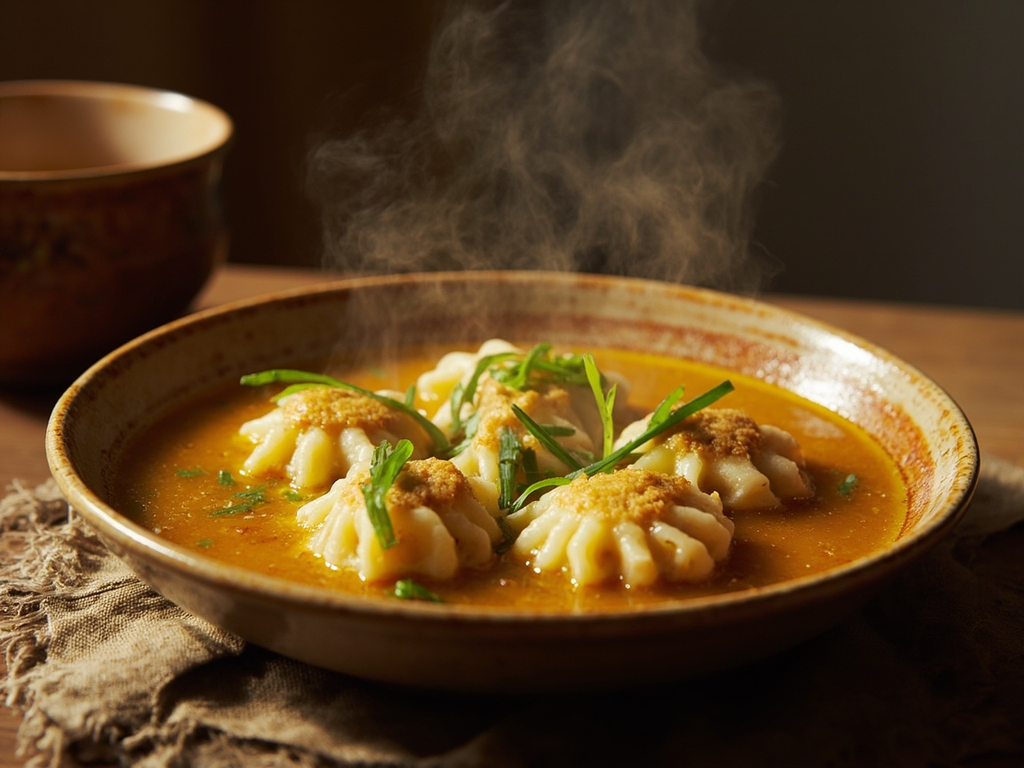
Large pockets of thin dough filled with minced meat, spinach, and bread, poached in broth. Served swimming in broth or pan-fried with onions.
Ah, Maultaschen! We call them 'God-cheats' at home, for our forebears hid the meat under the dough to conceal it from the eyes of Lent — a charming ruse, where appearance gently contradicts the thing itself. I loved them on feast days, served in steaming broth among cheerful company. The filling mixes meat, green herbs, and soaked bread, all enclosed in a dough rolled very thin. Nothing, believe me, equals such a shared dish for loosening the mind.
- •Flour and eggs — for the dough (wrapper)
- •Minced pork and veal — a good portion (filling)
- •Spinach — a generous handful (green filling)
- •Soaked stale bread — a few pieces (binder for the filling)
- •Onion, parsley, nutmeg — to taste (aromatics)
- •Meat broth — a large pot (poaching liquid)
Maultaschen — Swabian stuffed ravioli
Large pockets of thin dough filled with minced meat, spinach, and bread, poached in broth. Served swimming in broth or pan-fried with onions.
Why this dish? Maultaschen are THE Swabian festive dish, served on feast days as well as during Lent (where meat was once hidden in the dough). For a Württemberger like Hegel, it is the dish of large gatherings with company, which he so appreciated.
Ah, Maultaschen! We call them 'God-cheats' at home, for our forebears hid the meat under the dough to conceal it from the eyes of Lent — a charming ruse, where appearance gently contradicts the thing itself. I loved them on feast days, served in steaming broth among cheerful company. The filling mixes meat, green herbs, and soaked bread, all enclosed in a dough rolled very thin. Nothing, believe me, equals such a shared dish for loosening the mind.
Ingredients (period version)
- Flour and eggs — for the dough (wrapper)
- Minced pork and veal — a good portion (filling)
- Spinach — a generous handful (green filling)
- Soaked stale bread — a few pieces (binder for the filling)
- Onion, parsley, nutmeg — to taste (aromatics)
- Meat broth — a large pot (poaching liquid)
Ingredients
- Ravioli dough (250 g flour + 2 eggs + salt) — 1 portion (wrapper)
- Sausage meat + ground veal — 400 g total (filling)
- Fresh spinach (or squeezed frozen) — 200 g (green filling)
- Stale bread soaked in milk — 2 slices (binder)
- Onion, parsley, nutmeg, salt, pepper — to taste (aromatics)
- Beef broth — 1.5 L (poaching liquid)
Method
- Prepare a firm egg dough, let it rest, then roll it out very thinly.
- Sauté the onion, blanch and chop the spinach. Mix meats, spinach, squeezed bread, parsley, nutmeg, salt, and pepper.
- Place the filling in lines on the dough, fold over, seal, and cut into large rectangles of 6–8 cm.
- Poach the Maultaschen for 10–12 minutes in simmering broth.
- Serve either in the broth with chives, or drained and then pan-fried in butter with golden onions.
How it was made : The origin is attributed to Maulbronn Monastery; tradition says they were invented to camouflage meat during Lent, hence the nickname Herrgottsbscheißerle ('little God-cheaters'). They were made in large quantities on feast days.
The contemporary twist : Crispy pan-fried version, set on a spinach velouté, with some fried onions — the dialectic of soft and crunchy.
Hegel · Charactorium