 flip
flipArtisans' Barley Maza
Artisans' Barley Maza
Why this dish? Hephaestus is the patron of blacksmiths and artisans, working people who primarily ate barley — a rustic and cheap cereal, barely cooked, kneaded cold. This is the daily bread of those who work with their hands, as the god works in his underground workshop.
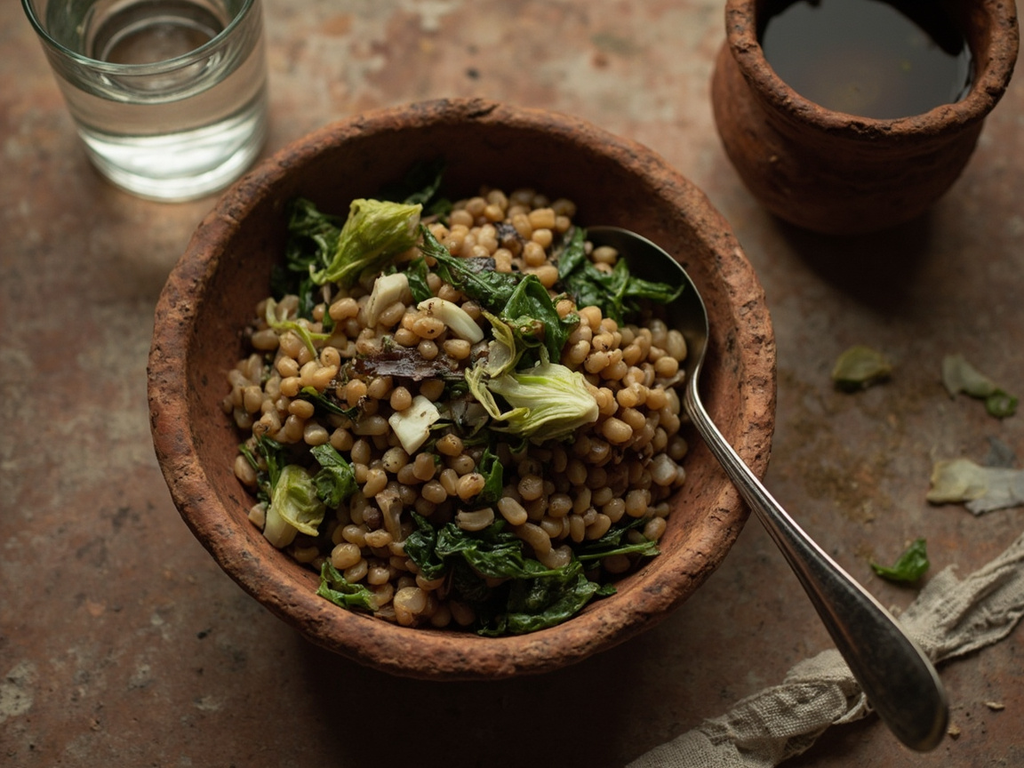
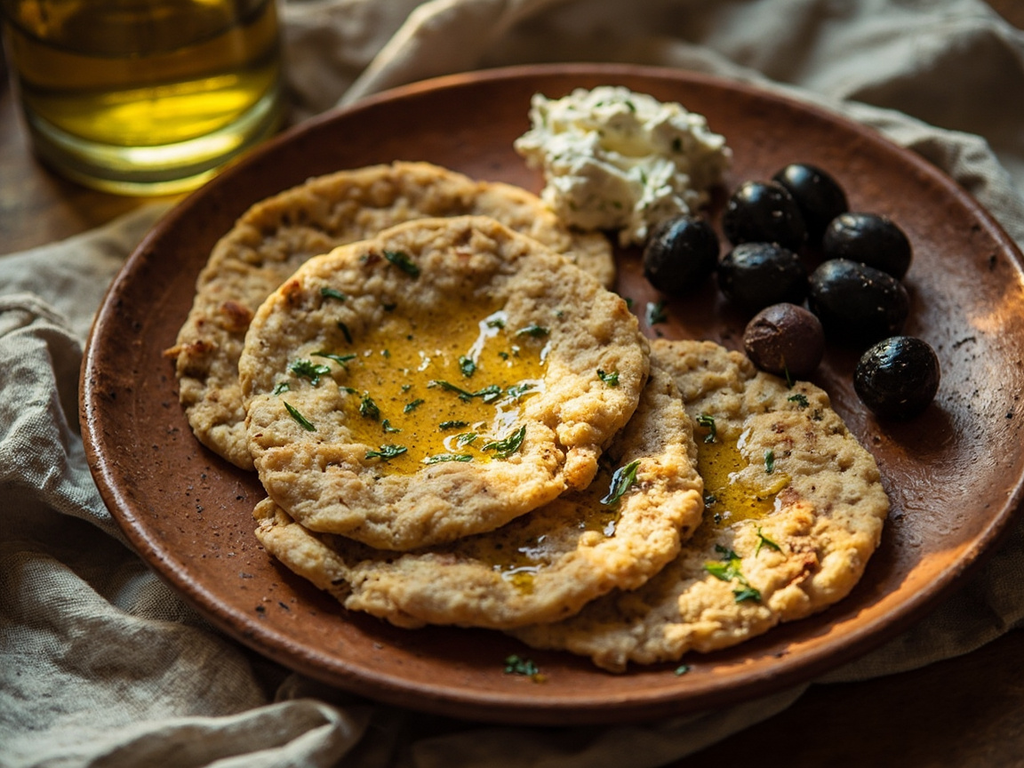
Flatbread or thick porridge made from toasted barley flour, kneaded with water, a drizzle of olive oil, and salt. The staple food of Greek workers, simple, filling, ready without an oven — just toast the grain, grind it, and moisten it. A slightly bitter and roasted note marks the barley.
Approach, mortal, and do not be fussy. When I leave the anvil, my hands black with soot, it is not ambrosia I feed on — leave that to the idlers of Olympus. I toast my barley on the same coals that soften my bronze, I crush it between two stones and knead it with water and a drizzle of oil. Eat it like me, standing by the fire: it is the bread of the strong, of those whose arms know the weight of the hammer.
- •Toasted barley flour (alphita) — two handfuls per person (base, roasted flavor)
- •Spring water — enough to bind (binder)
- •Olive oil — a drizzle (softness)
- •Sea salt — a pinch (seasoning)
Artisans' Barley Maza
Flatbread or thick porridge made from toasted barley flour, kneaded with water, a drizzle of olive oil, and salt. The staple food of Greek workers, simple, filling, ready without an oven — just toast the grain, grind it, and moisten it. A slightly bitter and roasted note marks the barley.
Why this dish? Hephaestus is the patron of blacksmiths and artisans, working people who primarily ate barley — a rustic and cheap cereal, barely cooked, kneaded cold. This is the daily bread of those who work with their hands, as the god works in his underground workshop.
Approach, mortal, and do not be fussy. When I leave the anvil, my hands black with soot, it is not ambrosia I feed on — leave that to the idlers of Olympus. I toast my barley on the same coals that soften my bronze, I crush it between two stones and knead it with water and a drizzle of oil. Eat it like me, standing by the fire: it is the bread of the strong, of those whose arms know the weight of the hammer.
Ingredients (period version)
- Toasted barley flour (alphita) — two handfuls per person (base, roasted flavor)
- Spring water — enough to bind (binder)
- Olive oil — a drizzle (softness)
- Sea salt — a pinch (seasoning)
Ingredients
- Barley flour (or blended barley flakes) — 200 g (base)
- Warm water — 120 to 150 ml (binder)
- Extra virgin olive oil — 2 tbsp (softness)
- Salt — 1/2 tsp (seasoning)
Method
- Toast the barley flour dry in a pan over medium heat until fragrant like hazelnuts (3 to 4 minutes).
- Pour into a bowl, add salt and olive oil.
- Gradually add warm water while kneading until you get a supple and compact dough (neither sticky nor dry).
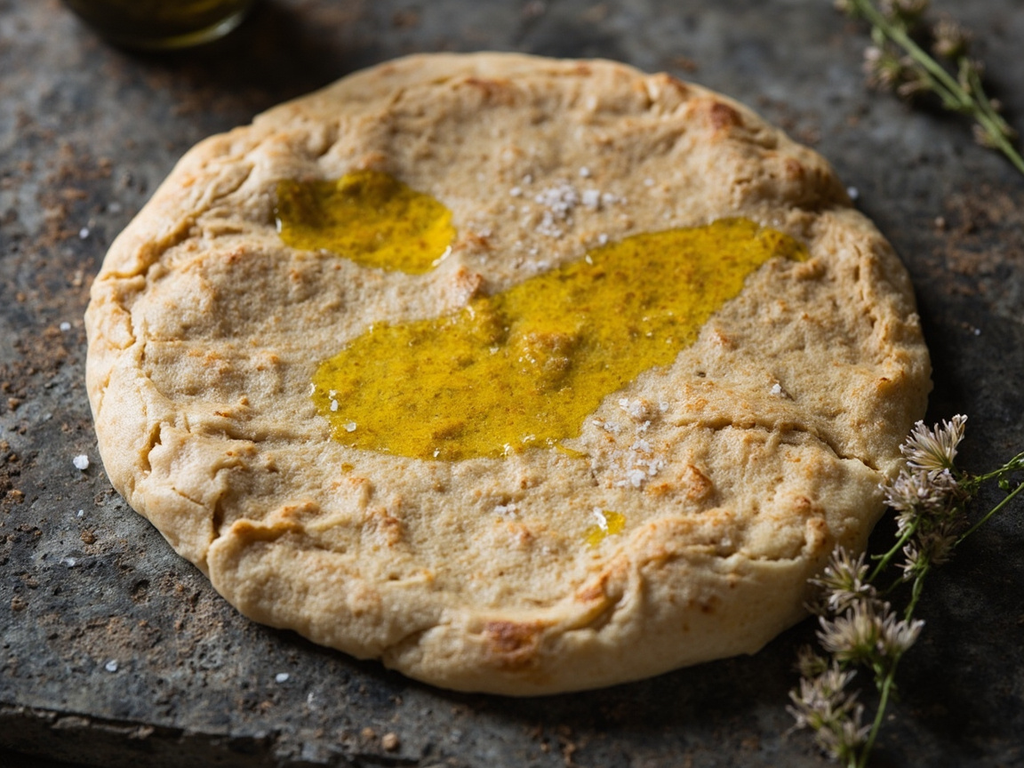
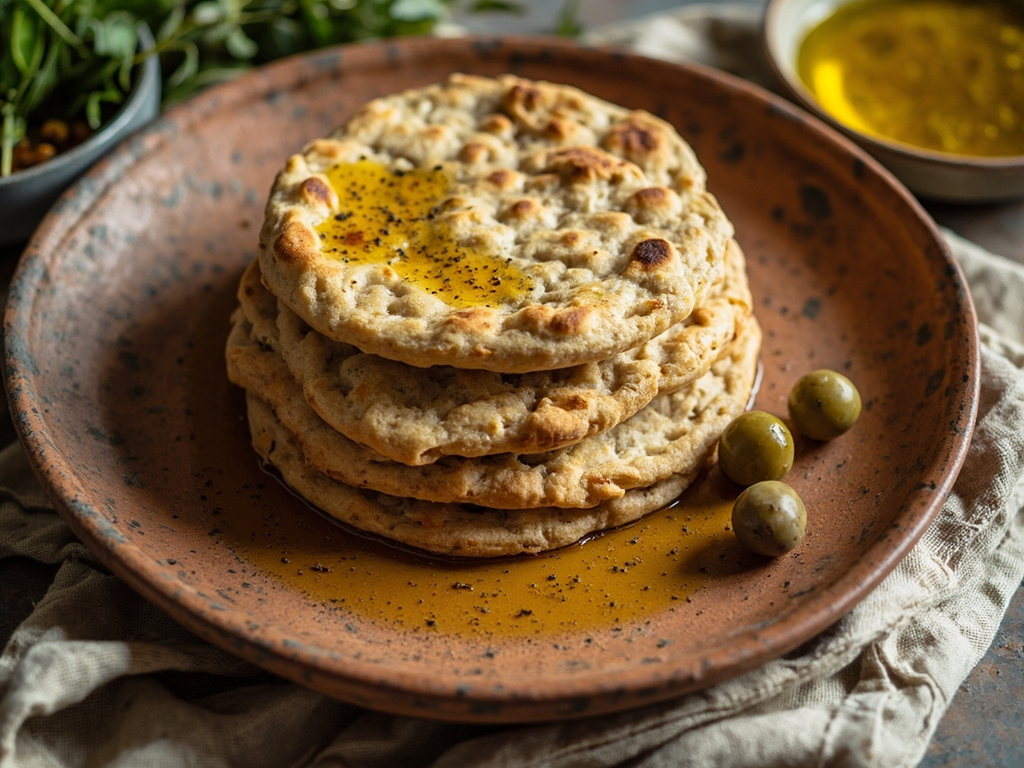
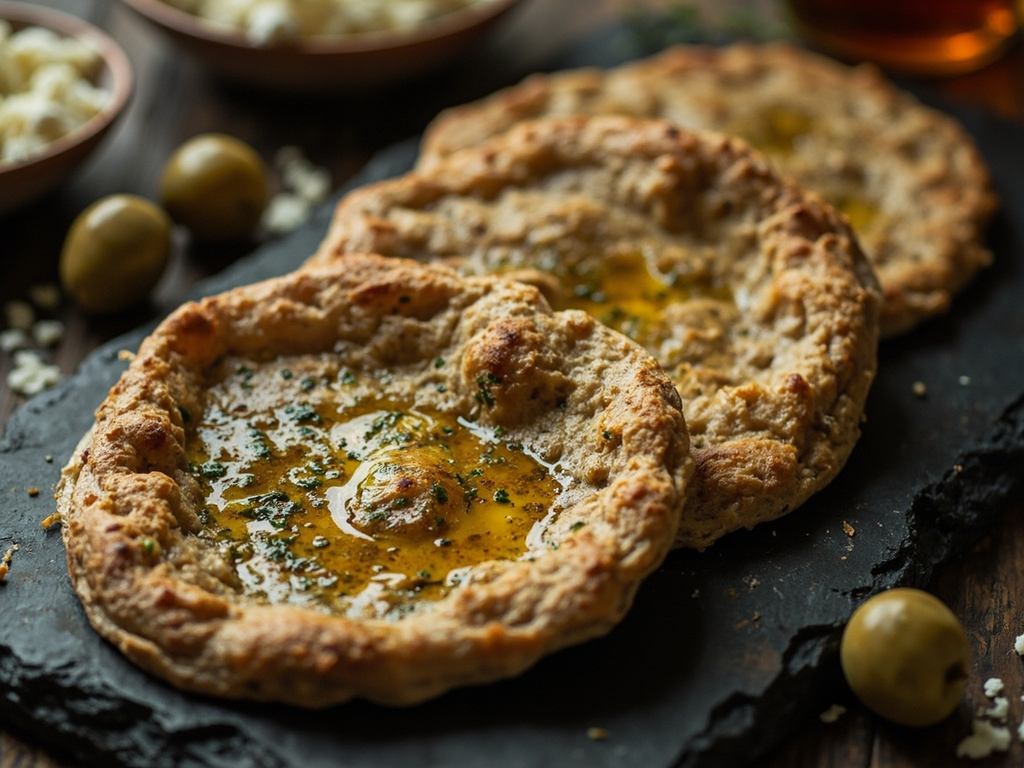
- Shape into flat cakes about one centimeter thick. Eat as is, or sear for 2 minutes on each side on a very hot griddle to brown.
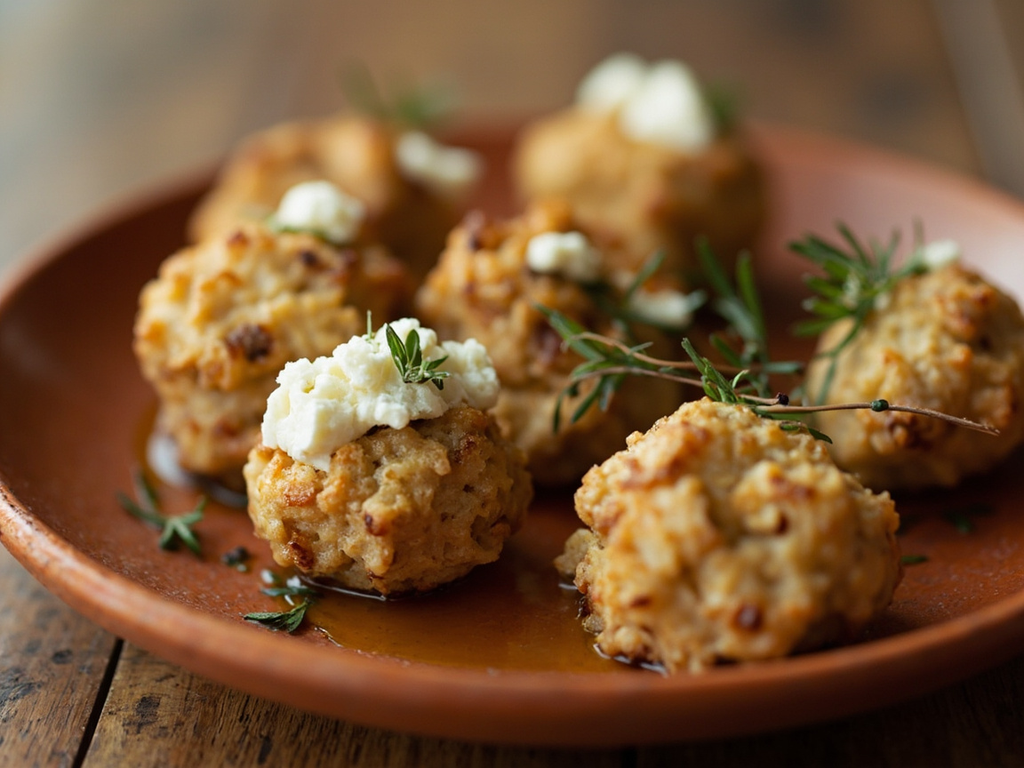
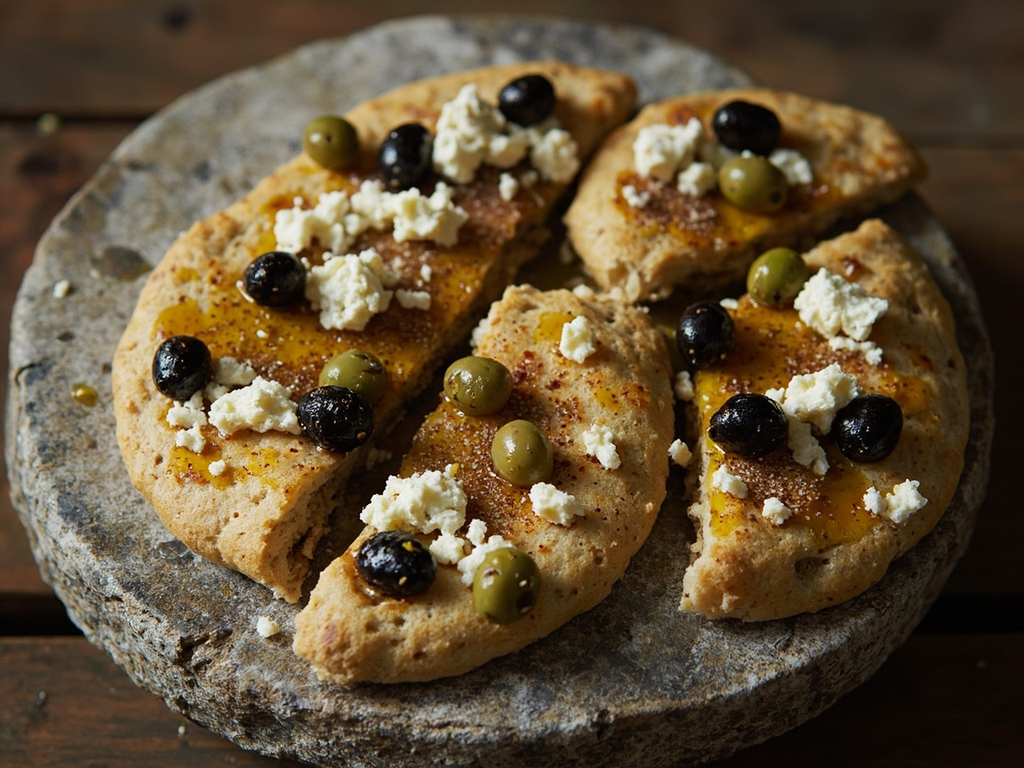
- Serve with a drizzle of oil, fresh cheese, or a few olives.
How it was made : Maza was the staple food of ancient Greece, more common than wheat bread baked in an oven (reserved for the wealthy and festivities). Barley was toasted before grinding, allowing it to be eaten without lengthy cooking — practical for workers and soldiers. Its texture ranged from firm cake to porridge depending on the amount of water added.
The contemporary twist : Serve it as a "workshop galette" on a slate board, crushed with a fork like a barley cream, topped with smoked olive oil and fleur de sel — a nod to the soot of the forge.
Sources : Homer, Iliad (mentions of barley and meals) · Athenaeus of Naucratis, The Learned Banqueters (Deipnosophistae), book III · A. Dalby, Food in the Ancient World from A to Z (2003)
Hephaestus · Charactorium