 flip
flipThe Roasted Portion of the Hecatomb (Herb-Grilled Beef)
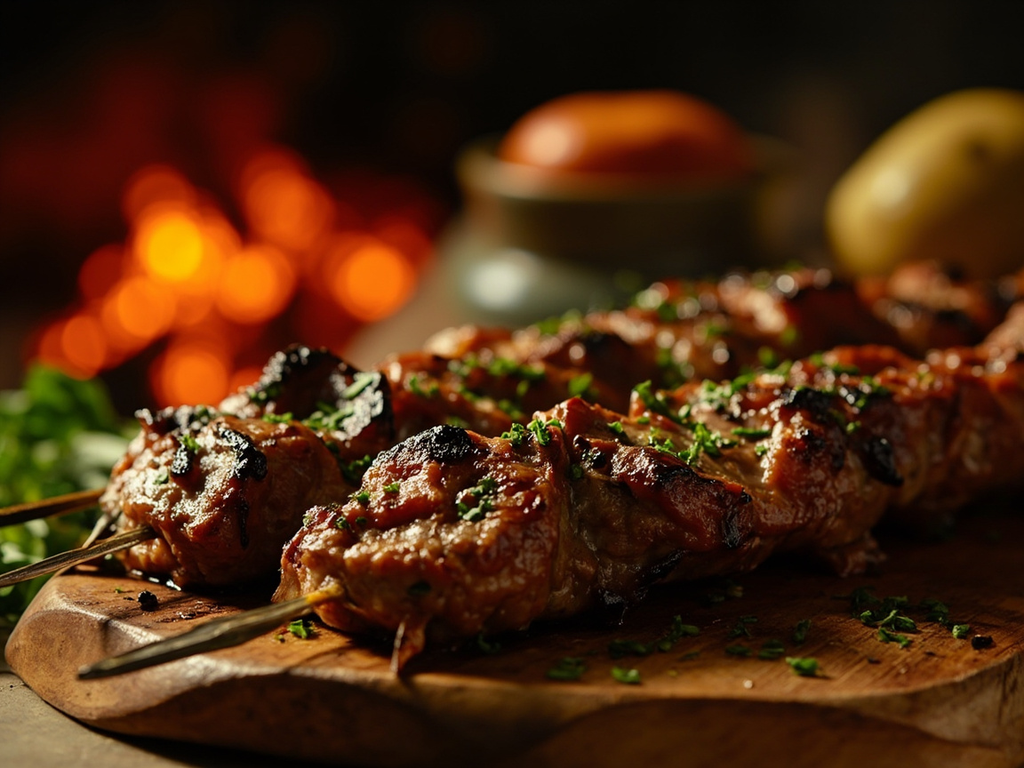
The Roasted Portion of the Hecatomb (Herb-Grilled Beef)
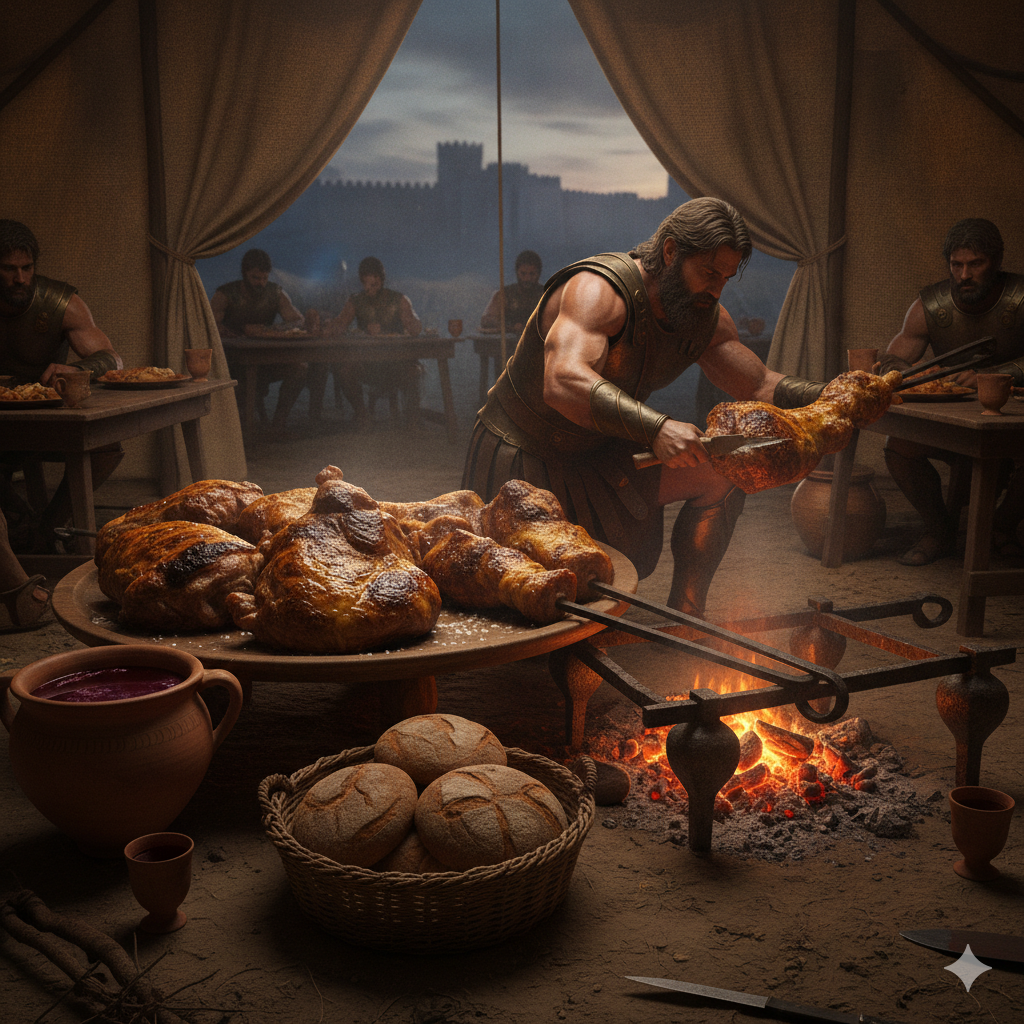
Why this dish? At the great Heraia of Argos, up to a hundred oxen were led to Hera's altar: this is the hecatomb. The thighs wrapped in fat burned for the goddess, whose sacred animals are the peacock and the ox; the faithful, meanwhile, shared the roasted meats in a vast banquet. This dish evokes that mortal share at the feast of the queen of the gods.
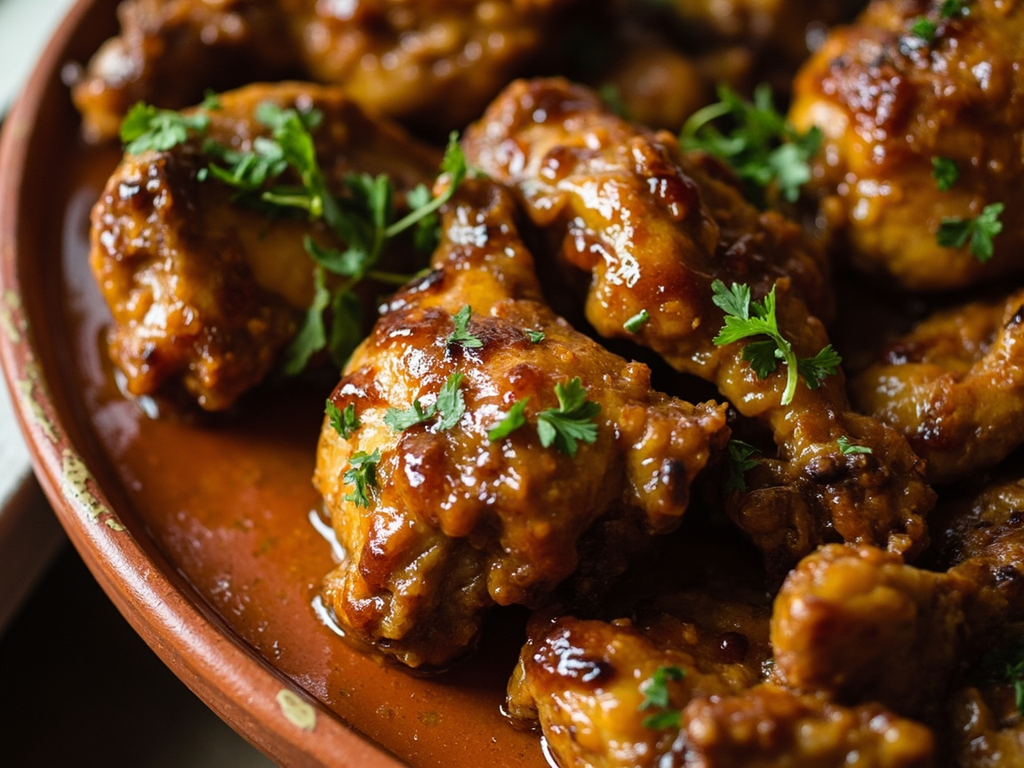
Pieces of beef rubbed with salt and herbs, skewered and grilled over coals, basted with a little oil and wine. A frank meat, smoked by the flames, just as it was eaten after the sacrifice.
Let the oxen be brought! A hundred sleek beasts for me, Hera, queen of Olympus and guardian of Samos. Know this: the fat and the thigh rise to me in fragrant smoke, but the flesh I leave to you — for a sacrifice that feeds no one offends the gods as much as men. Rub the meat with salt, oregano, and thyme from your hills, make it sing over the coals, and baste it with wine. Eat in my honor, and let your laughter fill my sanctuary.
- •Beef (shoulder or haunch) — a fine piece (base)
- •Salt — generously (seasoning)
- •Fresh oregano and thyme — a bunch (flavor)
- •Olive oil — for basting (softness)
- •Wine — a little (basting)
The Roasted Portion of the Hecatomb (Herb-Grilled Beef)
Pieces of beef rubbed with salt and herbs, skewered and grilled over coals, basted with a little oil and wine. A frank meat, smoked by the flames, just as it was eaten after the sacrifice.
Why this dish? At the great Heraia of Argos, up to a hundred oxen were led to Hera's altar: this is the hecatomb. The thighs wrapped in fat burned for the goddess, whose sacred animals are the peacock and the ox; the faithful, meanwhile, shared the roasted meats in a vast banquet. This dish evokes that mortal share at the feast of the queen of the gods.
Let the oxen be brought! A hundred sleek beasts for me, Hera, queen of Olympus and guardian of Samos. Know this: the fat and the thigh rise to me in fragrant smoke, but the flesh I leave to you — for a sacrifice that feeds no one offends the gods as much as men. Rub the meat with salt, oregano, and thyme from your hills, make it sing over the coals, and baste it with wine. Eat in my honor, and let your laughter fill my sanctuary.
Ingredients (period version)
- Beef (shoulder or haunch) — a fine piece (base)
- Salt — generously (seasoning)
- Fresh oregano and thyme — a bunch (flavor)
- Olive oil — for basting (softness)
- Wine — a little (basting)
Ingredients
- Beef for grilling (rump steak or flank) — 600 g (base)
- Olive oil — 3 tbsp (marinade)
- Dried oregano — 1 tbsp (flavor)
- Fresh thyme — a few sprigs (flavor)
- Dry red wine — 50 ml (marinade)
- Sea salt and pepper — to taste (seasoning)
Method
- Cut the beef into large cubes, about 4 cm.
- Mix oil, oregano, thyme leaves, wine, and salt; marinate the meat for at least 1 hour.
- Thread the cubes onto skewers (soaked wooden or metal).
- Grill over hot coals or a very hot griddle, 2 to 3 minutes per side, for meat golden outside and pink inside.
- Let rest a few minutes, pepper, and serve with maza flat cakes.
How it was made : In Greek sacrifices, the thigh bones wrapped in fat were burned for the gods (the divine portion, explained in the myth of Prometheus at Mekone), while the entrails (splanchna) and then the meat were roasted and shared among the faithful. Sacrifice was inseparable from the communal meal.
The contemporary twist : Presented on an olive wood board with a small bowl of honey-oregano for dipping: an 'Olympus street food' twist that appeals to teens.
Sources : Hesiod, Theogony (myth of Prometheus at Mekone) · Jean-Louis Durand, Sacrifice et labour en Grèce ancienne · Pausanias, Description of Greece (Heraion of Argos)
Hera · Charactorium