 flip
flipKalo Poi
Kalo Poi
Why this dish? Hiʻiaka travels the archipelago on foot: wherever she stops, it is poi, freshly pounded and shared from the same bowl, that seals hospitality. The daily food of all Hawaiians, it is the first thing offered to a weary traveler.
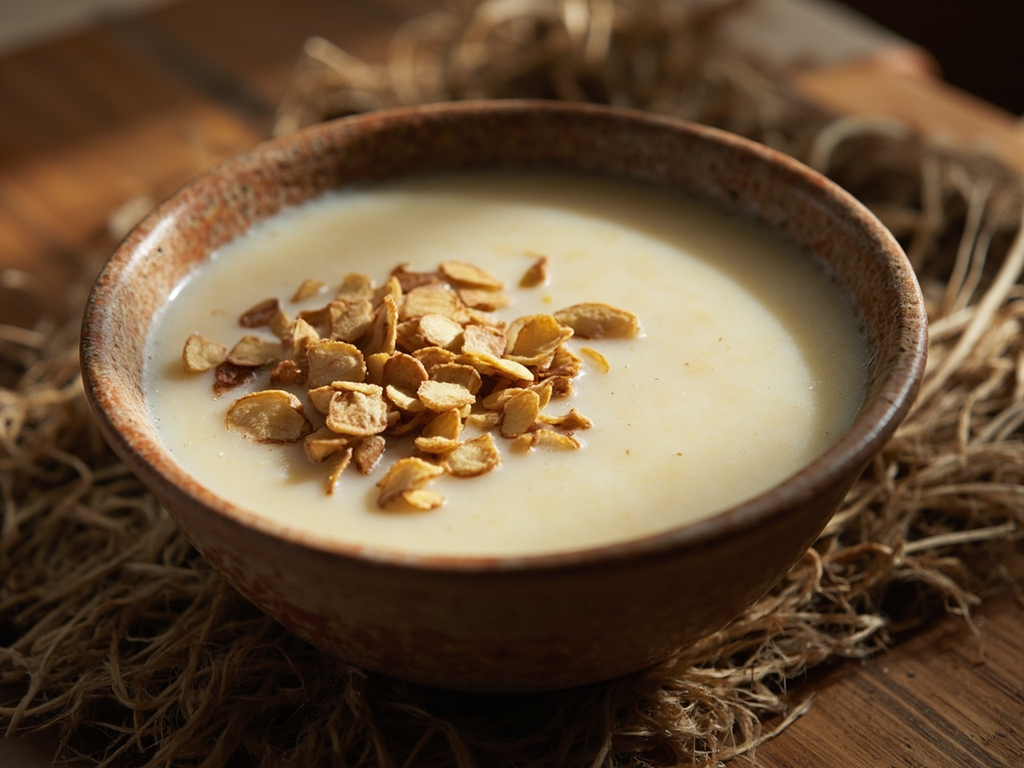
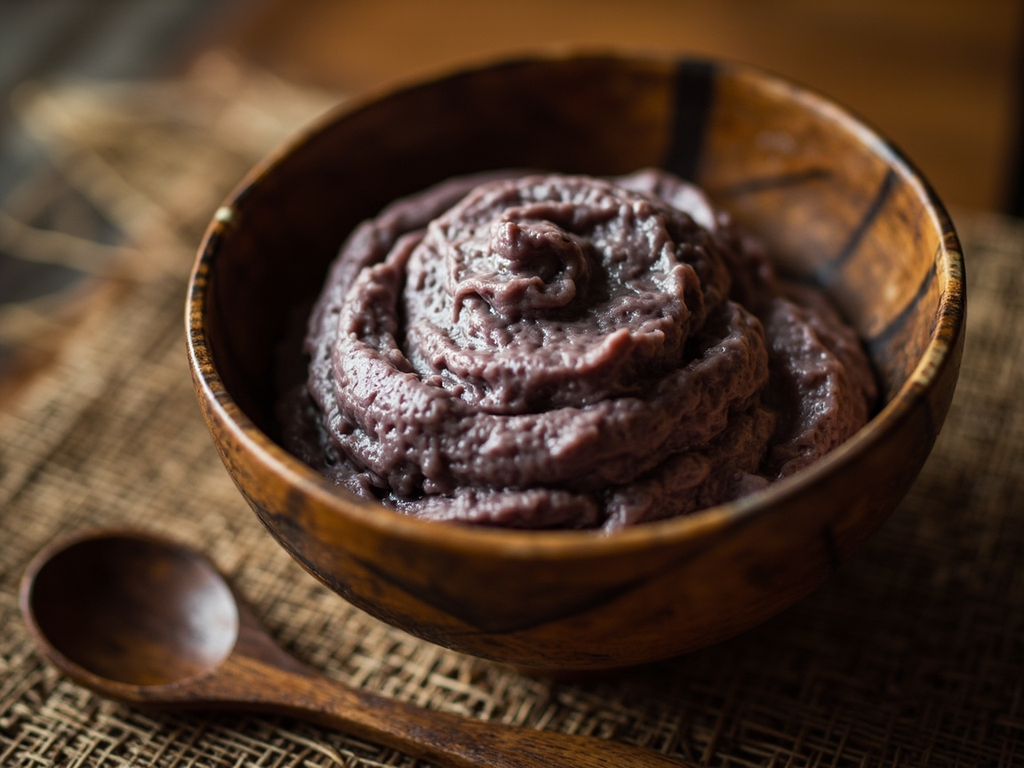
Smooth paste of cooked taro, then pounded and thinned with water, left to sour gently for a day or two to become "poi ʻawaʻawa." It is eaten with the fingertips, at one, two, or three fingers depending on its thickness.
Draw near, child, and sit by the bowl. See how the stone weighs in my hand when I strike the kalo on the board: it is Hāloa himself I work, the elder of your lineage, so eat in silence and without quarrel above him. I add water drop by drop until the paste sings and slides, then I let it sleep a night or two so it takes its sour edge. Dip two fingers, never three if hunger is small, and let poi keep you standing on the road as it has kept me from Puna to Kauaʻi.
- •Kalo (taro) corms — an armload (starch base, cooked in the imu)
- •Fresh spring water — to desired texture (thinning liquid)
Kalo Poi
Smooth paste of cooked taro, then pounded and thinned with water, left to sour gently for a day or two to become "poi ʻawaʻawa." It is eaten with the fingertips, at one, two, or three fingers depending on its thickness.
Why this dish? Hiʻiaka travels the archipelago on foot: wherever she stops, it is poi, freshly pounded and shared from the same bowl, that seals hospitality. The daily food of all Hawaiians, it is the first thing offered to a weary traveler.
Draw near, child, and sit by the bowl. See how the stone weighs in my hand when I strike the kalo on the board: it is Hāloa himself I work, the elder of your lineage, so eat in silence and without quarrel above him. I add water drop by drop until the paste sings and slides, then I let it sleep a night or two so it takes its sour edge. Dip two fingers, never three if hunger is small, and let poi keep you standing on the road as it has kept me from Puna to Kauaʻi.
Ingredients (period version)
- Kalo (taro) corms — an armload (starch base, cooked in the imu)
- Fresh spring water — to desired texture (thinning liquid)
Ingredients
- Fresh peeled taro — 1 kg (base)
- Filtered water — 200 to 350 ml (gradual thinning)
Method
- Steam the taro for 45 to 60 minutes until a knife pierces it without resistance (raw taro is irritating, never taste before cooking).
- Peel while hot, removing any hard or fibrous parts.
- Pound with a pestle (or crush in a mortar) into a lump-free paste.
- Incorporate water little by little until smooth, thicker or thinner to taste.
- Cover with a damp cloth and leave at room temperature for 1 to 2 days to develop the lactic acidity of "sour poi."
How it was made : The corms were cooked in the imu, an earth oven lined with volcanic stones heated by fire, covered with leaves and earth. Pounding was done on a slanted wooden board, the papa kuʻi ʻai, with a carved basalt pestle. Each family kept its poi bowl under a cloth, and it was kapu to argue over it.
The contemporary twist : Served in a small glass alongside marinated raw fish, sour poi acts as a plant-based "savory yogurt" that surprises and refreshes.
Sources : E. S. Craighill Handy & Mary Kawena Pukui, The Polynesian Family System in Kaʻu, Hawaii · Mary Kawena Pukui & Samuel Elbert, Hawaiian Dictionary
Hiʻiaka · Charactorium