 flip
flipKome Mushi — Steamed Brown Rice on a Leaf
Kome Mushi — Steamed Brown Rice on a Leaf
Why this dish? Rice is the heart of the Yayoi civilization over which Himiko reigned: it was stored in raised granaries like those at Yoshinogari and used to measure the wealth of the Yamatai kingdom. Eating this rice is eating what made the queen's power itself.
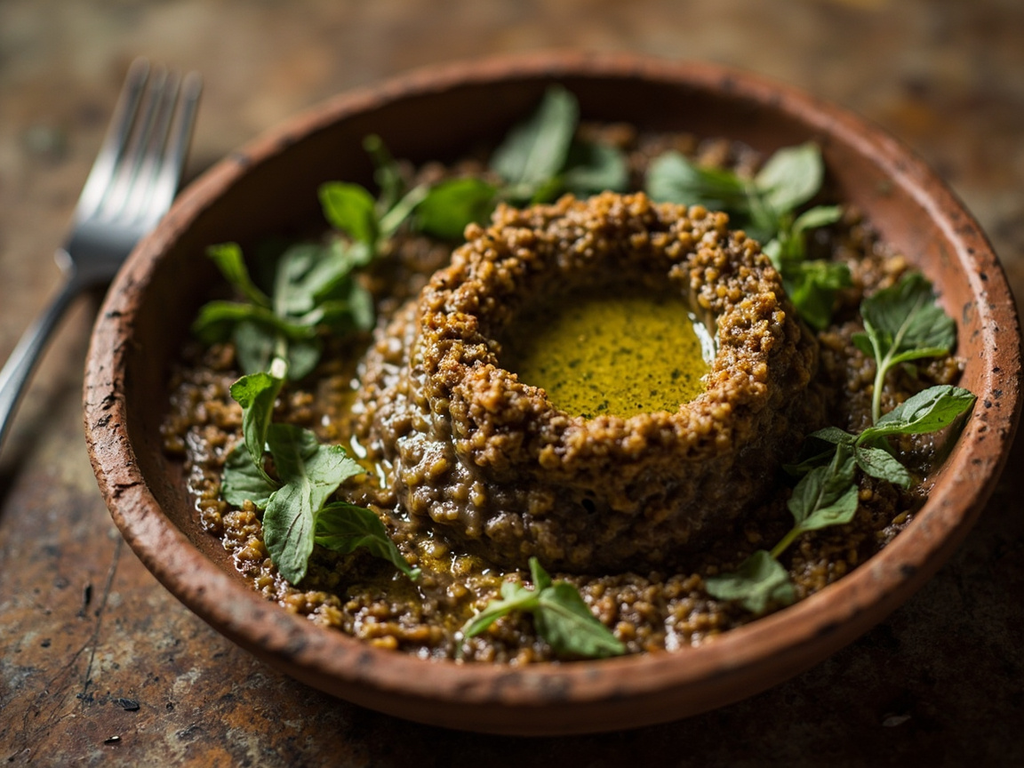
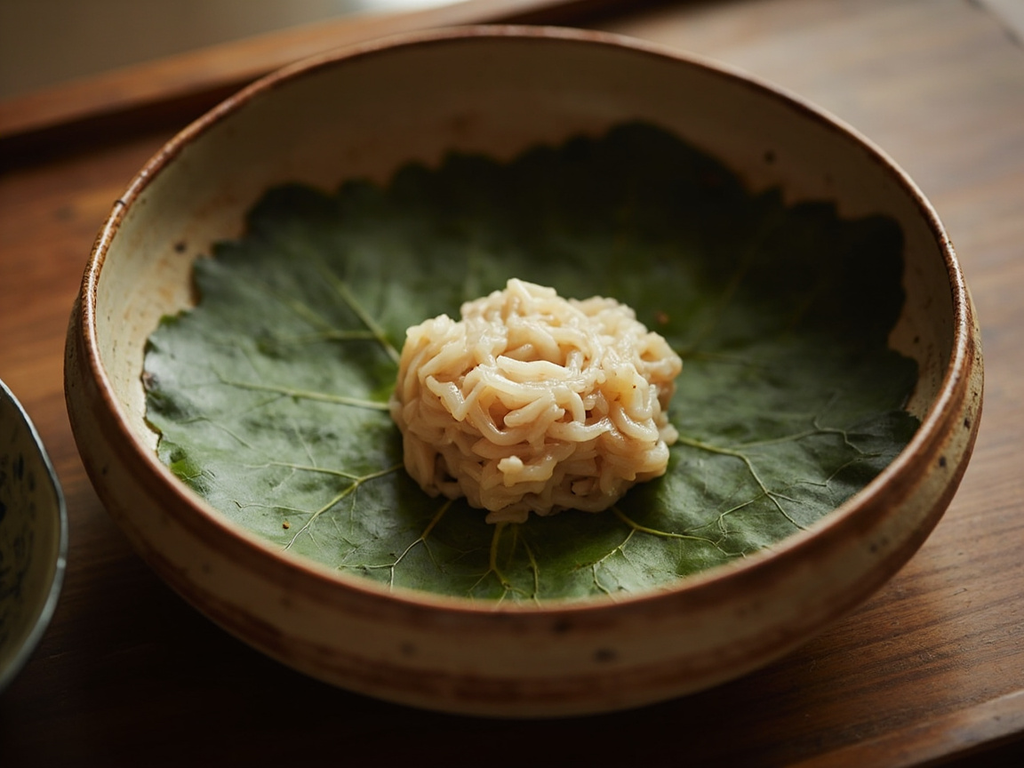
A whole-grain, short-grain, rustic rice, steamed over a vessel of boiling water and then placed on a plant leaf. Firm texture, taste of toasted cereal and hazelnut: the simple, nourishing ancestor of today's Japanese rice.
Listen well, you who come from afar. This rice is the flesh of my kingdom: every counted grain is a part of the strength the spirits have entrusted to me. My maidens place it over the steam until it becomes tender under the tooth but never soft, then lay it on a broad leaf so it touches not the impure earth. Eat it in silence, in the morning, and you will know why the granaries of Yamatai are worth more than the gold of the Wei.
- •Short-grain brown rice (Yayoi harvest) — two handfuls per guest (nourishing foundation)
- •Spring water — as needed for steaming (cooking)
- •Large plant leaf (oak, magnolia) — one per portion (support, light fragrance)
Kome Mushi — Steamed Brown Rice on a Leaf
A whole-grain, short-grain, rustic rice, steamed over a vessel of boiling water and then placed on a plant leaf. Firm texture, taste of toasted cereal and hazelnut: the simple, nourishing ancestor of today's Japanese rice.
Why this dish? Rice is the heart of the Yayoi civilization over which Himiko reigned: it was stored in raised granaries like those at Yoshinogari and used to measure the wealth of the Yamatai kingdom. Eating this rice is eating what made the queen's power itself.
Listen well, you who come from afar. This rice is the flesh of my kingdom: every counted grain is a part of the strength the spirits have entrusted to me. My maidens place it over the steam until it becomes tender under the tooth but never soft, then lay it on a broad leaf so it touches not the impure earth. Eat it in silence, in the morning, and you will know why the granaries of Yamatai are worth more than the gold of the Wei.
Ingredients (period version)
- Short-grain brown rice (Yayoi harvest) — two handfuls per guest (nourishing foundation)
- Spring water — as needed for steaming (cooking)
- Large plant leaf (oak, magnolia) — one per portion (support, light fragrance)
Ingredients
- Short-grain brown rice (genmai) — 300 g (nourishing foundation)
- Water — 1 liter for steaming + soaking (cooking)
- Edible oak or magnolia leaves (or parchment paper) — 4 (support, fragrance)
- Pinch of sea salt — 1 pinch (subtle seasoning (optional))
Method
- Rinse the brown rice and let it soak in cold water for 6 to 8 hours (brown rice is hard; soaking is essential).
- Drain and place the rice in a steamer basket lined with a cloth.
- Steam over simmering water for 40 to 50 minutes, until the grains are tender all the way through.
- Place a portion of rice on each leaf (or parchment square).
- Salt very lightly if desired and serve warm, eaten by hand or with simple chopsticks.
How it was made : In the Yayoi period, rice was not boiled in a pot of water as today but most often steamed (kome mushi) in perforated earthenware vessels (koshiki) placed over a jar of boiling water. People ate brown or semi-milled rice, more rustic and nutritious than modern polished white rice.
The contemporary twist : Served as a small dome on a lacquered oak leaf, sprinkled with a few toasted sesame seeds to recall the nutty flavor of genmai.
Sources : Mizoguchi, Koji — The Archaeology of Japan: From the Earliest Rice Farming Villages to the Rise of the State (Cambridge University Press, 2013) · Chinese chronicles Wei Zhi (Gishi Wajinden), 3rd century — description of the Wa people
Himiko · Charactorium