 flip
flipKuri to Donguri no Yakimochi — Chestnut and Acorn Flatbread
Kuri to Donguri no Yakimochi — Chestnut and Acorn Flatbread
Why this dish? Beyond the rice of the plains, Himiko's people supplemented their table with fruits of the mountain: chestnuts and acorns, harvested and dried to last the winter. These dense, nourishing flatbreads, inherited from the Jōmon tradition, were provisions that did not fear time.
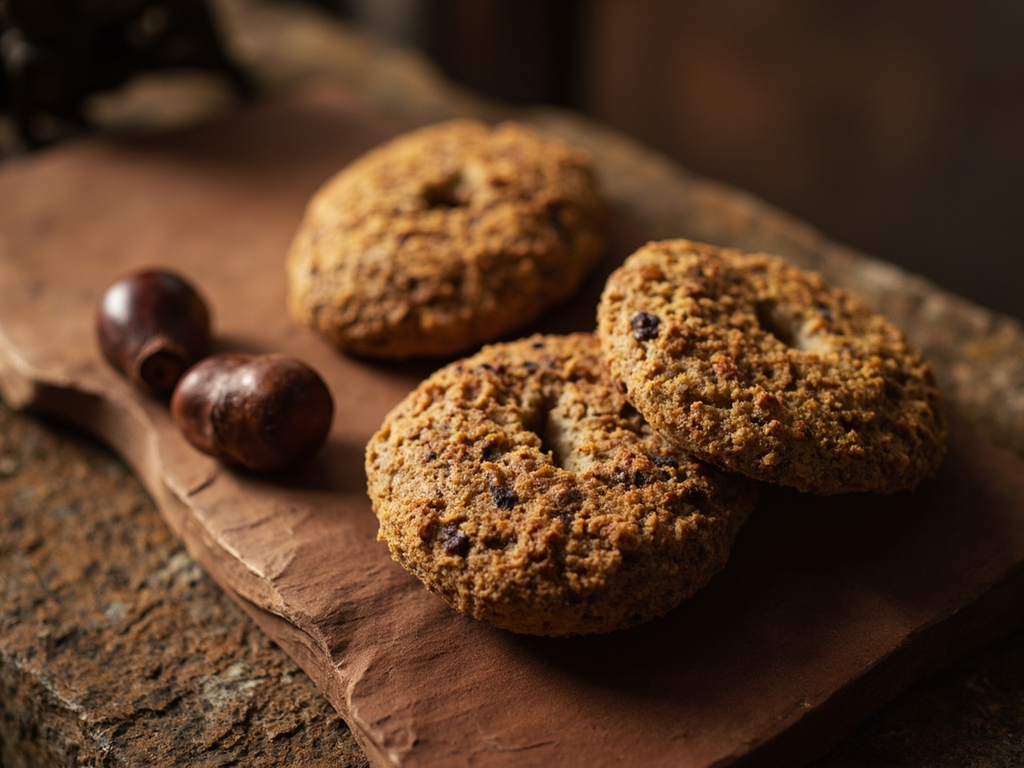
A compact flatbread of chestnut and acorn flour, freed of bitterness, cooked on a hot stone. Rustic taste, slightly sweet and woody with a hint of noble bitterness: the bread of the Japanese mountains before bread.
The plains give rice, but the mountain also feeds its children, never forget that. In autumn, we gather chestnuts and acorns; the acorns must be washed long in running water to drive out their harshness, else they twist the mouth. We grind them into flour, knead them, cook them on the burning stone. These flatbreads keep all winter, and more than once they have saved my people when snow closed the roads.
- •Dried chestnuts — two handfuls (sweet base)
- •Acorns, freed of bitterness — one handful (base, rustic binder)
- •Spring water — as needed to bind (binder)
Kuri to Donguri no Yakimochi — Chestnut and Acorn Flatbread
A compact flatbread of chestnut and acorn flour, freed of bitterness, cooked on a hot stone. Rustic taste, slightly sweet and woody with a hint of noble bitterness: the bread of the Japanese mountains before bread.
Why this dish? Beyond the rice of the plains, Himiko's people supplemented their table with fruits of the mountain: chestnuts and acorns, harvested and dried to last the winter. These dense, nourishing flatbreads, inherited from the Jōmon tradition, were provisions that did not fear time.
The plains give rice, but the mountain also feeds its children, never forget that. In autumn, we gather chestnuts and acorns; the acorns must be washed long in running water to drive out their harshness, else they twist the mouth. We grind them into flour, knead them, cook them on the burning stone. These flatbreads keep all winter, and more than once they have saved my people when snow closed the roads.
Ingredients (period version)
- Dried chestnuts — two handfuls (sweet base)
- Acorns, freed of bitterness — one handful (base, rustic binder)
- Spring water — as needed to bind (binder)
Ingredients
- Chestnut flour — 150 g (sweet, woody base)
- Acorn flour (or additional chestnut flour if unavailable) — 75 g (rusticity, noble bitterness)
- Warm water — 120-150 ml (binder)
- Pinch of salt — 1 pinch (balance)
- A little oil (or fat) for cooking — 1 tsp (to prevent sticking)
Method
- If starting with raw acorns: shell them, grind them, and rinse thoroughly with water several times (or soak with water changes) to remove bitter tannins, then dry and grind.
- Mix the chestnut and acorn flours with the salt.
- Gradually incorporate warm water until you get a soft, pliable dough that is not sticky.
- Form flat cakes about 1 cm thick.
- Cook on a hot stone or lightly oiled pan over medium heat, 4-5 minutes per side, until golden and slightly firm.
How it was made : The treatment of acorns to remove tannins (water leaching) is a technique attested since the Jōmon period and still practiced in Yayoi. Chestnuts and nuts were dried and stored as winter reserves. Without ovens, cooking was done on heated stones or earthenware plates placed over the fire.
The contemporary twist : Served warm with a drizzle of honey and a few crushed roasted chestnuts, embracing its autumn snack identity.
Sources : Habu, Junko — Ancient Jomon of Japan (Cambridge University Press, 2004) — acorn and nut processing · Mizoguchi, Koji — The Archaeology of Japan (Cambridge University Press, 2013)
Himiko · Charactorium