 flip
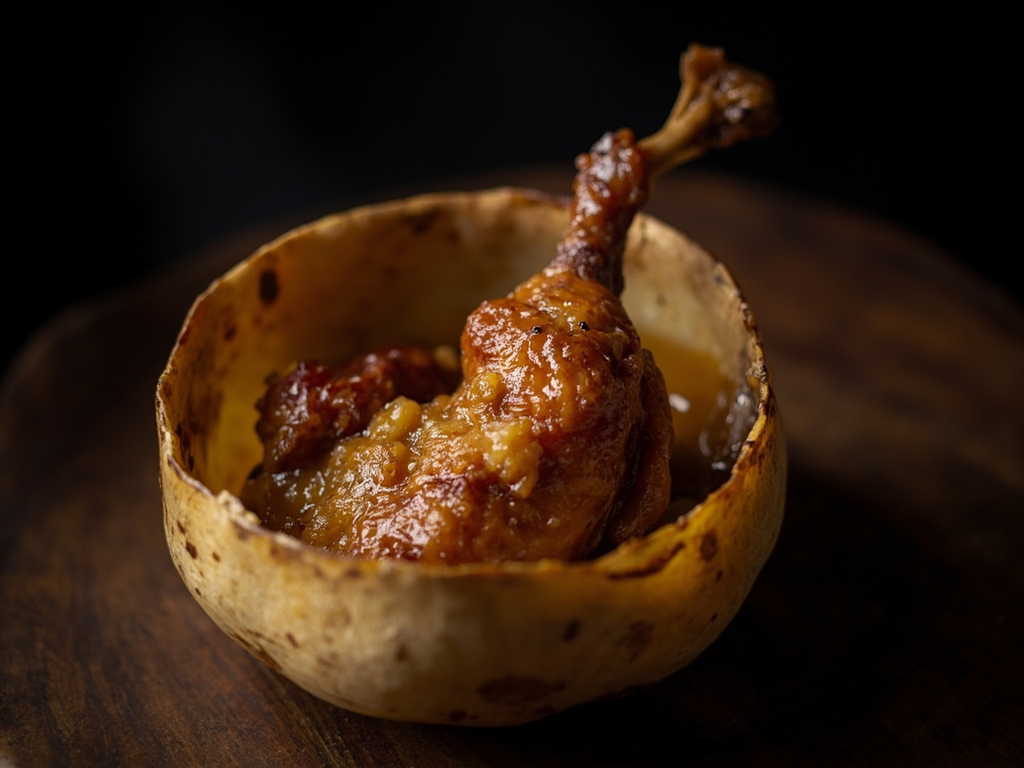
flipHuahua manu — birds preserved in their own fat, in a gourd
Huahua manu — birds preserved in their own fat, in a gourd
Why this dish? Fat forest birds were preserved by confiting them in their own fat, sealed in hue (gourds) — the same gourds that Hinemoa, tradition says, tied to her body to float during the nocturnal crossing of the lake. The object of her courage is also the vessel of her people's preserved cuisine.
Forest birds cooked then submerged in their rendered fat, sealed in a gourd to last through the seasons. A confit meat, deep and salty, that keeps for months.
You know the hue, the gourd I tied to my sides so I would not sink in the cold waters? We also use it to store food. When the birds are fat, in season, we cook them and then lay them in their own rendered fat, packed tightly at the bottom of a sealed gourd. Thus the flesh keeps from moon to moon, and when winter bites, the pātaka returns this treasure tender and fragrant. Nothing is wasted, you see, of what the forest gives us.
- •Fat forest birds (kererū, tūī) — according to the hunt (meat to confit)
- •Fat from the same birds — all rendered fat (preservation medium)
- •Sealed hue (gourd) — 1 per batch (airtight container)
Huahua manu — birds preserved in their own fat, in a gourd
Forest birds cooked then submerged in their rendered fat, sealed in a gourd to last through the seasons. A confit meat, deep and salty, that keeps for months.
Why this dish? Fat forest birds were preserved by confiting them in their own fat, sealed in hue (gourds) — the same gourds that Hinemoa, tradition says, tied to her body to float during the nocturnal crossing of the lake. The object of her courage is also the vessel of her people's preserved cuisine.
You know the hue, the gourd I tied to my sides so I would not sink in the cold waters? We also use it to store food. When the birds are fat, in season, we cook them and then lay them in their own rendered fat, packed tightly at the bottom of a sealed gourd. Thus the flesh keeps from moon to moon, and when winter bites, the pātaka returns this treasure tender and fragrant. Nothing is wasted, you see, of what the forest gives us.
Ingredients (period version)
- Fat forest birds (kererū, tūī) — according to the hunt (meat to confit)
- Fat from the same birds — all rendered fat (preservation medium)
- Sealed hue (gourd) — 1 per batch (airtight container)
Ingredients
- Duck legs — 6 (meat to confit)
- Duck fat — 500 g (confit medium)
- Sea salt — 2 tbsp (curing and preservation)
- Sterilized glass jar (substitute for gourd) — 1 large (container)
Method
- Rub duck legs with salt and let rest 12 hours in the fridge.
- Rinse, pat dry, then cook the legs submerged in melted duck fat at 90 °C for 2.5 hours (very gentle cooking).
- Check that the meat comes away from the bone.
- Pack the legs into the sterilized jar, cover completely with strained fat to exclude air.
- Let cool, seal, and store in a cool place; the fat solidifies and protects the meat for several weeks.
- When serving, gently reheat and crisp the skin.
How it was made : The confit of birds (huahua) in gourds (hue or taha huahua) sealed with fat was a major preservation technique of the Māori, allowing fatty game to be stored for lean months and great feasts. Decorated gourds were items of prestige.
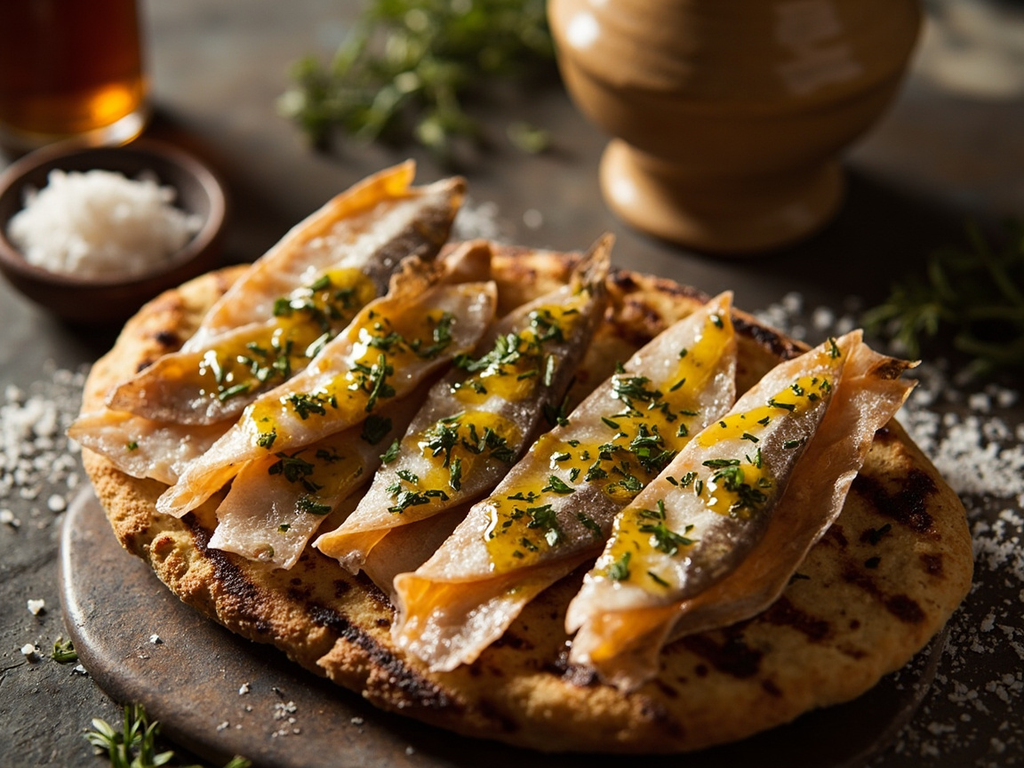
The contemporary twist : Shredded on a grilled kumara cake, the bird confit becomes a chic bite that tells the story of the pātaka to today's guests.
Sources : Elsdon Best, Forest Lore of the Maori (1942) · Anne Salmond, Hui: A Study of Maori Ceremonial Gatherings (1975)
Hinemoa · Charactorium