 flip
flipSekihan, Red Rice with Azuki Beans (赤飯)
Sekihan, Red Rice with Azuki Beans (赤飯)
Why this dish? Sekihan, rice tinted red by azuki beans, marks life's happy thresholds in Japan: births, coming of age, successes. For Raichō, whose existence was a series of thresholds crossed for women — founding Seitō in 1911, creating the New Woman's Association — this festive rice celebrates beginnings and the courage of transitions.
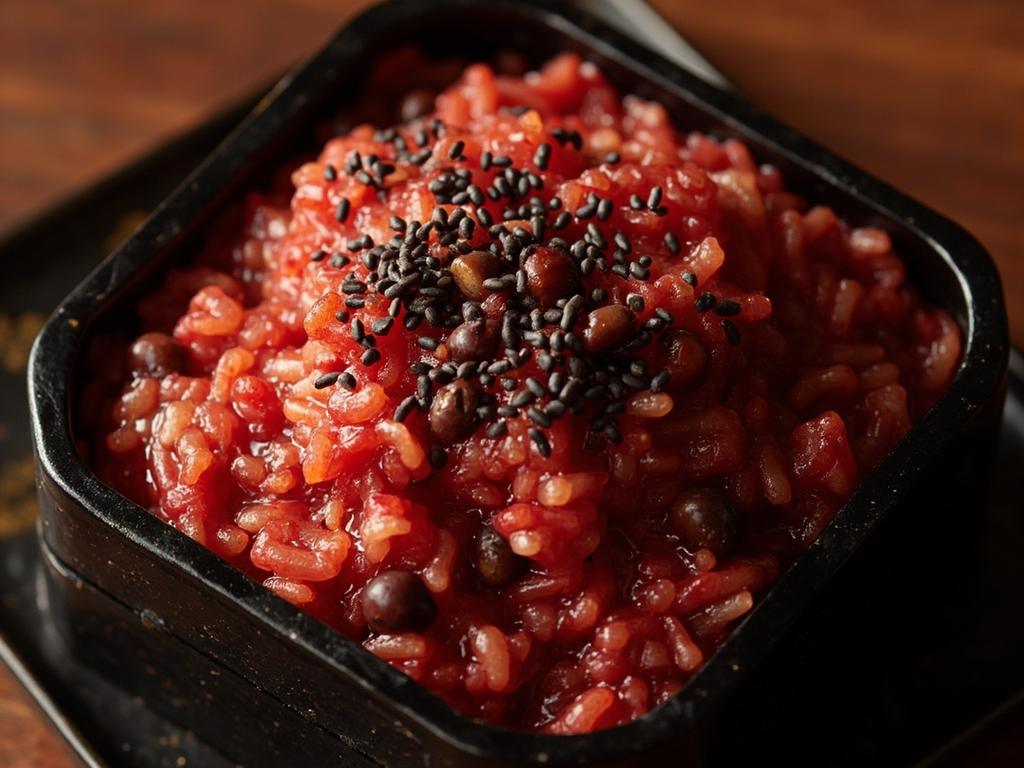
Glutinous rice steamed with azuki beans, which give it a pink-red hue symbolizing happiness. It is sprinkled with gomashio (toasted salted sesame) that contrasts with the rice's sweetness.
Red is not a decorative color, my child: it is the color that wards off misfortune and greets great beginnings. On the morning we published the first issue of our journal, I wished it could be served in every household in Japan. You soak the azuki the night before, you keep their pink water to color the glutinous rice, and you steam everything on a cloth. A pinch of salted sesame on top, and then you taste, on the tongue, salt and sugar mingled — as in every life, sorrow and hope mingle.
- •Glutinous rice (mochigome) — two bowls (base grain)
- •Azuki beans — a small handful (color and flavor)
- •Black sesame seeds — a little (finish)
- •Salt — a pinch (gomashio)
Sekihan, Red Rice with Azuki Beans (赤飯)
Glutinous rice steamed with azuki beans, which give it a pink-red hue symbolizing happiness. It is sprinkled with gomashio (toasted salted sesame) that contrasts with the rice's sweetness.
Why this dish? Sekihan, rice tinted red by azuki beans, marks life's happy thresholds in Japan: births, coming of age, successes. For Raichō, whose existence was a series of thresholds crossed for women — founding Seitō in 1911, creating the New Woman's Association — this festive rice celebrates beginnings and the courage of transitions.
Red is not a decorative color, my child: it is the color that wards off misfortune and greets great beginnings. On the morning we published the first issue of our journal, I wished it could be served in every household in Japan. You soak the azuki the night before, you keep their pink water to color the glutinous rice, and you steam everything on a cloth. A pinch of salted sesame on top, and then you taste, on the tongue, salt and sugar mingled — as in every life, sorrow and hope mingle.
Ingredients (period version)
- Glutinous rice (mochigome) — two bowls (base grain)
- Azuki beans — a small handful (color and flavor)
- Black sesame seeds — a little (finish)
- Salt — a pinch (gomashio)
Ingredients
- Japanese glutinous rice (mochigome) — 300 g (base grain)
- Dried azuki beans — 50 g (color and flavor)
- Water — as needed (soaking and coloring)
- Black sesame seeds — 1 tbsp (gomashio)
- Fine salt — 1/2 tsp (gomashio)
Method
- The night before, rinse azuki, cover with water and boil 5 min; discard this first water (it is bitter).
- Cover with fresh water and cook 20-30 min until beans are tender but whole; reserve both beans AND their pink cooking water.
- Soak glutinous rice overnight in this pink water to color it.
- Drain rice (reserve liquid), mix with azuki, then steam for 30-40 min on a cloth, sprinkling once or twice with the pink water.
- Toast sesame seeds dry, coarsely crush with salt to make gomashio.
- Serve rice warm, sprinkled with gomashio.
How it was made : Sekihan was traditionally served in wooden boxes for celebrations and offered to neighbors during happy events. Steaming (not absorption cooking) keeps the glutinous rice grains firm and glossy. Note: azuki (Vigna angularis) is an ancient Asian legume, unrelated to the American common bean.
The contemporary twist : Pressed into small onigiri triangles and wrapped in a leaf, sekihan becomes a portable festive gift to slip into the hands of loved ones.
Hiratsuka Raichō · Charactorium