 flip
flipSawiq — Toasted Barley Flour of the Traveler, with Dates
Sawiq — Toasted Barley Flour of the Traveler, with Dates
Why this dish? Ibn Khaldun was a man of the road: exiles, embassies, flights, desert crossings between Tunis, Frenda, Fez, Granada, Cairo, all the way to Damascus where he met Tamerlane. Sawiq — toasted barley or wheat ground into flour, mixed with water at the stop — was the very provision for these journeys, the meal that keeps and does not weigh down the saddlebags.
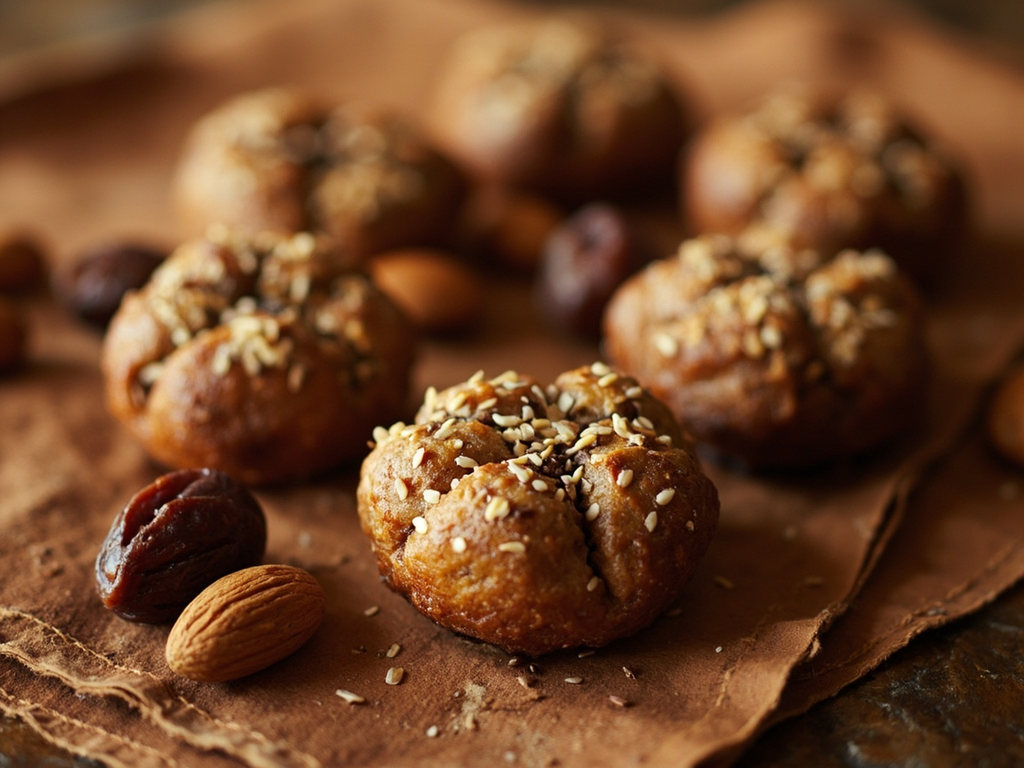
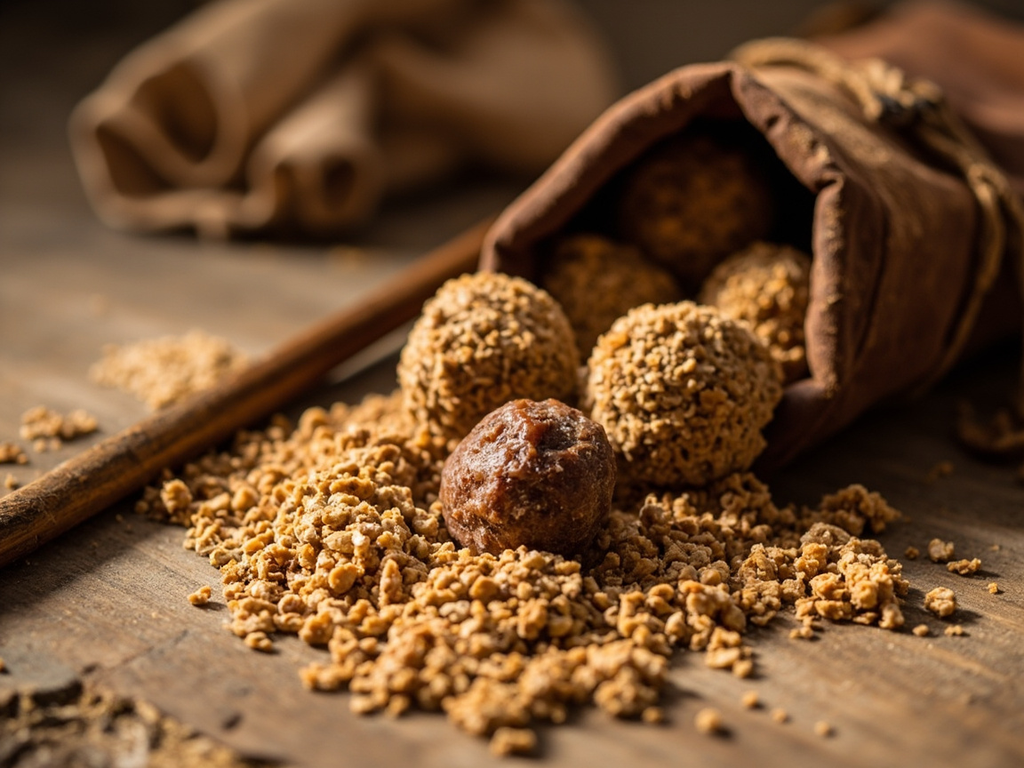
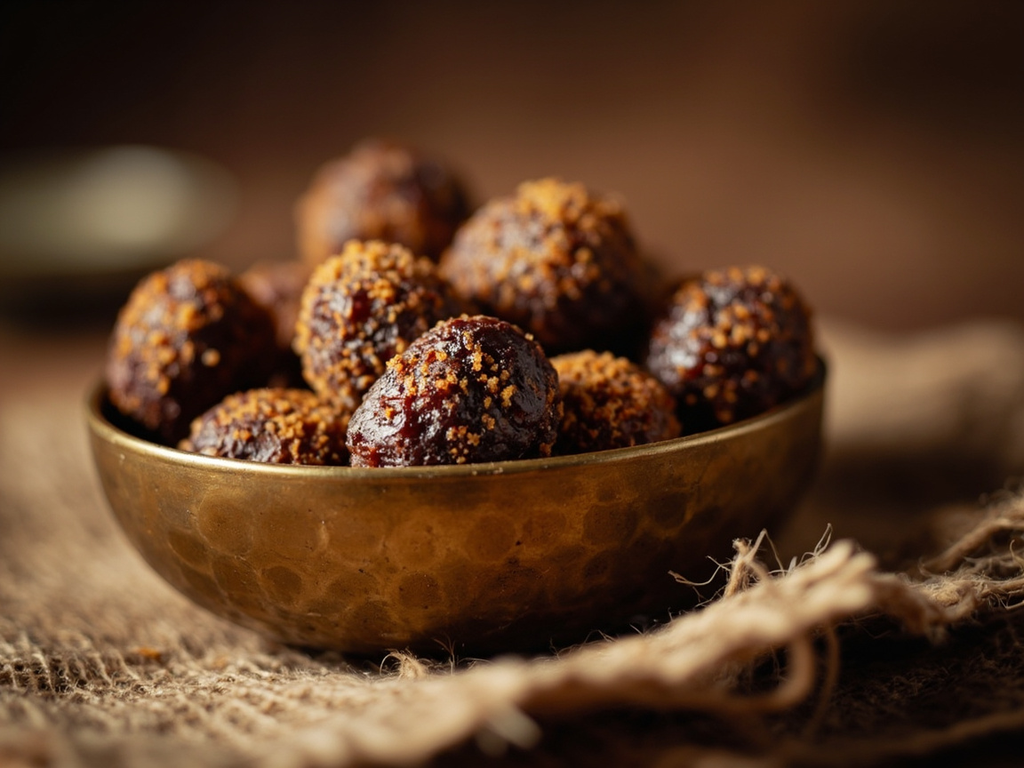
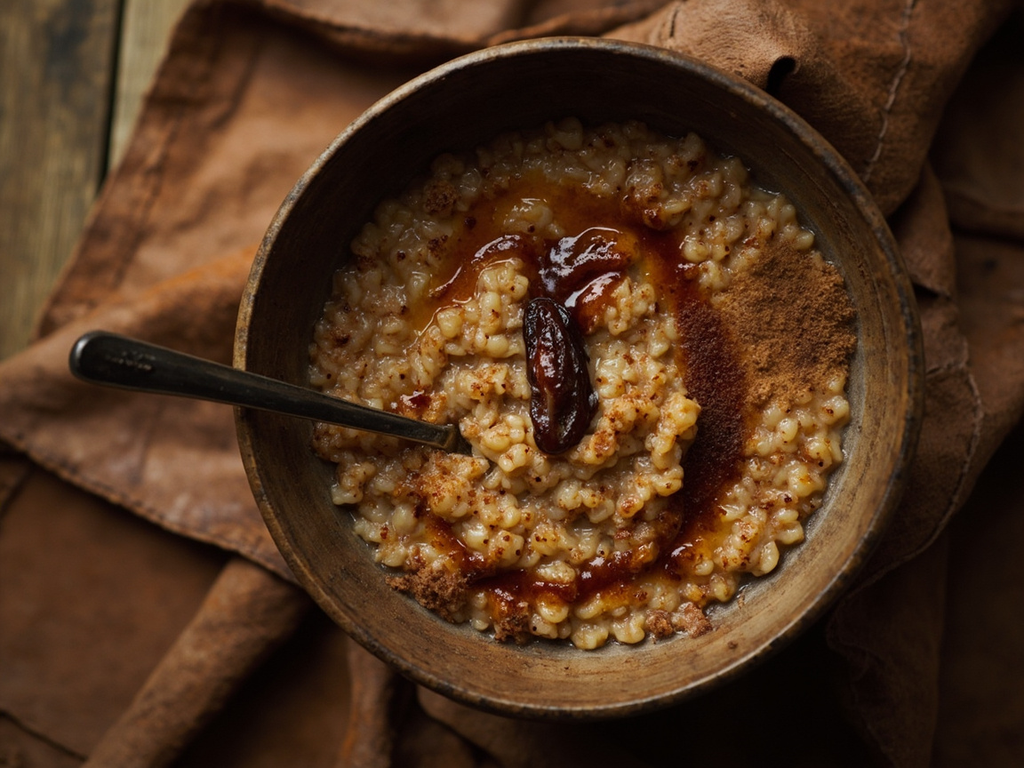
A toasted barley flour, mixed with fresh water (or buttermilk) and sweetened with crushed dates. No cooking at the campsite: you mix, you knead into a porridge or balls, you eat. The viaticum of caravans and armies since Arab antiquity.
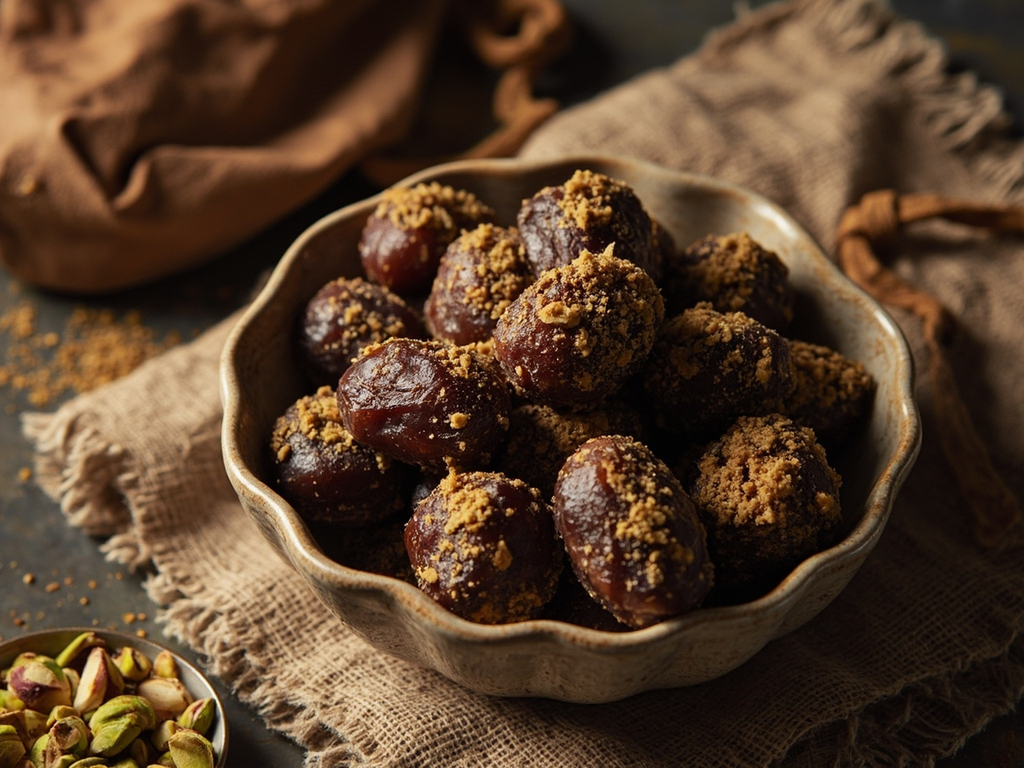
I have known long roads, exiles, and deserts where no oven smokes. There, the traveler has only his sawiq: barley toasted then ground, which I carried in a leather pouch with pressed dates. At the stop, I would pour a little water from the waterskin, mix this flour into a paste, crush a few dates, and there was my meal — no fire, no long halt. It is the food of desert men, whose harshness makes the strength of nascent empires. Believe one who has ridden much: a sack of sawiq is worth more than a distant feast.
- •Barley (or wheat) grains — according to journey length (base of toasted flour)
- •Dates — pressed, as desired (sugar and energy)
- •Water or buttermilk — for mixing (liquid)
- •Salt or pinch of sugar — to taste (seasoning by region)
Sawiq — Toasted Barley Flour of the Traveler, with Dates
A toasted barley flour, mixed with fresh water (or buttermilk) and sweetened with crushed dates. No cooking at the campsite: you mix, you knead into a porridge or balls, you eat. The viaticum of caravans and armies since Arab antiquity.
Why this dish? Ibn Khaldun was a man of the road: exiles, embassies, flights, desert crossings between Tunis, Frenda, Fez, Granada, Cairo, all the way to Damascus where he met Tamerlane. Sawiq — toasted barley or wheat ground into flour, mixed with water at the stop — was the very provision for these journeys, the meal that keeps and does not weigh down the saddlebags.
I have known long roads, exiles, and deserts where no oven smokes. There, the traveler has only his sawiq: barley toasted then ground, which I carried in a leather pouch with pressed dates. At the stop, I would pour a little water from the waterskin, mix this flour into a paste, crush a few dates, and there was my meal — no fire, no long halt. It is the food of desert men, whose harshness makes the strength of nascent empires. Believe one who has ridden much: a sack of sawiq is worth more than a distant feast.
Ingredients (period version)
- Barley (or wheat) grains — according to journey length (base of toasted flour)
- Dates — pressed, as desired (sugar and energy)
- Water or buttermilk — for mixing (liquid)
- Salt or pinch of sugar — to taste (seasoning by region)
Ingredients
- Toasted barley flour (or hulled barley to toast yourself) — 100 g per person (base)
- Pitted dates (Deglet Nour or Medjool) — 4 to 6 (sweetness)
- Fresh water or fermented milk (lben/buttermilk) — 150 to 200 ml (liquid)
- Melted butter or olive oil — 1 tbsp (optional) (richness)
- Cinnamon — 1 pinch (optional) (fragrance)
Method
- If using whole barley: dry-toast in a pan until golden and nutty-smelling, let cool, then grind finely.
- Mash the dates into a paste with a little warm water.
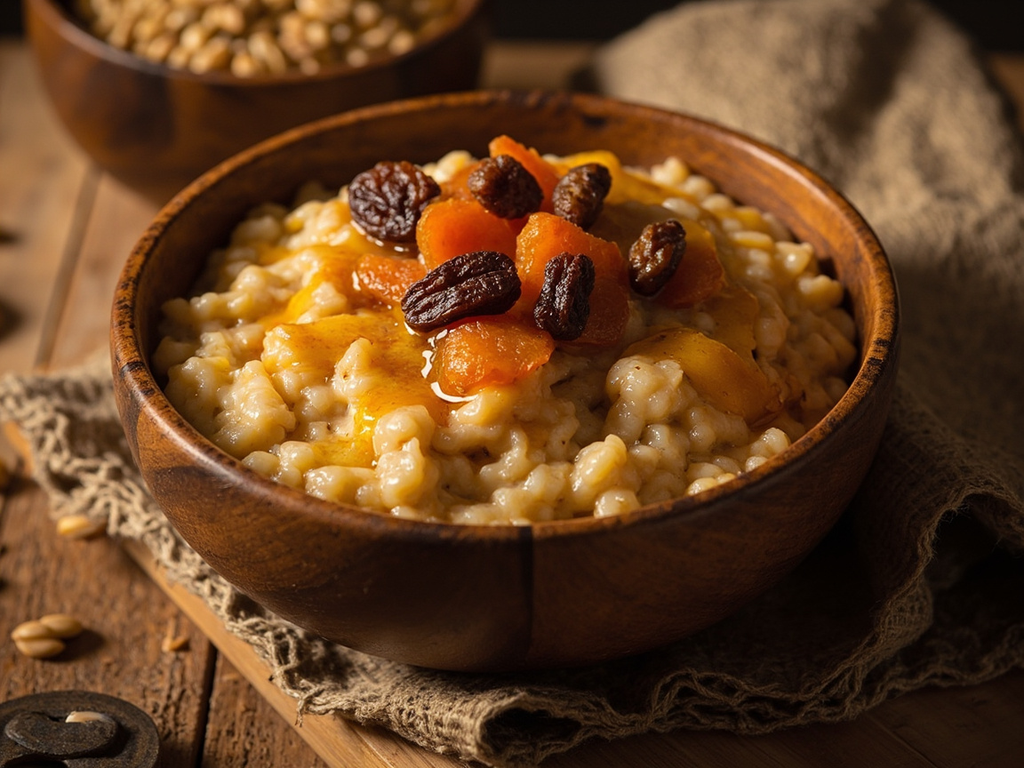
- Mix the toasted barley flour with the water (or buttermilk) until a smooth, thick porridge forms, free of lumps.
- Stir in the date paste, a pinch of cinnamon, and, if desired, a drizzle of melted butter.
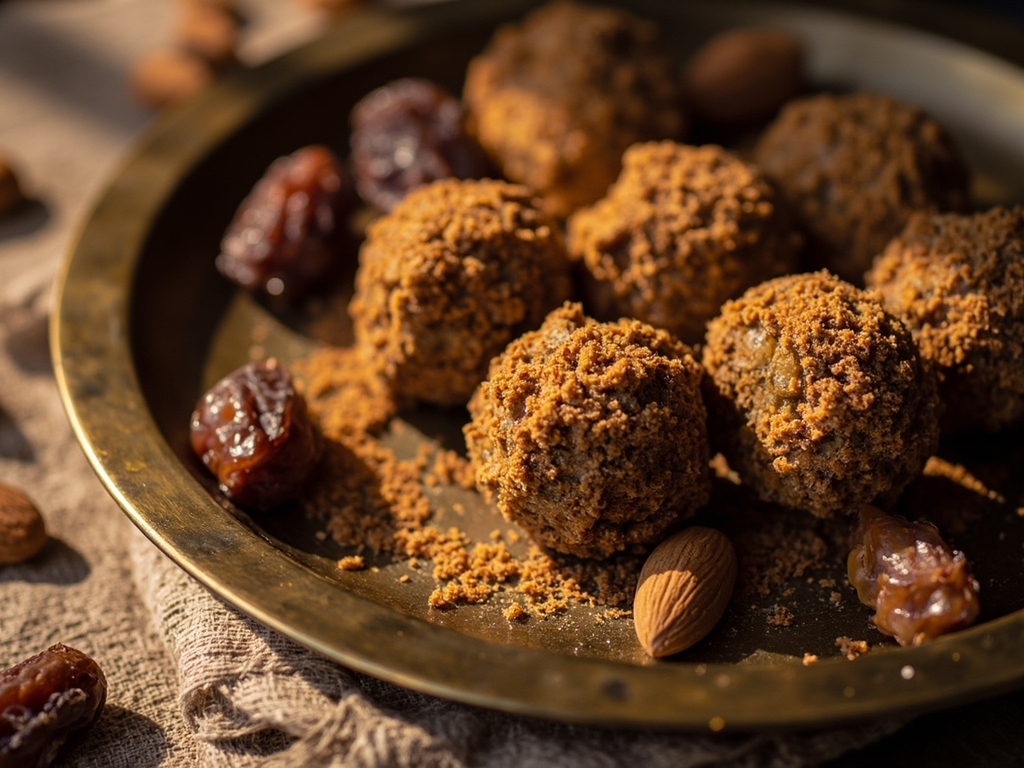
- Serve immediately as a thick porridge, or roll into small balls for carrying.
How it was made : Sawiq (toasted cereal flour mixed with liquid) is one of the oldest travel foods in the Arab world; sources cite it as a provision for caravans, pilgrims, and armies from the early centuries of Islam. Toasting makes it stable for weeks, and it requires no fire — a decisive advantage in the desert. It was eaten salty or sweet, with water, sour milk, or enriched with butter depending on means.
The contemporary twist : A 'hiker's energy bowl' version: toasted barley, dates, a spoonful of lben, and a pinch of cinnamon — the Maghrebi ancestor of instant porridge, a thousand years before granola bars.
Sources : Medieval Arabic sources on zād (travel provisions) and sawiq for caravans and pilgrims · Ibn Khaldun, Muqaddima — on nomadic life (badawa) and the harshness of desert people
Ibn Khaldun · Charactorium