 flip
flipCastilian Olla with Chickpeas and Saffron
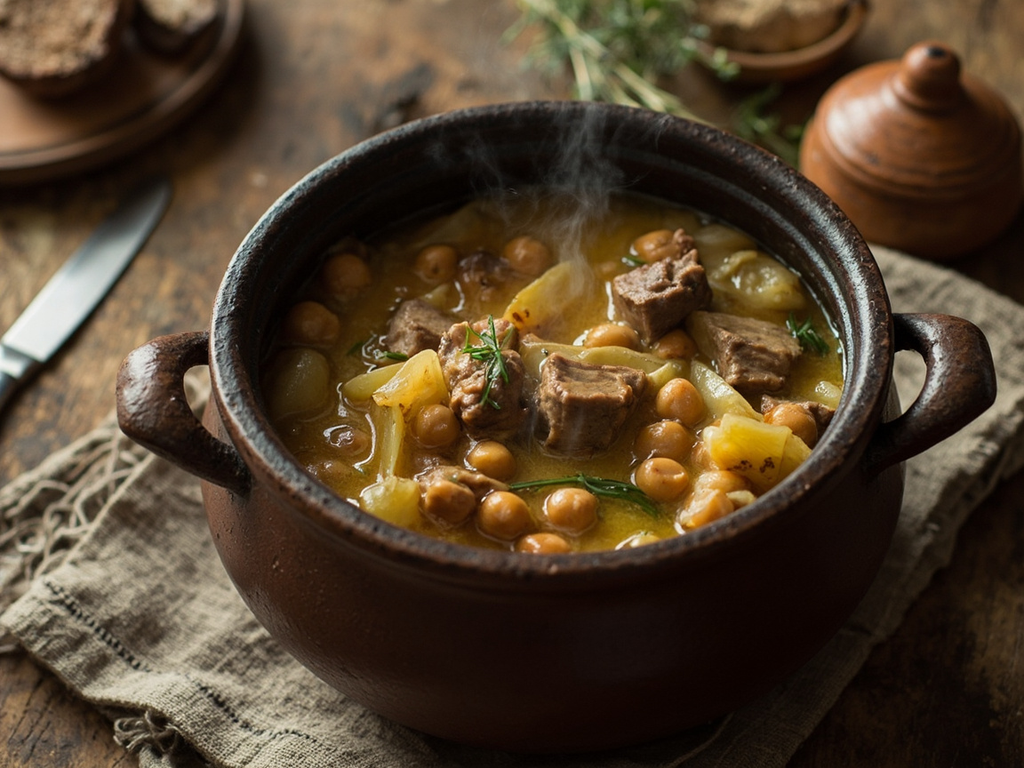
Castilian Olla with Chickpeas and Saffron
Why this dish? The olla, a simmered pot of chickpeas, meats and vegetables, was the foundation of Castilian diet at all ranks; on the royal table it was enhanced with saffron and lamb, roasted and boiled meats mentioned in the anchor of Isabella's court.
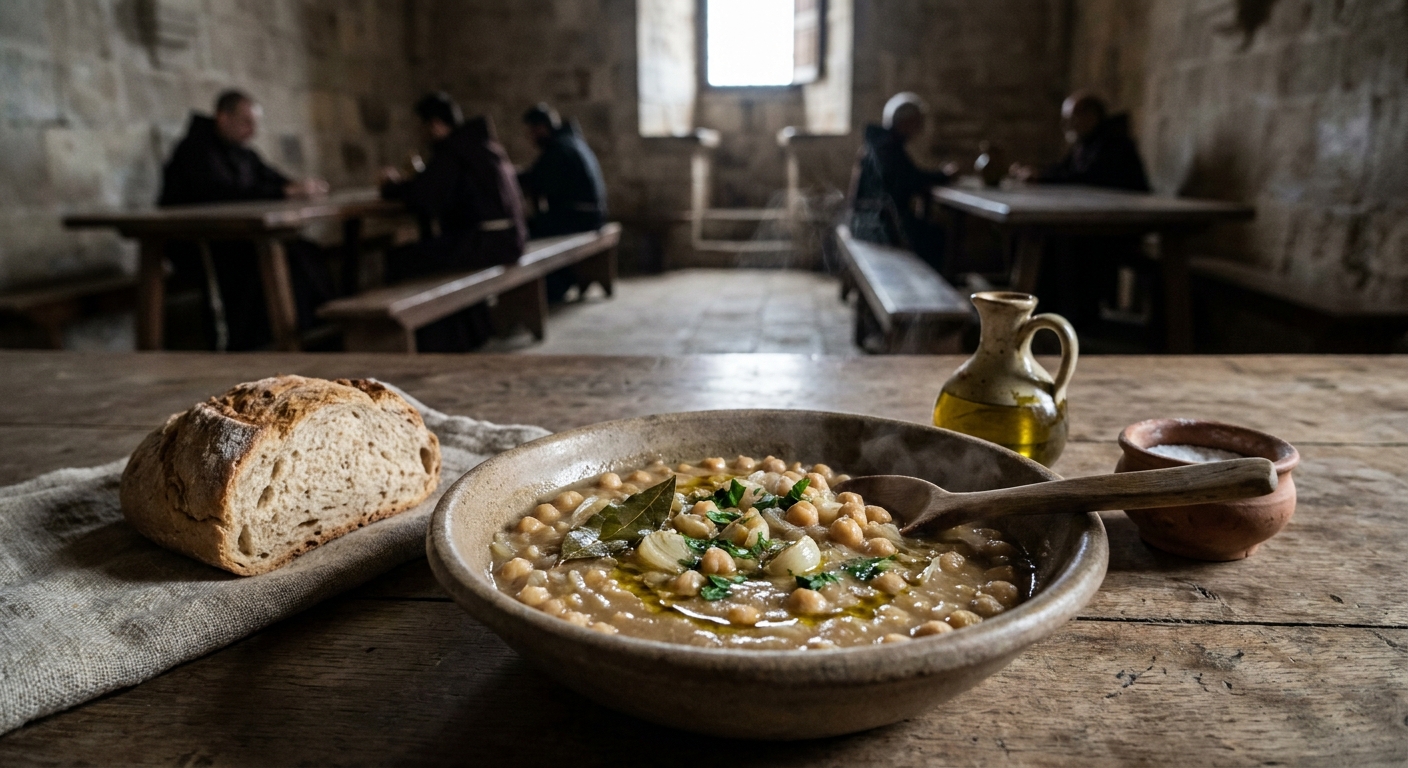
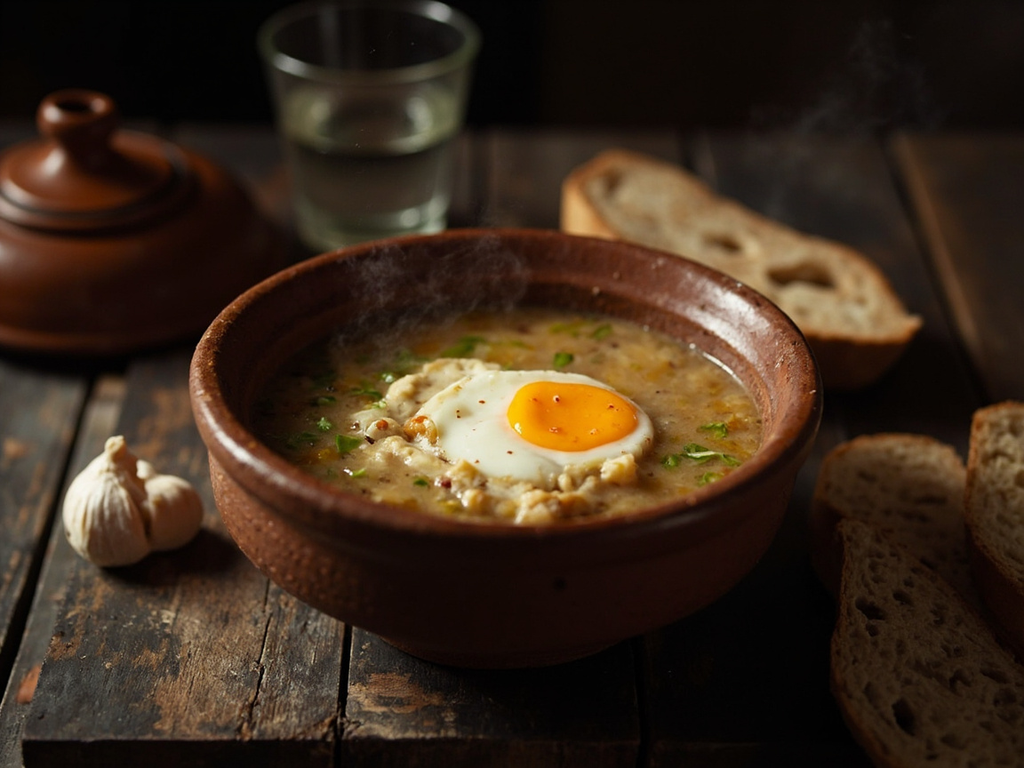
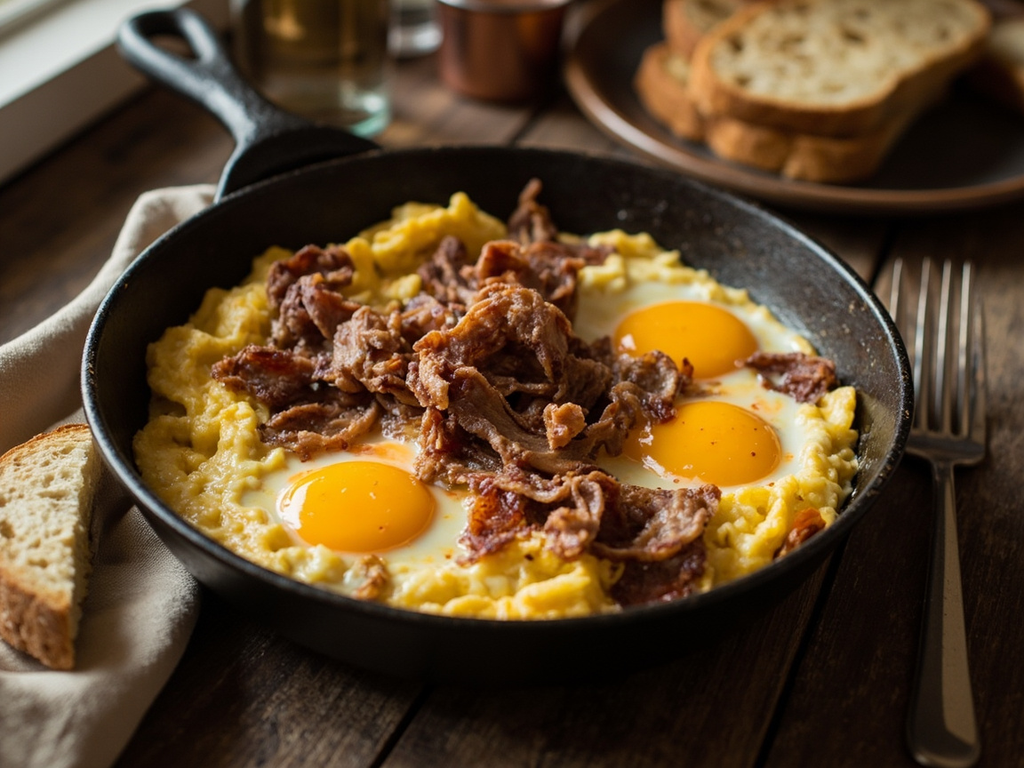
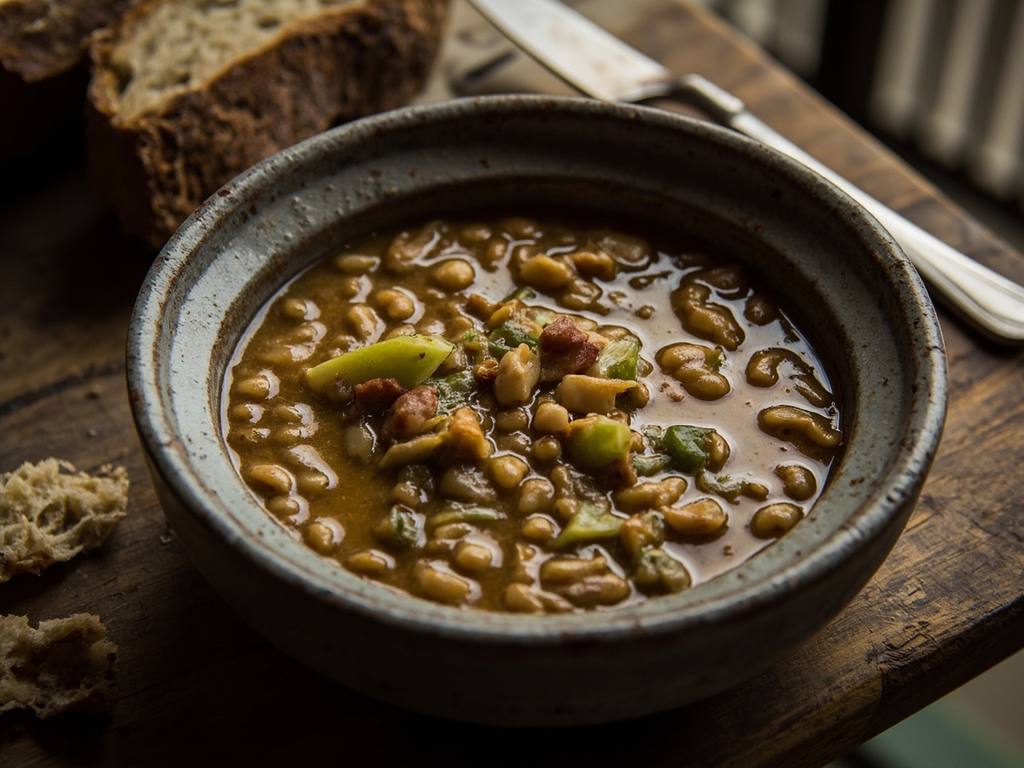
A generous pot where chickpeas, lamb and bacon simmer for hours with cabbage, turnip and garlic, gilded by saffron. The broth was served as soup, the meats and vegetables followed.
Here is the dish that nourishes both the laborer and the king: the olla. One soaks the chickpeas the night before, covers them with clear water with the lamb and a little bacon, and lets the pot sing on the embers all morning. I always want my pinch of saffron in it, for this golden flower of my lands delights the eye before the mouth. On lean days imposed by Holy Church, we remove the flesh and keep the vegetables: thus we eat according to God without losing any taste.
- •Chickpeas — a good measure, soaked (nourishing base)
- •Lamb and salt bacon — pieces for simmering (meats and fat)
- •Cabbage and turnips — as desired (vegetables)
- •Garlic and onion — a few cloves (aromatics)
- •Saffron — a few threads (color and perfume)
Castilian Olla with Chickpeas and Saffron
A generous pot where chickpeas, lamb and bacon simmer for hours with cabbage, turnip and garlic, gilded by saffron. The broth was served as soup, the meats and vegetables followed.
Why this dish? The olla, a simmered pot of chickpeas, meats and vegetables, was the foundation of Castilian diet at all ranks; on the royal table it was enhanced with saffron and lamb, roasted and boiled meats mentioned in the anchor of Isabella's court.
Here is the dish that nourishes both the laborer and the king: the olla. One soaks the chickpeas the night before, covers them with clear water with the lamb and a little bacon, and lets the pot sing on the embers all morning. I always want my pinch of saffron in it, for this golden flower of my lands delights the eye before the mouth. On lean days imposed by Holy Church, we remove the flesh and keep the vegetables: thus we eat according to God without losing any taste.
Ingredients (period version)
- Chickpeas — a good measure, soaked (nourishing base)
- Lamb and salt bacon — pieces for simmering (meats and fat)
- Cabbage and turnips — as desired (vegetables)
- Garlic and onion — a few cloves (aromatics)
- Saffron — a few threads (color and perfume)
Ingredients
- Dried chickpeas soaked 12 h — 300 g (base)
- Lamb shoulder in pieces — 400 g (meat)
- Bacon or salt pork belly — 100 g (fat and umami)
- Green cabbage — 1/4 head (vegetable)
- Turnips — 2 (vegetable)
- Garlic / onion — 3 cloves + 1 onion (aromatics)
- Saffron — 1 good pinch (color and perfume)
- Salt — to taste (seasoning)
Method
- Cover the soaked chickpeas, lamb, bacon, onion and garlic with cold water; bring slowly to a simmer and skim.
- Simmer covered over very low heat for 1 h 30 min.
- Add cabbage, turnips, and saffron dissolved in a ladle of broth; continue for 45 min.
- Season with salt at the end (the bacon already salts the broth).
- Serve the golden broth first, then the chickpeas, meats and vegetables.
How it was made : The olla is the direct ancestor of cocido / olla podrida. Before 1492, no potato or common bean (forbidden here): chickpeas, an Old World legume, provide all the substance of the dish.
The contemporary twist : Served 'deconstructed': saffron consommé in a cup, then a plate of shredded meats and glazed vegetables — a gala cocido.
Isabella I of Castile · Charactorium