 flip
flipDuelos y quebrantos (Scrambled Eggs with Bacon)
Duelos y quebrantos (Scrambled Eggs with Bacon)
Why this dish? This is the very first dish mentioned in *Don Quixote*: « duelos y quebrantos los sábados ». The Church allowed offal and pork fat (never noble meat) on Saturdays in Castile; this egg and bacon dish was the daily fare of impoverished hidalgos like Cervantes himself.
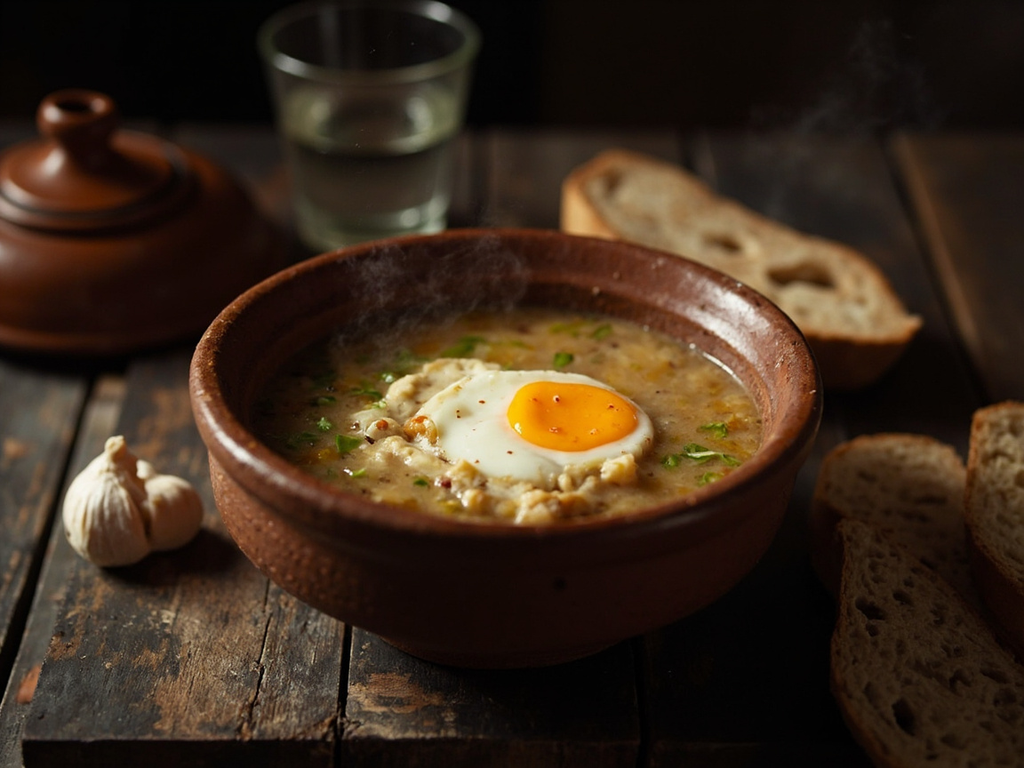
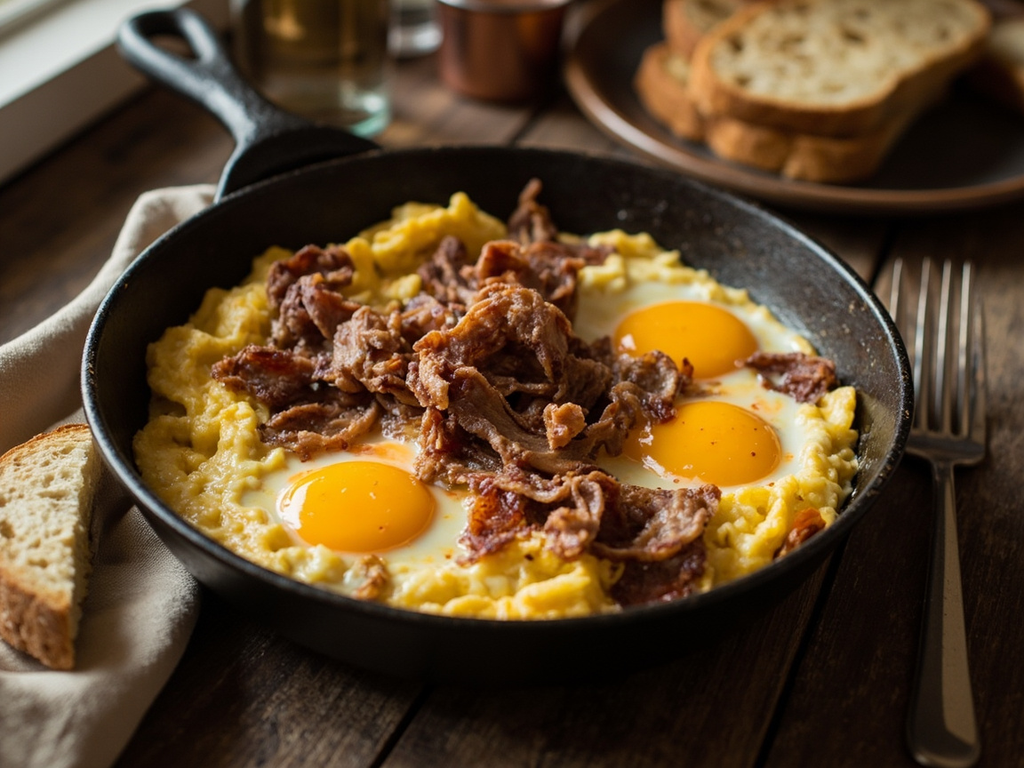
Scrambled eggs with melted bacon and lamb brain, a Saturday windfall dish from Castile, rich and hearty, born of a religious exception to the calendar of lean days.
Ah, do not laugh at the name: "sorrows and breakages," for such was the look of the hidalgo who, come Saturday, could afford nothing better than the leftovers from the salt cellar! I would melt the bacon in the iron pan, toss in the well-washed brain, then the eggs, which I scrambled without letting them set completely. Believe me, reader, a dish that costs almost nothing can fill a man as well as a gentleman's feast — and spare his purse as much as his conscience.
- •Fresh eggs — half a dozen (base)
- •Pork bacon (*tocino*) — a good piece (fat and flavor)
- •Lamb brain — one (fatty garnish allowed on Saturday)
- •Salt — a pinch (seasoning)
Duelos y quebrantos (Scrambled Eggs with Bacon)
Scrambled eggs with melted bacon and lamb brain, a Saturday windfall dish from Castile, rich and hearty, born of a religious exception to the calendar of lean days.
Why this dish? This is the very first dish mentioned in *Don Quixote*: « duelos y quebrantos los sábados ». The Church allowed offal and pork fat (never noble meat) on Saturdays in Castile; this egg and bacon dish was the daily fare of impoverished hidalgos like Cervantes himself.
Ah, do not laugh at the name: "sorrows and breakages," for such was the look of the hidalgo who, come Saturday, could afford nothing better than the leftovers from the salt cellar! I would melt the bacon in the iron pan, toss in the well-washed brain, then the eggs, which I scrambled without letting them set completely. Believe me, reader, a dish that costs almost nothing can fill a man as well as a gentleman's feast — and spare his purse as much as his conscience.
Ingredients (period version)
- Fresh eggs — half a dozen (base)
- Pork bacon (*tocino*) — a good piece (fat and flavor)
- Lamb brain — one (fatty garnish allowed on Saturday)
- Salt — a pinch (seasoning)
Ingredients
- Eggs — 6 (base)
- Lardons or smoked bacon — 120 g (fat and flavor)
- Lamb brain (or, failing that, 80 g mild chorizo without strong chili) — 1 (or 80 g) (garnish)
- Salt and pepper — to taste (seasoning)
- Olive oil — 1 tbsp (cooking)
Method
- Sauté the lardons in a pan with a drizzle of olive oil until golden.
- Add the brain, previously poached for 5 minutes in salted water and crumbled (or the chorizo in dice), and heat through.
- Beat the eggs, lightly salt them, and pour into the pan.
- Scramble over low heat, stirring constantly; remove from heat while still runny.
- Serve immediately with rustic bread.
How it was made : In La Mancha, on Saturdays (*día de grosura*), offal and pork fat were consumed, the only animal products allowed that day. The dish was made in an iron pan over embers; it was sometimes also called *huevos con torreznos*. The *pimentón* (paprika) that colors chorizo today had only just arrived in Spain from the New World and was not yet in common use.
The contemporary twist : Served on a slice of grilled bread rubbed with garlic, tartine-style, with a few parsley sprigs — a Golden Age brunch.
Sources : Miguel de Cervantes, *Don Quixote*, I, 1 (1605) · Francisco Martínez Montiño, *Arte de cocina, pastelería, vizcochería y conservería* (1611)
Miguel de Cervantes · Charactorium