 flip
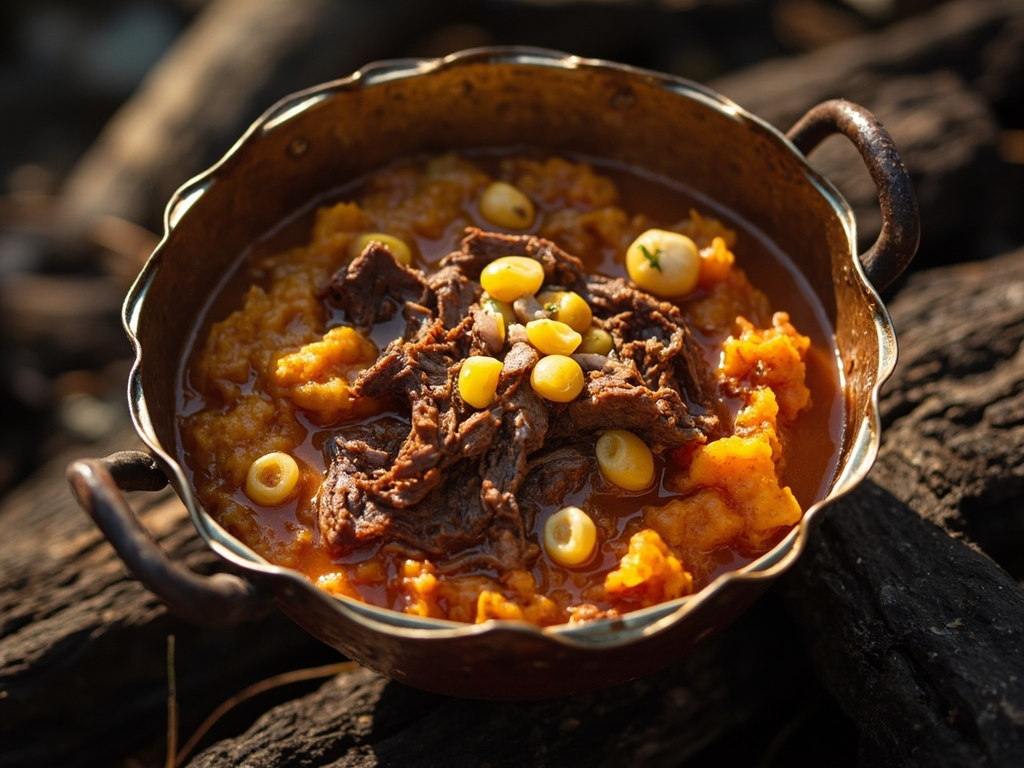
flipCharquicán of the Andes (Dried Meat Stew)
Charquicán of the Andes (Dried Meat Stew)
Why this dish? To cross the Andes (Los Patos and Uspallata passes) with his army in 1817, San Martín had *charqui* prepared — dried and salted beef, light and non-perishable. Rehydrated into a stew with whatever was found, it fed soldiers at 4,000 meters altitude. *Charquicán* is the slow-cooked version.
Dried meat (charqui) pounded and rehydrated, simmered with squash, potatoes, and corn into a thick, comforting stew — a dish designed to warm men exhausted by mountain cold.
To cross the Cordillera, you need food that does not weigh down the saddlebag and does not rot on the way: that is why we carried charqui, that meat beaten, salted, and dried in the pampa sun. In the evening, at the freezing bivouac, my men pounded it with stones, threw it into the pot with pumpkin and potatoes, and this thick stew gave them strength for the next day's climb. Believe me, soldier: you do not cross the Andes on an empty stomach. Foresight wins campaigns more than courage.
- •Charqui (sun-dried salted beef) — a handful per man (preserved protein)
- •Squash / pumpkin (zapallo) — according to the pot (binder and sweetness)
- •Andean potatoes — as needed (starch)
- •Corn — a few grains (garnish)
- •Onion, salt — what is found (seasoning)
Charquicán of the Andes (Dried Meat Stew)
Dried meat (charqui) pounded and rehydrated, simmered with squash, potatoes, and corn into a thick, comforting stew — a dish designed to warm men exhausted by mountain cold.
Why this dish? To cross the Andes (Los Patos and Uspallata passes) with his army in 1817, San Martín had *charqui* prepared — dried and salted beef, light and non-perishable. Rehydrated into a stew with whatever was found, it fed soldiers at 4,000 meters altitude. *Charquicán* is the slow-cooked version.
To cross the Cordillera, you need food that does not weigh down the saddlebag and does not rot on the way: that is why we carried charqui, that meat beaten, salted, and dried in the pampa sun. In the evening, at the freezing bivouac, my men pounded it with stones, threw it into the pot with pumpkin and potatoes, and this thick stew gave them strength for the next day's climb. Believe me, soldier: you do not cross the Andes on an empty stomach. Foresight wins campaigns more than courage.
Ingredients (period version)
- Charqui (sun-dried salted beef) — a handful per man (preserved protein)
- Squash / pumpkin (zapallo) — according to the pot (binder and sweetness)
- Andean potatoes — as needed (starch)
- Corn — a few grains (garnish)
- Onion, salt — what is found (seasoning)
Ingredients
- Dried beef (charqui, or substitute bresaola / Bündnerfleisch) — 200 g (protein)
- Pumpkin — 500 g, cubed (binder and sweetness)
- Potatoes — 4 medium (starch)
- Corn kernels — 150 g (garnish)
- Onion — 1 large, sliced (aromatic base)
- Sweet paprika and salt — 1 tsp + to taste (seasoning)
Method
- Soak the dried meat in warm water for 1-2 hours, then shred or pound it.
- Sauté the sliced onion in a little fat until soft, add paprika.
- Add the meat, cover with water, and simmer for 20 minutes.
- Add cubed pumpkin and potatoes, cook until the pumpkin breaks down and thickens the stew.
- Add corn kernels, adjust salt, and serve piping hot.
How it was made : Charqui (origin of the word 'jerky') was the preserved meat of the Andes, already used by the Incas. The meat was beaten, salted, and dried in the dry high-altitude sun. Light and durable, it was the ideal supply for a mountain army. Rehydrated and stewed with squash and tubers, it became *charquicán*, a dish still alive in Chile and Argentina.
The contemporary twist : Top with a runny fried egg when serving — the classic modern touch of today's Chilean *charquicán*.
José de San Martín · Charactorium