 flip
flipSekihan (Festive Red Rice with Azuki Beans)
Sekihan (Festive Red Rice with Azuki Beans)
Why this dish? In Japan, sekihan — glutinous rice tinted pink by azuki beans — is prepared for major happy events: births, successes, victories. When Tabei returned from Everest in 1975, the first woman to summit the world's highest peak, this is exactly the kind of celebratory dish a Japanese household would make to honor a national and family achievement.
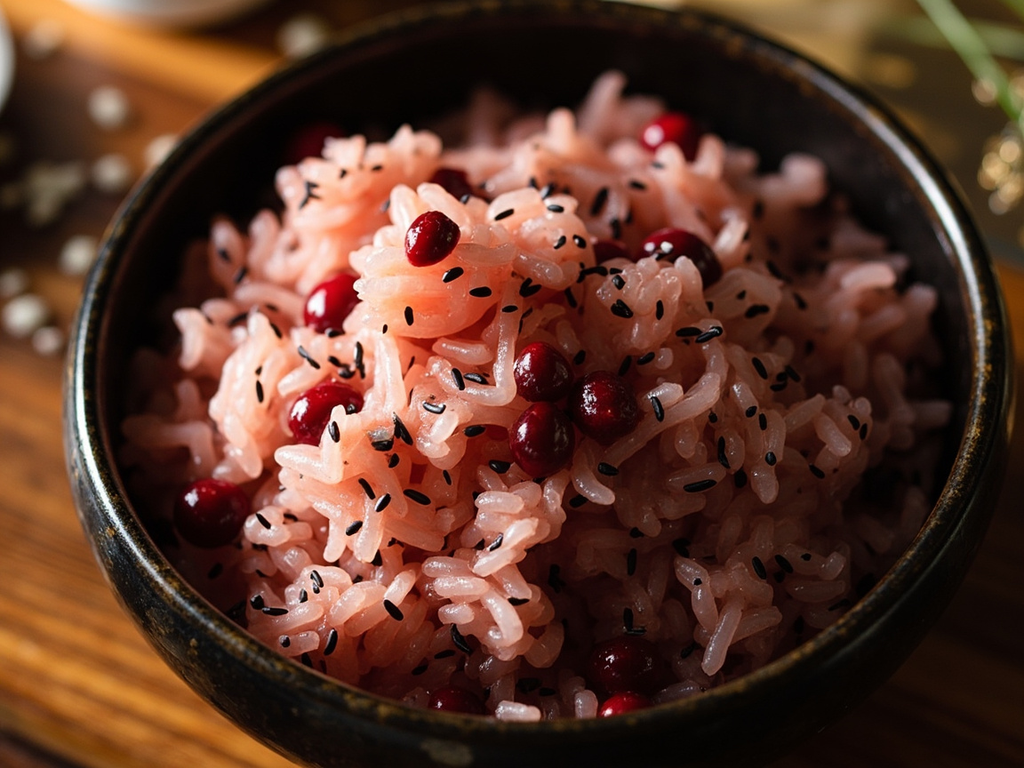
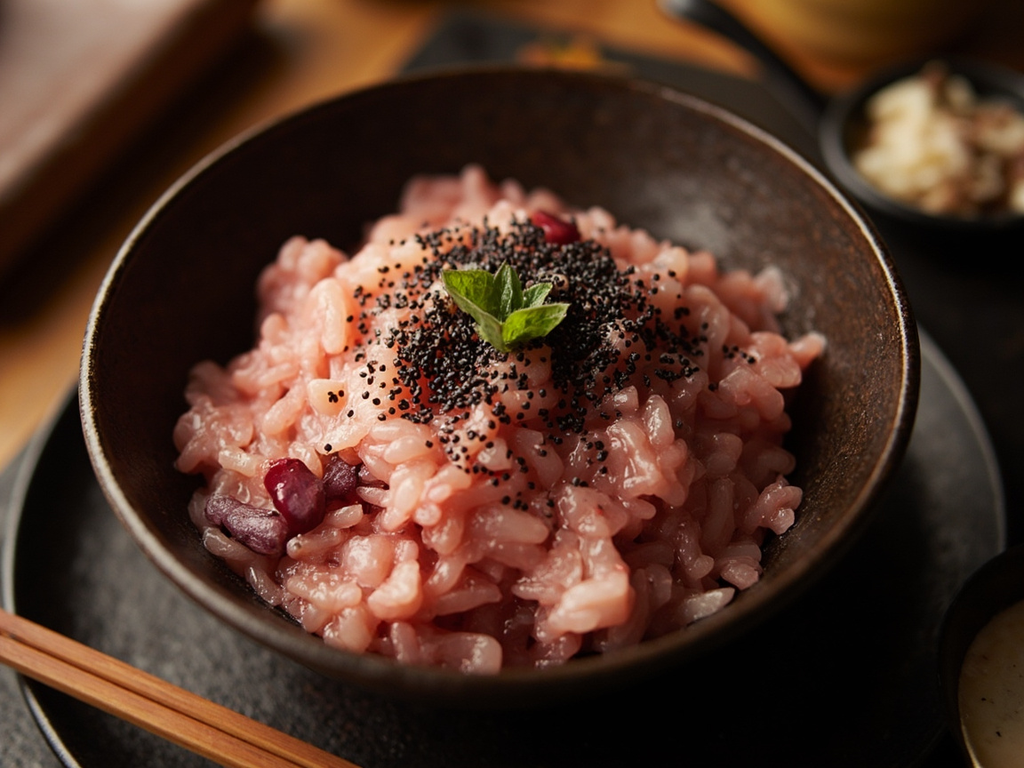
Glutinous rice steamed with azuki beans, which color it a subtle pink, and sprinkled with gomashio (sesame salt). Sweet, slightly earthy, with a salty edge: the rice of shared joy.
Sekihan was not made just any day — there had to be a real reason to rejoice. The azuki give the rice that tender pink color that announces happiness, and it was said that red wards off bad luck. When I returned from the great mountain, we steamed the rice in the bamboo seiro, and shared it sprinkled with sesame and salt. I have never liked too much praise; but that bowl, shared with family, I accepted with a full heart.
- •Glutinous rice (mochigome) — as much as needed (base)
- •Azuki beans — a handful (color and garnish)
- •Sesame seeds — a little (gomashio)
- •Salt — a pinch (gomashio)
Sekihan (Festive Red Rice with Azuki Beans)
Glutinous rice steamed with azuki beans, which color it a subtle pink, and sprinkled with gomashio (sesame salt). Sweet, slightly earthy, with a salty edge: the rice of shared joy.
Why this dish? In Japan, sekihan — glutinous rice tinted pink by azuki beans — is prepared for major happy events: births, successes, victories. When Tabei returned from Everest in 1975, the first woman to summit the world's highest peak, this is exactly the kind of celebratory dish a Japanese household would make to honor a national and family achievement.
Sekihan was not made just any day — there had to be a real reason to rejoice. The azuki give the rice that tender pink color that announces happiness, and it was said that red wards off bad luck. When I returned from the great mountain, we steamed the rice in the bamboo seiro, and shared it sprinkled with sesame and salt. I have never liked too much praise; but that bowl, shared with family, I accepted with a full heart.
Ingredients (period version)
- Glutinous rice (mochigome) — as much as needed (base)
- Azuki beans — a handful (color and garnish)
- Sesame seeds — a little (gomashio)
- Salt — a pinch (gomashio)
Ingredients
- Glutinous rice (mochigome) — 400 g (base)
- Dried azuki beans — 60 g (color and garnish)
- Black sesame seeds — 1 tbsp (gomashio)
- Salt — 1 tsp (gomashio)
Method
- Cook azuki in water until just tender, reserving the pink cooking water.
- Soak glutinous rice for several hours, then drain; tint it with a little of the azuki cooking water.
- Mix beans with rice and steam everything (ideally in a bamboo steamer) for 30 to 40 min.
- Meanwhile, toast sesame seeds and coarsely grind with salt for gomashio.
- Serve the rice pressed into a bowl, sprinkled with gomashio.
How it was made : Sekihan is so tied to celebration that in Japan the expression 'to prepare sekihan' figuratively means 'to celebrate good news.' In the past, it was exclusively steamed in a bamboo basket, as glutinous rice does not cook well in water.
The contemporary twist : Mold into small domes and top with a tiny flag: a 'summit rice' to celebrate any victory, big or small.
Junko Tabei · Charactorium