 flip
flipPaximadion — Twice-Baked Barley Bread of the Soldier
Paximadion — Twice-Baked Barley Bread of the Soldier
Why this dish? Justinian's armies—those of Belisarius and Narses—reconquered Africa, Italy, and part of Spain. These long campaigns were sustained by *paximadion*, the twice-baked barley biscuit that kept for months in soldiers' packs. It is the bread that carried the reconquest of the Empire.
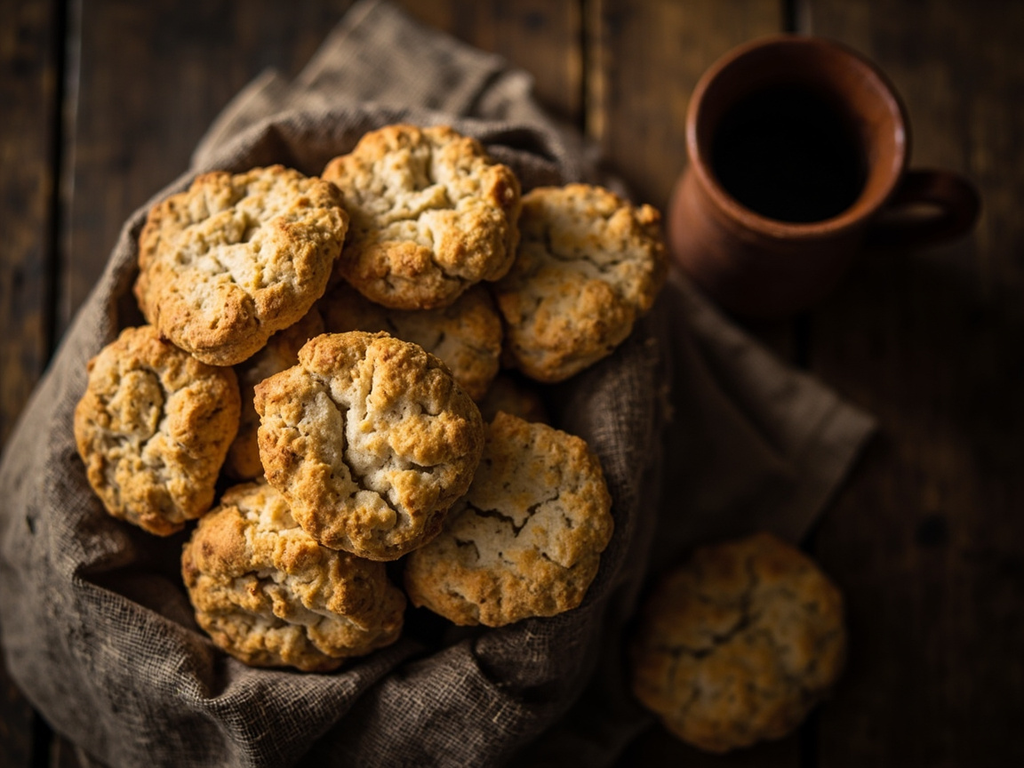
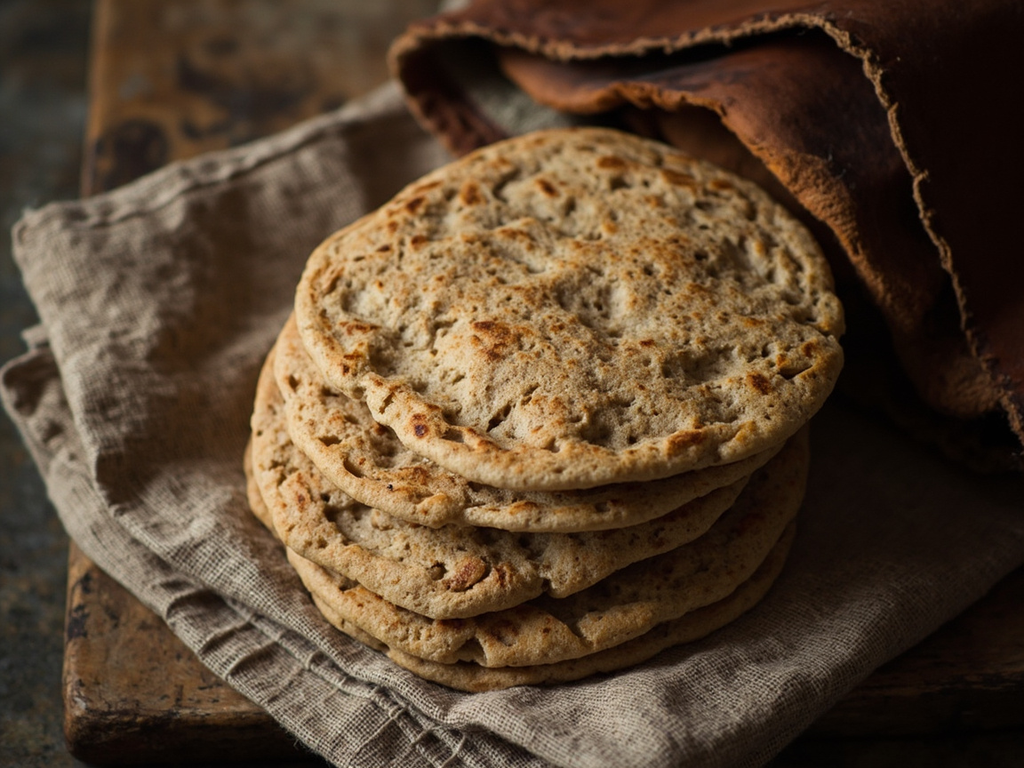
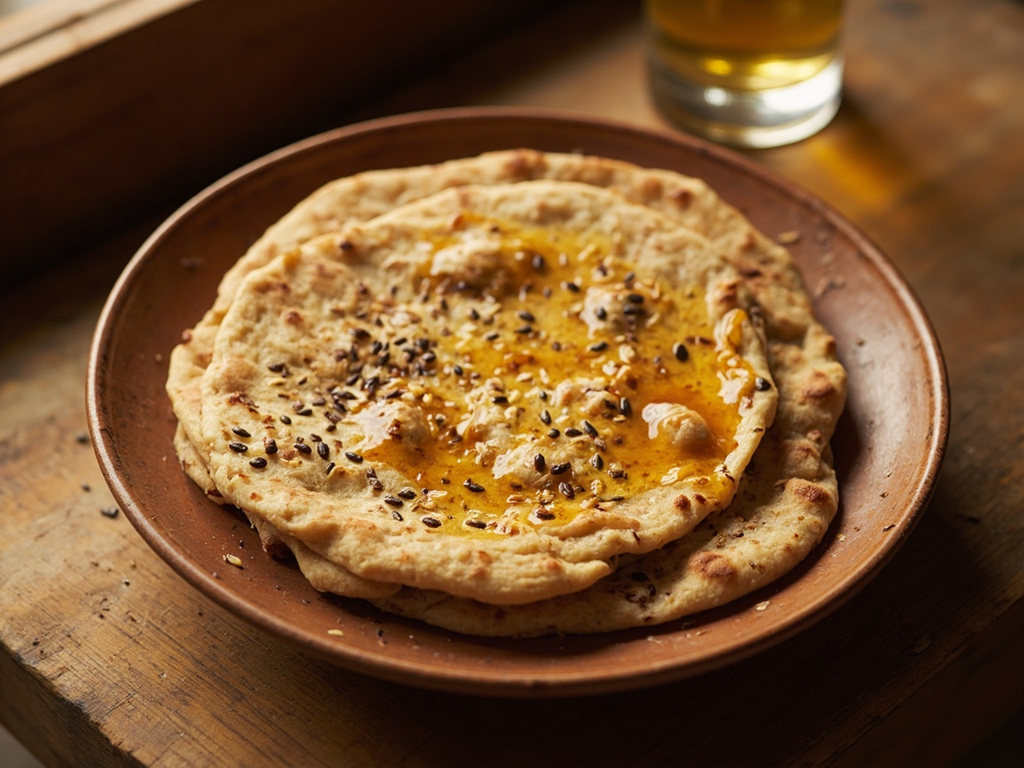
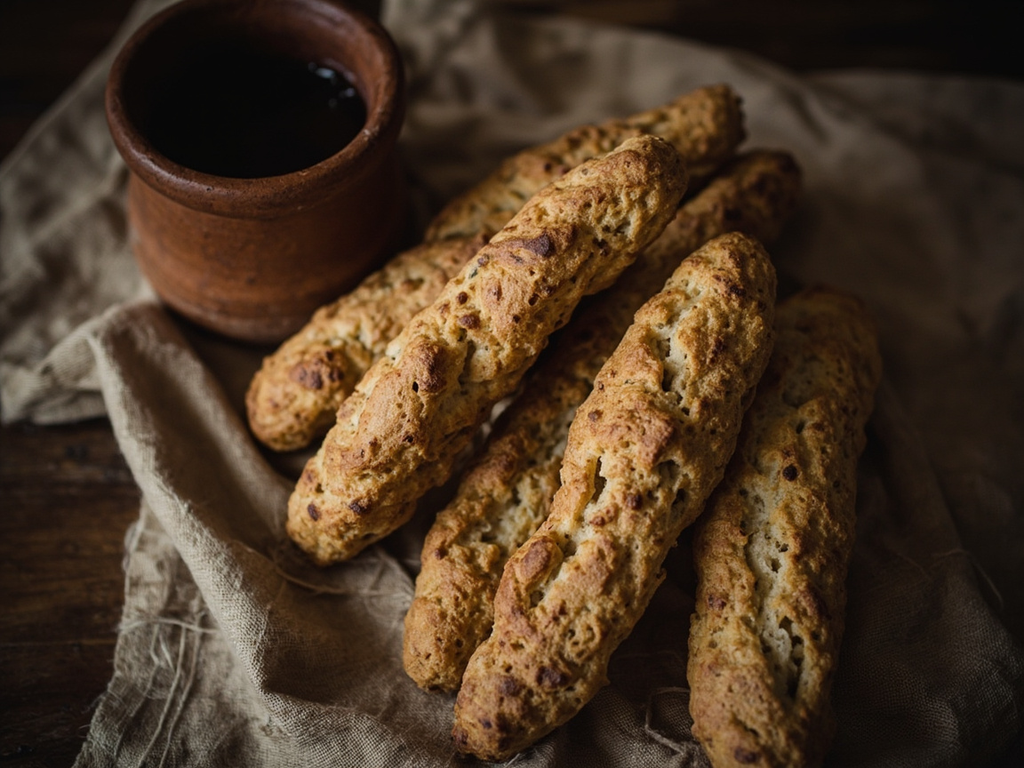
A barley flatbread baked, sliced, and dried a second time in the oven until rock-hard. It was softened with water or diluted wine before eating. The imperishable ration of the Byzantine legionary.
You see this biscuit hard as a pebble? Do not despise it: it is this that restored Africa and Rome to the Empire. My soldiers, under Belisarius, filled their satchels with it; it is baked, sliced, and baked again until all moisture is gone, and then it keeps from one season to the next without rotting. In camp, it is dipped in water or diluted wine, and it becomes tender again. An empire, understand, feeds before it conquers.
- •Barley flour (and a little wheat) — as needed (base)
- •Sourdough starter — a piece (fermentation)
- •Salt — a pinch (flavor and preservation)
- •Water — as needed (kneading)
Paximadion — Twice-Baked Barley Bread of the Soldier
A barley flatbread baked, sliced, and dried a second time in the oven until rock-hard. It was softened with water or diluted wine before eating. The imperishable ration of the Byzantine legionary.
Why this dish? Justinian's armies—those of Belisarius and Narses—reconquered Africa, Italy, and part of Spain. These long campaigns were sustained by *paximadion*, the twice-baked barley biscuit that kept for months in soldiers' packs. It is the bread that carried the reconquest of the Empire.
You see this biscuit hard as a pebble? Do not despise it: it is this that restored Africa and Rome to the Empire. My soldiers, under Belisarius, filled their satchels with it; it is baked, sliced, and baked again until all moisture is gone, and then it keeps from one season to the next without rotting. In camp, it is dipped in water or diluted wine, and it becomes tender again. An empire, understand, feeds before it conquers.
Ingredients (period version)
- Barley flour (and a little wheat) — as needed (base)
- Sourdough starter — a piece (fermentation)
- Salt — a pinch (flavor and preservation)
- Water — as needed (kneading)
Ingredients
- Barley flour — 300 g (base)
- Whole wheat flour — 150 g (structure)
- Active sourdough starter (or 5 g dry yeast) — 100 g (fermentation)
- Salt — 1.5 tsp (flavor and preservation)
- Warm water — about 280 ml (kneading)
Method
- Knead the flours, starter, salt, and water into a firm dough; let rise for 2–3 hours.
- Shape into flat rounds about 2 cm thick and bake at 200°C for 25 minutes.
- Let cool slightly, then slice each round in half horizontally.
- Return the slices to the oven at 110°C for 1.5–2 hours, until completely dry and hard.
- Store in a dry place; to eat, briefly dip in water, broth, or wine diluted with water.
How it was made : *Paximadion* (which gave modern Greek *paximadi*) is the quintessential Byzantine military ration, inherited from the Roman *buccellatum*. The double baking removed moisture, making it imperishable for long campaigns—exactly those that reconstituted the Empire under Justinian.
The contemporary twist : As an era bruschetta: rubbed with garlic, drizzled with olive oil, and topped with fresh cheese and herbs.
Sources : Andrew Dalby, *Flavours of Byzantium* (Prospect Books, 2003) · Procopius of Caesarea, *History of the Wars* (army provisions)
Justinian · Charactorium