 flip
flipNisholda with Almonds and Rose Water
Nisholda with Almonds and Rose Water
Why this dish? Khoja Ahrar funded countless pious foundations (waqf) and distributed food to the poor. Nisholda — a whipped meringue made from egg whites and sugar perfumed with rose water — was traditionally prepared for religious festivals and acts of charity. It accompanied distributions during Nowruz and Sufi festivals at Samarkand mausoleums.
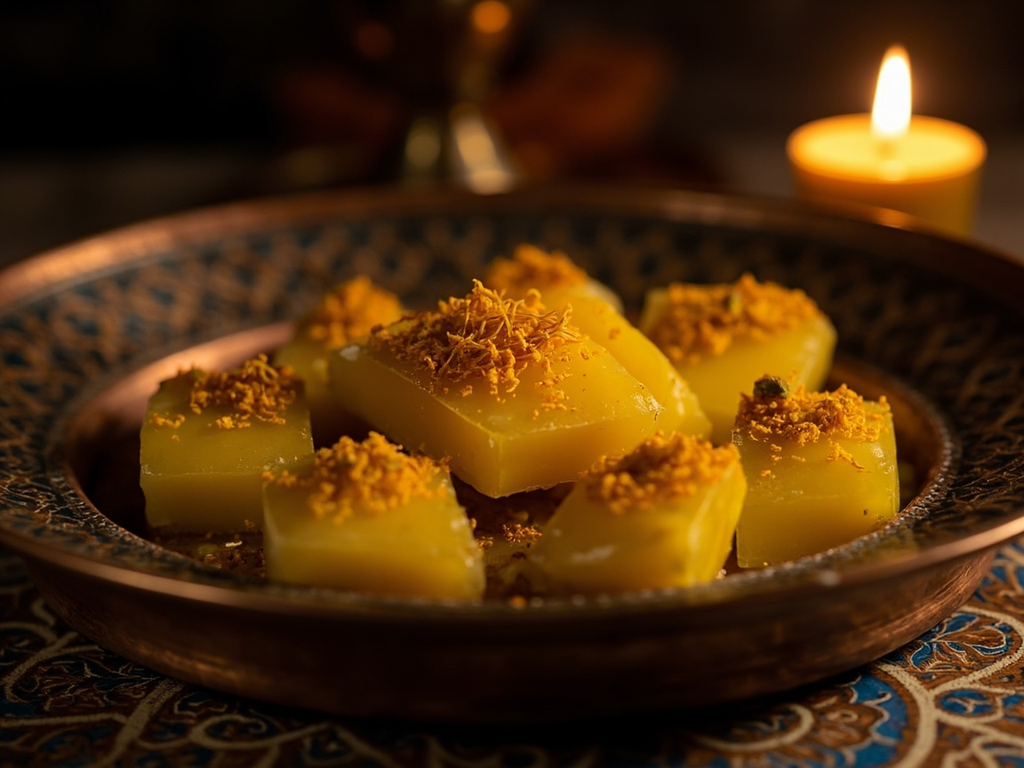
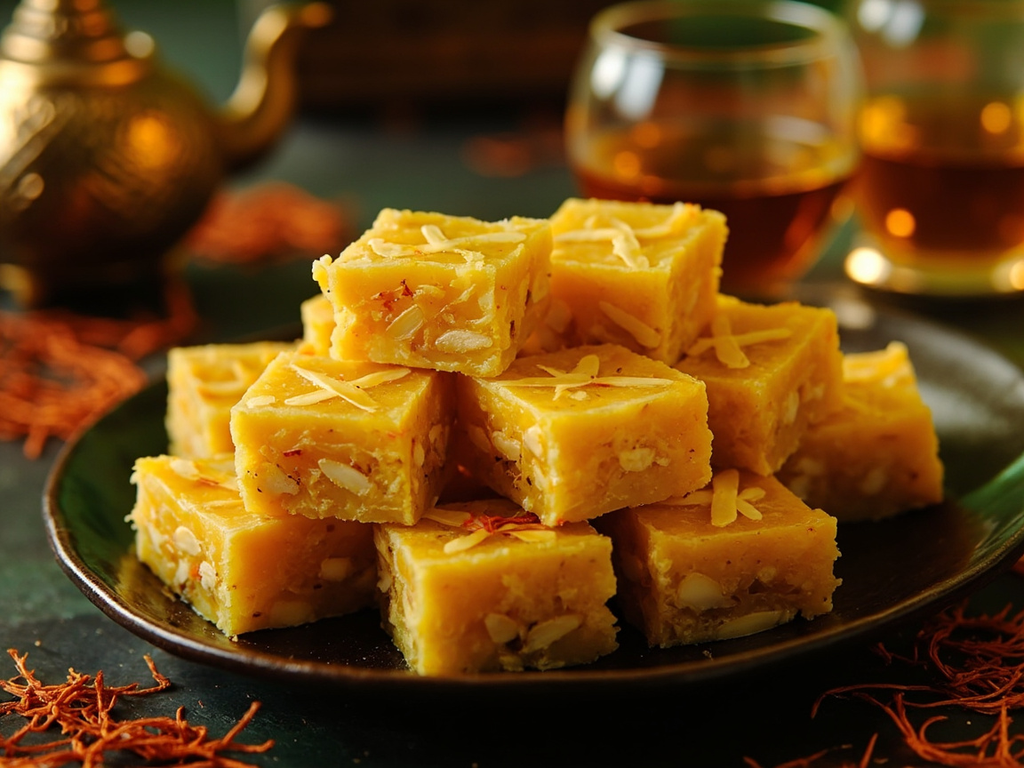
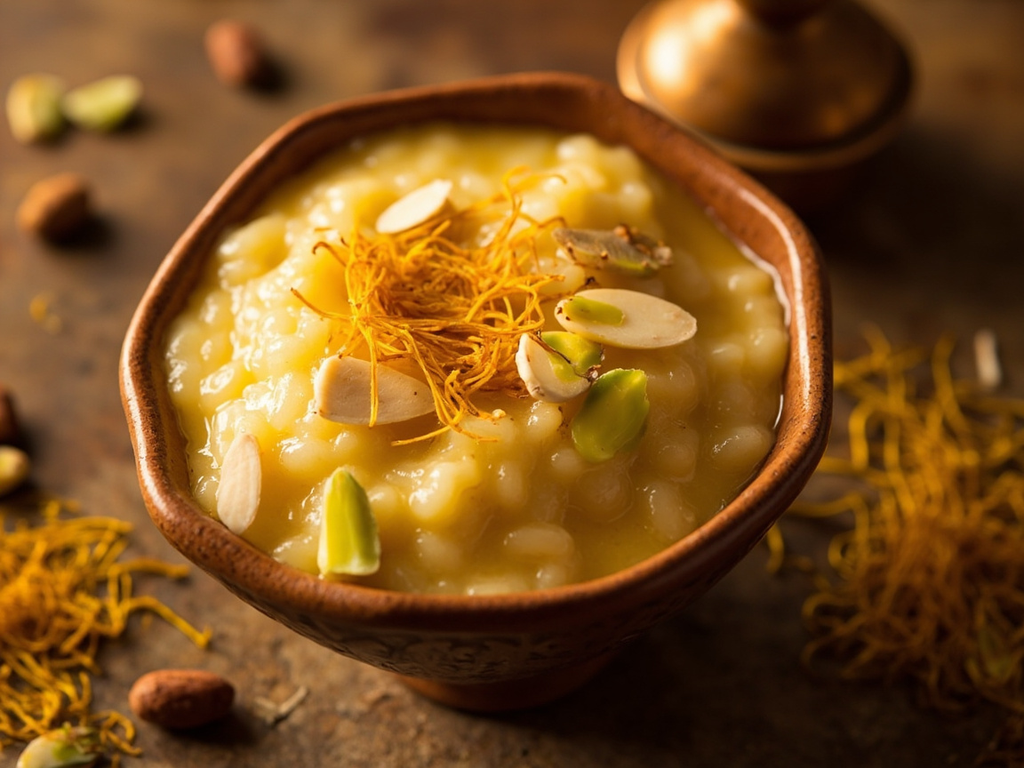
An airy Central Asian sweet: egg whites whipped long with a boiling sugar syrup and perfumed with rose water, topped with slivered almonds. Immaculately white, this melt-in-the-mouth confection was served at festivals and pious gatherings.
When Nowruz comes or a sultan asks me to intercede for peace between princes, I have this sweet prepared, white as the light of dhikr. My servants beat the egg whites with a boiling syrup until the mass becomes light as the soul of the murīd who has abandoned his ego. The rose water comes from Herat, the almonds from our gardens in Chach. It is distributed at the gates of the khanqah, and each — rich and beggar alike — receives an equal portion, for the sweetness of God knows no measure.
- •Egg whites — four or five (Meringue base)
- •Sugar — a good measure (Syrup)
- •Rose water — a few spoonfuls (Flavoring)
- •Licorice root (shirinbiya) — a piece (Natural foaming agent)
- •Almonds — a handful (Garnish)
Nisholda with Almonds and Rose Water
An airy Central Asian sweet: egg whites whipped long with a boiling sugar syrup and perfumed with rose water, topped with slivered almonds. Immaculately white, this melt-in-the-mouth confection was served at festivals and pious gatherings.
Why this dish? Khoja Ahrar funded countless pious foundations (waqf) and distributed food to the poor. Nisholda — a whipped meringue made from egg whites and sugar perfumed with rose water — was traditionally prepared for religious festivals and acts of charity. It accompanied distributions during Nowruz and Sufi festivals at Samarkand mausoleums.
When Nowruz comes or a sultan asks me to intercede for peace between princes, I have this sweet prepared, white as the light of dhikr. My servants beat the egg whites with a boiling syrup until the mass becomes light as the soul of the murīd who has abandoned his ego. The rose water comes from Herat, the almonds from our gardens in Chach. It is distributed at the gates of the khanqah, and each — rich and beggar alike — receives an equal portion, for the sweetness of God knows no measure.
Ingredients (period version)
- Egg whites — four or five (Meringue base)
- Sugar — a good measure (Syrup)
- Rose water — a few spoonfuls (Flavoring)
- Licorice root (shirinbiya) — a piece (Natural foaming agent)
- Almonds — a handful (Garnish)
Ingredients
- Egg whites — 4 (about 140 g) (Meringue base)
- Granulated sugar — 200 g (Syrup)
- Water — 80 ml (Syrup)
- Rose water — 2 tablespoons (Flavoring)
- Lemon juice — 1 teaspoon (Stabilizer (replaces licorice))
- Slivered almonds — 40 g (Garnish)
- Chopped pistachios — 20 g (Decoration)
Method
- Lightly toast the slivered almonds in a dry pan. Set aside.
- Make a syrup: in a saucepan, bring the sugar and water to a boil. Cook to the soft-ball stage (about 118°C).
- Meanwhile, whip the egg whites with the lemon juice to stiff peaks.
- Pour the boiling syrup in a thin stream over the whites while whipping at high speed for 8 to 10 minutes, until a white, glossy, very firm mass forms.
- Fold in the rose water and whip for another minute.
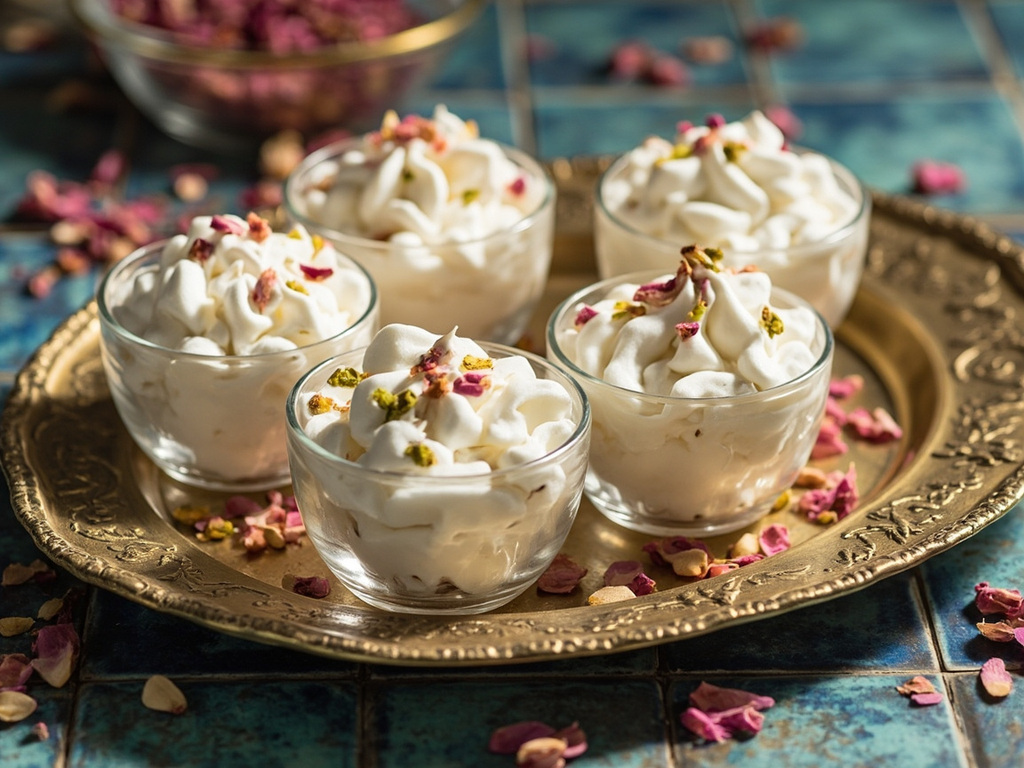
- Scoop into domes or quenelles in small cups. Sprinkle with toasted almonds and chopped pistachios. Serve immediately or refrigerate for 1 hour.
How it was made : Nisholda is an ancient Central Asian confection, traditionally stabilized with a decoction of licorice root (shirinbiya) rather than an acid. It was prepared for Nowruz (Persian New Year) and for food distributions (langar) organized by Sufi masters and waqf foundations. Sugar, imported or locally produced from cane in irrigated areas, was a luxury item that Khoja Ahrar could afford.
The contemporary twist : Present the nisholda in small glass cups to highlight its whiteness, with dried edible rose petals as decoration.
Sources : Glenn Randall Mack and Asele Surina, Food Culture in Russia and Central Asia, Greenwood Press, 2005
Khoja Ahrar · Charactorium