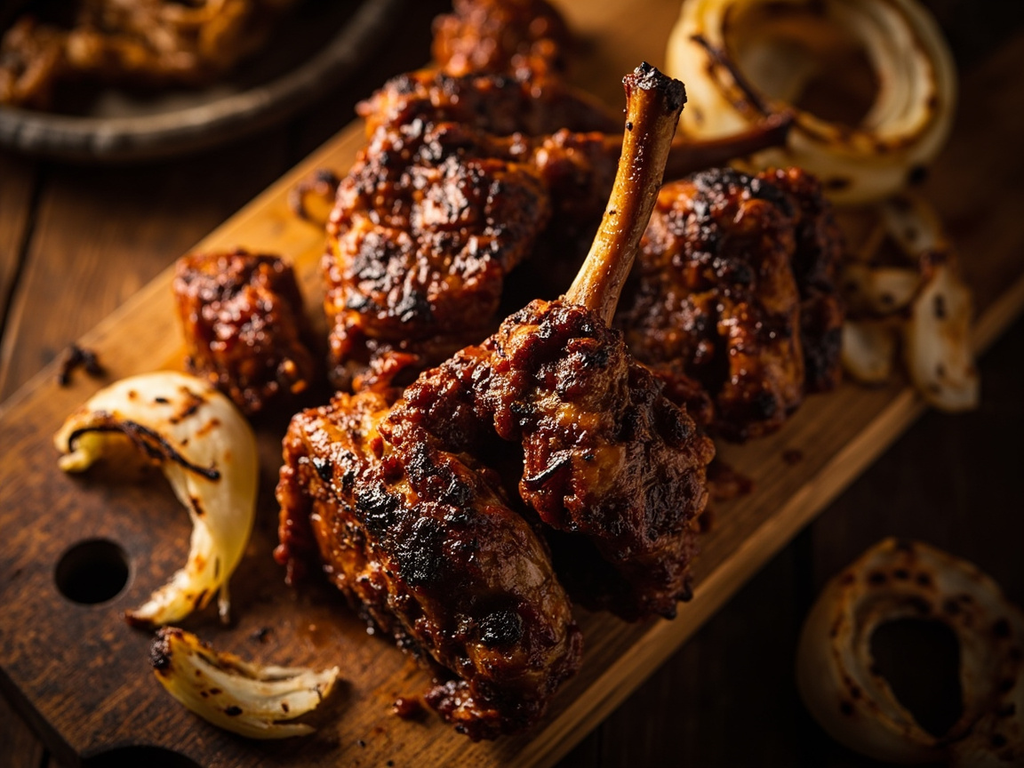
Samarkand Osh Palov
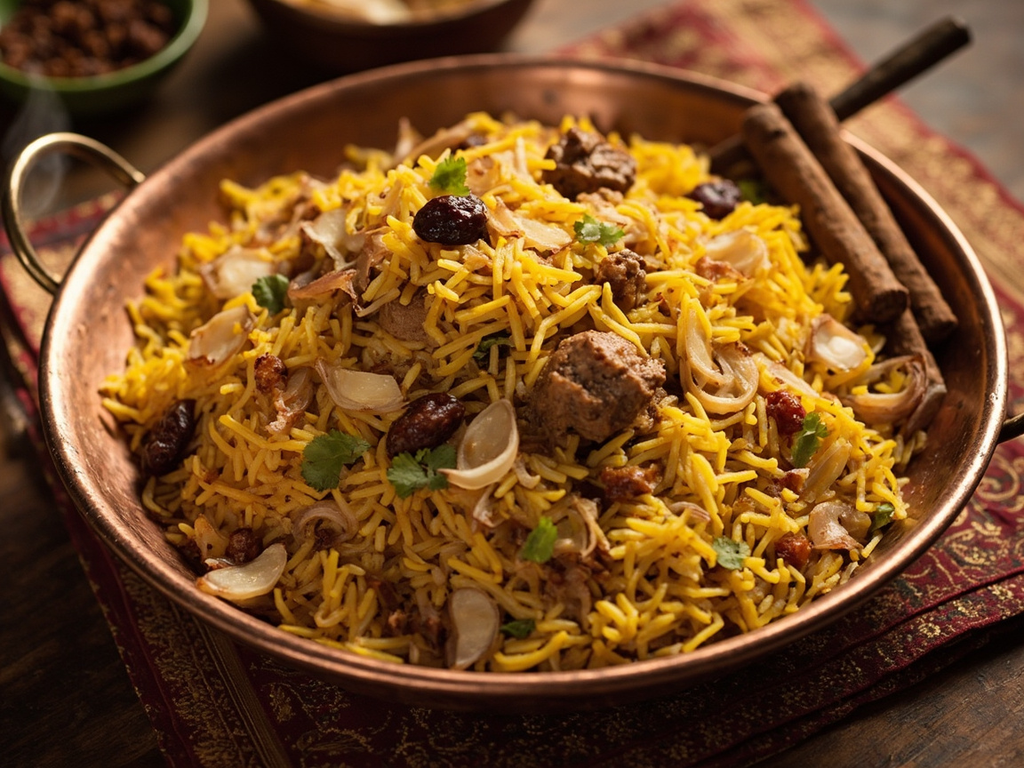
The king of Central Asian dishes: long-grain rice steamed in the fat of a fat-tailed sheep, with yellow carrots cut into julienne, chickpeas, raisins, and a generous handful of zira. Cooked in a kazan (cast-iron cauldron) using a precise layering technique where the rice absorbs the juices without being stirred.
The king of Central Asian dishes: long-grain rice steamed in the fat of a fat-tailed sheep, with yellow carrots cut into julienne, chickpeas, raisins, and a generous handful of zira. Cooked in a kazan (cast-iron cauldron) using a precise layering technique where the rice absorbs the juices without being stirred.
See this kazan, friend. The mutton fat crackles, and now I throw in the zira — do you smell how the fragrance rises to the Most High? At my table in Samarkand, this palov feeds both Sultan Abu Sa'id and the lowliest water-carrier, for before God and before rice, there is no rank. My steward knows that it takes three parts carrots to one part rice, and that one never — never — stirs once the rice is laid. Patience is a station on the path, in prayer as in cooking.
- •Long-grain rice from Ferghana — a good measure (Base of the dish)
- •Fat-tailed sheep (kurdiuk) — a quarter of an animal (Meat and cooking fat)
- •Yellow carrots — as much as the rice by volume (Sweetness and color)
- •Soaked chickpeas — two handfuls (Nourishing element)
- •Onions — three or four large (Aromatic base)
- •Zira (Samarkand cumin) — a handful (Signature spice)
- •Raisins — a handful (Sweetness)
- •Salt — to taste (Seasoning)
Samarkand Osh Palov
The king of Central Asian dishes: long-grain rice steamed in the fat of a fat-tailed sheep, with yellow carrots cut into julienne, chickpeas, raisins, and a generous handful of zira. Cooked in a kazan (cast-iron cauldron) using a precise layering technique where the rice absorbs the juices without being stirred.
Why this dish? Khoja Ahrar was renowned for his redistribution banquets where he fed hundreds of the poor. Samarkand palov, cooked in huge kazans, was the dish of these gatherings. As the largest landowner in the region, he owned the lands that produced the rice, carrots, and cumin for the pilaf.
See this kazan, friend. The mutton fat crackles, and now I throw in the zira — do you smell how the fragrance rises to the Most High? At my table in Samarkand, this palov feeds both Sultan Abu Sa'id and the lowliest water-carrier, for before God and before rice, there is no rank. My steward knows that it takes three parts carrots to one part rice, and that one never — never — stirs once the rice is laid. Patience is a station on the path, in prayer as in cooking.
Ingredients (period version)
- Long-grain rice from Ferghana — a good measure (Base of the dish)
- Fat-tailed sheep (kurdiuk) — a quarter of an animal (Meat and cooking fat)
- Yellow carrots — as much as the rice by volume (Sweetness and color)
- Soaked chickpeas — two handfuls (Nourishing element)
- Onions — three or four large (Aromatic base)
- Zira (Samarkand cumin) — a handful (Signature spice)
- Raisins — a handful (Sweetness)
- Salt — to taste (Seasoning)
Ingredients
- Basmati or long-grain rice — 500 g (Base of the dish)
- Lamb shoulder on the bone — 700 g (Meat)
- Sheep tail fat or vegetable oil — 100 ml (Cooking fat)
- Carrots (preferably yellow) — 500 g (Sweetness and color)
- Dried chickpeas (soaked overnight) — 100 g (Nourishing element)
- Yellow onions — 3 medium (Aromatic base)
- Cumin seeds — 2 tablespoons (Signature spice)
- Golden raisins — 60 g (Sweetness)
- Salt — 2 teaspoons (Seasoning)
- Hot water — about 800 ml (Rice cooking liquid)
Method
- Rinse the rice in plenty of water until the water runs clear, then soak for 30 minutes. Drain.
- Heat the fat in a large cast-iron pot (or deep wok) over high heat until it just begins to smoke.
- Brown the lamb pieces on all sides, then remove and set aside.
- In the same fat, fry the sliced onions in rings until well browned.
- Return the meat, add the carrots cut into 5 cm sticks, drained chickpeas, and cumin. Salt. Sauté for 5 minutes.
- Add hot water to cover and simmer covered for 40 minutes (this is the zirvak).
- Spread the drained rice in an even layer over the zirvak without stirring. Scatter raisins on top.
- Pour hot water to 2 cm above the rice. Increase heat until the water is absorbed on the surface.
- Reduce heat to minimum, cover tightly, and steam for 25 minutes without opening or stirring.
- Remove from heat, let rest covered for 10 minutes. Gently fluff the rice with a spoon, mound on a large platter with the meat on top.
How it was made : Palov was already the prestige dish of Samarkand in the 15th century, cooked in cast-iron kazans over wood fires. Sheep tail fat (kurdiuk) was the main cooking fat. Khoja Ahrar's landholdings in the Zeravshan Valley directly produced the rice and yellow carrots used. Great Sufi banquets (langar) could feed several hundred guests.
The contemporary twist : Mound the palov on a turquoise ceramic platter reminiscent of Timurid faience, with a whole roasted head of garlic on top like a jewel.
Sources : Charles Perry, "The Central Asian Pilaw", in Medieval Arab Cookery, Prospect Books, 2001 · Paul D. Buell and Eugene N. Anderson, A Soup for the Qan: Chinese Dietary Medicine of the Mongol Era, Brill, 2010
Khoja Ahrar · Charactorium