 flip
flipOghuz Şorpa
Oghuz Şorpa
Why this dish? Şorpa (mutton broth) is the daily meal of the Oghuz yurt. In the Book of Dede Korkut, domestic scenes describe the mother or wife boiling meat in the cauldron. It is the dish that Dede Korkut, the old sage, would have eaten every evening in the hospitable yurt that welcomes him — a warm, comforting bowl after a day of tales on the kopuz.
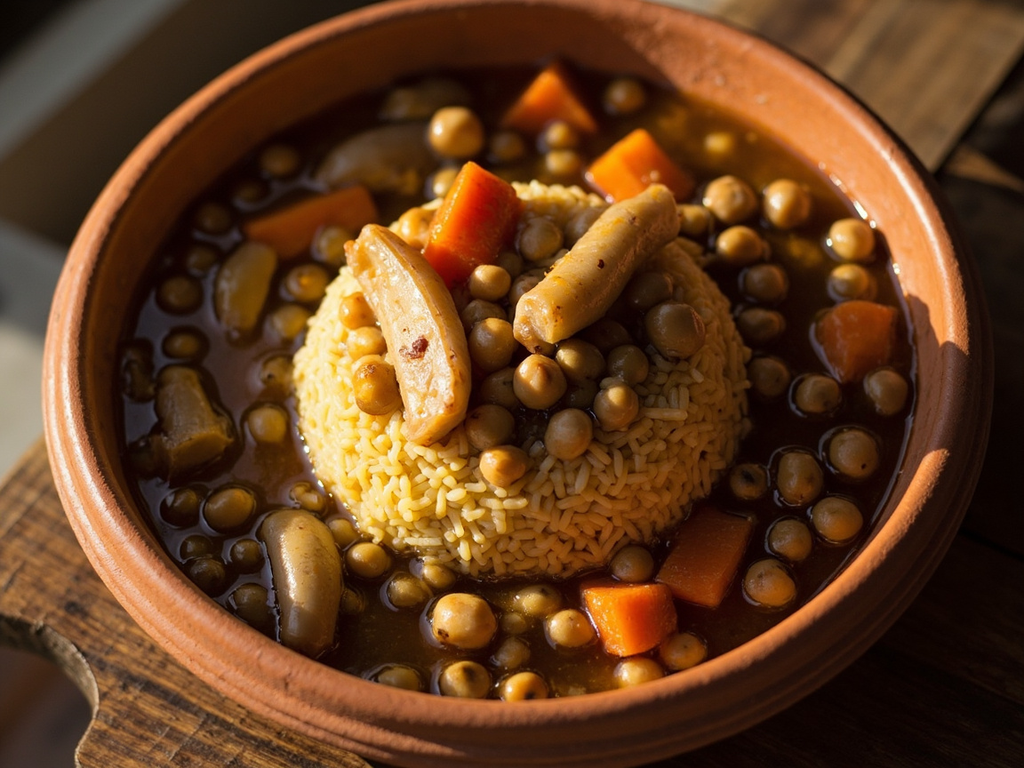
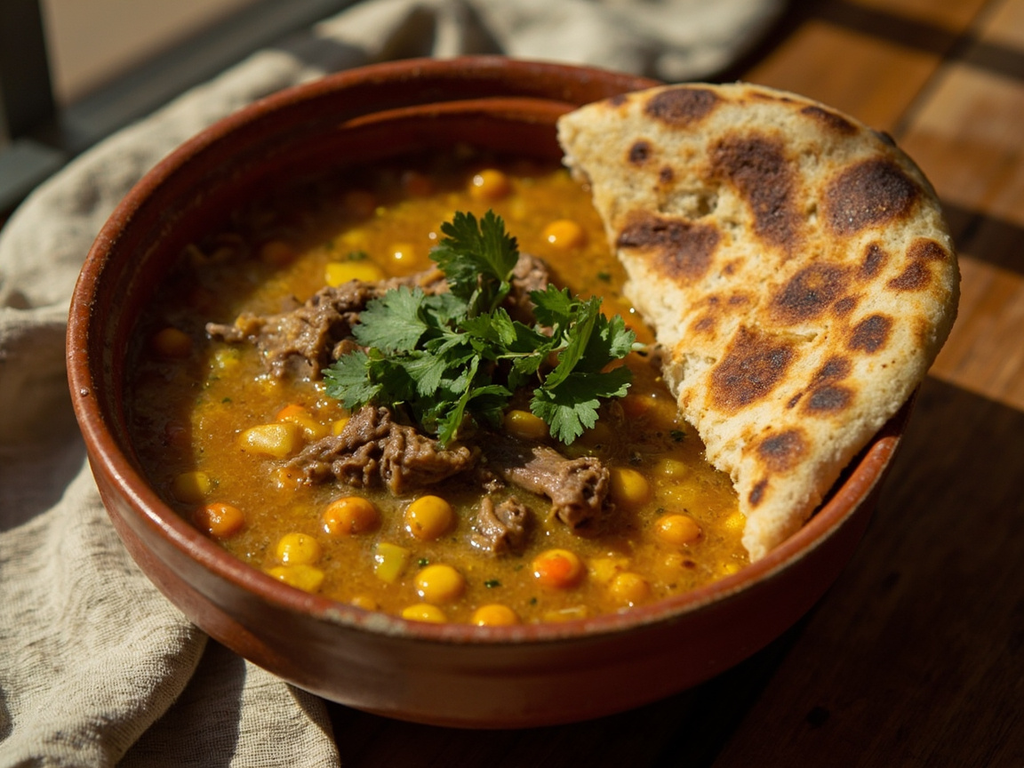
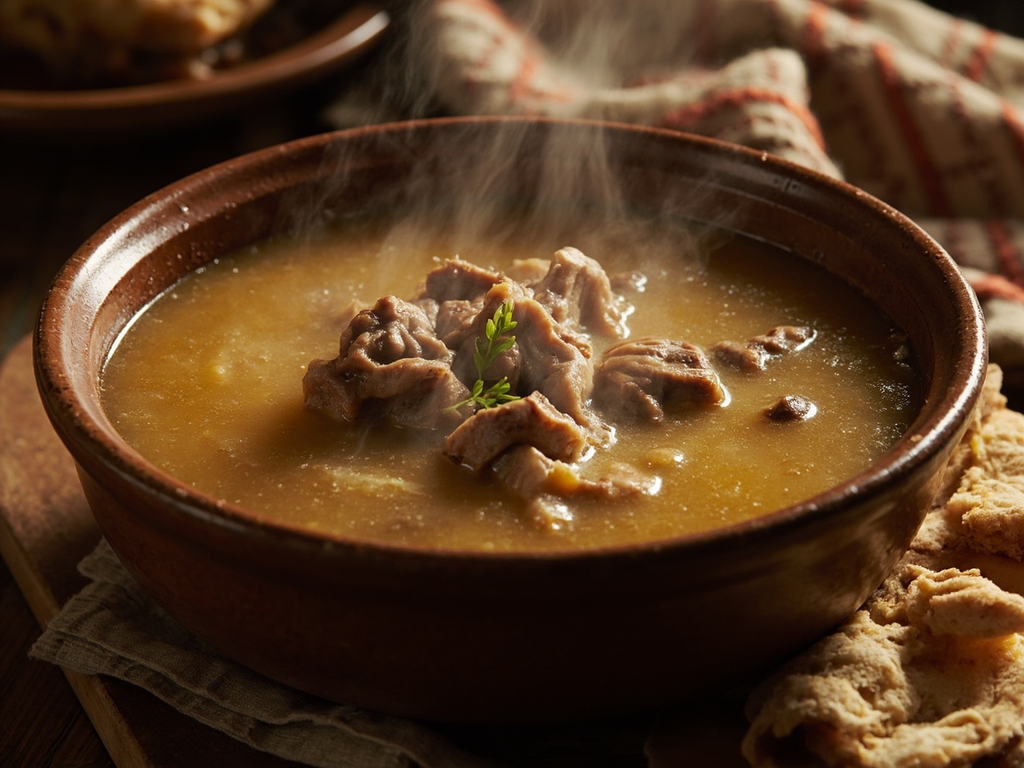
Clear, fatty mutton broth long-simmered with bones, enriched with onions and a few wild steppe herbs. Flatbread is crumbled into it. A humble, nourishing, everyday dish — the stockpot staple of all nomadic Turkish life.
The steppe knows no hunger for him who has a cauldron and a sheep. In the evening, when the herds have returned and the tezek fire glows red, my daughter-in-law puts the bones and shoulder in the kazan with water from the well. She throws in a handful of wild onions and a few stalks of those herbs that grow by the Seyhun. Then we wait, and I sing, for şorpa is made slowly like a good tale. When the broth is clear and golden and the meat falls from the bone, we break bread into it and each eats his fill. It is the everyday meal of the Oghuz, and no more is needed.
- •Mutton bones and shoulder — a good piece with bone (broth base)
- •Spring water — to cover generously (liquid)
- •Wild onions — a few (aromatic)
- •Steppe herbs (wild thyme, wild coriander) — a handful (flavor)
- •Rock salt — to taste (seasoning)
- •Flatbread (yupka) — for dipping (accompaniment)
Oghuz Şorpa
Clear, fatty mutton broth long-simmered with bones, enriched with onions and a few wild steppe herbs. Flatbread is crumbled into it. A humble, nourishing, everyday dish — the stockpot staple of all nomadic Turkish life.
Why this dish? Şorpa (mutton broth) is the daily meal of the Oghuz yurt. In the Book of Dede Korkut, domestic scenes describe the mother or wife boiling meat in the cauldron. It is the dish that Dede Korkut, the old sage, would have eaten every evening in the hospitable yurt that welcomes him — a warm, comforting bowl after a day of tales on the kopuz.
The steppe knows no hunger for him who has a cauldron and a sheep. In the evening, when the herds have returned and the tezek fire glows red, my daughter-in-law puts the bones and shoulder in the kazan with water from the well. She throws in a handful of wild onions and a few stalks of those herbs that grow by the Seyhun. Then we wait, and I sing, for şorpa is made slowly like a good tale. When the broth is clear and golden and the meat falls from the bone, we break bread into it and each eats his fill. It is the everyday meal of the Oghuz, and no more is needed.
Ingredients (period version)
- Mutton bones and shoulder — a good piece with bone (broth base)
- Spring water — to cover generously (liquid)
- Wild onions — a few (aromatic)
- Steppe herbs (wild thyme, wild coriander) — a handful (flavor)
- Rock salt — to taste (seasoning)
- Flatbread (yupka) — for dipping (accompaniment)
Ingredients
- Lamb neck or shoulder on the bone — 600 g (broth base)
- Lamb or beef marrow bones — 2-3 pieces (richness of broth)
- Cold water — 2 liters (liquid)
- Yellow onion — 2 (aromatic)
- Carrots (optional, present in Central Asia at the time) — 2 (vegetable)
- Fresh thyme or wild thyme — 3 sprigs (herb)
- Coriander seeds — 1 tsp (mild spice)
- Salt — to taste (seasoning)
- Flatbread (lavash or naan) — for serving (accompaniment)
Method
- Place the meat and bones in a large pot. Cover with cold water. Bring to a boil over high heat.
- Skim off the foam that rises to the surface during the first 10 minutes.
- Add the onions cut into quarters, carrots in large chunks, coriander seeds, and thyme. Season lightly with salt.
- Reduce heat to low and simmer, covered, for 2 to 2.5 hours, until the meat falls off the bone.
- Remove meat and bones. Shred the meat, cut into pieces, and return to the broth. Discard bones.
- Adjust seasoning. The broth should be clear, golden, with beads of fat on the surface — do not skim, that is the richness.
- Serve piping hot in large bowls. Crumble flatbread into the broth. Eat the meat with your fingers.
How it was made : Şorpa (chorba, shorpo) is the most universal and ancient dish of steppe cuisine. Every nomadic people with a cauldron and a herd makes this broth. Carrots (native to Central Asia) may have already appeared in wild form. Flatbread (yupka or çörek) baked on an iron plate or directly in the ashes always accompanies the soup.
The contemporary twist : Strain the broth and serve in a warm shot glass with a drizzle of fresh herb oil and a flatbread chip — an elegant steppe consommé.
Sources : Le Livre de Dede Korkut, trans. Louis Bazin & Altan Gokalp, Gallimard, 1998 · Buell, Paul D. & Anderson, Eugene N., A Soup for the Qan, Brill, 2010 · Mahmud al-Kashgari, Dîvânu Lugâti't-Türk, 11th century
Dede Korkut · Charactorium