 flip
flipIka Maroke — sea-salt dried fish
Ika Maroke — sea-salt dried fish
Why this dish? Kupe and his crew had to carry provisions for weeks of open-ocean crossing. Dried fish, salted with sea salt and dried in the offshore wind, was the essential voyage protein: light, compact, resistant to tropical heat. Each *waka hourua* carried stores wrapped in leaves.
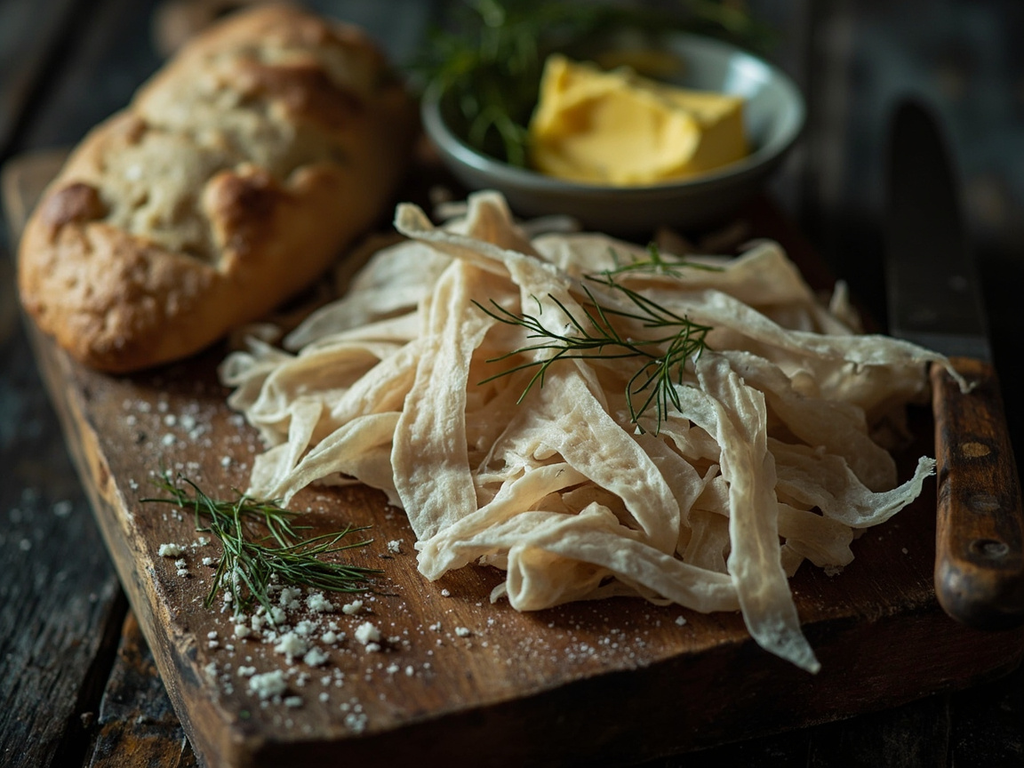
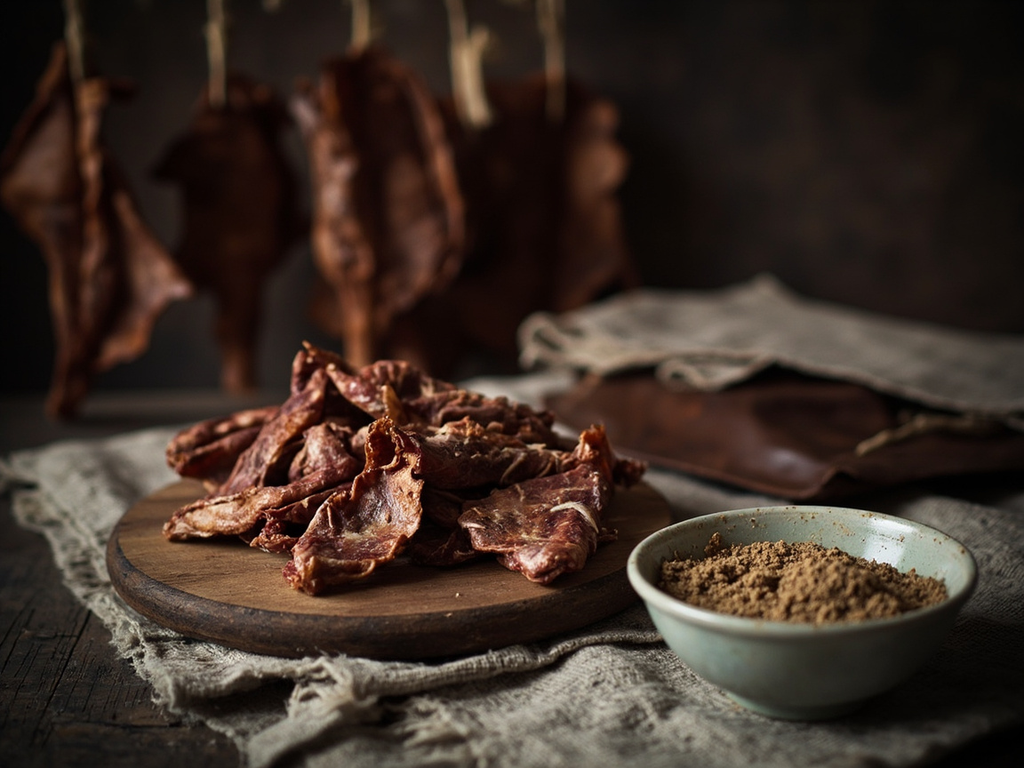
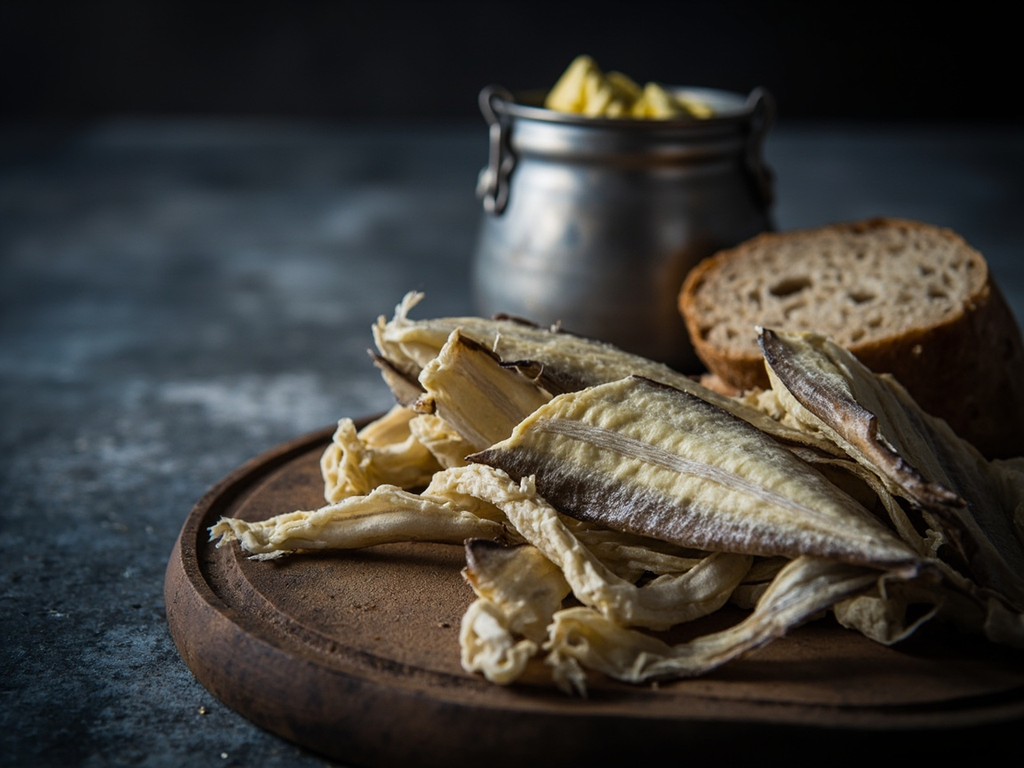
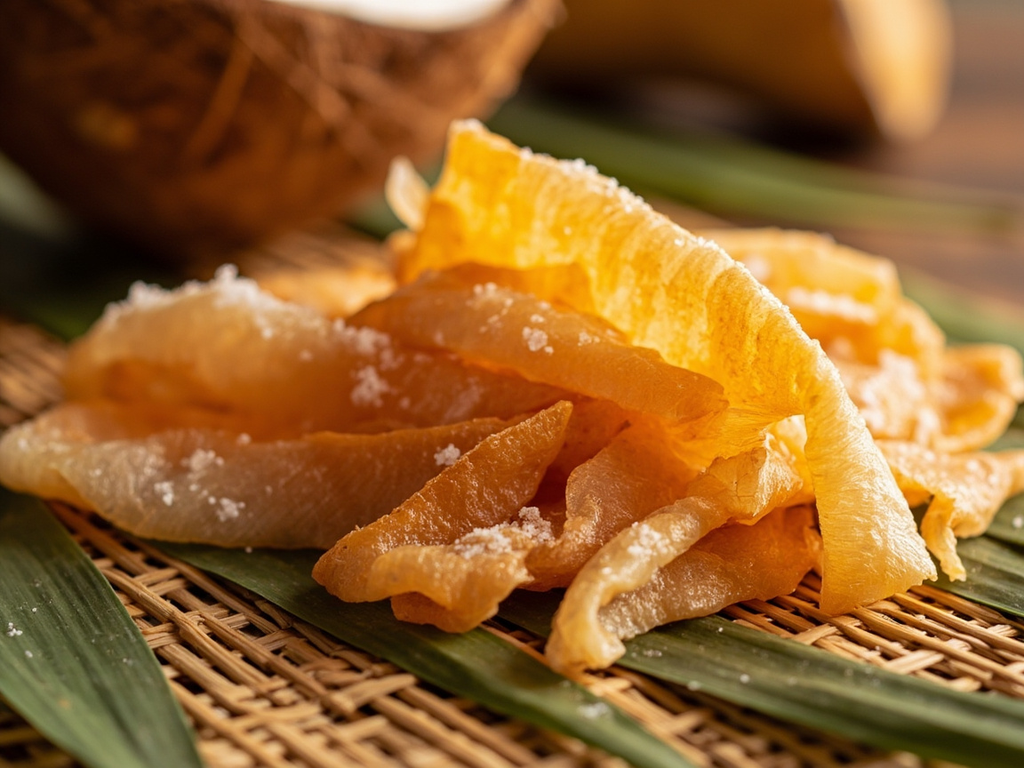
Fillets of firm-fleshed fish (tuna, bonito or snapper), rubbed with coarse sea salt, sun- and wind-dried for several days until the flesh is dense, translucent and intensely flavored. Eaten as is, rehydrated in coconut milk, or crumbled over taro.
Listen well, for this knowledge feeds those who cross Te Moana Nui. Before the departure from Hawaiki, the women split the fish into thin strips, rubbed each piece with the salt the sea gives us, then hung the flesh on poles facing the wind. Three suns, four suns — when the flesh becomes hard as the wood of the waka and golden as amber, then it is ready. You carry it in your voyage basket and it keeps you alive when Tangaroa refuses to give you fresh fish. This salt, this wind, this sun — these are the three guardians of the navigator.
- •Fresh firm-fleshed fish (bonito, tuna, snapper) — Several whole fish (Protein base)
- •Sea salt harvested from rock pools — Generous handfuls (Preservative and seasoning)
Ika Maroke — sea-salt dried fish
Fillets of firm-fleshed fish (tuna, bonito or snapper), rubbed with coarse sea salt, sun- and wind-dried for several days until the flesh is dense, translucent and intensely flavored. Eaten as is, rehydrated in coconut milk, or crumbled over taro.
Why this dish? Kupe and his crew had to carry provisions for weeks of open-ocean crossing. Dried fish, salted with sea salt and dried in the offshore wind, was the essential voyage protein: light, compact, resistant to tropical heat. Each *waka hourua* carried stores wrapped in leaves.
Listen well, for this knowledge feeds those who cross Te Moana Nui. Before the departure from Hawaiki, the women split the fish into thin strips, rubbed each piece with the salt the sea gives us, then hung the flesh on poles facing the wind. Three suns, four suns — when the flesh becomes hard as the wood of the waka and golden as amber, then it is ready. You carry it in your voyage basket and it keeps you alive when Tangaroa refuses to give you fresh fish. This salt, this wind, this sun — these are the three guardians of the navigator.
Ingredients (period version)
- Fresh firm-fleshed fish (bonito, tuna, snapper) — Several whole fish (Protein base)
- Sea salt harvested from rock pools — Generous handfuls (Preservative and seasoning)
Ingredients
- Fresh tuna fillets (or bonito, snapper) — 500 g (Protein base)
- Coarse sea salt — 100 g (Preservative)
Method
- Cut tuna fillets into strips 1.5 cm thick lengthwise.
- Rub each strip generously with coarse salt on all sides. Place on a rack over a dish and let drain in the refrigerator for 12 hours.
- Rinse strips briefly in cold water, pat dry.
- Arrange strips on a rack in a well-ventilated area (or use a dehydrator at 55°C). Dry for 24 to 48 hours until the flesh is firm and translucent.
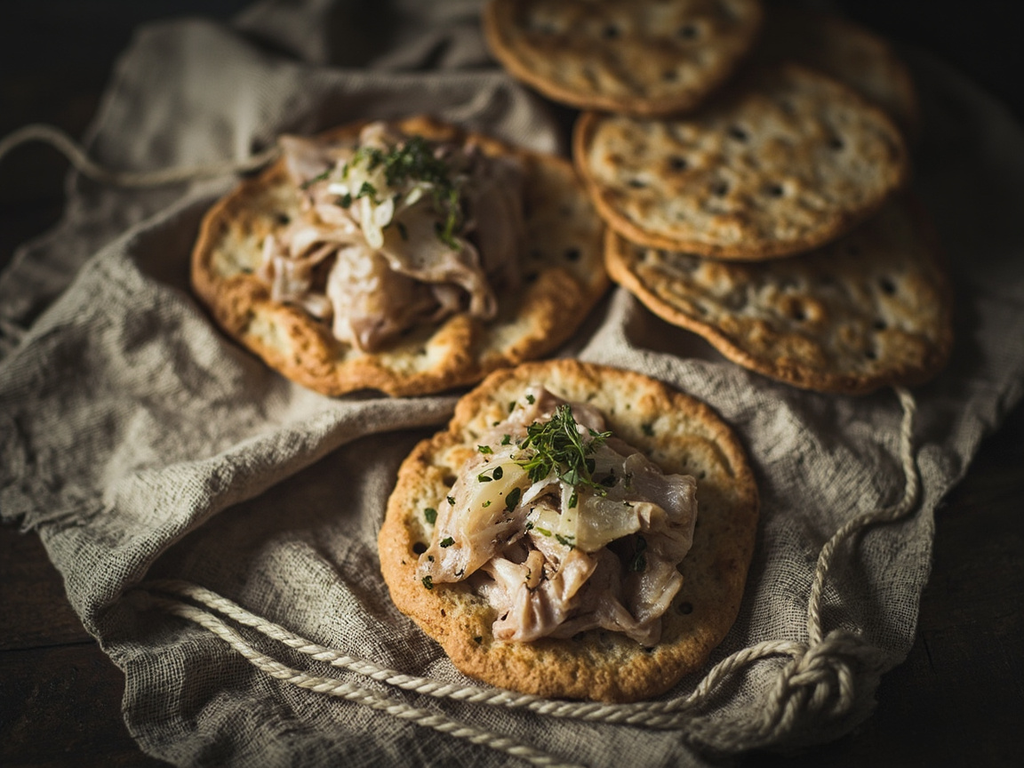
- Store in an airtight container. To serve: cut into thin slices and eat as is, or rehydrate for 30 minutes in coconut milk before serving over taro.
How it was made : Fish drying was practiced throughout Polynesia as a preservation technique for long sea voyages. Polynesian navigators carried dried fish, cooked tubers and coconut water as shipboard provisions. Sea salt, harvested from coastal rock crevices, was the only available preservative.
The contemporary twist : Serve the dried fish slices on a bed of mashed taro, drizzled with fresh coconut cream and sprinkled with fleur de sel — an elegant reminder of crossing provisions.
Sources : Best, Elsdon. “Food Products of Tuhoeland”. Transactions of the New Zealand Institute, vol. 35, 1902. · Hiroa, Te Rangi (Peter Buck). “The Coming of the Maori”. Whitcombe and Tombs, 1949.
Kupe · Charactorium