 flip
flipThiéboudiène (Ceebu jën) — Rice with Fish
Thiéboudiène (Ceebu jën) — Rice with Fish
Why this dish? National dish of Senegal and pride of Saint-Louis, thiéboudiène embodies the cuisine to which Senghor remained viscerally attached. Born in Joal, a Serer fishing village on the Atlantic coast, he grew up with the smell of fish and the rice of the family meal. Even as president and then academician in Paris, it was this taste of the sea of his childhood that he sought to rediscover.
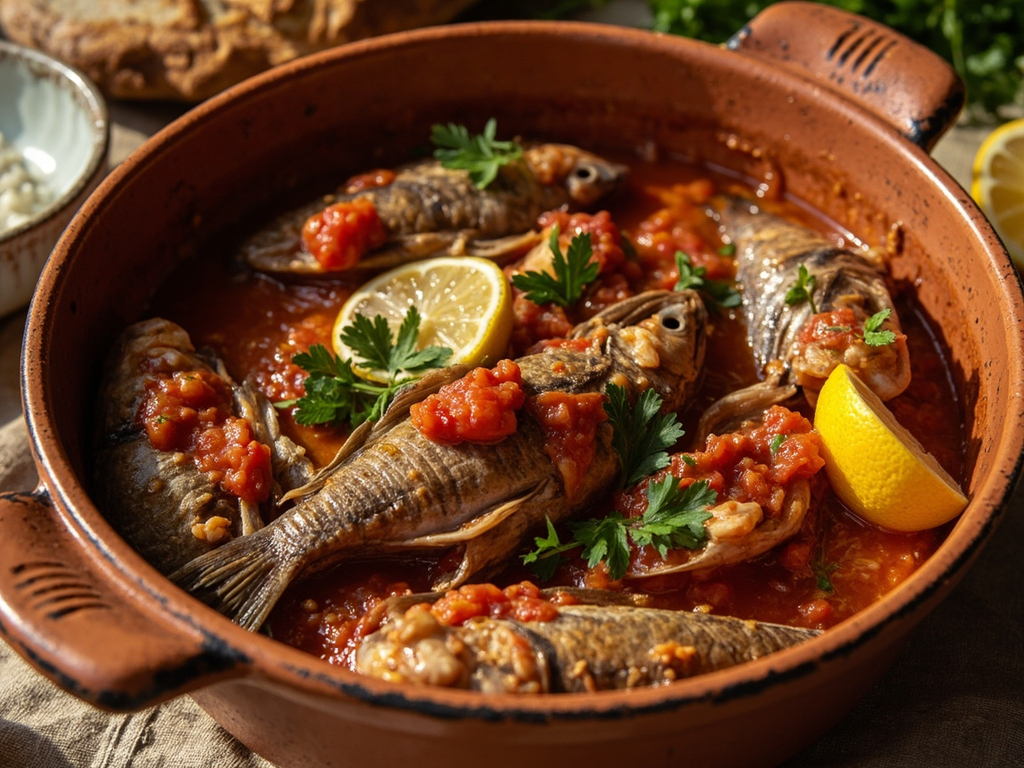
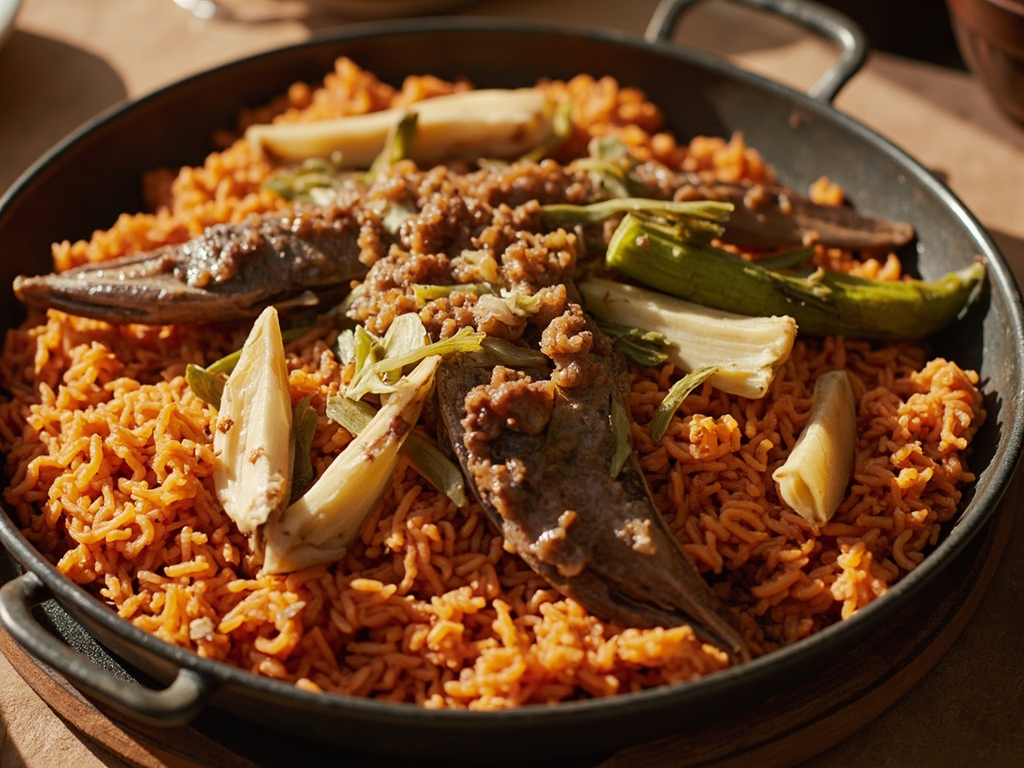
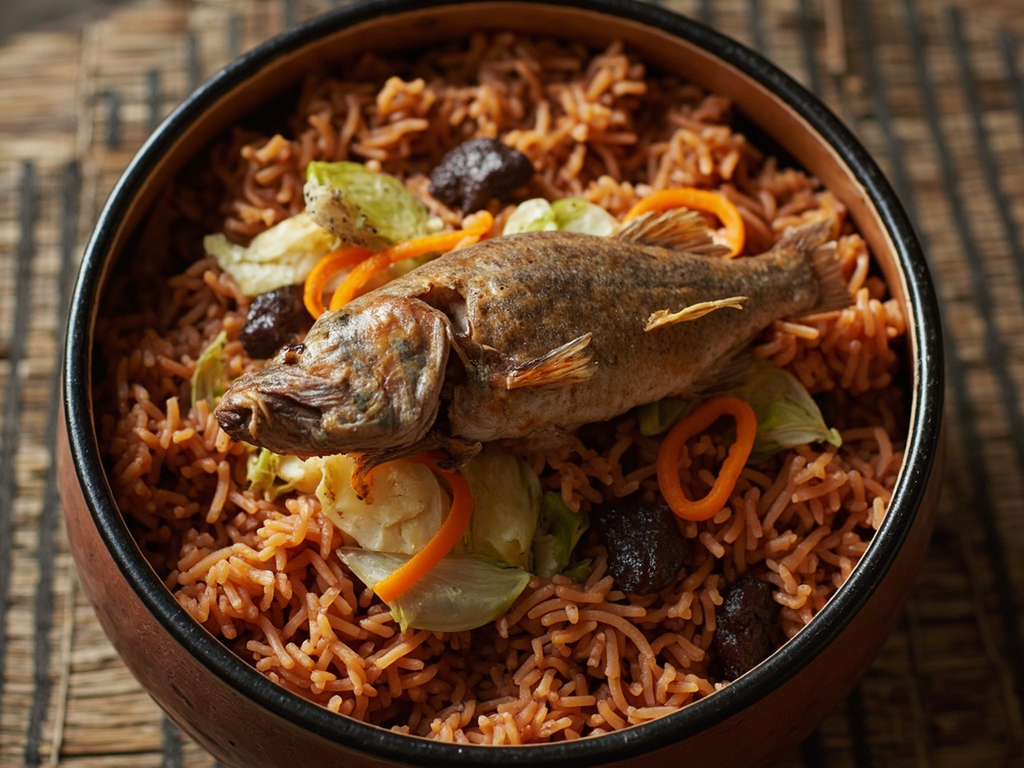
A browned rice simmered in a tomato and fish broth, topped with a beautiful fish stuffed with herbs and a medley of tender vegetables. All bound by tangy tamarind and the fermented depth of guedj. The showpiece dish par excellence, the one shared by several people around the large bowl.
Allow me to serve you, as I was served as a child in Joal, when the pirogues returned heavy with thiof. See this rice that has drunk all the fish broth, this color of red earth at dusk: that is the whole art, for the rice must absorb without falling apart. My mother would slip in a pinch of guedj, that fermented fish whose smell, I admit, frightens the foreigner but without which the dish has no soul. Eat with the right hand, directly from the bowl, and you will understand what my country calls téraanga, hospitality. It is my childhood kingdom that I offer you in this handful of rice.
- •Broken rice — a large bowl for the table (base of the dish)
- •Thiof (grouper) or other rock fish — a nice whole fish (main protein)
- •Tomato paste — by the ladle (sauce and color)
- •Guedj (dried fermented fish) — one piece (umami signature)
- •Yété (fermented shellfish) — a few pieces (saline depth)
- •Tamarind (daxar) — one soaked ball (acidity)
- •Bitter eggplant (jaxatu) — a handful (bitter vegetable)
- •Cassava, carrot, cabbage, sweet potato — according to the market (stewed vegetables)
- •Parsley, garlic, onion, chili — for the stuffing (rof) (aromatics)
- •Oil — generous (cooking)
Thiéboudiène (Ceebu jën) — Rice with Fish
A browned rice simmered in a tomato and fish broth, topped with a beautiful fish stuffed with herbs and a medley of tender vegetables. All bound by tangy tamarind and the fermented depth of guedj. The showpiece dish par excellence, the one shared by several people around the large bowl.
Why this dish? National dish of Senegal and pride of Saint-Louis, thiéboudiène embodies the cuisine to which Senghor remained viscerally attached. Born in Joal, a Serer fishing village on the Atlantic coast, he grew up with the smell of fish and the rice of the family meal. Even as president and then academician in Paris, it was this taste of the sea of his childhood that he sought to rediscover.
Allow me to serve you, as I was served as a child in Joal, when the pirogues returned heavy with thiof. See this rice that has drunk all the fish broth, this color of red earth at dusk: that is the whole art, for the rice must absorb without falling apart. My mother would slip in a pinch of guedj, that fermented fish whose smell, I admit, frightens the foreigner but without which the dish has no soul. Eat with the right hand, directly from the bowl, and you will understand what my country calls téraanga, hospitality. It is my childhood kingdom that I offer you in this handful of rice.
Ingredients (period version)
- Broken rice — a large bowl for the table (base of the dish)
- Thiof (grouper) or other rock fish — a nice whole fish (main protein)
- Tomato paste — by the ladle (sauce and color)
- Guedj (dried fermented fish) — one piece (umami signature)
- Yété (fermented shellfish) — a few pieces (saline depth)
- Tamarind (daxar) — one soaked ball (acidity)
- Bitter eggplant (jaxatu) — a handful (bitter vegetable)
- Cassava, carrot, cabbage, sweet potato — according to the market (stewed vegetables)
- Parsley, garlic, onion, chili — for the stuffing (rof) (aromatics)
- Oil — generous (cooking)
Ingredients
- Broken rice (basmati if unavailable) — 500 g (base)
- Grouper/cod fillets or steaks — 800 g (protein)
- Tomato paste — 3 tbsp (sauce)
- Guedj / fermented fish (African grocery) — 1 small piece (umami signature)
- Tamarind paste — 1 tbsp (acidity)
- Carrot, cassava, cabbage, sweet potato, eggplant — 1 each (vegetables)
- Onions — 2 (sauce base)
- Parsley, garlic, chili, stock cube — 1 bunch + 4 cloves (rof and seasoning)
- Vegetable oil — 10 cl (cooking)
Method
- Prepare the rof: blend parsley, garlic, onion and chili, then slash the fish steaks and stuff them with this paste.
- Sauté onion and tomato paste in oil, add water, fermented fish and stock cube: let simmer to build the broth.
- Sear the stuffed fish on each side, set aside so it does not fall apart.
- Poach the vegetables in the broth from hardest (cassava, carrot) to softest (cabbage, eggplant), then remove them.
- Add the tamarind to the broth, adjust salt and acidity.
- Pour the washed rice into the remaining broth and cook covered until fully absorbed, stirring for an even color.
- Arrange the browned rice at the bottom of the large bowl, place the fish in the center and the vegetables in a crown. Serve piping hot, to share.
How it was made : Ceebu jën is said to have been born in Saint-Louis in the 19th century, under cook Penda Mbaye. In Senghor's childhood, it was cooked over a wood fire in large pots, with imported broken rice gradually replacing millet. Fish came directly from the pirogues, and fermentation (guedj, yété) served both to preserve and to flavor.
The contemporary twist : Serve in individual portions in small colorful enameled bowls, with a lime wedge and a spoonful of tamarind on the side, an "academician's thiéboudiène" style.
Sources : Inscription of Saint-Louis and its cuisine to heritage; ceebu jën recognized as UNESCO Intangible Cultural Heritage (2021)
Léopold Sédar Senghor · Charactorium