 flip
flipYassa au poulet (Yaasa ginaar)
Yassa au poulet (Yaasa ginaar)
Why this dish? Originally from Casamance, yassa has become the quintessential Senegalese family dish, simpler and more everyday than thiéboudiène. For Senghor, torn between Dakar and Paris, it was the accessible taste of home, those onions melted with lemon acidity that recall the everyday table back home.
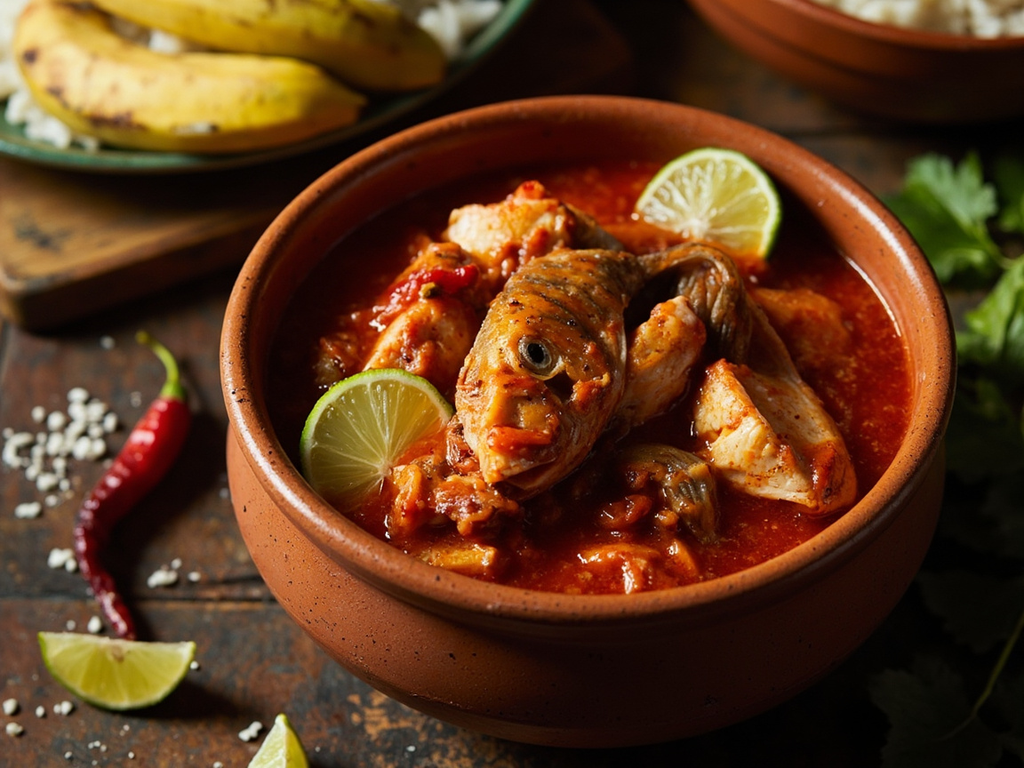
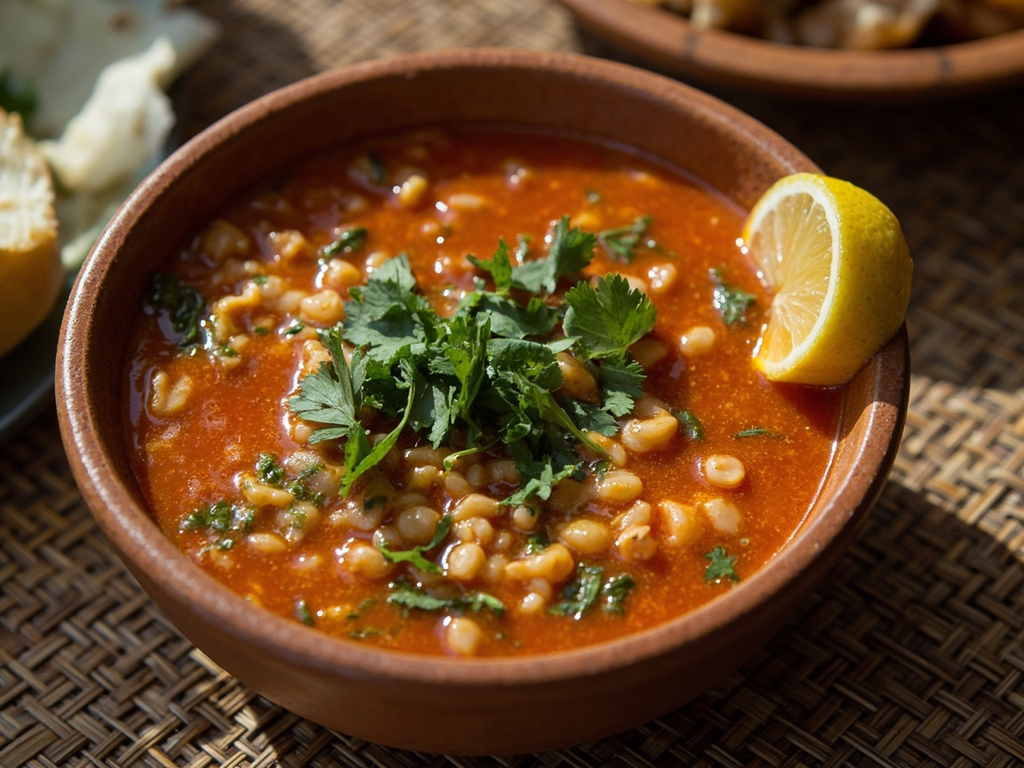
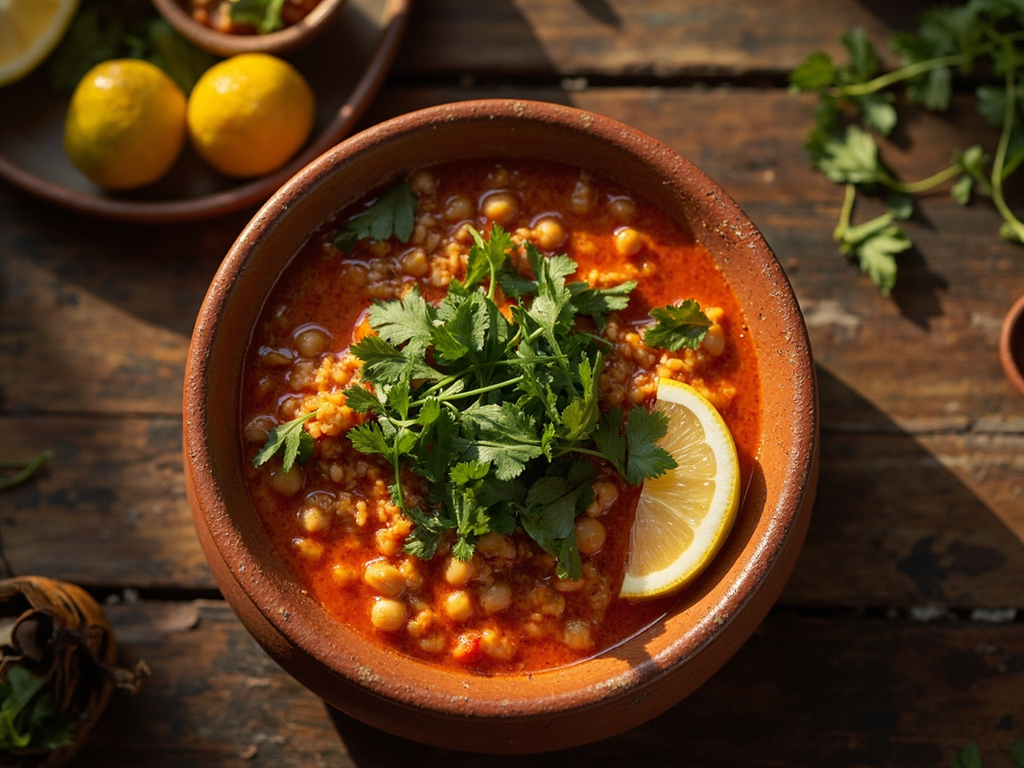
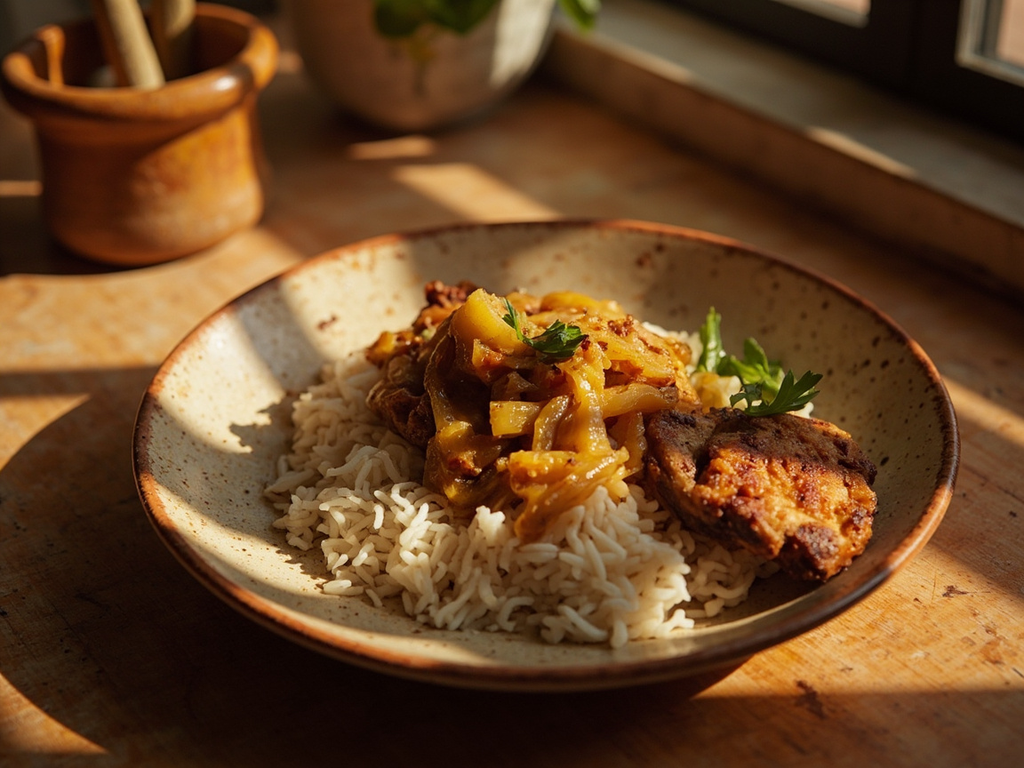
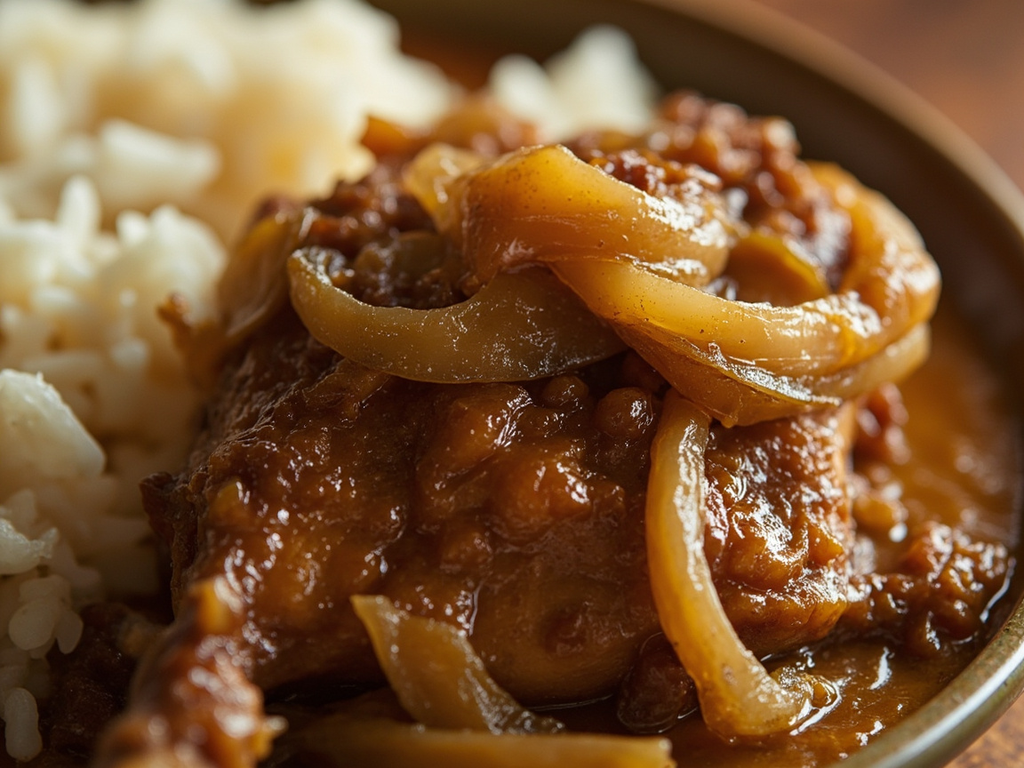
Chicken first grilled then long-stewed in a sea of caramelized onions, tangy with lemon and spiked with mustard and chili. A golden, melting, lively sauce, ladled over hot white rice.
Do not be fooled by its simplicity: yassa is a lesson in patience. You must let the onions die slowly in the lemon until they become a salty jam, almost translucent. At home we would first sear the poultry over the embers, so it would keep the memory of the fire, before marrying it to this sauce. Taste how the acid awakens everything: it is the weekday dish, the one a mother prepares without ceremony but with all her heart. That, in my opinion, is true elegance — the kind hidden in the ordinary.
- •Free-range chicken — one, cut up (protein)
- •Onions — in large quantity (sauce base)
- •Lemon (juice) — several (acidic marinade)
- •Chili — to taste (heat)
- •Oil — for cooking (fat)
- •Mustard — one spoonful (binder and pungency)
- •White rice — for the table (accompaniment)
Yassa au poulet (Yaasa ginaar)
Chicken first grilled then long-stewed in a sea of caramelized onions, tangy with lemon and spiked with mustard and chili. A golden, melting, lively sauce, ladled over hot white rice.
Why this dish? Originally from Casamance, yassa has become the quintessential Senegalese family dish, simpler and more everyday than thiéboudiène. For Senghor, torn between Dakar and Paris, it was the accessible taste of home, those onions melted with lemon acidity that recall the everyday table back home.
Do not be fooled by its simplicity: yassa is a lesson in patience. You must let the onions die slowly in the lemon until they become a salty jam, almost translucent. At home we would first sear the poultry over the embers, so it would keep the memory of the fire, before marrying it to this sauce. Taste how the acid awakens everything: it is the weekday dish, the one a mother prepares without ceremony but with all her heart. That, in my opinion, is true elegance — the kind hidden in the ordinary.
Ingredients (period version)
- Free-range chicken — one, cut up (protein)
- Onions — in large quantity (sauce base)
- Lemon (juice) — several (acidic marinade)
- Chili — to taste (heat)
- Oil — for cooking (fat)
- Mustard — one spoonful (binder and pungency)
- White rice — for the table (accompaniment)
Ingredients
- Chicken thighs — 6 (protein)
- Onions — 6 large (caramelized sauce)
- Lemons (juice) — 4 (acidity)
- Dijon mustard — 2 tbsp (pungent binder)
- Chili / stock cube — 1 + 1 (seasoning)
- Oil — 5 cl (cooking)
- Long-grain rice — 400 g (accompaniment)
Method
- Marinate the chicken for at least 2 hours in lemon juice, sliced onions, mustard, chili and salt.
- Drain the chicken and brown it in a pan (or grill), set aside.
- Melt all the marinade onions over low heat until blond and caramelized.
- Add the remaining marinade, stock cube and a little water, let reduce.
- Return the chicken to the sauce and simmer covered for 30 to 40 minutes, until tender.
- Cook the white rice separately and serve the chicken topped with its onion sauce.
How it was made : The word "yassa" comes from the Diola language of Casamance. Traditionally, the long cooking of the onions also served to preserve them, and the lemon played a dual role as tenderizer and preservative in the hot climate. Mustard, a legacy of colonial contact, was incorporated into the recipe in the 20th century.
The contemporary twist : Create a "poet's yassa" with onions reduced almost to marmalade and a few candied lemon zest pieces as a finish.
Léopold Sédar Senghor · Charactorium