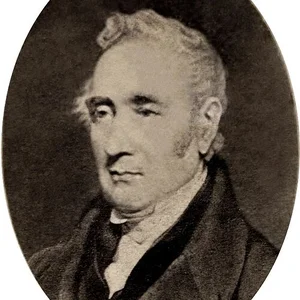
French inventor and industrialist, Louis Lumière developed the Cinématographe with his brother Auguste in 1895. On December 28, 1895, they organized the first paid public film screening in Paris, a founding moment in the history of cinema worldwide. He also invented the Autochrome process, the first commercially available color photography technique.
Louis Lumière(1864 — 1948)
Louis Lumière
France
9 min read
Frequently asked questions
Key Facts
- Born October 5, 1864 in Besançon, died June 6, 1948 in Lyon
- 1895: invention of the Cinématographe with his brother Auguste Lumière
- December 28, 1895: first paid public screening at the Grand Café, Boulevard des Capucines, Paris
- 1903: invention of the Autochrome process for color photography
- Filed more than 170 patents over the course of his life
Works & Achievements
Invention patented on February 13, 1895 under the name 'device for obtaining and viewing chronophotographic prints.' This apparatus combining camera, developer, and projector is considered the birth certificate of modern cinema.
The first publicly screened film, showing workers leaving the Lumière factory. This 46-second film is considered the very first film in the history of cinema, shot by Louis himself.
A film of around fifty seconds showing a train pulling into a station. It became one of the most famous films in cinema history and is associated with the legend of audience members terrified by the image of the locomotive hurtling toward them.
The first comic fiction film in cinema history, depicting a gardener falling victim to a mischievous boy. It inaugurated the slapstick comedy genre and foreshadowed the future narrative possibilities of the cinematograph.
The first color photography technique to be successfully commercialized on a worldwide scale, using dyed starch grains as a color filter. This process revolutionized photography and was used by the greatest photographers of the early twentieth century.
A collection of over 1,400 short films produced by Lumière camera operators in every corner of the world, forming an exceptional documentary record of daily life at the end of the nineteenth century and a universal piece of cinematic heritage.
Anecdotes
At the first public paid screening on December 28, 1895, at the Salon Indien of the Grand Café in Paris, audiences discovered the film 'Arrival of a Train at La Ciotat Station'. Legend has it that some spectators, seized with terror, leapt to their feet and fled, convinced the locomotive was about to crush them. While this episode has been somewhat embellished over time, it speaks to the immense astonishment that moving images provoked.
The Cinématographe, invented by Louis and Auguste Lumière, was a remarkably ingenious device: it functioned simultaneously as a camera, film developer, and projector. Weighing only five kilograms, it was far lighter and more portable than Edison's Kinetoscope, which allowed Lumière operators to film in all corners of the world as early as 1896.
Louis Lumière is often credited with the famous phrase: 'Cinema is an invention without a future.' Although he did genuinely underestimate the commercial potential of the medium in its early days — preferring to regard it as a scientific curiosity — he nonetheless went on to produce more than 1,400 short films between 1895 and 1905.
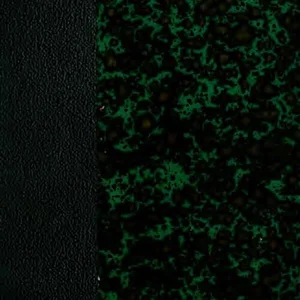
To develop the Autochrome process, commercialized in 1907, Louis Lumière hit upon a stroke of genius: using grains of potato starch dyed red-orange, green, and violet as a color filter. These tiny grains, distributed randomly across a glass plate, made it possible to produce color photographs of remarkable softness and striking realism.
The Lumière brothers organized their first private screenings as early as March 1895, before members of the Société d'encouragement à l'industrie nationale. The film chosen, 'Workers Leaving the Lumière Factory in Lyon', simply showed workers leaving their factory. This unassuming film, considered the first film in cinema history, was met with extraordinary enthusiasm by the scientists in attendance.
Primary Sources
We, Auguste and Louis Lumière, industrialists in Lyon, have invented an apparatus designed to obtain, on a sensitive surface, the recording of a series of images representing the successive phases of a subject's movement, and to subsequently reproduce that movement.
The images obtained reproduce movement with such fidelity that the illusion of reality is complete. A rate of 16 frames per second ensures retinal persistence and gives the impression of continuous motion.
One day our father showed us a strip from Edison's Kinetoscope. The strip passed behind a peephole and could only be seen by one person at a time. He said to us: 'You should do something with that.' And that is how it all began.
This evening, from 9 to 11 o'clock, Lumière Cinématographe. Admission is set at one franc per person. On show: Workers Leaving the Lumière Factory in Lyon, Acrobatic Gymnastics, Fishing for Goldfish, Delegates Disembarking at the Photography Congress in Lyon…
The Autochrome process is based on the use of starch grains dyed in three primary hues — orange, green, and violet — spread in a thin layer over a glass plate coated with a panchromatic emulsion. The result is a natural-color image of a quality hitherto unknown.
Key Places
Birthplace of Louis Lumière, born on 5 October 1864. His father Antoine was a photographer there before relocating his family and business to Lyon.
The heart of the Lumière industrial empire, the Monplaisir district is home to the photographic plate factory founded by Antoine Lumière, as well as the laboratory where Louis and Auguste developed the Cinématographe. The family villa is now the Institut Lumière, a museum dedicated to the history of cinema.
A legendary venue located at 14, boulevard des Capucines in Paris, where on 28 December 1895 the first public, ticketed screening of the Cinématographe took place before an audience of around thirty people. This event is universally recognized as the birth of cinema.
The filming location of one of the most famous movies in cinema history, *L'Arrivée d'un train en gare de La Ciotat* (1895–1896). The Lumières owned a villa in La Ciotat and filmed several of their earliest works there.
Louis Lumière died in Lyon on 6 June 1948, at the age of 83, having devoted his life to the photographic industry and scientific research in the city that was the cradle of his life's work.
Typical Objects

Versatile device patented in 1895, weighing approximately 5 kg, serving simultaneously as a camera for filming, a film developer, and a projector. Its compactness and robustness set it radically apart from Edison's bulky machines.

A glass plate coated with potato starch granules dyed in three colors (orange, green, violet), invented by Louis Lumière and commercially available from 1907. It allowed the general public to take color photographs for the first time.

A celluloid strip 35 millimeters wide, perforated along both edges to allow its regular advancement through the camera and projector. This format, used in the Cinematograph, became the worldwide standard for cinema for over a century.

A device for projecting still images onto glass slides, the direct ancestor of cinema, widely used throughout the 19th century at parlor shows and fairs. The Lumière brothers drew inspiration from it when designing their projection system.

A device used in the Lumière factories to produce silver gelatin bromide photographic plates. The Lumière family's mastery of this technology formed the industrial foundation on which their research into motion was built.

A stretched white surface used as a screen for Cinematograph projections. At the first public screening at the Grand Café, a simple white sheet allowed some thirty spectators to simultaneously discover moving images, inaugurating the shared experience of cinema.
School Curriculum
Vocabulary & Tags
Key Vocabulary
Daily Life
Morning
Louis Lumière rose early, as befitted an industrialist shaped by a rigorous bourgeois upbringing in Lyon. He would make his way to the family factory at Monplaisir, where hundreds of workers manufactured photographic plates. He oversaw production, inspected equipment, and met with his engineers to discuss ongoing technical improvements.
Afternoon
His afternoons were divided between industrial management and laboratory research. Surrounded by trusted technicians, he devoted several hours to experiments in chronophotography, emulsion chemistry, or colorimetry processes. Scientific rigor and practical intuition combined in his approach to invention.
Evening
Evenings during the Belle Époque were those of a prosperous industrialist: family dinners at the Monplaisir villa, scientific reading, and occasional receptions with photographers, academics, or journalists who came to learn about the latest discoveries. The Lumière family embodied that republican ideal of the scientist-entrepreneur — respected and influential in Lyonnais society.
Food
The Lumière table reflected comfortable Lyonnais bourgeois life: refined regional cuisine, Rhône wines, meals taken with the family in the grand house at Monplaisir. Like many industrialists of the era, Louis Lumière appreciated local produce, without any particular ostentation.
Clothing
Louis Lumière dressed in the serious, austere manner of the Belle Époque engineer-industrialist: dark suit with a long jacket, stiff white collar, understated tie. In the laboratory or factory, he wore a work coat to protect his clothes from photographic chemicals. His plain attire stood in contrast to the flamboyance of some of his contemporaries.
Housing
The Lumière family lived in the Villa Lumière at Monplaisir, a bourgeois neighborhood of Lyon situated directly alongside the factory. This comfortable residence, surrounded by a garden, housed both family life and part of the laboratories. The Lumières also owned a villa in La Ciotat on the Mediterranean coast, where they would go to rest and where they shot several of their most celebrated films.
Historical Timeline
Period Vocabulary
Liens externes & ressources
Références
Œuvres
Procédé Autochrome Lumière
1907