 flip
flipTubers in Coconut Milk, Inspired by Kanak Fires
Tubers in Coconut Milk, Inspired by Kanak Fires
Why this dish? Deported to New Caledonia from 1873 to 1880 on the Ducos Peninsula, Louise Michel developed friendship and respect for the Kanak people, whom she defended during the 1878 revolt. This dish evokes—without claiming to reproduce the sacred bougna—the yams, taros, and coconut milk she discovered there, at the other end of her exile.
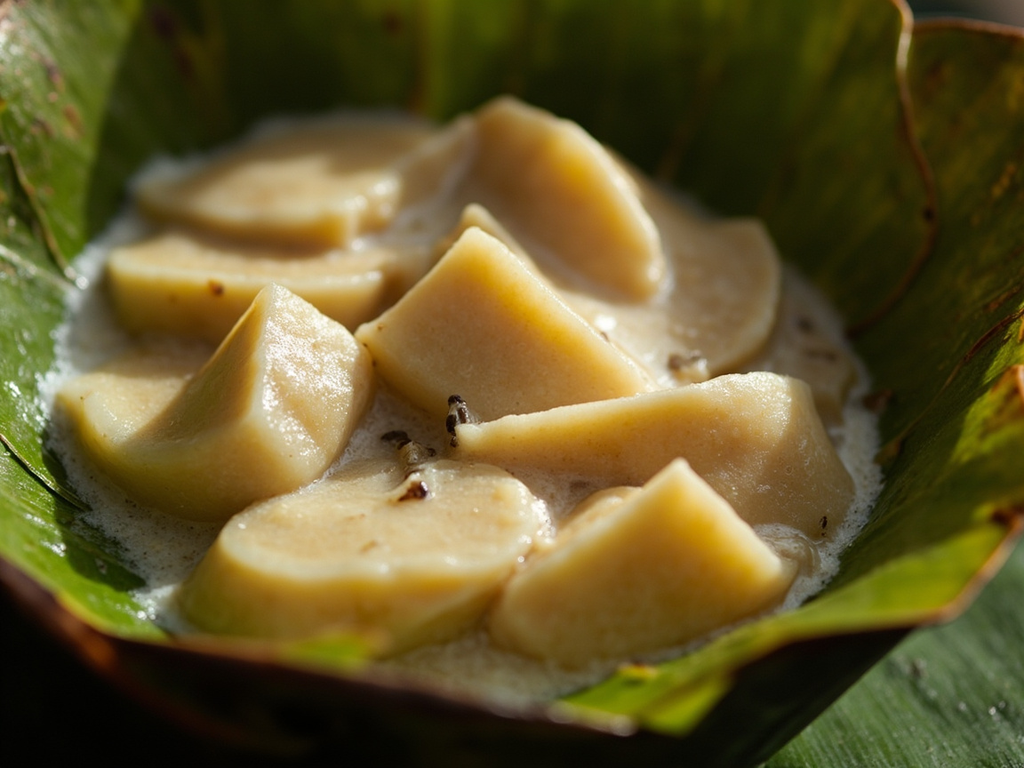
Tender yam and taro simmered in fragrant coconut milk, a respectful nod to the stewed cooking of Kanak cuisine encountered during deportation. Sweet, comforting, deeply exotic.
The penal colony had thrown me to the other side of the world, on that peninsula battered by the Pacific. There, I met the Kanaks, who they called savages and who taught me everything about dignity. They buried under the earth, in leaves and coconut milk, the yam and taro from their gardens, and the meal came out sweet as a promise. I have no right to reveal their rites, which are not mine to share—but I can tell you the taste of that sweetness, which consoled my exile.
- •Yam — according to harvest (staple starch)
- •Taro — a few tubers (staple starch)
- •Milk from fresh grated coconut — as much as the nut gives (creamy binder)
- •Banana leaves — for stewing (cooking wrapper)
- •Sea salt — a little (seasoning)
Tubers in Coconut Milk, Inspired by Kanak Fires
Tender yam and taro simmered in fragrant coconut milk, a respectful nod to the stewed cooking of Kanak cuisine encountered during deportation. Sweet, comforting, deeply exotic.
Why this dish? Deported to New Caledonia from 1873 to 1880 on the Ducos Peninsula, Louise Michel developed friendship and respect for the Kanak people, whom she defended during the 1878 revolt. This dish evokes—without claiming to reproduce the sacred bougna—the yams, taros, and coconut milk she discovered there, at the other end of her exile.
The penal colony had thrown me to the other side of the world, on that peninsula battered by the Pacific. There, I met the Kanaks, who they called savages and who taught me everything about dignity. They buried under the earth, in leaves and coconut milk, the yam and taro from their gardens, and the meal came out sweet as a promise. I have no right to reveal their rites, which are not mine to share—but I can tell you the taste of that sweetness, which consoled my exile.
Ingredients (period version)
- Yam — according to harvest (staple starch)
- Taro — a few tubers (staple starch)
- Milk from fresh grated coconut — as much as the nut gives (creamy binder)
- Banana leaves — for stewing (cooking wrapper)
- Sea salt — a little (seasoning)
Ingredients
- Yam (or sweet potato if unavailable) — 400 g (staple starch)
- Taro (or firm potato) — 300 g (staple starch)
- Coconut milk — 400 ml (creamy binder)
- Spring onion — 2 (flavor)
- Fresh ginger — 1 cm grated (freshness)
- Salt — to taste (seasoning)
Method
- Peel the yam and taro, cut into large even chunks.
- Place them in a pot with sliced spring onion and ginger.
- Pour in the coconut milk, add salt and a little water to half-cover.
- Cook covered on low heat for 35 to 40 minutes, until the tubers are tender.
- Let the coconut milk reduce to a coating sauce and serve hot in a bowl.
How it was made : Traditional Kanak cooking revolves around tubers (yam, taro), foods with high social and ceremonial value, cooked in an earth oven. The yam is a marker of respect and season. This modern dish is freely inspired and does not reproduce any rite: it pays homage to Louise Michel's encounter with this people.
The contemporary twist : A pinch of kaffir lime zest and some fresh herbs as a finish to awaken the sweetness of the coconut.
Sources : Louise Michel, Mémoires (1886) · Louise Michel, Légendes et chants de gestes canaques (1885)
Louise Michel · Charactorium