 flip
flipRoasted partridge with bitter orange
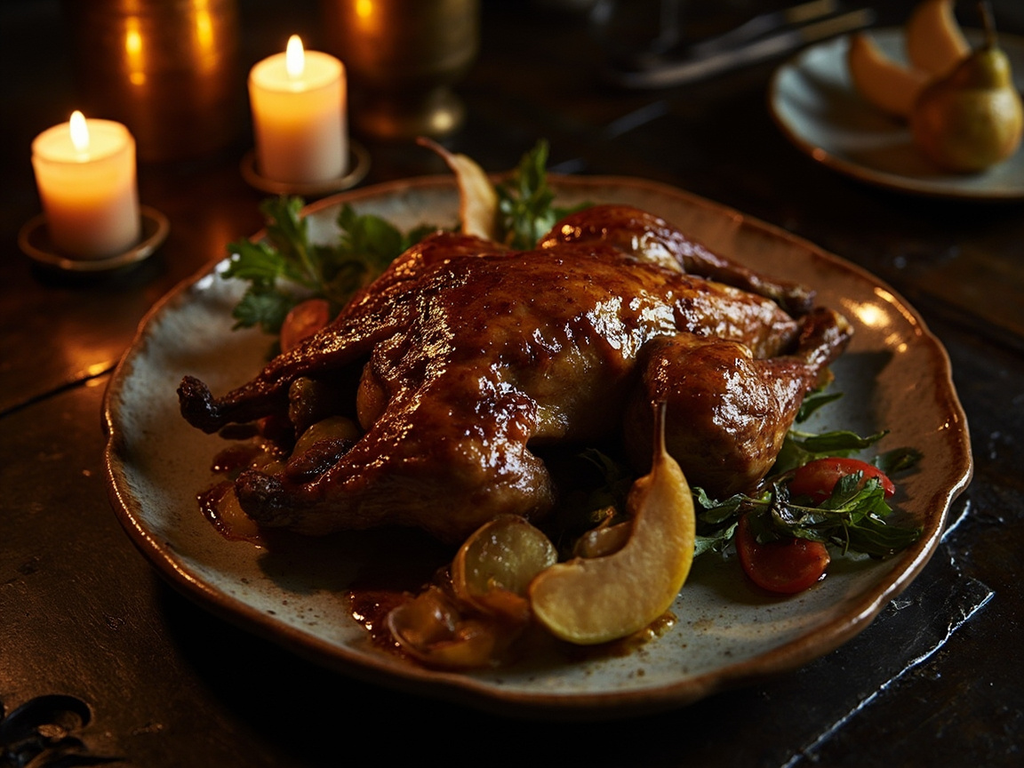
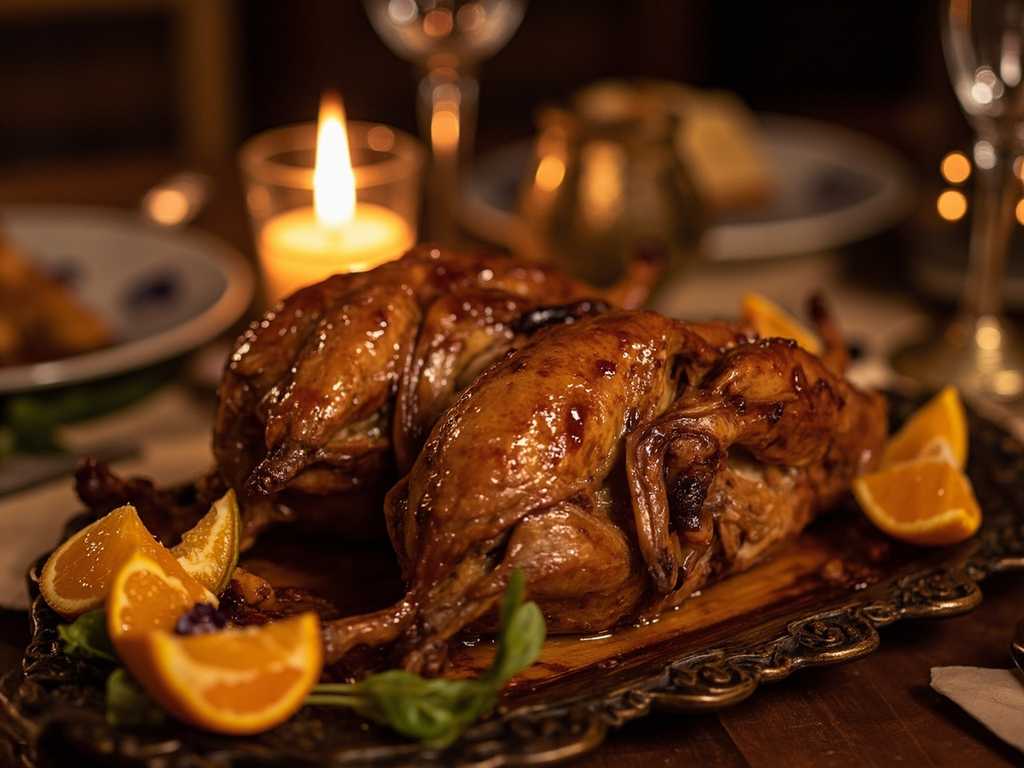
Roasted partridge with bitter orange
Why this dish? Madame de Sévigné left the most famous account of the feast given at Chantilly for Louis XIV in April 1671—the one where the steward Vatel ran himself through with a sword, believing the seafood had not arrived. Spit-roasted game was the centerpiece of these courtly splendors she described with such wit.
Partridges larded with bacon, browned on the spit and coated with a jus sharpened with bitter orange juice and butter. The roast was the highlight of the festive meal, the moment when the finest beasts were brought in, glory of the cook and the master of the house.
I must tell you about the feasts at Chantilly, for in my life I have never seen such magnificence. The roasts arrived in perfumed mountains, and poor Vatel watched over everything with an exactness that cost him his life. For my part, I hold that a well-browned partridge, basted with its own juice and a dash of sour orange, is worth all the speeches: it is served steaming, shared, and for a moment one forgets the sorrows of this world. Taste it, and you will tell me whether the court was wrong to feast on it.
- •Partridges — two fine birds (main piece)
- •Larding bacon strips — enough to wrap (protects and enriches the flesh)
- •Fresh butter — a good piece (basting, sauce)
- •Bitter oranges (Seville oranges) — one or two (acidity, aroma)
- •Salt and nutmeg — to taste (seasoning)
Roasted partridge with bitter orange
Partridges larded with bacon, browned on the spit and coated with a jus sharpened with bitter orange juice and butter. The roast was the highlight of the festive meal, the moment when the finest beasts were brought in, glory of the cook and the master of the house.
Why this dish? Madame de Sévigné left the most famous account of the feast given at Chantilly for Louis XIV in April 1671—the one where the steward Vatel ran himself through with a sword, believing the seafood had not arrived. Spit-roasted game was the centerpiece of these courtly splendors she described with such wit.
I must tell you about the feasts at Chantilly, for in my life I have never seen such magnificence. The roasts arrived in perfumed mountains, and poor Vatel watched over everything with an exactness that cost him his life. For my part, I hold that a well-browned partridge, basted with its own juice and a dash of sour orange, is worth all the speeches: it is served steaming, shared, and for a moment one forgets the sorrows of this world. Taste it, and you will tell me whether the court was wrong to feast on it.
Ingredients (period version)
- Partridges — two fine birds (main piece)
- Larding bacon strips — enough to wrap (protects and enriches the flesh)
- Fresh butter — a good piece (basting, sauce)
- Bitter oranges (Seville oranges) — one or two (acidity, aroma)
- Salt and nutmeg — to taste (seasoning)
Ingredients
- Partridges (or a cut-up free-range chicken) — 2 partridges / 1 chicken (main piece)
- Thin slices of smoked bacon — 4 to 6 slices (barding)
- Butter — 60 g (basting and sauce)
- Bitter orange (or 1 orange + 1/2 lemon) — 1 to 2 (acidic juice)
- Salt, grated nutmeg, pepper — to taste (seasoning)
Method
- Season the partridges inside with salt and a little grated nutmeg, then wrap them with the bacon strips tied with string.
- Roast in a hot oven (210°C) or on a spit, basting regularly with melted butter, about 25 to 35 minutes depending on size.
- Remove the bacon at the end of cooking to allow the skin to brown.
- Collect the cooking juices, deglaze with the bitter orange juice, and whisk in fresh butter off the heat.
- Serve the birds whole, coated with this glossy, tangy sauce.
How it was made : The roast was done on a spit in front of the hearth, basted constantly by a kitchen boy. Bitter orange (bigarade) and verjuice provided the acidity that lemon and vinegar also shared at the time, whereas the Middle Ages would have drowned the meat in saffron and cinnamon. La Varenne's cuisine now favors short jus and butter.
The contemporary twist : Serve on a wooden board, whole partridges surrounded by supreme segments of orange, and the bigarade sauce in a sauceboat—a nod to "duck à l'orange," of which this dish is the ancestor.
Sources : La Varenne, Le Cuisinier françois, 1651 · Madame de Sévigné, Lettres (account of Vatel's death, 24-26 April 1671)
Madame de Sévigné · Charactorium