 flip
flipRoast Partridge with Verjus Sauce
Roast Partridge with Verjus Sauce
Why this dish? La Bruyère was tutor and later librarian to the Condé family and lived at the Château de Chantilly, famous for its abundant game hunts and sumptuous table where roast game abounded. The partridge with sweet-and-sour sauce was precisely the kind of dish set before the great lords he frequented — and observed.
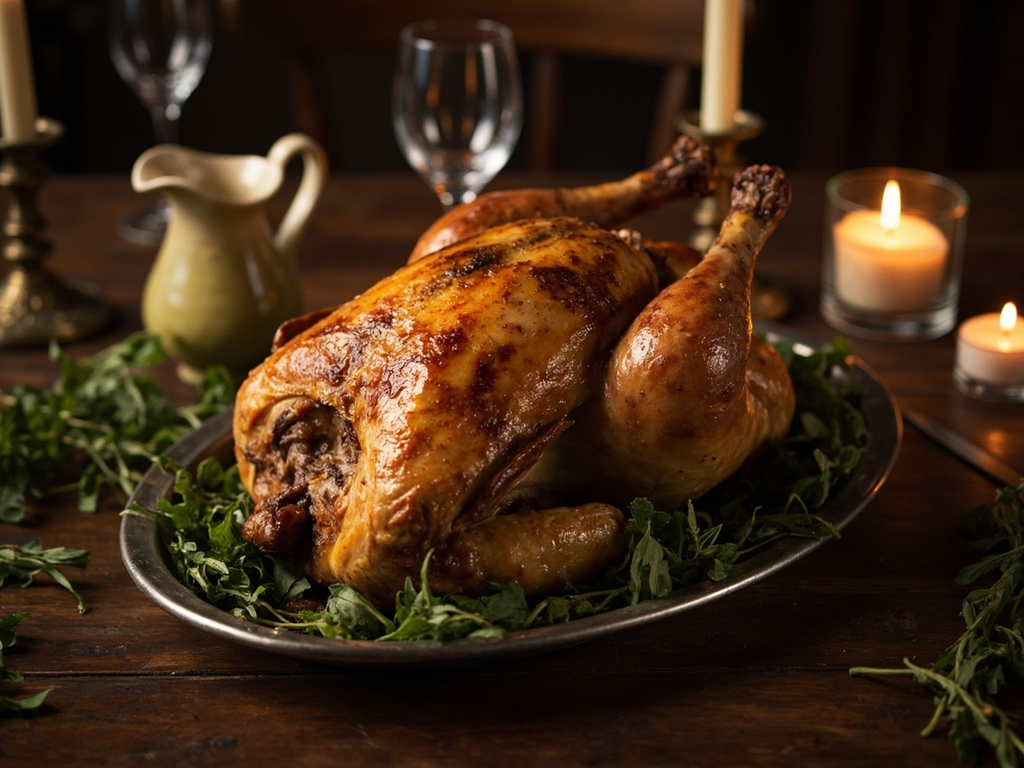
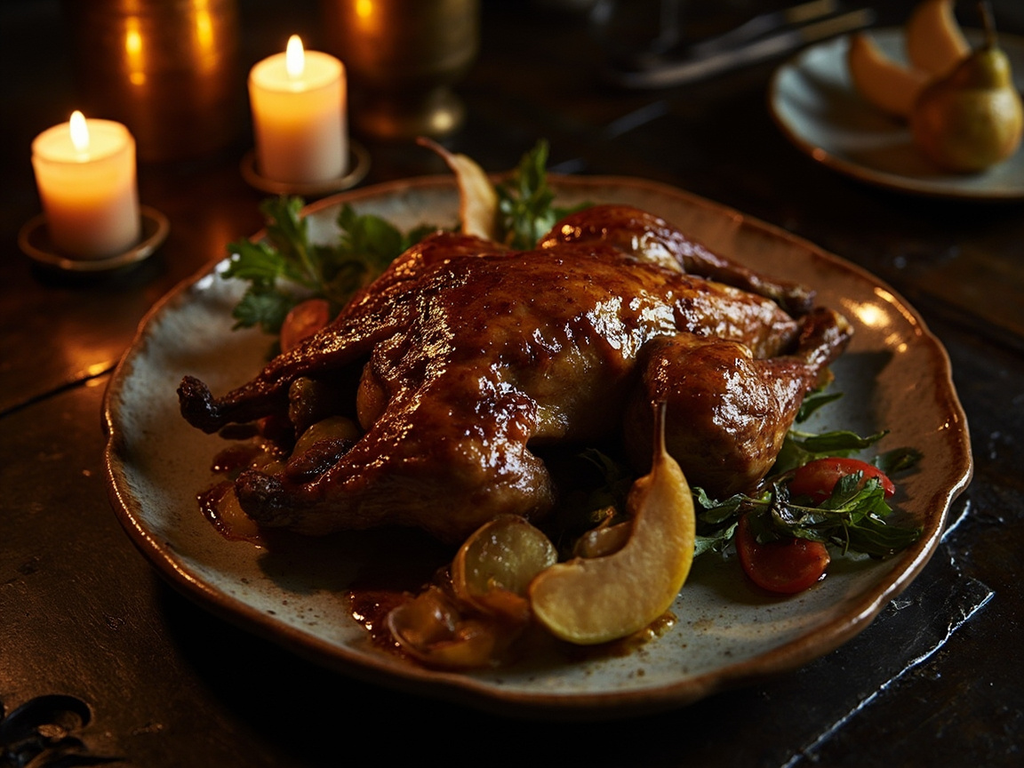
A partridge roasted on the spit, napped with a short sauce of verjus, wine, and sweet spices: the classic acidity that enlivens game.
At Chantilly, game is never wanting, and they roast partridge there as nowhere else. Have it turned on the spit until its skin is golden and crackling; deglaze the dripping pan with a dash of verjus and wine, season with a hint of cinnamon and clove. That is the whole art: neither too many spices, which smack of the apothecary, nor too few. The Prince would ask for more; as for me, I took a wing and watched the others gorge themselves.
- •Partridges — two, plucked and larded with bacon (main roast piece)
- •Fat bacon — a few strips (keeps the flesh moist)
- •Verjus — half a glass (signature acidity)
- •White wine — a glass (sauce base)
- •Cinnamon, clove, nutmeg — a pinch (sweet spices)
- •Salt, pepper — to taste (seasoning)
Roast Partridge with Verjus Sauce
A partridge roasted on the spit, napped with a short sauce of verjus, wine, and sweet spices: the classic acidity that enlivens game.
Why this dish? La Bruyère was tutor and later librarian to the Condé family and lived at the Château de Chantilly, famous for its abundant game hunts and sumptuous table where roast game abounded. The partridge with sweet-and-sour sauce was precisely the kind of dish set before the great lords he frequented — and observed.
At Chantilly, game is never wanting, and they roast partridge there as nowhere else. Have it turned on the spit until its skin is golden and crackling; deglaze the dripping pan with a dash of verjus and wine, season with a hint of cinnamon and clove. That is the whole art: neither too many spices, which smack of the apothecary, nor too few. The Prince would ask for more; as for me, I took a wing and watched the others gorge themselves.
Ingredients (period version)
- Partridges — two, plucked and larded with bacon (main roast piece)
- Fat bacon — a few strips (keeps the flesh moist)
- Verjus — half a glass (signature acidity)
- White wine — a glass (sauce base)
- Cinnamon, clove, nutmeg — a pinch (sweet spices)
- Salt, pepper — to taste (seasoning)
Ingredients
- Partridges (or guinea fowl / quail) — 2 partridges or 1 guinea fowl (roast meat)
- Thin bacon strips — 4 (barding the poultry)
- Verjus (or substitute: green grape juice + 1 tbsp vinegar) — 8 cl (sauce acidity)
- Dry white wine — 12 cl (juice base)
- Cinnamon / ground clove / nutmeg — 1 pinch each (sweet spices)
- Butter — 20 g (binds the sauce)
- Salt, black pepper — to taste (seasoning)
Method
- Preheat the oven to 210°C. Bard the partridges with bacon, season with salt and pepper.
- Roast for 25 to 30 minutes, basting regularly with the cooking juices, until the skin is golden.
- Keep the birds warm. Deglaze the pan with white wine and verjus, scraping up the browned bits.
- Add the sweet spices, reduce by half over high heat, then whisk in cold butter to bind.
- Carve the partridges and nap with the short sauce. Serve with a salad or cooked pears.
How it was made : The roast "on the spit" before the fire was the centerpiece of the meal. The cuisine of Louis XIV abandoned the avalanche of medieval spices for cleaner pairings: verjus, the pressed juice of unripe grapes, provided the acidity that lemon, still rare and costly, brought only to the richest tables. Massialot would codify these short sauces at the end of the century.
The contemporary twist : Present the boned partridge on a bed of bitter leaves (frisée, Treviso) with a few roasted pear wedges: the sweet-sour-bitter contrast is very popular with today's palates.
Sources : François Massialot, Le Cuisinier roïal et bourgeois, 1691 · La Varenne, Le Cuisinier françois, 1651
Jean de La Bruyère · Charactorium