 flip
flipChicken Marengo
Chicken Marengo
Why this dish? On the evening of the Battle of Marengo, June 14, 1800, in northern Italy, his cook Dunand is said to have had on hand, in distant wagons, only a chicken, tomatoes, garlic, eggs, oil, and a few crayfish gathered from a stream. From this battlefield improvisation was born the dish associated with Bonaparte's most decisive victory.
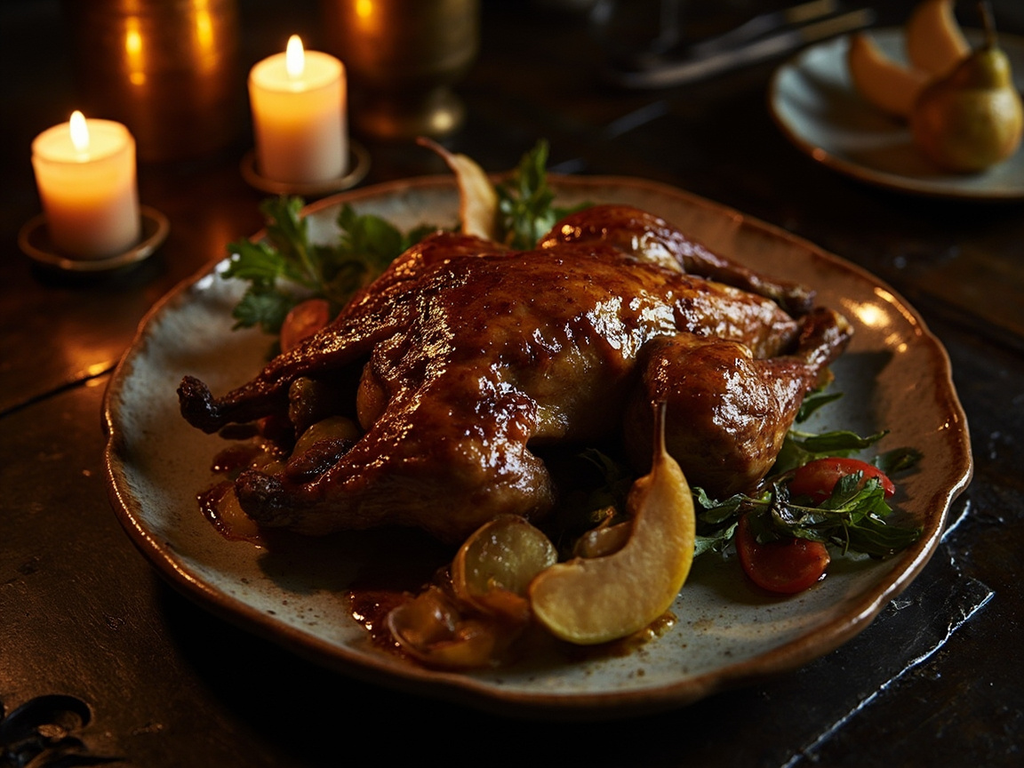
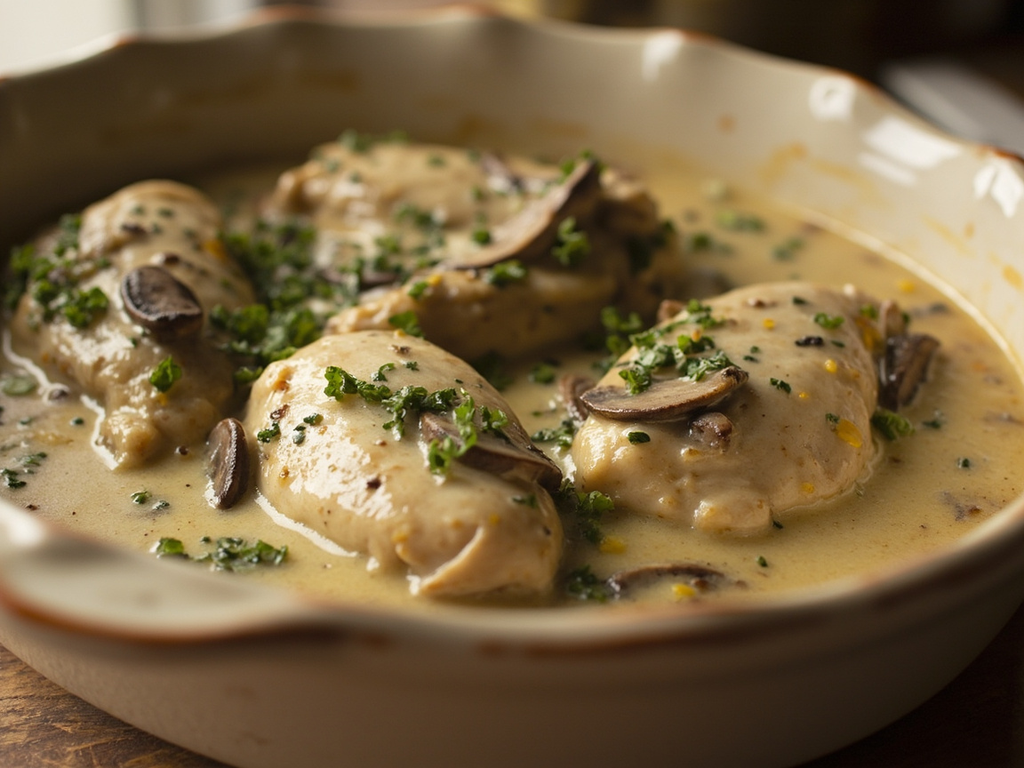
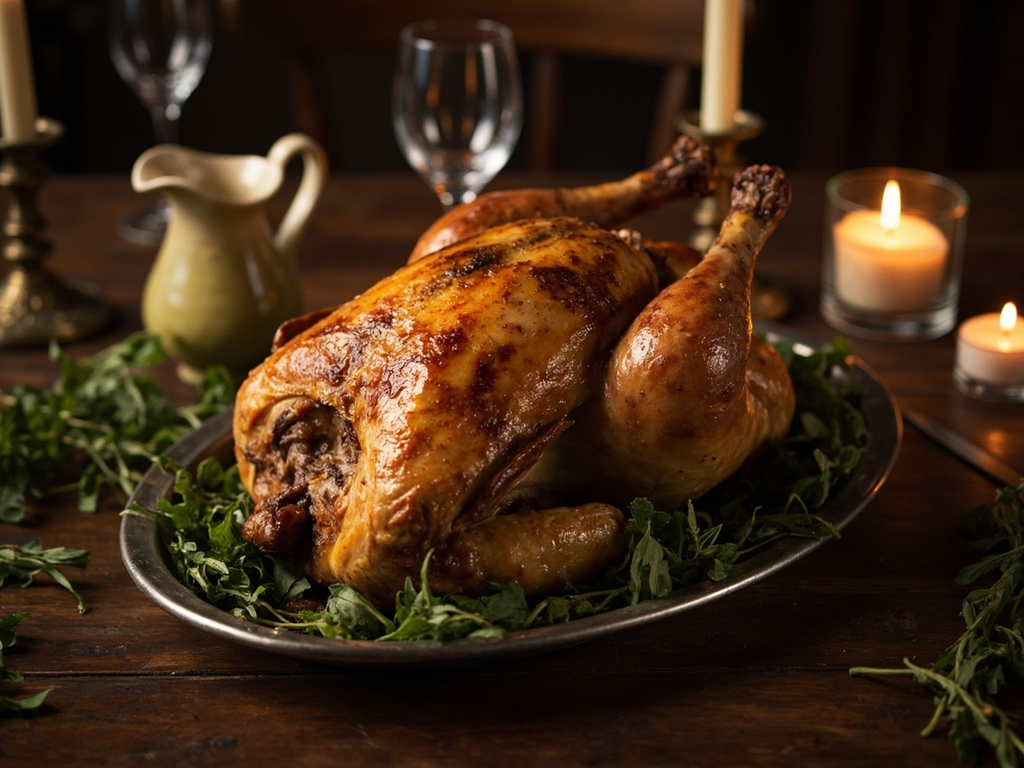
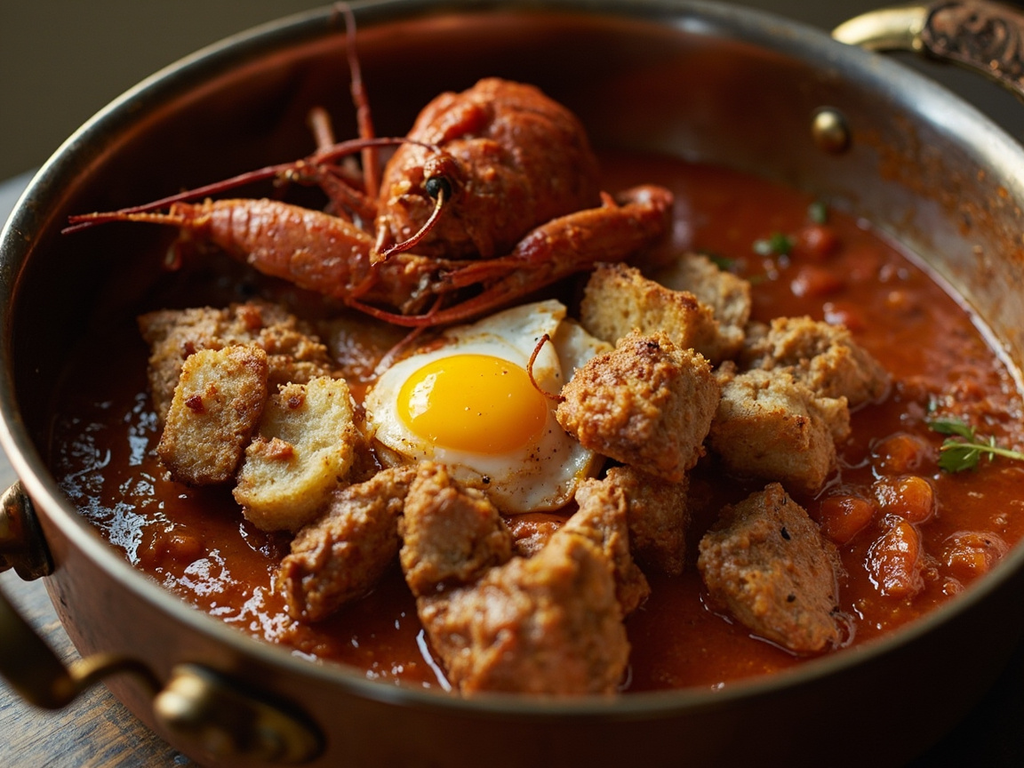
A chicken sautéed in oil, simmered with tomatoes, garlic, and wine, crowned with fried eggs and croutons—a bivouac dish transfigured into an imperial table dish, both tangy from the tomato and deep from the chicken stock.
Come now, no fuss: it's a soldier's dish, born the evening I crushed the Austrians at Marengo. My Dunand had only what the land would give him—a scrawny chicken, garlic, those red love-apples from Italy, a little oil, and three crayfish fished from the ditch. He served it to me in a devil-may-care fashion, and I decreed that henceforth I would be served this chicken after every victory: a general does not change a winning recipe. Eat it quickly, like me, and remember that fortune is seized like a hot dish—without waiting.
- •Young chicken — 1, cut up with a knife (centerpiece)
- •Olive oil — a good drizzle (cooking fat (for lack of butter in the field))
- •Love-apples (tomatoes) — a handful, ripe (tangy sauce)
- •Garlic — a few cloves (aromatic)
- •White wine and brandy — a glass (deglazing)
- •Eggs — a few (fried, as garnish)
- •Crayfish — a handful (festive garnish)
- •Stale bread — a few slices (fried croutons)
Chicken Marengo
A chicken sautéed in oil, simmered with tomatoes, garlic, and wine, crowned with fried eggs and croutons—a bivouac dish transfigured into an imperial table dish, both tangy from the tomato and deep from the chicken stock.
Why this dish? On the evening of the Battle of Marengo, June 14, 1800, in northern Italy, his cook Dunand is said to have had on hand, in distant wagons, only a chicken, tomatoes, garlic, eggs, oil, and a few crayfish gathered from a stream. From this battlefield improvisation was born the dish associated with Bonaparte's most decisive victory.
Come now, no fuss: it's a soldier's dish, born the evening I crushed the Austrians at Marengo. My Dunand had only what the land would give him—a scrawny chicken, garlic, those red love-apples from Italy, a little oil, and three crayfish fished from the ditch. He served it to me in a devil-may-care fashion, and I decreed that henceforth I would be served this chicken after every victory: a general does not change a winning recipe. Eat it quickly, like me, and remember that fortune is seized like a hot dish—without waiting.
Ingredients (period version)
- Young chicken — 1, cut up with a knife (centerpiece)
- Olive oil — a good drizzle (cooking fat (for lack of butter in the field))
- Love-apples (tomatoes) — a handful, ripe (tangy sauce)
- Garlic — a few cloves (aromatic)
- White wine and brandy — a glass (deglazing)
- Eggs — a few (fried, as garnish)
- Crayfish — a handful (festive garnish)
- Stale bread — a few slices (fried croutons)
Ingredients
- Chicken thighs and drumsticks — 1.2 kg (centerpiece)
- Olive oil — 4 tbsp (cooking)
- Ripe tomatoes (or canned peeled) — 400 g (sauce)
- Garlic — 3 cloves (aromatic)
- Dry white wine — 150 ml (deglazing)
- Cognac — 2 tbsp (flavor)
- Chicken stock — 150 ml (sauce)
- Eggs — 4 (fried in oil, as garnish)
- Large shrimp or crayfish — 8 (festive garnish)
- Country bread — 4 slices (croutons)
Method
- Season the chicken pieces with salt and brown them on all sides in hot olive oil, then set aside.
- In the same pot, lightly brown the garlic, add the crushed tomatoes, deglaze with white wine and cognac, and pour in the chicken stock.
- Return the chicken to the pot, cover partially, and simmer for 35 to 40 minutes until the meat falls off the bone and the sauce thickens.
- Meanwhile, fry the bread croutons in oil, then fry the eggs (white set, yolk runny), and quickly sauté the shrimp.
- Arrange the chicken on a platter, spoon the sauce over, and top with the fried eggs, shrimp, and croutons.
How it was made : At the time, the dish was prepared on the spot, without butter (forbidden or unavailable in the field), hence the use of olive oil. Over time, Parisian cooks "ennobled" the recipe, sometimes replacing the crayfish with mushrooms, but Napoleon, superstitious, is said to have insisted that the garnish of eggs and crayfish never be omitted, for fear of losing the luck attached to the dish.
The contemporary twist : Serve it as a "battle plate": spread the sauce with a spatula like a military map, stand the crouton upright like a flag, and place the fried egg gleaming in the center.
Sources : Larousse Gastronomique, notice "Marengo" · Mémoires de Constant, premier valet de chambre de l'Empereur
Napoleon Bonaparte · Charactorium