 flip
flipFricassée of chicken with verjuice
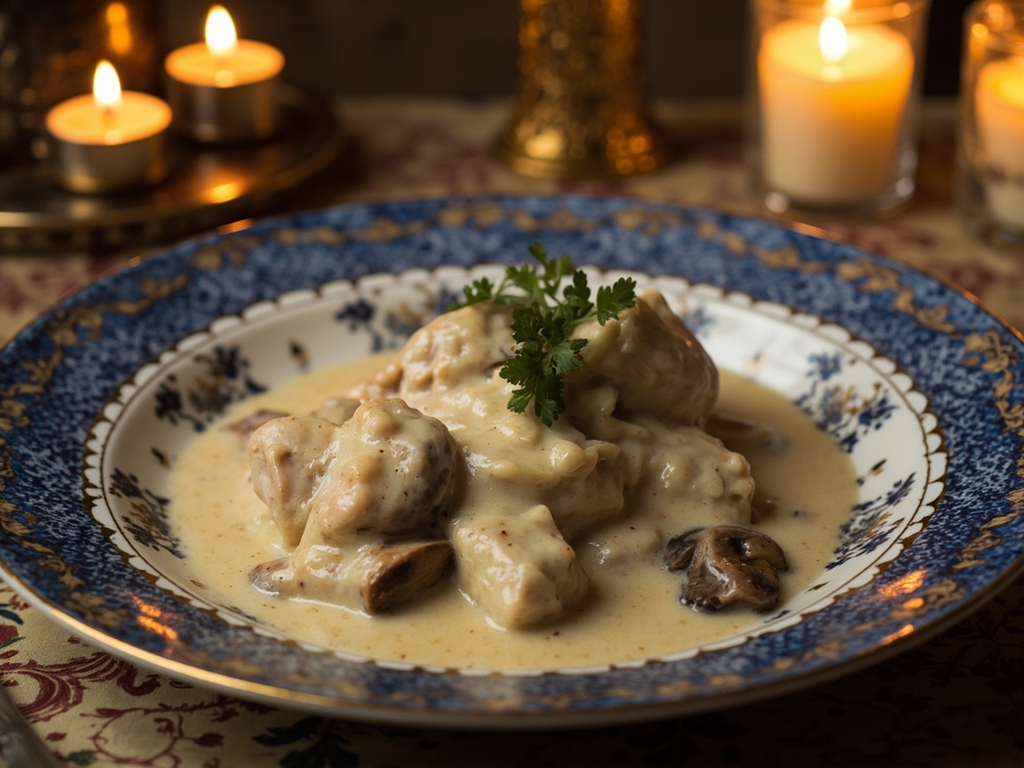
Fricassée of chicken with verjuice
Why this dish? Chicken fricassée was THE dish for salons and entertaining: Olympe frequented Paris's literary and political circles, and this kind of dish — elegant without being ruinous — was served when hosting wits.
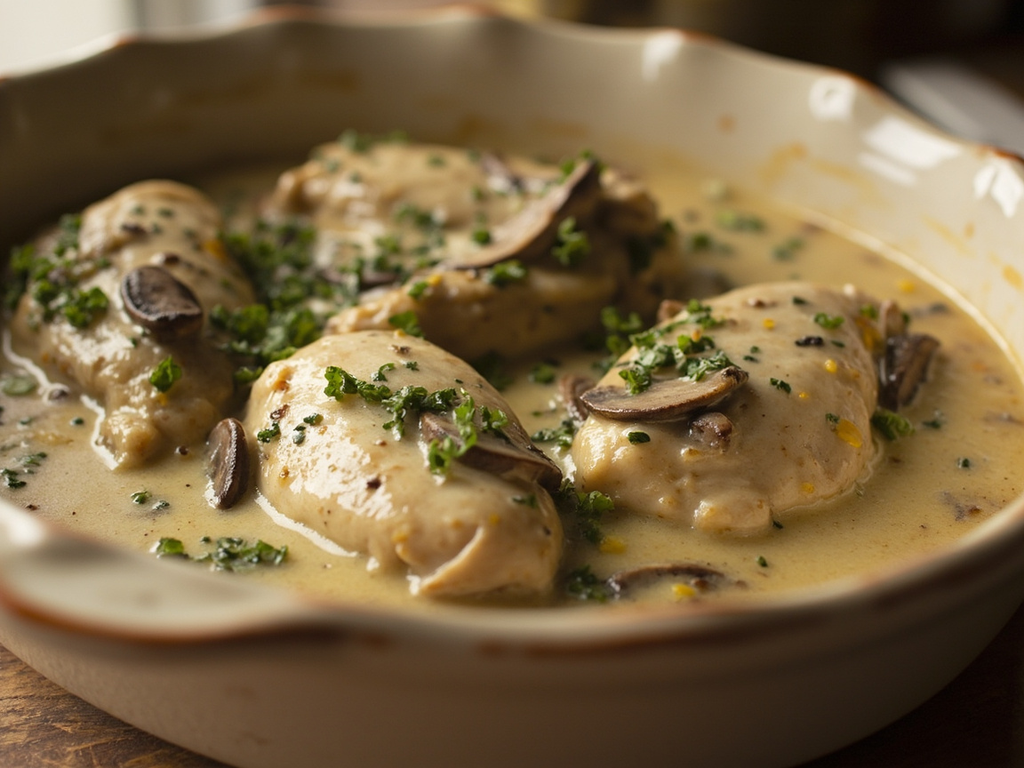
Chicken pieces simmered in butter, then coated in a white sauce bound with egg yolks, sharpened with verjuice and perfumed with fine herbs. The great classic of 18th-century bourgeois cuisine.
Ah, here is the dish for days when one entertains! When men of letters came to my home to debate liberty and rights, it was a fricassée I had served to them. The secret, I tell you: bind the sauce off the heat, with egg yolks and a dash of verjuice, never letting it boil — otherwise it curdles, and with it the honor of the mistress of the house. A touch of acidity wakes everything up, like a witty remark revives a languid conversation.
- •Chicken (or tender hen) — one, jointed (main meat)
- •Butter — a good knob (cooking)
- •Broth — a ladleful (moistening)
- •Egg yolks — two or three (sauce binder)
- •Verjuice — a dash (acidity (signature))
- •Mushrooms — a handful (garnish, umami)
- •Fine herbs — a bouquet (flavor (signature))
Fricassée of chicken with verjuice
Chicken pieces simmered in butter, then coated in a white sauce bound with egg yolks, sharpened with verjuice and perfumed with fine herbs. The great classic of 18th-century bourgeois cuisine.
Why this dish? Chicken fricassée was THE dish for salons and entertaining: Olympe frequented Paris's literary and political circles, and this kind of dish — elegant without being ruinous — was served when hosting wits.
Ah, here is the dish for days when one entertains! When men of letters came to my home to debate liberty and rights, it was a fricassée I had served to them. The secret, I tell you: bind the sauce off the heat, with egg yolks and a dash of verjuice, never letting it boil — otherwise it curdles, and with it the honor of the mistress of the house. A touch of acidity wakes everything up, like a witty remark revives a languid conversation.
Ingredients (period version)
- Chicken (or tender hen) — one, jointed (main meat)
- Butter — a good knob (cooking)
- Broth — a ladleful (moistening)
- Egg yolks — two or three (sauce binder)
- Verjuice — a dash (acidity (signature))
- Mushrooms — a handful (garnish, umami)
- Fine herbs — a bouquet (flavor (signature))
Ingredients
- Chicken thighs and drumsticks — 1 kg (main meat)
- Butter — 40 g (cooking)
- Chicken broth — 300 ml (moistening)
- Button mushrooms — 200 g (garnish, umami)
- Egg yolks — 3 (binder)
- Verjuice (or substitute: green grape juice or a little mild vinegar) — 2 tbsp (acidity (signature))
- Parsley and tarragon — 1 bunch (flavor (signature))
- Salt, pepper, nutmeg — to taste (seasoning)
Method
- Brown the chicken pieces in butter without coloring them too much (the fricassée should remain white).
- Add the sliced mushrooms, sweat for 5 minutes.
- Moisten with the broth, season with salt, pepper, and a little nutmeg, cover and simmer for 30 minutes.
- Beat the egg yolks with the verjuice in a bowl.
- Remove the pan from the heat, take a little hot juice to temper the yolks, then pour everything back over the chicken, stirring WITHOUT boiling: the sauce thickens.
- Adjust acidity and seasoning, sprinkle with chopped fine herbs, and serve immediately.
How it was made : The fricassée is emblematic of 'service à la française': white meat in a sauce bound with egg yolks, a delicate technique that distinguished the good cook. Verjuice, the juice of unripe grapes, provided acidity before lemons became widespread. Menon gives the canonical recipe as early as 1746.
The contemporary twist : Serve the fricassée on a bed of rice pilaf or steamed potatoes, and add a few fresh broad beans in spring for color.
Sources : Menon, La Cuisinière bourgeoise, 1746 · Massialot, Le Cuisinier roïal et bourgeois, 1691
Olympe de Gouges · Charactorium