 flip
flipBucellatum, Soldier's Marching Biscuit
Bucellatum, Soldier's Marching Biscuit
Why this dish? Antony led long campaigns, notably the exhausting expedition against the Parthians, where supplies ran short. *Bucellatum*, twice-baked biscuit bread, kept for weeks: it was the survival bread of legions on the march, the one that saved — or failed to save — armies far from Rome.
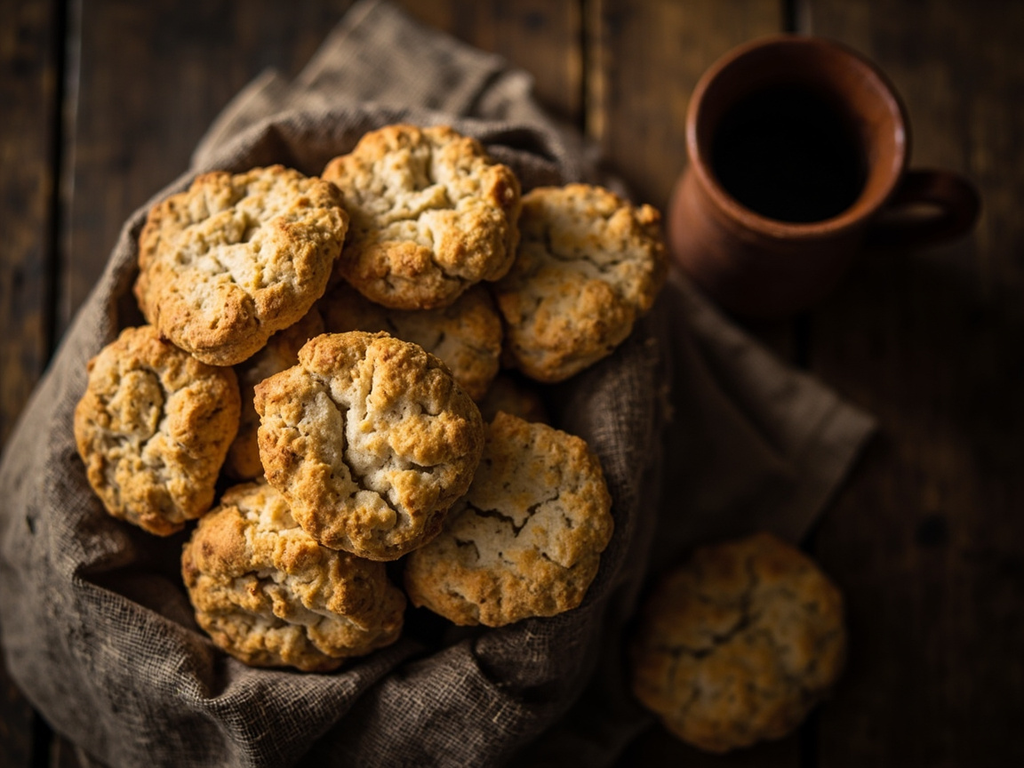
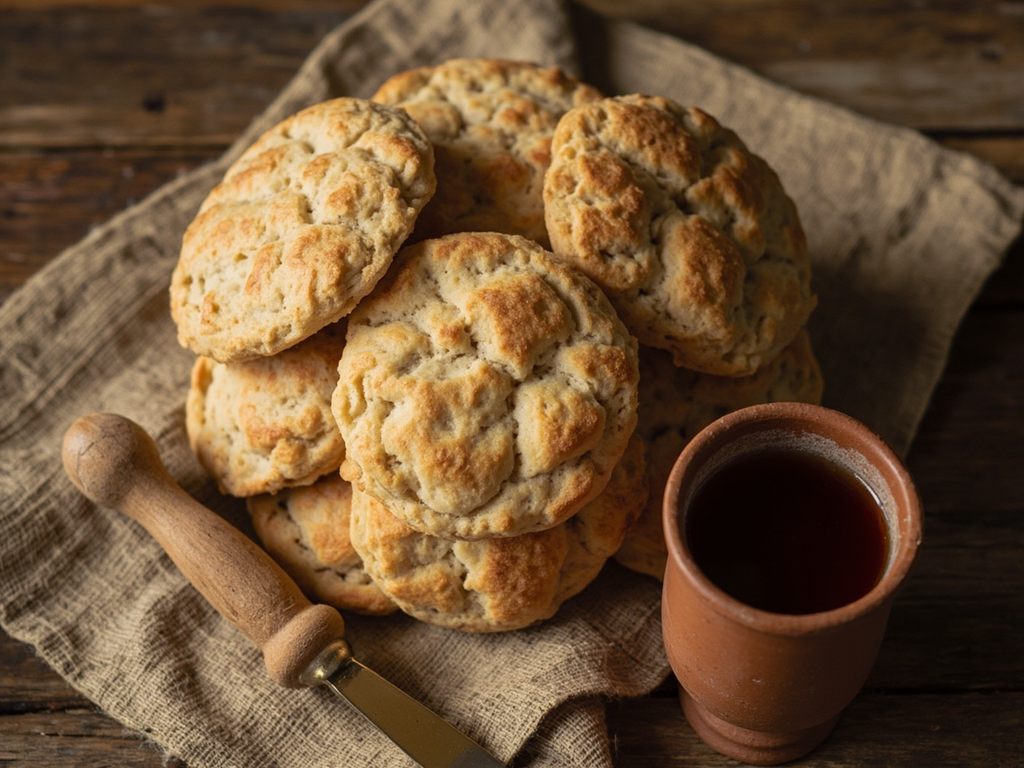
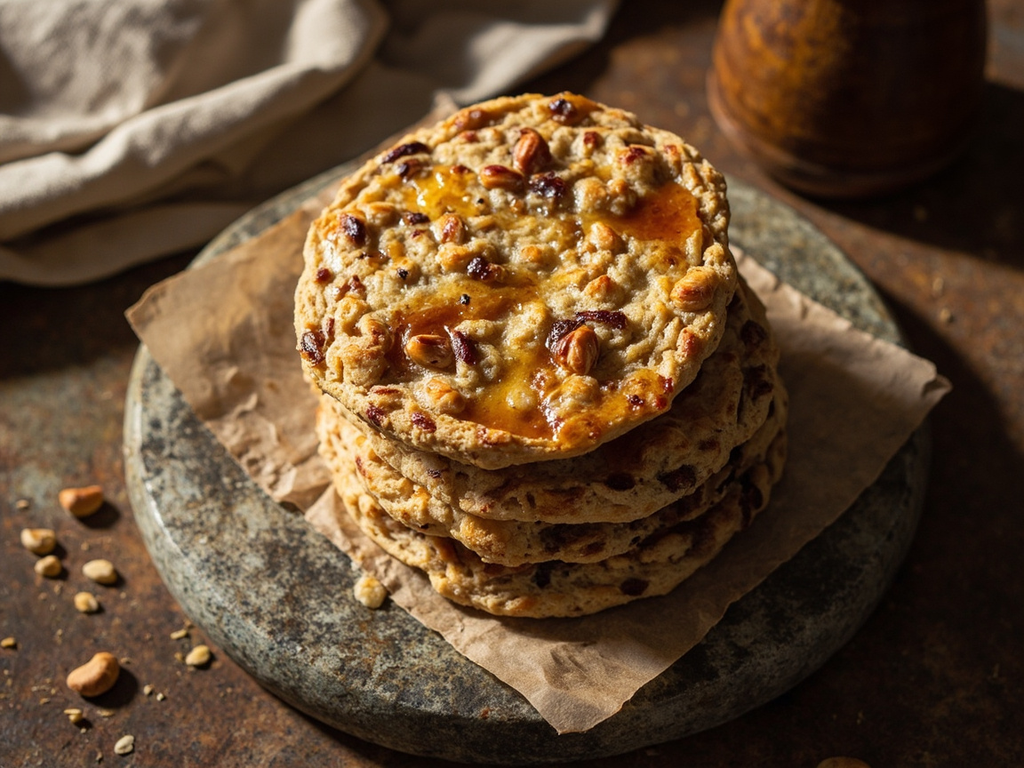
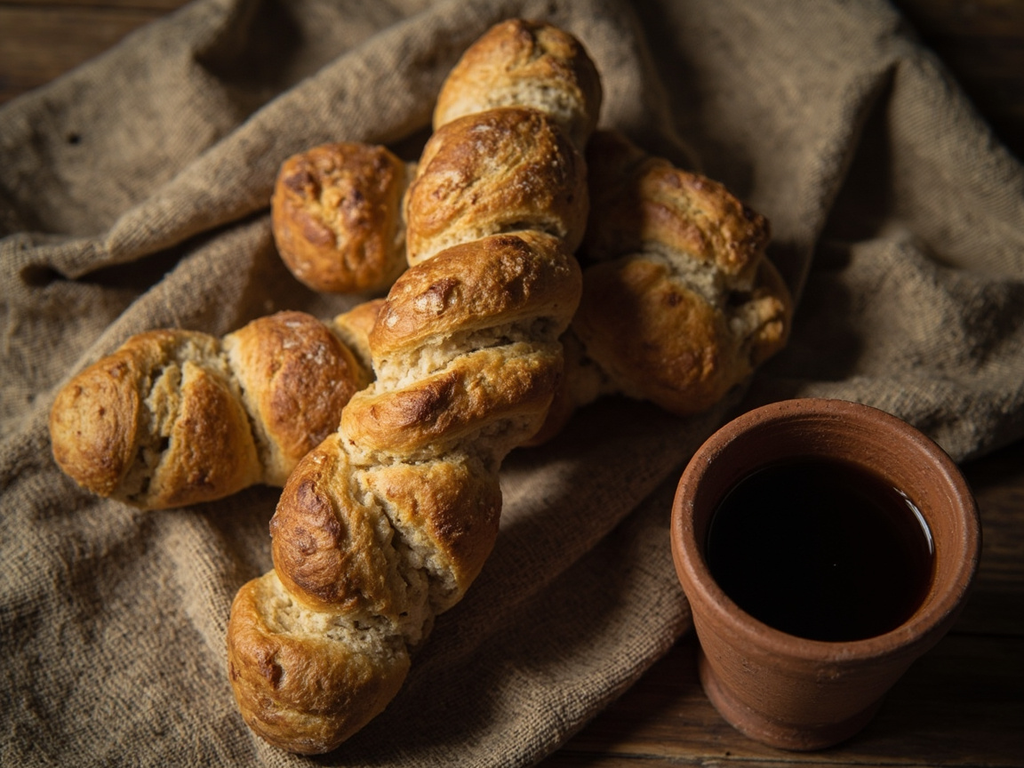
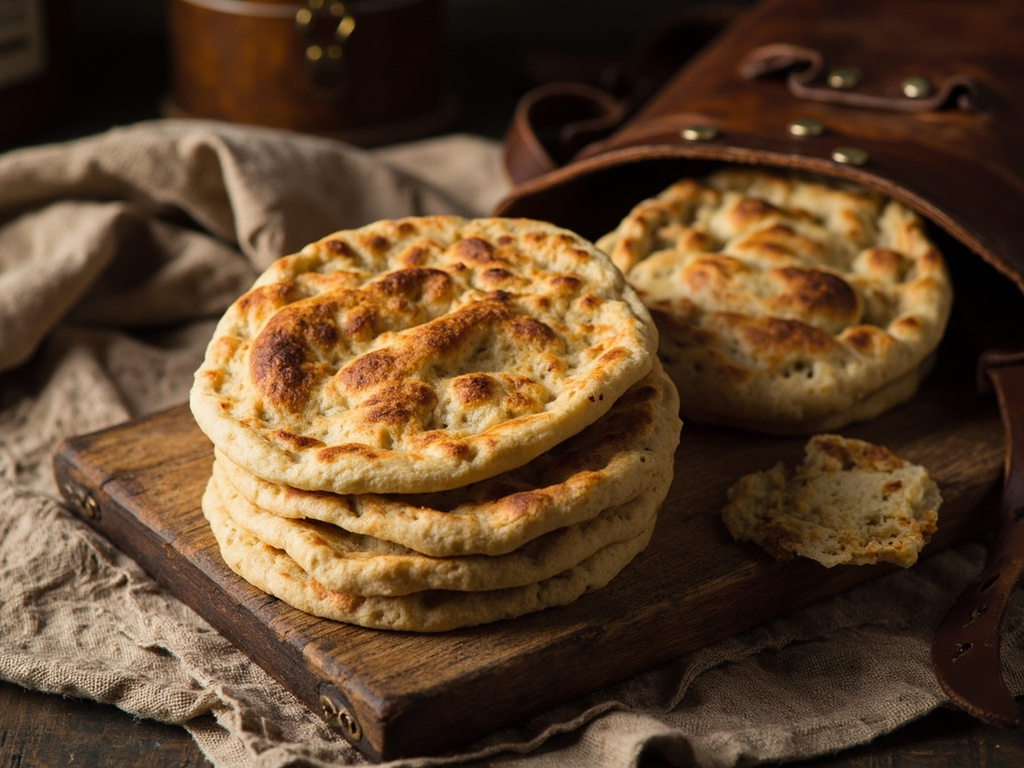
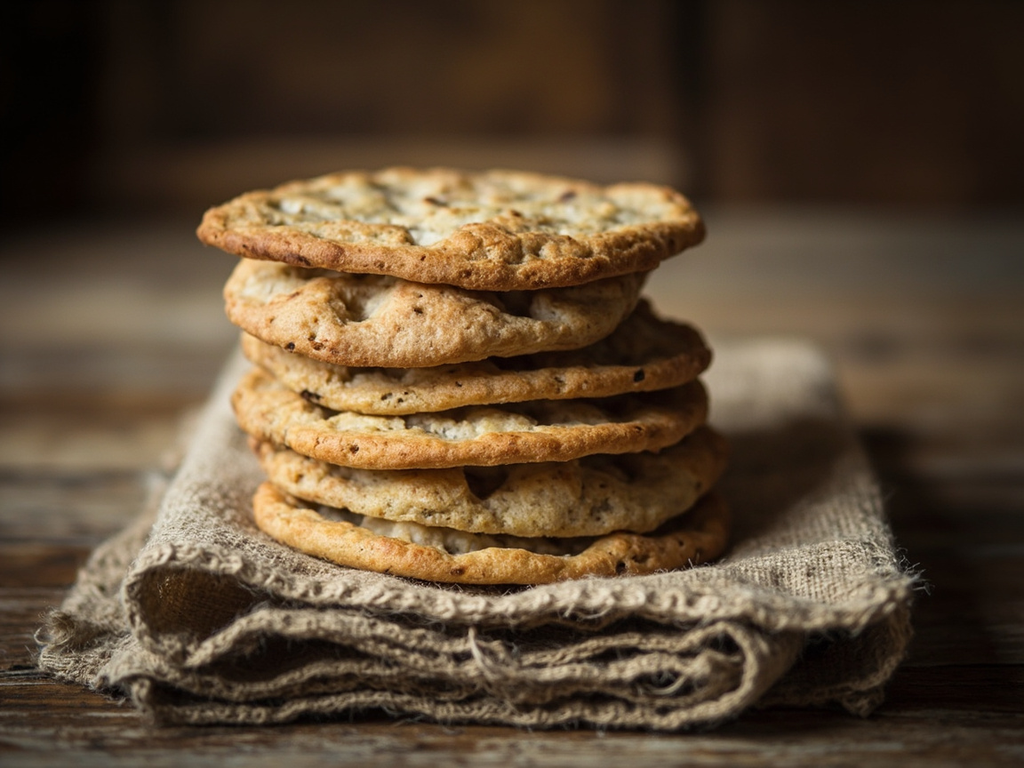
Flatbreads of spelt flour and salt, baked then re-dried in the oven until rock-hard. The 'biscuit' (*bis coctus*, twice-baked) that traveled in the legionary's pack and softened in water or wine.
In the Parthian desert, I saw my men perish for lack of bread — a general never forgets that. This bucellatum is baked twice so it lasts to the ends of the earth: hard on the tooth, yes, but soaked in water or wine it restores strength to those who have nothing left. I carried it myself in my pack, like the lowliest soldier. Remember this, friend: an army marches on its stomach, and glory feeds no one.
- •Spelt flour — as much as needed (base)
- •Water — for a firm dough (binder)
- •Salt — a good pinch (flavor and preservation)
Bucellatum, Soldier's Marching Biscuit
Flatbreads of spelt flour and salt, baked then re-dried in the oven until rock-hard. The 'biscuit' (*bis coctus*, twice-baked) that traveled in the legionary's pack and softened in water or wine.
Why this dish? Antony led long campaigns, notably the exhausting expedition against the Parthians, where supplies ran short. *Bucellatum*, twice-baked biscuit bread, kept for weeks: it was the survival bread of legions on the march, the one that saved — or failed to save — armies far from Rome.
In the Parthian desert, I saw my men perish for lack of bread — a general never forgets that. This bucellatum is baked twice so it lasts to the ends of the earth: hard on the tooth, yes, but soaked in water or wine it restores strength to those who have nothing left. I carried it myself in my pack, like the lowliest soldier. Remember this, friend: an army marches on its stomach, and glory feeds no one.
Ingredients (period version)
- Spelt flour — as much as needed (base)
- Water — for a firm dough (binder)
- Salt — a good pinch (flavor and preservation)
Ingredients
- Spelt flour (or half spelt, half whole wheat) — 300 g (base)
- Warm water — about 150 ml (binder)
- Salt — 1 tsp (flavor and preservation)
- Olive oil — 1 tbsp (optional) (dough pliability)
Method
- Mix the flour and salt, add water little by little to form a firm, non-sticky dough; knead 5 minutes.
- Shape small flat discs about 1 cm thick.
- Bake at 200°C for 20 minutes until golden.
- Reduce oven to 120°C and return the discs for 40 minutes to 1 hour to dry them completely (the 'second baking').
- Let cool: they should be hard and dry.
- To eat, dip them for a few minutes in hot water, broth, or diluted wine.
How it was made : Twice-baked bread was the long-lasting ration of ancient and medieval armies (*panis bucellatus*, ancestor of 'ship's biscuit'). Dry, it resisted mold for weeks. Soldiers rehydrated it in *posca* (vinegar water) or broth. Antony's Parthian expedition in 36 BC turned into a logistical disaster, illustrating how supply decided the fate of campaigns.
The contemporary twist : Serve as 'ancient crackers' to dip in olive tapenade — the legionary's aperitif revisited for today's table.
Sources : Pliny the Elder, Natural History, XVIII · Vegetius, De re militari (on army supply)
Mark Antony · Charactorium