 flip
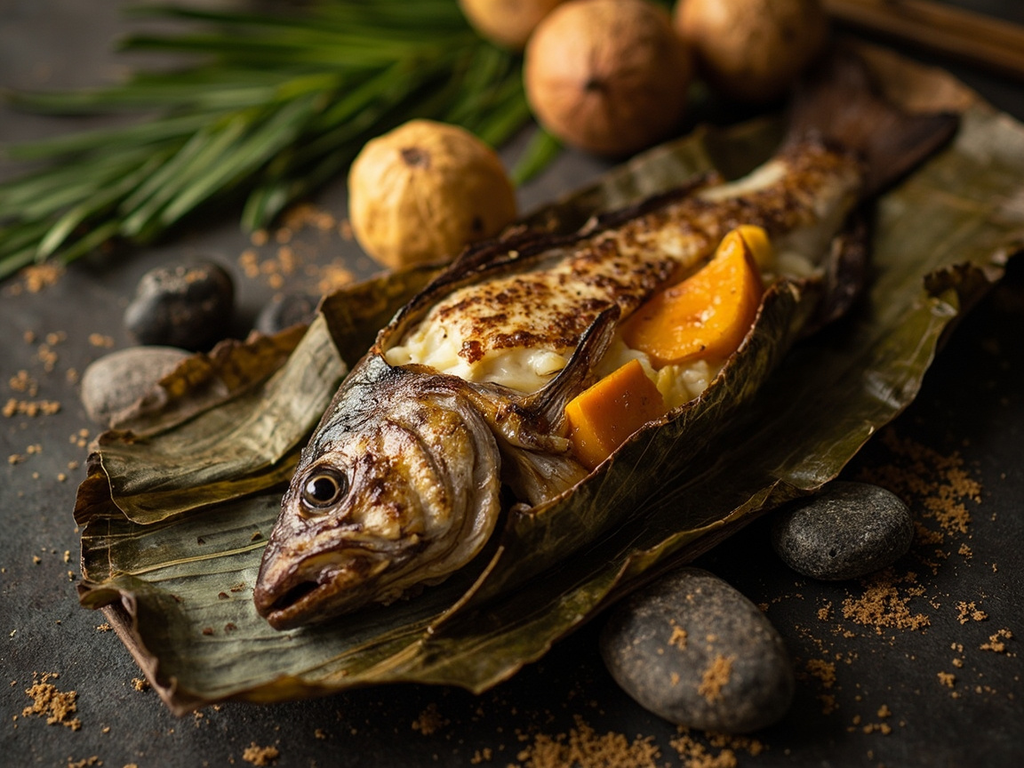
flipHākari of the umu — fish, taro and kumara on hot stones
Hākari of the umu — fish, taro and kumara on hot stones
Why this dish? Māui literally fished the islands from the bottom of the ocean with his hook Te Matau a Māui: his catch is entire lands. What could be more fitting to celebrate him than a great earth oven where ocean fish join the tubers of these islands pulled from the waves.
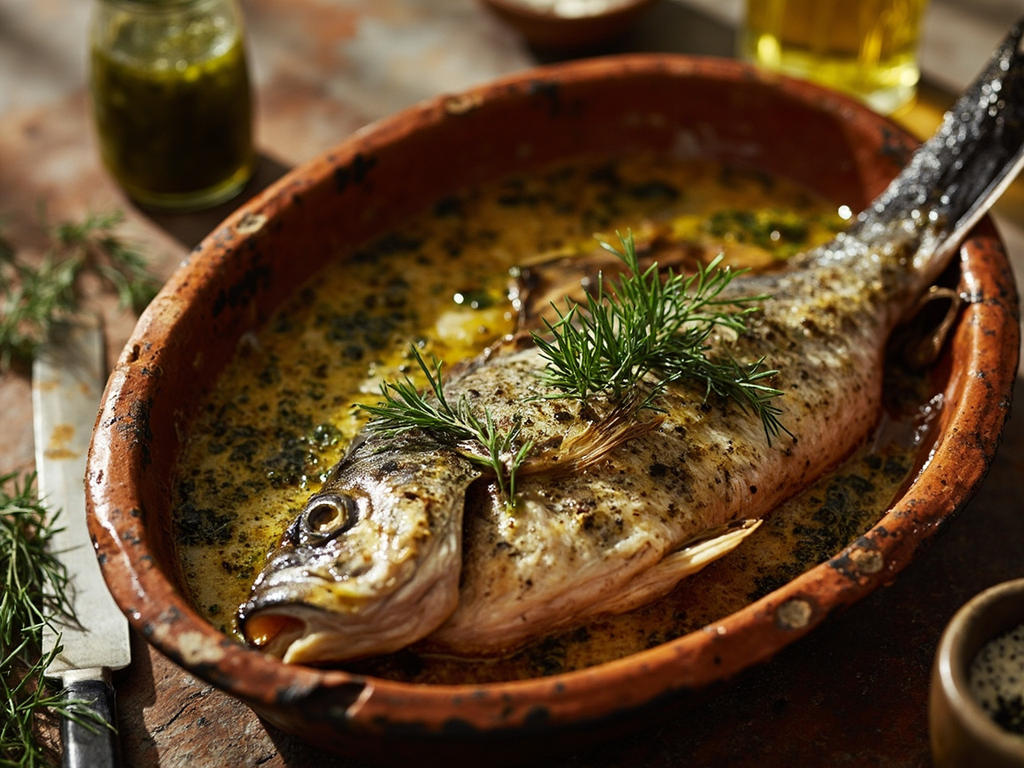
The quintessential Polynesian feast: whole fish, taro and kumara wrapped in leaves and slowly cooked underground on red-hot volcanic stones. A gentle, smoky cooking that concentrates flavours without a drop of oil.
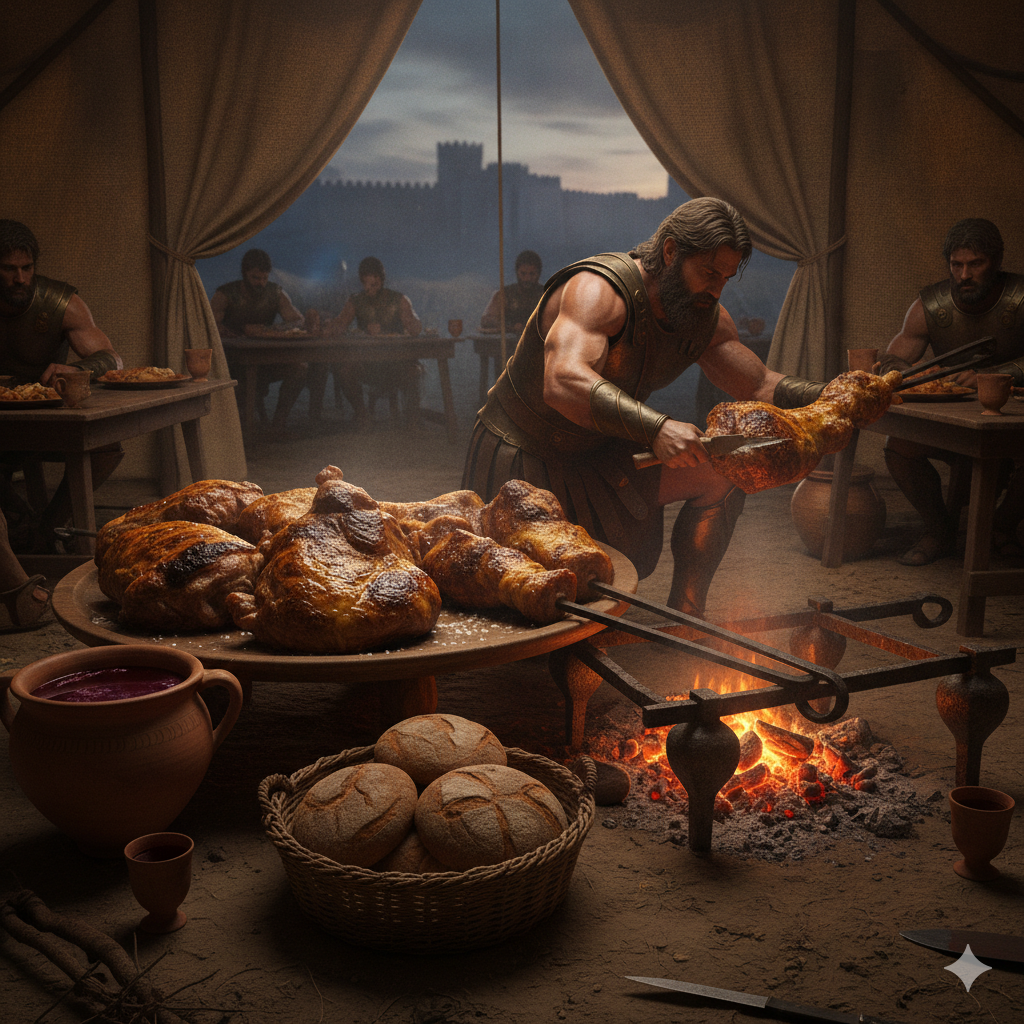
Listen well, you who eat tonight: this oven, it's my fire. I took it from my old ancestress Mahuika, fingernail after burning fingernail, until I carried it to humans — so don't waste it. The fish you see? I've pulled bigger ones: I hauled entire islands from the bottom of the sea with my hook! Lay your stones red-hot, cover with fresh leaves, and be patient: a demigod knows you rush neither the sun nor a good umu. Eat, and remember who gave you the flame.
- •Whole reef fish (snapper, grouper) — one large fish per family (heart of the feast)
- •Taro (roots) — several roots (staple starch)
- •Kumara (sweet potato) — an armful (sweet tuber)
- •Pressed coconut milk — as needed (binder and richness)
- •Taro / banana leaves — several (cooking wrap)
- •Sea salt — a pinch (seasoning)
Hākari of the umu — fish, taro and kumara on hot stones
The quintessential Polynesian feast: whole fish, taro and kumara wrapped in leaves and slowly cooked underground on red-hot volcanic stones. A gentle, smoky cooking that concentrates flavours without a drop of oil.
Why this dish? Māui literally fished the islands from the bottom of the ocean with his hook Te Matau a Māui: his catch is entire lands. What could be more fitting to celebrate him than a great earth oven where ocean fish join the tubers of these islands pulled from the waves.
Listen well, you who eat tonight: this oven, it's my fire. I took it from my old ancestress Mahuika, fingernail after burning fingernail, until I carried it to humans — so don't waste it. The fish you see? I've pulled bigger ones: I hauled entire islands from the bottom of the sea with my hook! Lay your stones red-hot, cover with fresh leaves, and be patient: a demigod knows you rush neither the sun nor a good umu. Eat, and remember who gave you the flame.
Ingredients (period version)
- Whole reef fish (snapper, grouper) — one large fish per family (heart of the feast)
- Taro (roots) — several roots (staple starch)
- Kumara (sweet potato) — an armful (sweet tuber)
- Pressed coconut milk — as needed (binder and richness)
- Taro / banana leaves — several (cooking wrap)
- Sea salt — a pinch (seasoning)
Ingredients
- Snapper or sea bream fillets — 4 (about 600 g) (heart of the dish)
- Taro (or yam as substitute) — 400 g (starch)
- Sweet potato — 400 g (sweet tuber)
- Coconut milk — 200 ml (binder)
- Banana leaves (or parchment paper) — 4 large (wrap)
- Sea salt, water — to taste (seasoning)
Method
- Peel taro and sweet potato, cut into large chunks, and parboil for 15 minutes in salted boiling water (taro must always be thoroughly cooked).
- Place the salted fish on a banana leaf (or parchment paper), surround with the tubers, drizzle with coconut milk.
- Close into airtight parcels.
- Bake at 180°C for 30-35 minutes (if no umu, the oven mimics gentle steam-cooking), or on the embers of a covered barbecue.
- Open the parcels at the table, in their fragrant steam.
How it was made : The true umu (umu in Tahitian/Māori, imu in Hawaii, hāngī in New Zealand) requires digging a pit, heating volcanic stones for hours, then stacking food baskets, covering with wet leaves and earth. Cooking lasts several hours. It is communal work, reserved for special occasions.
The contemporary twist : Serve the parcels still tied on a raw wooden board, with visible fibre string, like little packages just out of the earth.
Sources : Helen M. Leach, '1000 Years of Gardening in New Zealand' · Te Ara — Encyclopedia of New Zealand, entry 'Hangi'
Maui · Charactorium