 flip
flipCinnamon and Cumin Roasted Lamb Shoulder (Kuzu Kebabı)
Cinnamon and Cumin Roasted Lamb Shoulder (Kuzu Kebabı)
Why this dish? Roasted lamb and méchoui are central to Ottoman banquets, especially during victory celebrations and grand receptions for ambassadors that Mehmed II hosted after the conquest of Constantinople. The fatty, aromatic meat proclaimed the sultan's munificence.
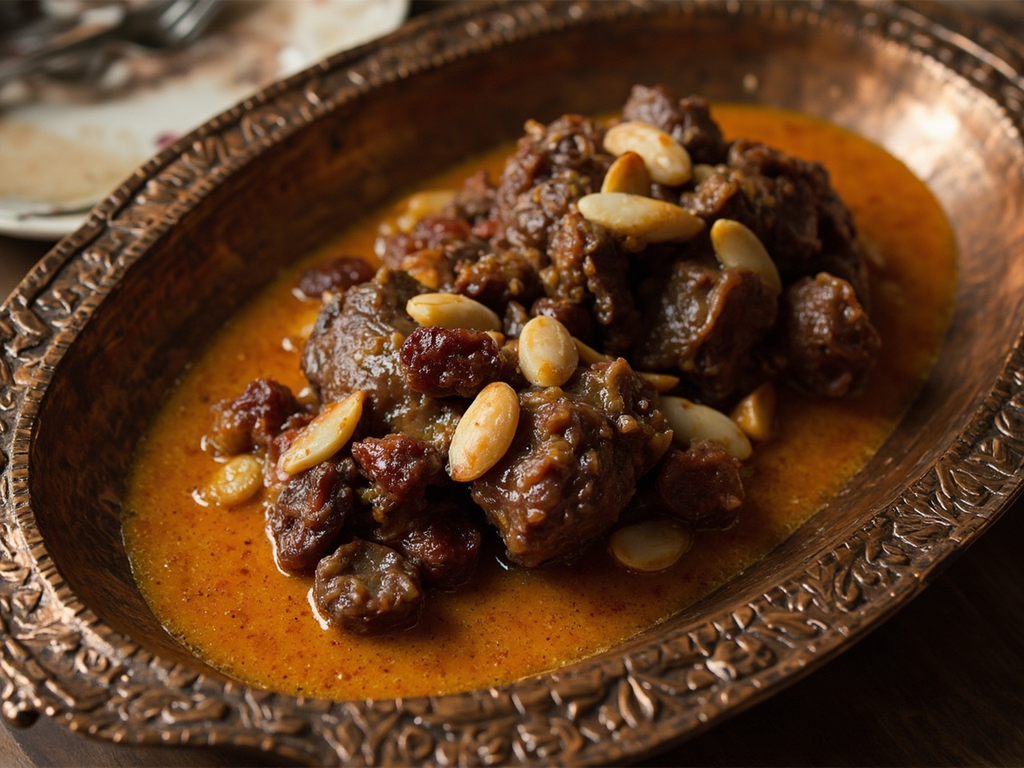
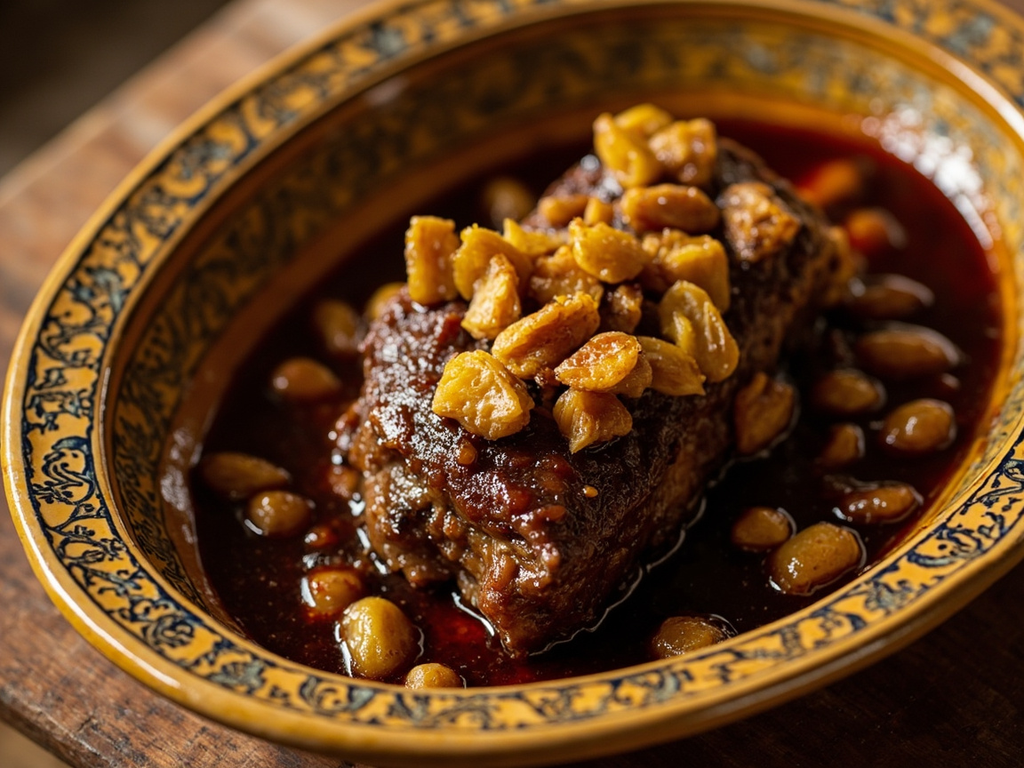
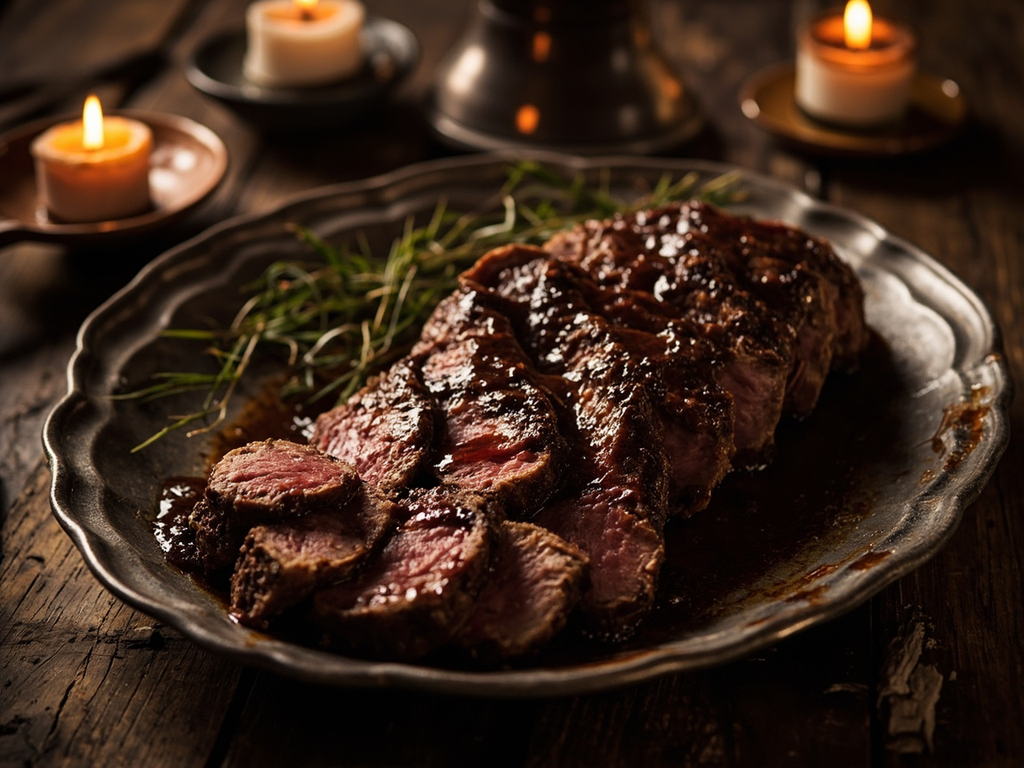
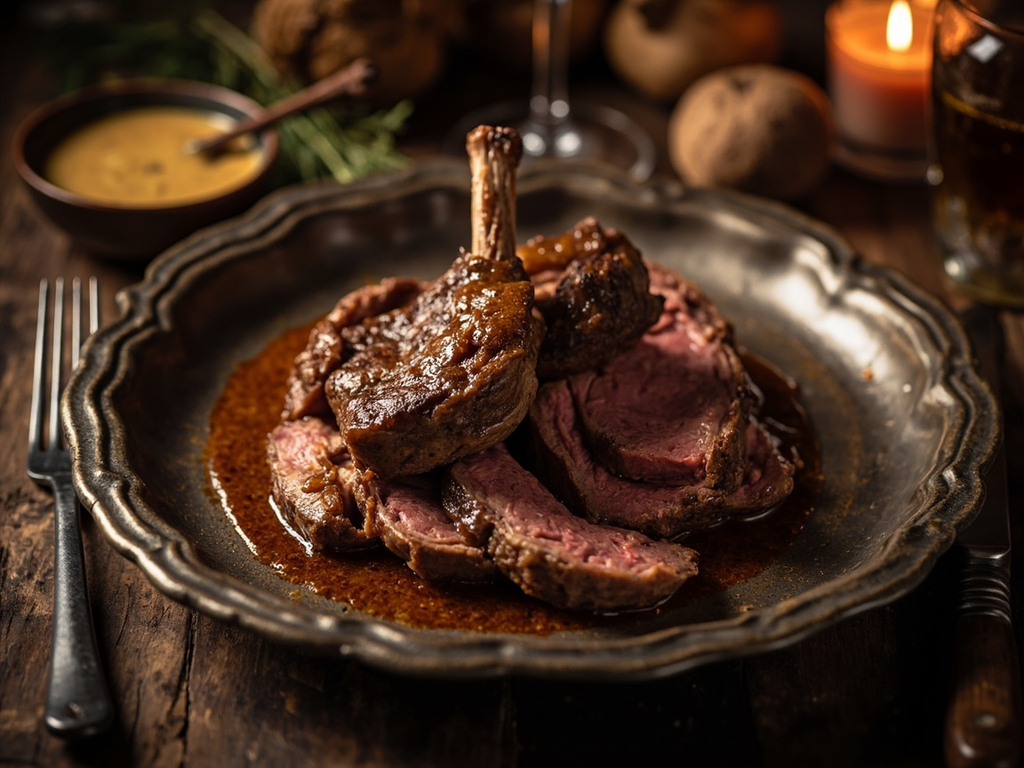
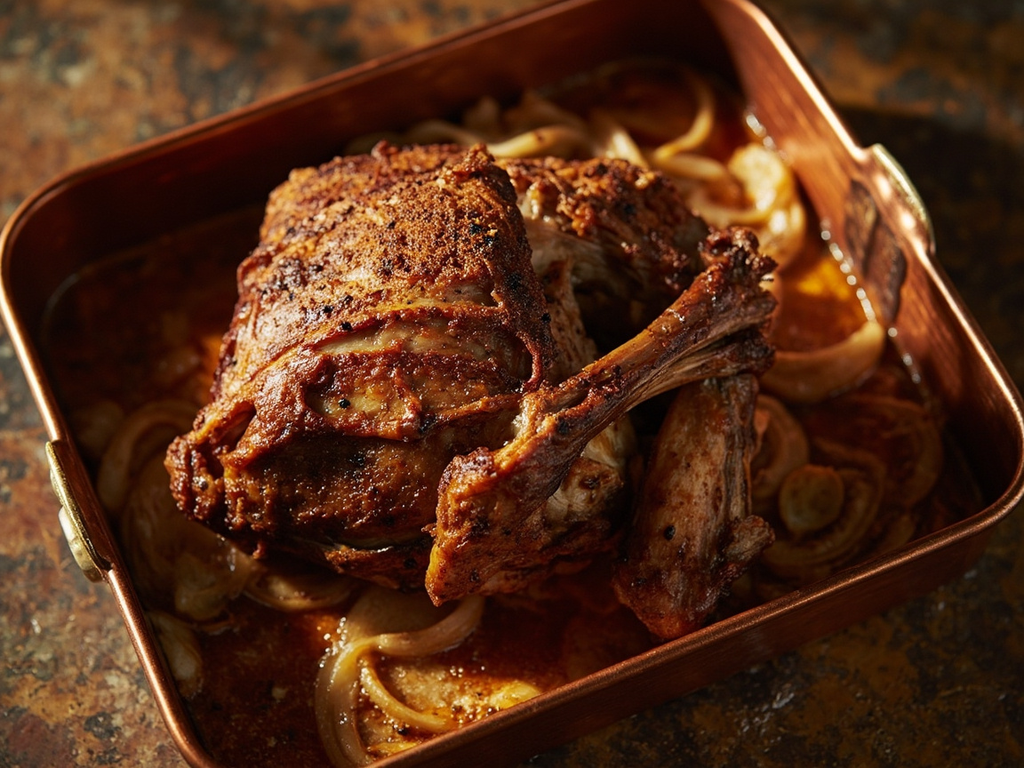
A meltingly tender lamb shoulder, rubbed with a blend of cinnamon, cumin, and pepper, slow-roasted until it falls off the bone. A generous festive dish, shared directly from the large platter.
When my armies returned victorious, I had fires lit and whole lambs roasted for a thousand mouths. See how I rub this shoulder with cumin, cinnamon, and black pepper — the spices of the Orient that my caravans bring me from thousands of leagues away. We cook it slowly, near the embers and not over them, so the fat melts without burning. And when the flesh falls apart under the fingers, only then is it worthy of a sultan’s table. Eat, and do not forget: it is bread and meat shared that hold an empire together.
- •Lamb shoulder — one whole piece (base)
- •Cinnamon — to taste (sweet spice)
- •Cumin — to taste (warm spice)
- •Black pepper — to taste (pungent spice)
- •Onions — several (base, sweetness)
- •Clarified butter — as needed (basting)
- •Salt — to taste (seasoning)
Cinnamon and Cumin Roasted Lamb Shoulder (Kuzu Kebabı)
A meltingly tender lamb shoulder, rubbed with a blend of cinnamon, cumin, and pepper, slow-roasted until it falls off the bone. A generous festive dish, shared directly from the large platter.
Why this dish? Roasted lamb and méchoui are central to Ottoman banquets, especially during victory celebrations and grand receptions for ambassadors that Mehmed II hosted after the conquest of Constantinople. The fatty, aromatic meat proclaimed the sultan's munificence.
When my armies returned victorious, I had fires lit and whole lambs roasted for a thousand mouths. See how I rub this shoulder with cumin, cinnamon, and black pepper — the spices of the Orient that my caravans bring me from thousands of leagues away. We cook it slowly, near the embers and not over them, so the fat melts without burning. And when the flesh falls apart under the fingers, only then is it worthy of a sultan’s table. Eat, and do not forget: it is bread and meat shared that hold an empire together.
Ingredients (period version)
- Lamb shoulder — one whole piece (base)
- Cinnamon — to taste (sweet spice)
- Cumin — to taste (warm spice)
- Black pepper — to taste (pungent spice)
- Onions — several (base, sweetness)
- Clarified butter — as needed (basting)
- Salt — to taste (seasoning)
Ingredients
- Lamb shoulder — 1.5 kg (base)
- Ground cinnamon — 1 tsp (sweet spice)
- Ground cumin — 2 tsp (warm spice)
- Black pepper — 1 tsp (pungent spice)
- Onions — 3 large, sliced (base, sweetness)
- Clarified butter (or olive oil) — 3 tbsp (basting)
- Coarse salt — 2 tsp (seasoning)
- Water — 1 cup (slow cooking liquid)
Method
- Mix cinnamon, cumin, pepper, and salt; rub the lamb shoulder generously with the mixture.
- Line a roasting pan with sliced onions, place the lamb on top, pour over melted butter and a cup of water.
- Cover with foil or a lid and roast at 150°C for 3 to 4 hours, basting occasionally.
- Uncover for the last 20 minutes at 200°C to brown the surface.
- Let rest 15 minutes, then shred the meat directly in the pan, coating with the onion juices.
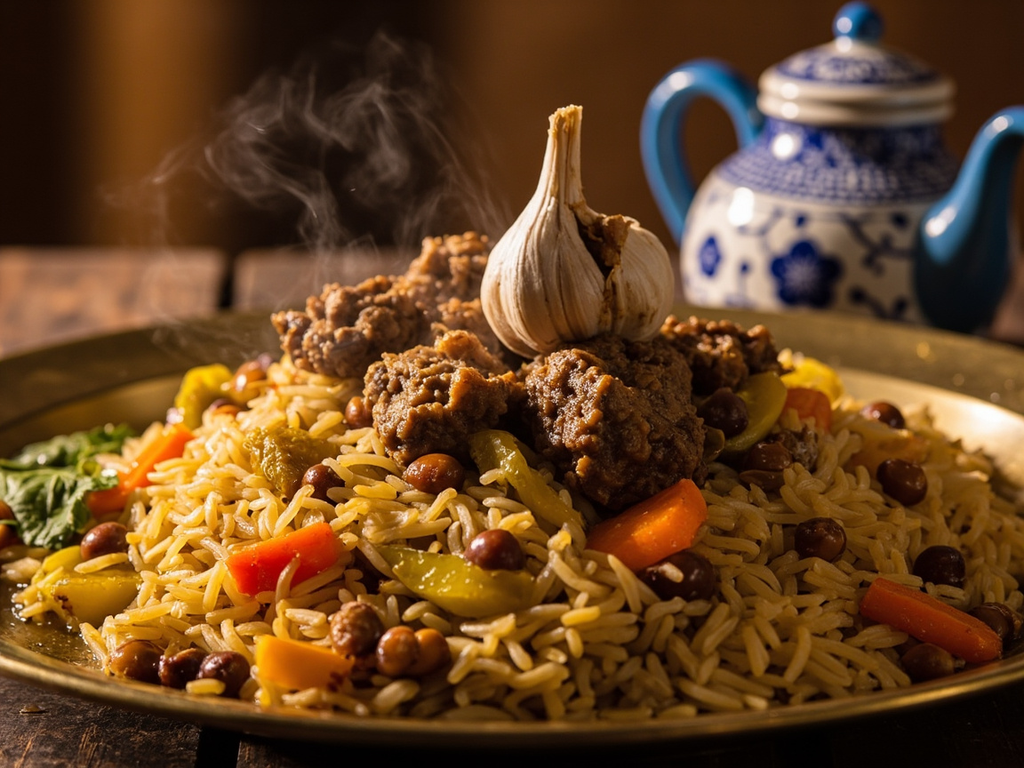
- Serve with the saffron pilaf (r1).
How it was made : Lacking an exact 15th-century palace recipe, we reconstruct from later Ottoman manuals and regional constants: slow cooking near embers, sweet (cinnamon) and warm (cumin) spices, abundant fat. Chili pepper, being New World, is excluded.
The contemporary twist : Served on a wooden board, shredded as “Conqueror’s pulled lamb,” with a minty yogurt sauce on the side for freshness.
Mehmet II · Charactorium