 flip
flipSpit-roasted trout with honey and woodland herbs
Spit-roasted trout with honey and woodland herbs
Why this dish? When Merlin appears at Arthur's court for a banquet, river fish — which he knows how to catch better than anyone — becomes a dish worthy of the king. Glazed with honey and sharpened with a splash of verjuice, it marries the forester's frugality and the splendor of Camelot's feast.
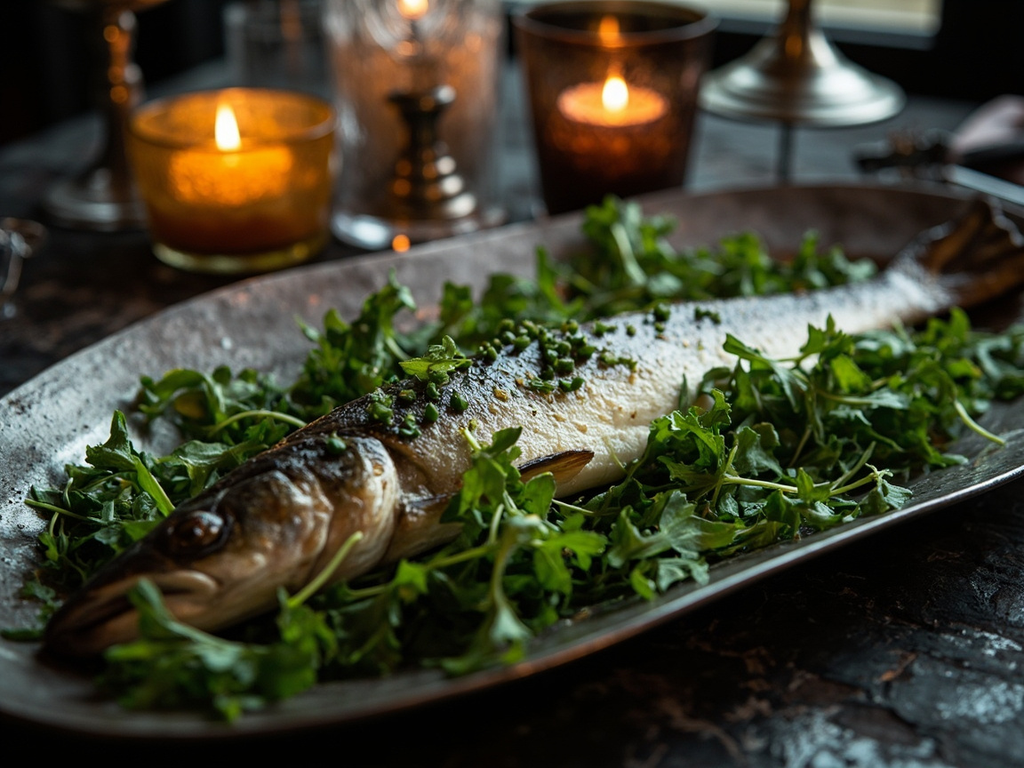
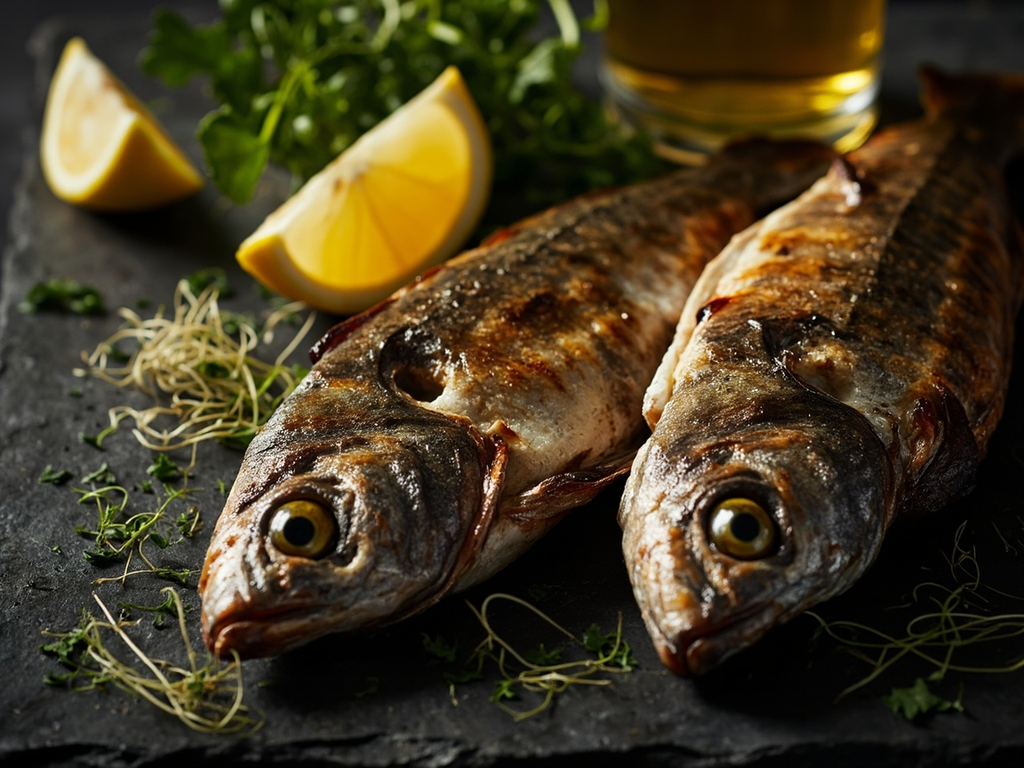
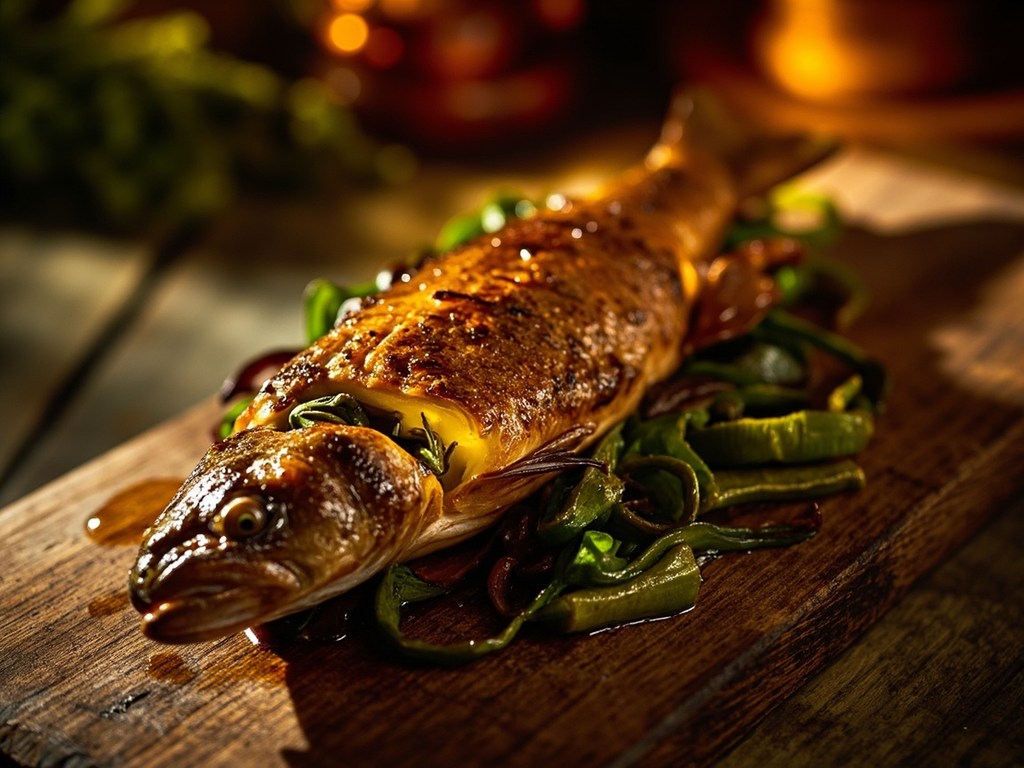
A whole trout roasted over the fire, its skin lacquered with honey and perfumed with herbs, awakened by the acidity of verjuice. A festive dish that remains true to the freshwater so dear to the mage.
For the king's feast, I left the modesty of the cauldron and pulled from the river the finest trout, the one that lurked beneath the stone like a secret. I open it, rub it with herbs, hang it near the embers, and baste it with honey so it takes that golden varnish that pleases the mighty. At the last moment, a splash of verjuice, sour as a truth — for even at Arthur's table, a little acid is needed to wake sleeping kings. Eat, lord, and remember whence comes what you savor.
- •Whole river trout — one fine specimen (centerpiece)
- •Honey — a spoonful (glaze, shine)
- •Verjuice (green grape juice) — a dash (period acidity)
- •Herbs (parsley, thyme, sage) — a bunch (flavor)
- •Salt — a pinch (seasoning)
Spit-roasted trout with honey and woodland herbs
A whole trout roasted over the fire, its skin lacquered with honey and perfumed with herbs, awakened by the acidity of verjuice. A festive dish that remains true to the freshwater so dear to the mage.
Why this dish? When Merlin appears at Arthur's court for a banquet, river fish — which he knows how to catch better than anyone — becomes a dish worthy of the king. Glazed with honey and sharpened with a splash of verjuice, it marries the forester's frugality and the splendor of Camelot's feast.
For the king's feast, I left the modesty of the cauldron and pulled from the river the finest trout, the one that lurked beneath the stone like a secret. I open it, rub it with herbs, hang it near the embers, and baste it with honey so it takes that golden varnish that pleases the mighty. At the last moment, a splash of verjuice, sour as a truth — for even at Arthur's table, a little acid is needed to wake sleeping kings. Eat, lord, and remember whence comes what you savor.
Ingredients (period version)
- Whole river trout — one fine specimen (centerpiece)
- Honey — a spoonful (glaze, shine)
- Verjuice (green grape juice) — a dash (period acidity)
- Herbs (parsley, thyme, sage) — a bunch (flavor)
- Salt — a pinch (seasoning)
Ingredients
- Whole gutted trout — 1 (approx. 400 g) (centerpiece)
- Honey — 1 tbsp (glaze)
- Verjuice (or lemon juice + water) — 2 tbsp (acidity)
- Bunch of parsley, thyme, and sage — 1 (aromatics)
- Salt — 1 tsp (seasoning)
- Butter — 20 g (moistness in cooking)
Method
- Preheat the oven to 200°C (or prepare a bed of embers). Salt the inside of the trout and stuff with the herb bunch and a knob of butter.
- Place the trout on a baking sheet or grill; mix the honey with a spoonful of verjuice and brush the skin.
- Cook for 18 to 22 minutes, brushing once or twice with the honey glaze, until the skin is lacquered and the flesh pearly.
- Upon removal, drizzle with the remaining verjuice, let rest 3 minutes, and serve with oatcakes and melted leeks.
How it was made : At the noble medieval table, roasted freshwater fish was a choice dish, especially on lean days imposed by the Church. Verjuice — sour green grape juice — was the common acidulant of medieval cuisine (before the spread of lemon in the north), and sweet-and-sour contrasts were favored, with honey used to glaze meats and fish.
The contemporary twist : Present the whole trout on a driftwood board, strewn with edible flowers and young shoots — a 'river catch' worthy of a chic forest dinner.
Sources : Le Mesnagier de Paris (medieval cookery, use of verjuice and sweet-sour sauces) · Medieval use of verjuice as acidulant
Merlin · Charactorium