 flip
flipTortelli d'erbe e ricotta (herb and ricotta tortelli)
Tortelli d'erbe e ricotta (herb and ricotta tortelli)
Why this dish? On one of his illustrated shopping lists (kept at the Casa Buonarroti), Michelangelo sketched, next to the words, "tortegli," bread, a herring, and a salad to guide an illiterate servant. Tortelli are thus one of the few dishes known to have been on his table — a *companatico* for better days.
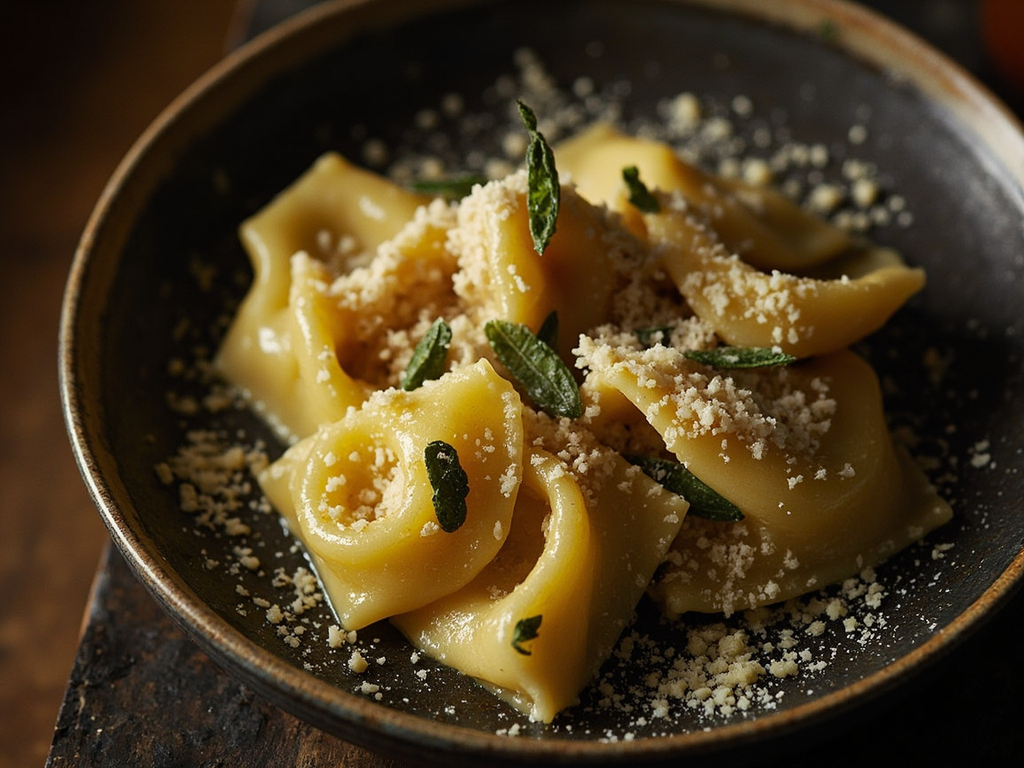
Squares of fresh pasta filled with ricotta, spinach and herbs, scented with nutmeg, served with melted butter, sage and grated cheese.
Look, I even scribbled the word on my paper, with a little drawing, because my boy cannot read: *tortegli*. On days when we allow ourselves a little sweetness, you beat ricotta with garden herbs and a pinch of nutmeg, wrap it in pasta as thin as gold leaf, and let them swim a moment in boiling water. Some butter, sage, and grated cheese on top — this is what you eat when the work has gone well and the soul needs a rest.
- •Wheat flour — two pounds (pasta)
- •Eggs — a few (pasta)
- •Fresh ricotta — a good amount (filling)
- •Spinach and garden herbs (chard, parsley) — one bunch (filling)
- •Nutmeg — one, grated (flavor)
- •Grating cheese (aged pecorino) — as desired (seasoning)
- •Butter and sage — to taste (sauce)
Tortelli d'erbe e ricotta (herb and ricotta tortelli)
Squares of fresh pasta filled with ricotta, spinach and herbs, scented with nutmeg, served with melted butter, sage and grated cheese.
Why this dish? On one of his illustrated shopping lists (kept at the Casa Buonarroti), Michelangelo sketched, next to the words, "tortegli," bread, a herring, and a salad to guide an illiterate servant. Tortelli are thus one of the few dishes known to have been on his table — a *companatico* for better days.
Look, I even scribbled the word on my paper, with a little drawing, because my boy cannot read: *tortegli*. On days when we allow ourselves a little sweetness, you beat ricotta with garden herbs and a pinch of nutmeg, wrap it in pasta as thin as gold leaf, and let them swim a moment in boiling water. Some butter, sage, and grated cheese on top — this is what you eat when the work has gone well and the soul needs a rest.
Ingredients (period version)
- Wheat flour — two pounds (pasta)
- Eggs — a few (pasta)
- Fresh ricotta — a good amount (filling)
- Spinach and garden herbs (chard, parsley) — one bunch (filling)
- Nutmeg — one, grated (flavor)
- Grating cheese (aged pecorino) — as desired (seasoning)
- Butter and sage — to taste (sauce)
Ingredients
- All-purpose flour — 300 g (pasta)
- Eggs — 3 (pasta)
- Ricotta — 250 g (filling)
- Cooked and squeezed spinach — 200 g (filling)
- Nutmeg — 1 pinch (flavor)
- Grated pecorino (or parmesan) — 60 g (filling and finish)
- Butter — 60 g (sauce)
- Sage — 8 leaves (sauce)
- Salt — to taste (seasoning)
Method
- Knead the flour and eggs into a smooth dough, let rest 30 minutes under a cloth.
- Finely chop the cooked spinach, mix with ricotta, half the cheese, nutmeg, and salt.
- Roll out the dough very thinly, place small walnut-sized mounds of filling spaced apart, fold over and cut into squares or circles, sealing edges well.
- Poach the tortelli in salted boiling water for 3 to 4 minutes, until they float.
- Melt the butter with the sage until nutty and fragrant.
- Drain the tortelli, coat with sage butter, sprinkle with remaining cheese, and serve immediately.
How it was made : Stuffed pasta is attested in Italian cuisine since the Middle Ages; during the Renaissance, treatises like Bartolomeo Scappi's describe many "tortelli" and "tortellini" with herbs, fresh cheese and spices. Nutmeg, brought from the East, was a marker of accessible refinement. Each piece was sealed by hand, a lengthy task reserved for feast days.
The contemporary twist : Served on a dark plate, foamy butter and a rain of pecorino, they evoke a fresco: shaded background, light spots of cheese like bursts of light.
Michelangelo · Charactorium