 flip
flipMiyar nama da dawadawa (festive mutton and fermented locust bean sauce)
Miyar nama da dawadawa (festive mutton and fermented locust bean sauce)
Why this dish? Its anchoring specifies: mutton or beef appeared only at important meals. To celebrate a military victory or receive chiefs from neighboring cities like Kano and Katsina, the warrior queen's table offered a generous meat sauce, built on dawadawa and perfumed with okra.
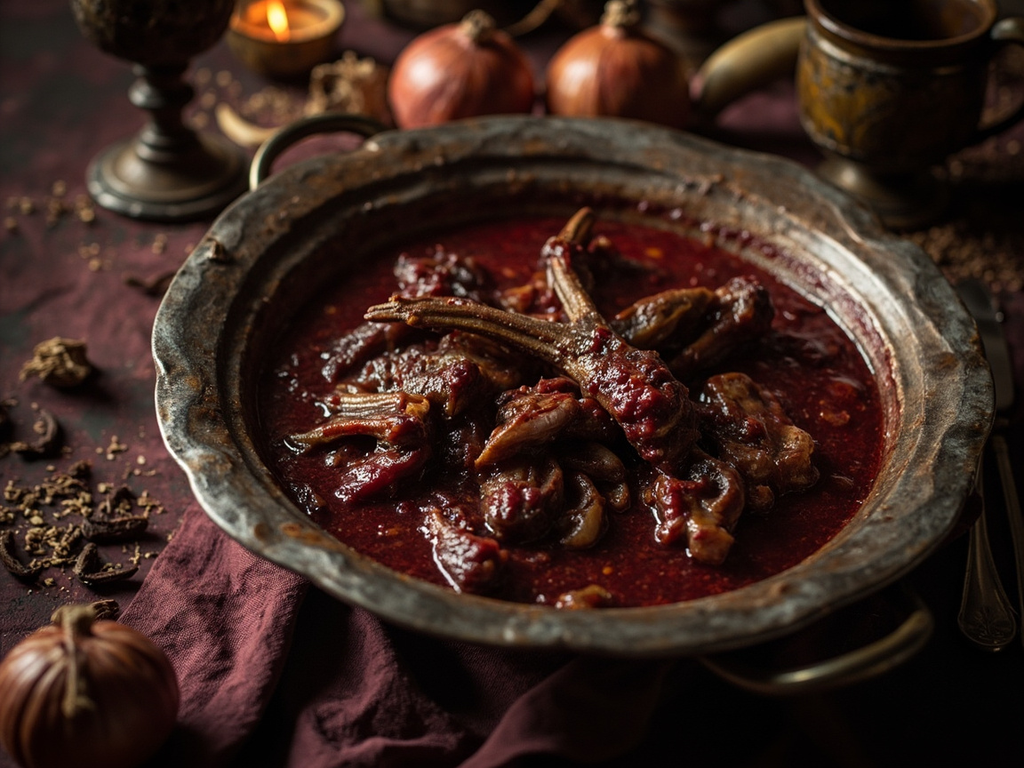
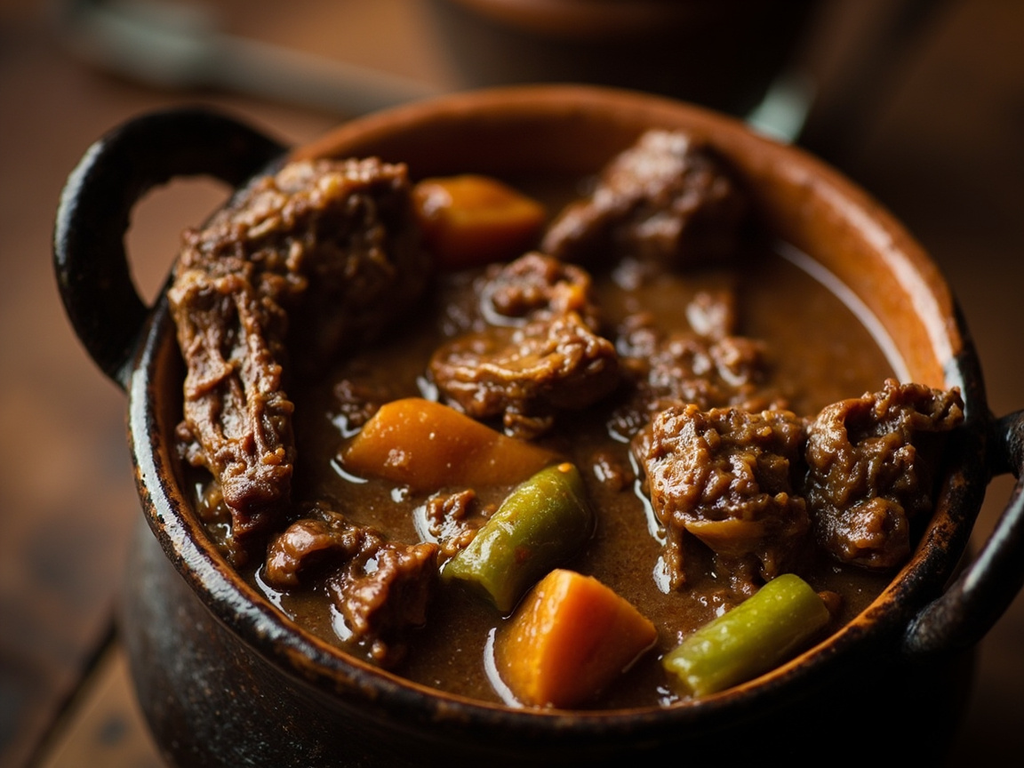
A thick, rich sauce of simmered mutton pieces, bound with okra, deeply savory thanks to dawadawa and shea butter. This is the miya of banquets, the one served when millet paste becomes a dish of honor.
When my horsemen returned victorious and the walls of a new city were added to my kingdom, I did not send them away with empty bellies. The sheep was slaughtered, the meat thrown into the great pot with dawadawa and okra, and the aroma rose to the ramparts. Taste this sauce: it is heavy with meat as a feast of return from war should be. A queen is also measured by the table she sets for the brave.
- •Mutton on the bone — fine pieces (heart of the dish)
- •Fresh okra (kubewa) — a handful (binder and body of the sauce)
- •Dawadawa — three cakes (deep umami)
- •Onion — one (aromatic base)
- •Shea butter — two spoonfuls (cooking fat)
- •Pounded sesame seeds (ridi) — a handful (thickener and nutty flavor)
- •Rock salt — to taste (seasoning)
Miyar nama da dawadawa (festive mutton and fermented locust bean sauce)
A thick, rich sauce of simmered mutton pieces, bound with okra, deeply savory thanks to dawadawa and shea butter. This is the miya of banquets, the one served when millet paste becomes a dish of honor.
Why this dish? Its anchoring specifies: mutton or beef appeared only at important meals. To celebrate a military victory or receive chiefs from neighboring cities like Kano and Katsina, the warrior queen's table offered a generous meat sauce, built on dawadawa and perfumed with okra.
When my horsemen returned victorious and the walls of a new city were added to my kingdom, I did not send them away with empty bellies. The sheep was slaughtered, the meat thrown into the great pot with dawadawa and okra, and the aroma rose to the ramparts. Taste this sauce: it is heavy with meat as a feast of return from war should be. A queen is also measured by the table she sets for the brave.
Ingredients (period version)
- Mutton on the bone — fine pieces (heart of the dish)
- Fresh okra (kubewa) — a handful (binder and body of the sauce)
- Dawadawa — three cakes (deep umami)
- Onion — one (aromatic base)
- Shea butter — two spoonfuls (cooking fat)
- Pounded sesame seeds (ridi) — a handful (thickener and nutty flavor)
- Rock salt — to taste (seasoning)
Ingredients
- Mutton shoulder or neck, in pieces — 600 g (heart of the dish)
- Fresh okra — 200 g (natural binder of the sauce)
- Dawadawa / iru — 2 to 3 tbsp (fermented umami (substitute: 2 tsp miso))
- Onion — 1 large (aromatic base)
- Edible shea butter or sesame oil — 2 tbsp (fat)
- Sesame paste (tahini) — 1 tbsp (roundness and binder)
- Salt — to taste (seasoning)
Method
- Sauté the sliced onion in shea butter until browned, add the mutton pieces and sear on all sides.
- Cover with hot water, add crumbled dawadawa and salt, simmer covered for 1 hour until the meat is tender.
- Wash and slice the okra. Add to the sauce and cook for 10 minutes: it will thicken and become silky.
- Dissolve the sesame paste in a ladle of broth and return to the pot to bind and round out the flavor.
- Adjust salt, let reduce for 5 minutes until the sauce is coating and glossy.
- Serve very hot with tuwo of millet or sorghum, eaten by hand.
How it was made : In the 16th-century Hausa city-states, meat remained a luxury reserved for feasts, honored guests, and victories. Mutton and beef came from the herds of Fulani and Hausa herders. Okra, sesame, and locust bean were local binders and flavor enhancers, long before the arrival of tomato or chili in the region — ingredients that would only reach West Africa after Atlantic contacts.
The contemporary twist : Serve as a 'return-from-campaign bowl': smoothed tuwo, mutton sauce in the center, okra arranged in a fan, and toasted sesame flakes on top.
Amina de Zaria · Charactorium