Hypocras from Montaigne's Wine
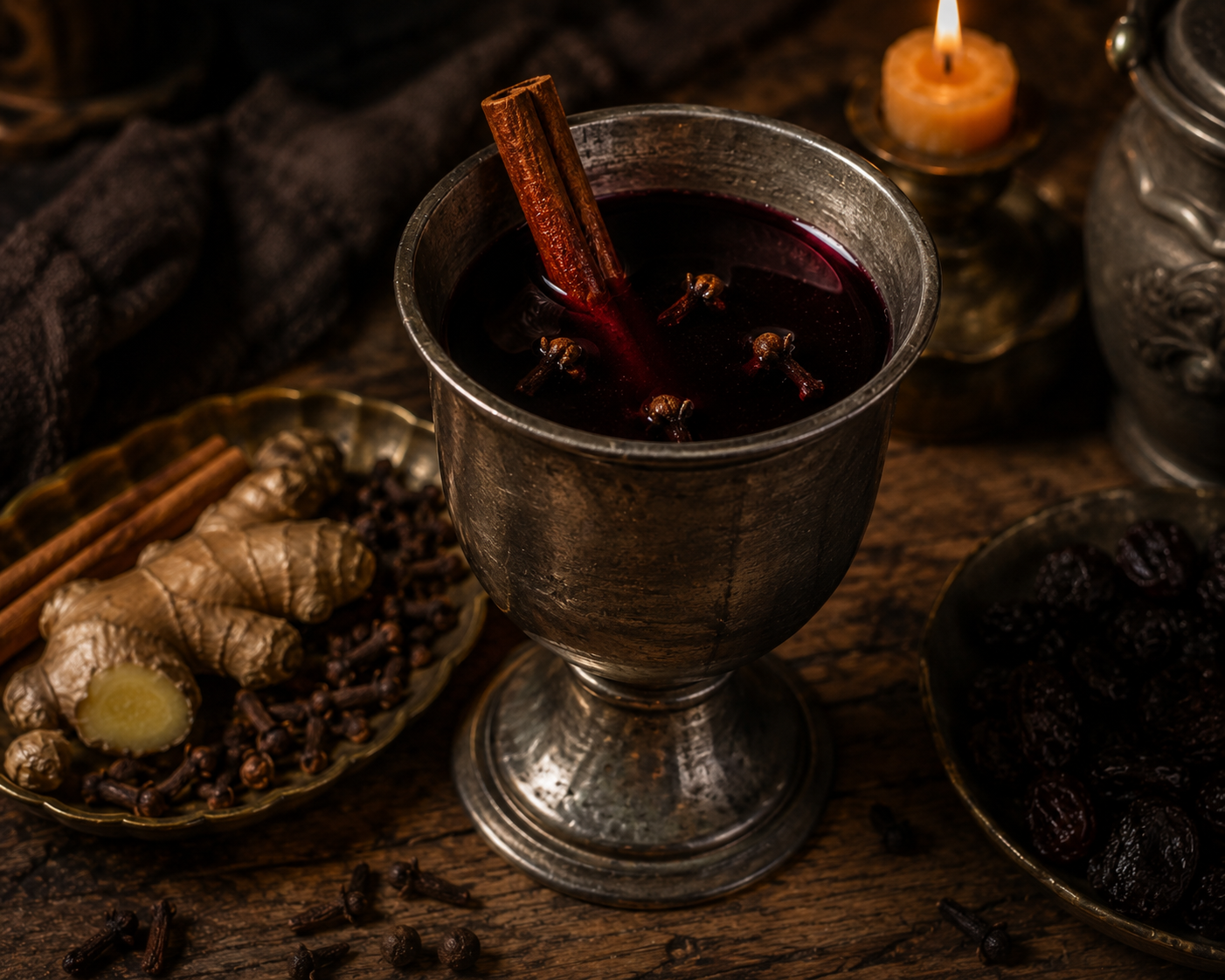
The festive wine of the Renaissance: a red or white wine sweetened with sugar (or honey) and perfumed with cinnamon, ginger, and grains of paradise, filtered until clear. It was drunk at the end of the meal, with dragées, to aid — it was said — digestion.
The festive wine of the Renaissance: a red or white wine sweetened with sugar (or honey) and perfumed with cinnamon, ginger, and grains of paradise, filtered until clear. It was drunk at the end of the meal, with dragées, to aid — it was said — digestion.
At the end of the meal, reader, they used to present this wine called hypocras: my wine, from my vines, sweetened with sugar and perfumed with cinnamon and ginger. It is passed and repassed through a cloth bag, which they call Hippocrates' sleeve, until it is clear as ruby. I use it soberly, for I have always held that moderation suits pleasure better than excess — but a cup, among dragées and good company, I do not refuse.
- •Wine (red or white) — a pint (base)
- •Sugar or honey — to taste (sweetness)
- •Cinnamon — one stick (master spice)
- •Ginger — one root (spice)
- •Grains of paradise (melegueta pepper) — a few grains (spicy heat)
- •Clove, nutmeg — a pinch (flavor)
Hypocras from Montaigne's Wine
The festive wine of the Renaissance: a red or white wine sweetened with sugar (or honey) and perfumed with cinnamon, ginger, and grains of paradise, filtered until clear. It was drunk at the end of the meal, with dragées, to aid — it was said — digestion.
Why this dish? Montaigne drank wine from his own vineyards, "with a certain moderation." Transformed into hypocras — sweetened, spiced wine served to close Renaissance feasts — this same wine became the ceremonial drink of his issue de table.
At the end of the meal, reader, they used to present this wine called hypocras: my wine, from my vines, sweetened with sugar and perfumed with cinnamon and ginger. It is passed and repassed through a cloth bag, which they call Hippocrates' sleeve, until it is clear as ruby. I use it soberly, for I have always held that moderation suits pleasure better than excess — but a cup, among dragées and good company, I do not refuse.
Ingredients (period version)
- Wine (red or white) — a pint (base)
- Sugar or honey — to taste (sweetness)
- Cinnamon — one stick (master spice)
- Ginger — one root (spice)
- Grains of paradise (melegueta pepper) — a few grains (spicy heat)
- Clove, nutmeg — a pinch (flavor)
Ingredients
- Red or white wine — 75 cl (base)
- Sugar (or honey) — 120 to 150 g (sweetness)
- Cinnamon — 1 stick (main spice)
- Fresh ginger — 3 thin slices (spice)
- Grains of paradise or long pepper — 1/2 tsp (heat)
- Cloves — 2 (flavor)
- Nutmeg — a grating (flavor)
Method
- Pour the wine into a large bowl, add the sugar and stir until dissolved (without heating, in the old manner).
- Coarsely crush the spices and add them to the wine.
- Let infuse covered in a cool place for 1 to 12 hours depending on desired intensity.
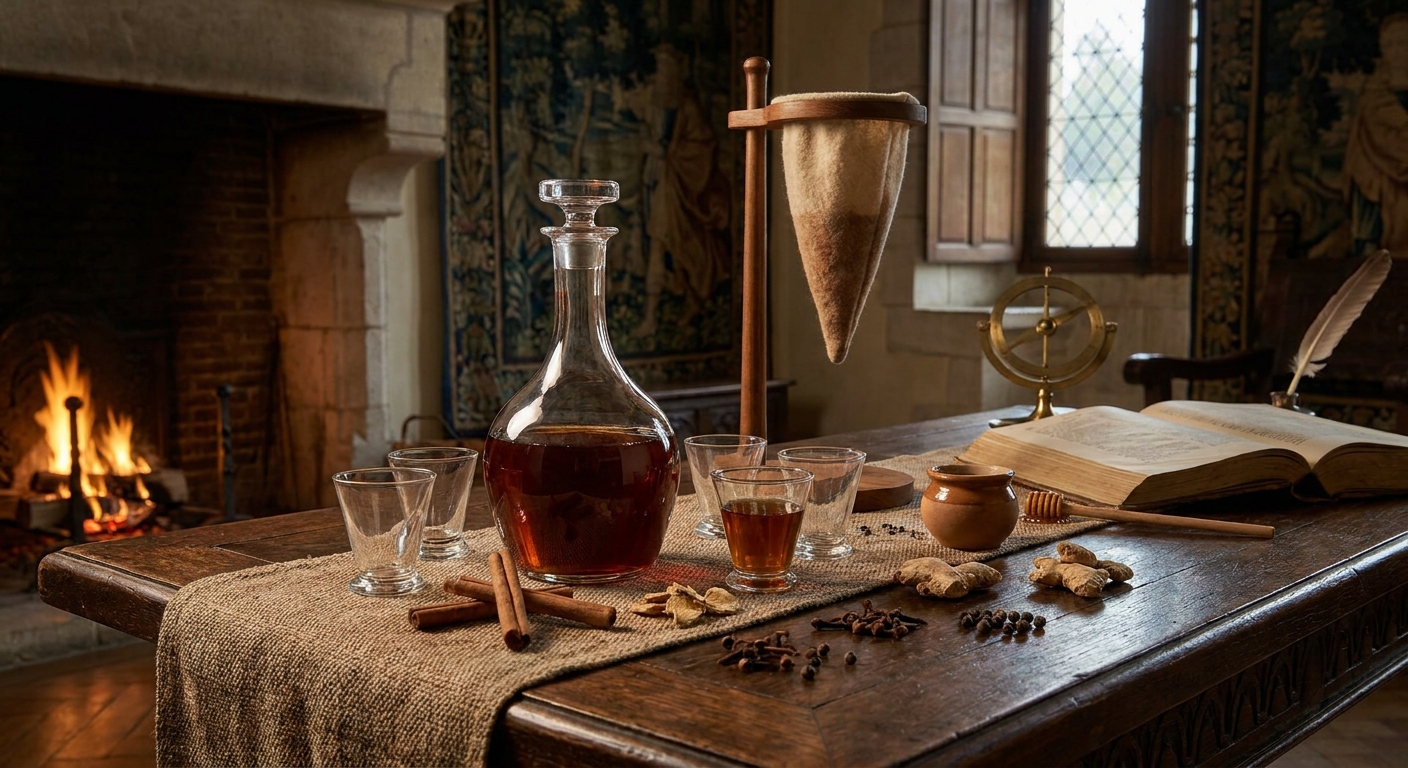
- Filter carefully through a fine cloth (the famous "Hippocras sleeve"), several times if necessary, until clear.
- Serve cool or at room temperature in small cups, accompanied by dried fruits and dragées.
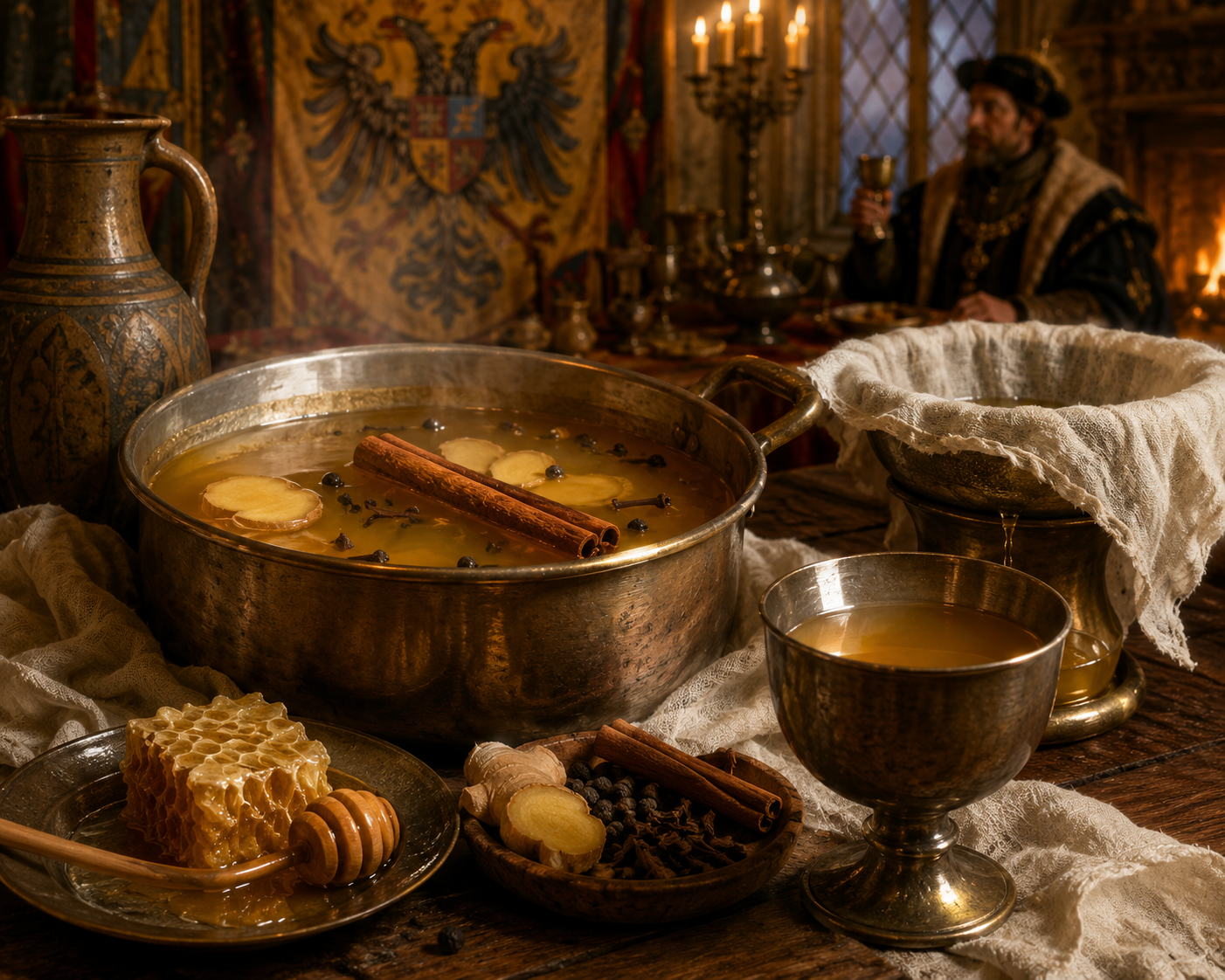
How it was made : Hypocras takes its name from the "Hippocras sleeve," a conical cloth bag through which the spiced wine was filtered. An emblematic drink of medieval and Renaissance issue de table, it was believed to have digestive virtues. It was traditionally prepared cold by infusion, with sugar — still costly and classed among spices — or honey providing sweetness.
The contemporary twist : Serve it over ice in small glasses with a cinnamon stick stirrer, like a "friendship wine" at meal's end — or warm in winter, as a noble ancestor of mulled wine.
Sources : Le Ménagier de Paris (hypocras recipes) · Montaigne, Essais (on his relationship with wine and moderation)
Michel de Montaigne · Charactorium