 flip
flipKaeng som pla (แกงส้มปลา) — sour curry with river fish
Kaeng som pla (แกงส้มปลา) — sour curry with river fish
Why this dish? Ayutthaya, a lake capital crisscrossed by canals, lived off river fish. This sour tamarind curry was the staple of both the royal and common tables — a dish that Naresuan would have eaten daily at the palace of Phitsanulok, between war councils.
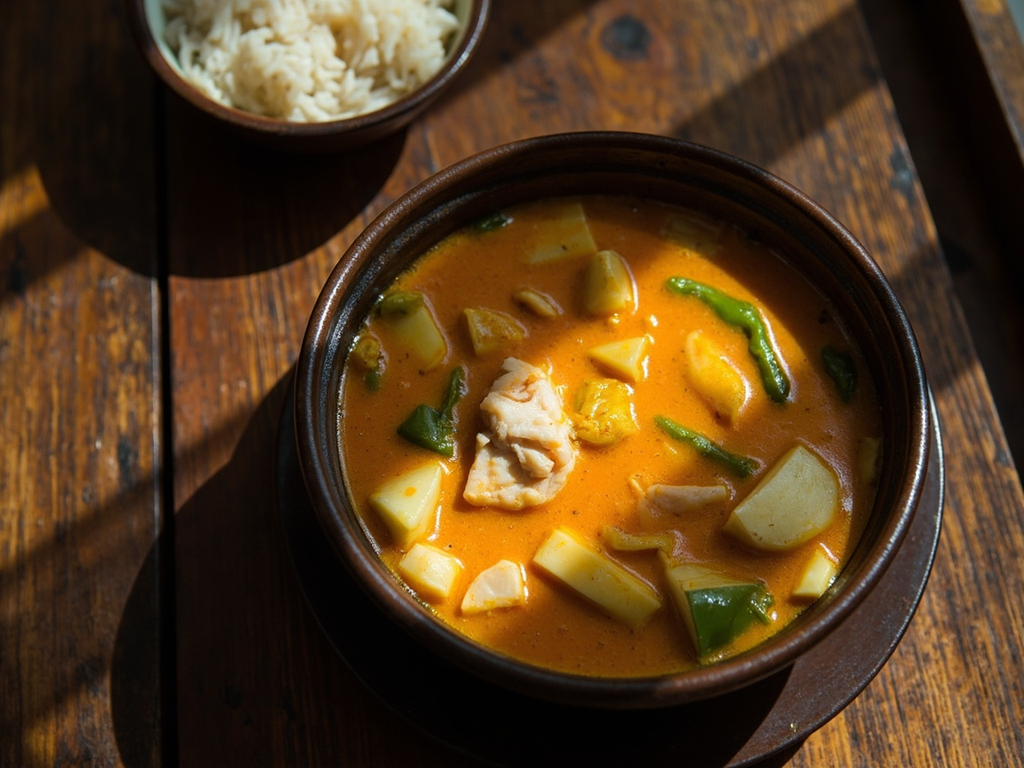
A light curry without coconut milk, where freshwater fish cooks in a broth spiced with a paste of kapi, shallots, and long pepper, soured with tamarind. Seasonal vegetables — wax gourd, snake beans — complete the dish. It is the backbone of the daily Siamese meal.
This curry is served to me every day the gods grant, and every day it suits me. The fish comes from our rivers in the morning, it is in my bowl before noon. My mother introduced it to me at Phitsanulok, when I was still a child the Burmese held hostage — it is the very taste of the land that was stolen from me. The tamarind must bite the tongue, the kapi must sing beneath it, and the pepper must remind you this is no invalid’s broth. Here is a dish that nourishes a king as well as a soldier.
- •Whole freshwater fish (pla chon or pla nil) — one fine fish, cut into chunks (protein base)
- •Fermented shrimp paste (kapi) — one good spoonful (umami base)
- •Shallots — four or five, pounded (aromatic)
- •Long pepper (di pli) — a generous pinch, pounded (heat)
- •Fresh turmeric — one finger, pounded (color and slight bitterness)
- •Tamarind pulp — a handful, dissolved in water (sourness)
- •Wax gourd (fak) — a few pieces (vegetable)
- •Snake beans — a handful, cut (vegetable)
- •Salt — to taste (seasoning)
Kaeng som pla (แกงส้มปลา) — sour curry with river fish
A light curry without coconut milk, where freshwater fish cooks in a broth spiced with a paste of kapi, shallots, and long pepper, soured with tamarind. Seasonal vegetables — wax gourd, snake beans — complete the dish. It is the backbone of the daily Siamese meal.
Why this dish? Ayutthaya, a lake capital crisscrossed by canals, lived off river fish. This sour tamarind curry was the staple of both the royal and common tables — a dish that Naresuan would have eaten daily at the palace of Phitsanulok, between war councils.
This curry is served to me every day the gods grant, and every day it suits me. The fish comes from our rivers in the morning, it is in my bowl before noon. My mother introduced it to me at Phitsanulok, when I was still a child the Burmese held hostage — it is the very taste of the land that was stolen from me. The tamarind must bite the tongue, the kapi must sing beneath it, and the pepper must remind you this is no invalid’s broth. Here is a dish that nourishes a king as well as a soldier.
Ingredients (period version)
- Whole freshwater fish (pla chon or pla nil) — one fine fish, cut into chunks (protein base)
- Fermented shrimp paste (kapi) — one good spoonful (umami base)
- Shallots — four or five, pounded (aromatic)
- Long pepper (di pli) — a generous pinch, pounded (heat)
- Fresh turmeric — one finger, pounded (color and slight bitterness)
- Tamarind pulp — a handful, dissolved in water (sourness)
- Wax gourd (fak) — a few pieces (vegetable)
- Snake beans — a handful, cut (vegetable)
- Salt — to taste (seasoning)
Ingredients
- Tilapia or perch fillets — 400 g, in pieces (protein base)
- Shrimp paste (kapi, Asian section) — 1 tbsp (umami base)
- Shallots — 4, sliced (aromatic)
- Black peppercorns — 1 tsp, crushed (heat)
- Fresh turmeric or powder — 1 tsp (color)
- Tamarind paste — 2 tbsp (sourness)
- Squash or zucchini — 150 g, in pieces (vegetable)
- Green beans — 100 g, in pieces (vegetable)
- Water — 600 ml (broth)
- Salt or fish sauce — 1 tsp (seasoning)
Method
- In a mortar, pound shallots, turmeric, crushed pepper, and kapi into a smooth paste.
- In a pot, bring water to a boil and stir in the paste to dissolve.
- Add the squash and cook for 5 minutes until it begins to soften.
- Dilute tamarind paste in a little warm water, strain, and add to the broth.
- Add fish pieces and green beans. Cook over medium heat for 5–7 minutes without stirring vigorously to avoid breaking the fish.
- Taste and adjust: the tamarind should give a clean sourness, the kapi a salty-umami base. Adjust with salt or fish sauce.
- Serve in a bowl with jasmine rice on the side.
How it was made : Kaeng som is one of the oldest attested Siamese curries, predating the arrival of chili. Heat came from pepper — long pepper (Piper longum) or black pepper — and color from turmeric. Wild tamarind grew throughout the Chao Phraya basin. The Ayutthayan version used no coconut milk, which was reserved for richer court curries (kaeng kathi).
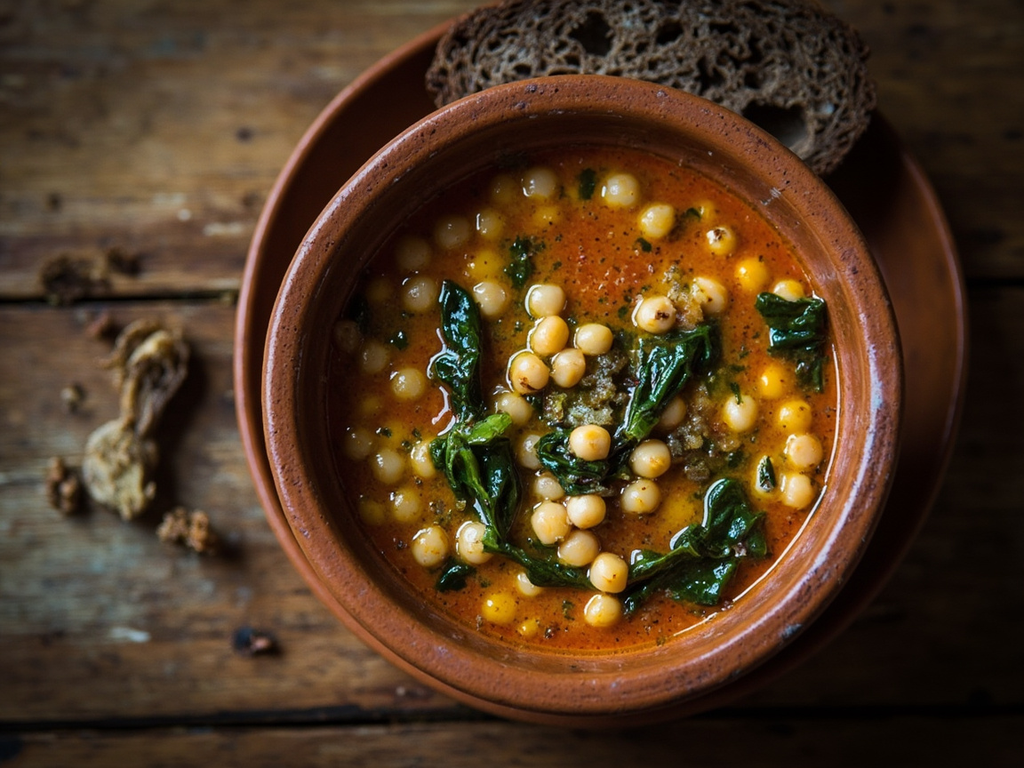
The contemporary twist : Serve in a terracotta bowl with a drizzle of toasted sesame oil and a few fresh coriander leaves for a contemporary presentation.
Sources : Suthon Sukphisit, “The Cuisine of Ayutthaya”, Bangkok Post, historical articles on pre-modern Thai gastronomy · David Thompson, “Thai Food”, 2002, Penguin — chapters on ancient curries and mortar paste techniques
Naresuan · Charactorium