 flip
flipKhao chae (ข้าวแช่) — rice in flower-scented water
Khao chae (ข้าวแช่) — rice in flower-scented water
Why this dish? Khao chae is an Ayutthayan court dish associated with the Songkran festival (Siamese New Year) and royal ceremonies of the hot season. After his decisive victories over Burma, Naresuan restored the great festivals of the Siamese calendar — this sumptuous, refreshing, and time-consuming dish embodies the renewed luxury of a liberated court.
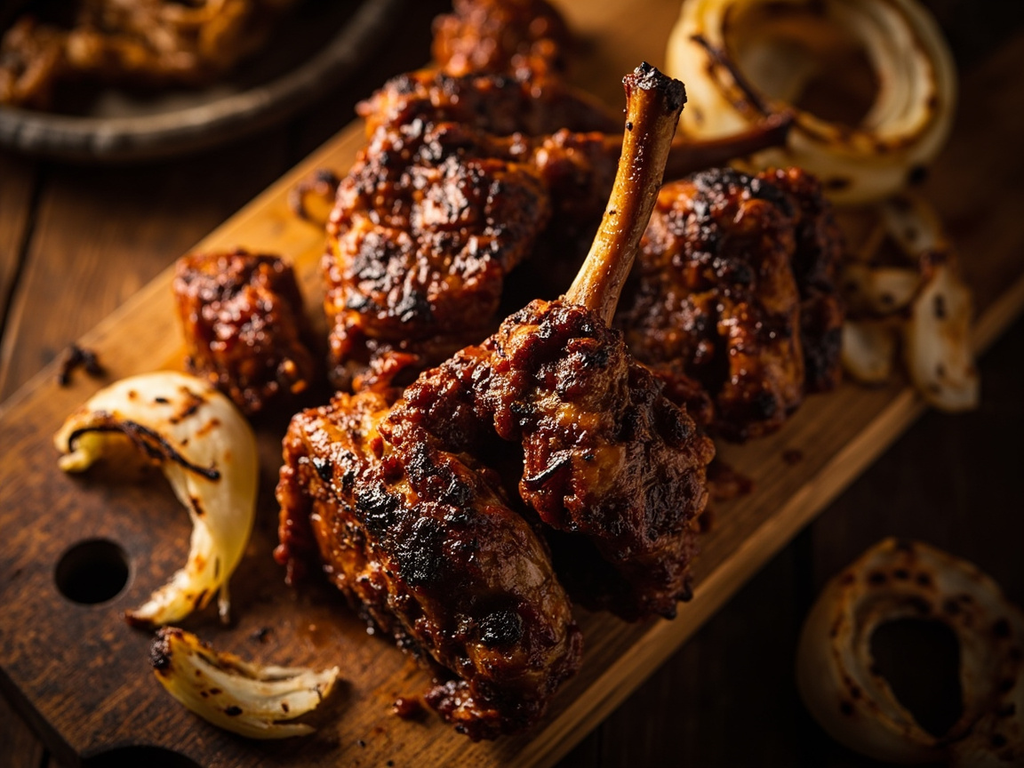
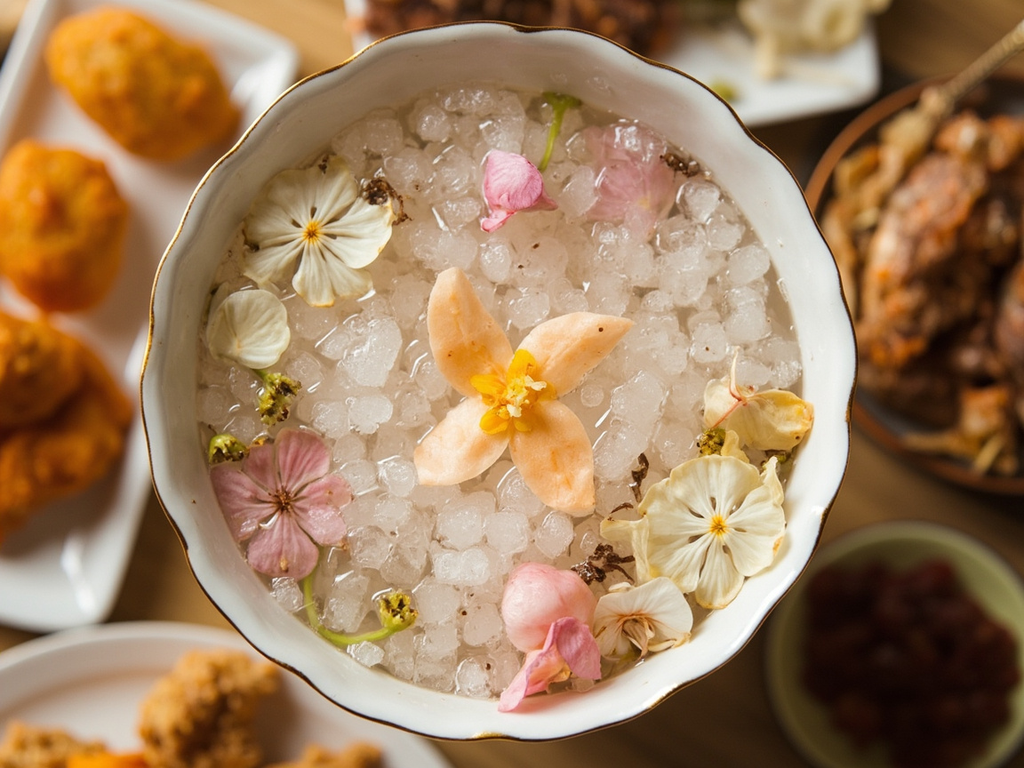
Cooked jasmine rice, rinsed in ice water, then served in a bowl of water scented with candle and jasmine flowers. It is accompanied by elaborate small savory preparations — fried kapi balls, shredded dried fish, stuffed onion — eaten in alternation with spoonfuls of floral rice. A dish of royal patience.
When the wars are won and the Songkran heat oppresses the palace, my women prepare this rice in flower water. It takes a whole day to make — the water is perfumed with candle and jasmine, each little dish around it is a handiwork. This is peace you eat. After years when I slept in armor, it is fitting that Ayutthaya’s table becomes beautiful again. This dish tells the world the kingdom stands tall.
- •Jasmine rice — one measure, cooked then rinsed in cold water (base)
- •Rainwater scented with jasmine and candle — enough to cover the rice (floral broth)
- •Kapi — one portion, mixed with shallots and fried into balls (savory accompaniment)
- •Dried fish (pla haeng) — a few fillets, shredded and fried (accompaniment)
- •Stuffed onions (with minced meat) — a few pieces (accompaniment)
- •Cucumber — thinly sliced (freshness)
- •Fresh jasmine flowers — a handful (scent)
Khao chae (ข้าวแช่) — rice in flower-scented water
Cooked jasmine rice, rinsed in ice water, then served in a bowl of water scented with candle and jasmine flowers. It is accompanied by elaborate small savory preparations — fried kapi balls, shredded dried fish, stuffed onion — eaten in alternation with spoonfuls of floral rice. A dish of royal patience.
Why this dish? Khao chae is an Ayutthayan court dish associated with the Songkran festival (Siamese New Year) and royal ceremonies of the hot season. After his decisive victories over Burma, Naresuan restored the great festivals of the Siamese calendar — this sumptuous, refreshing, and time-consuming dish embodies the renewed luxury of a liberated court.
When the wars are won and the Songkran heat oppresses the palace, my women prepare this rice in flower water. It takes a whole day to make — the water is perfumed with candle and jasmine, each little dish around it is a handiwork. This is peace you eat. After years when I slept in armor, it is fitting that Ayutthaya’s table becomes beautiful again. This dish tells the world the kingdom stands tall.
Ingredients (period version)
- Jasmine rice — one measure, cooked then rinsed in cold water (base)
- Rainwater scented with jasmine and candle — enough to cover the rice (floral broth)
- Kapi — one portion, mixed with shallots and fried into balls (savory accompaniment)
- Dried fish (pla haeng) — a few fillets, shredded and fried (accompaniment)
- Stuffed onions (with minced meat) — a few pieces (accompaniment)
- Cucumber — thinly sliced (freshness)
- Fresh jasmine flowers — a handful (scent)
Ingredients
- Thai jasmine rice — 200 g (base)
- Cold water — 500 ml (liquid base)
- Dried jasmine flowers (or food-grade jasmine water) — 1 tbsp flowers or a few drops (scent)
- Food-grade scented candle (optional, or 1 incense stick passed over water) — 1 (traditional scent)
- Shrimp paste (kapi) — 2 tbsp (for balls)
- Shallots — 3, finely chopped (for balls)
- Palm sugar — 1 tbsp (for balls)
- Dried fish or dried shrimp — 50 g (accompaniment)
- Minced pork (or chicken) — 100 g (for stuffed onions)
- Small onions — 4 (to stuff)
- Cucumber — 1, sliced (freshness)
- Oil for frying — for the balls (cooking)
- Ice cubes — a few (freshness)
Method
- Cook jasmine rice normally, then rinse thoroughly in cold water until grains are separate and cool. Set aside.
- Prepare scented water: steep jasmine flowers in cold water for at least 2 hours in the refrigerator. Strain.
- Kapi balls: mix kapi with chopped shallots and palm sugar. Form small balls and fry over medium heat until golden and crispy. Drain.
- Shredded fish: crumble dried fish and fry quickly until crispy.
- Stuffed onions: hollow out small onions, stuff with seasoned minced meat (pepper, salt), then steam for 10 minutes or lightly fry.
- Assemble: place cooled rice in a bowl, pour chilled jasmine water over it, add a few ice cubes. Arrange accompaniments in small dishes around.
- Eat by alternating a spoonful of rice in scented water with a bite of each savory accompaniment.
How it was made : Khao chae is a court dish of Mon-Khmer origin adopted by Ayutthayan royalty. Its complex preparation — water scented with beeswax candle and flowers, numerous meticulous accompaniments — made it exclusively royal or aristocratic fare. It is traditionally associated with Songkran and the hot season (March-April). Its survival in modern Thai haute cuisine testifies to the continuity of Ayutthayan culinary traditions.
The contemporary twist : Serve the jasmine water in a clear glass bowl to highlight its clarity, with an edible flower petal floating and the accompaniments arranged on a lacquer tray.
Sources : M.R. Thanadsri Svasti, “The Cuisine of the Royal Houses of Thailand”, 2006 — court recipes and royal culinary traditions · Suthon Sukphisit, articles on khao chae as Ayutthayan heritage, Bangkok Post
Naresuan · Charactorium