 flip
flipMoretum, Fresh Cheese Spread with Herbs and Garlic
Moretum, Fresh Cheese Spread with Herbs and Garlic
Why this dish? Under the Stoic influence of his tutor Seneca, Nero experienced phases of asceticism where he shunned the excesses of the imperial table. The moretum, a robust and frugal peasant spread, embodies this sober Rome that philosophers contrasted with the luxury of banquets.
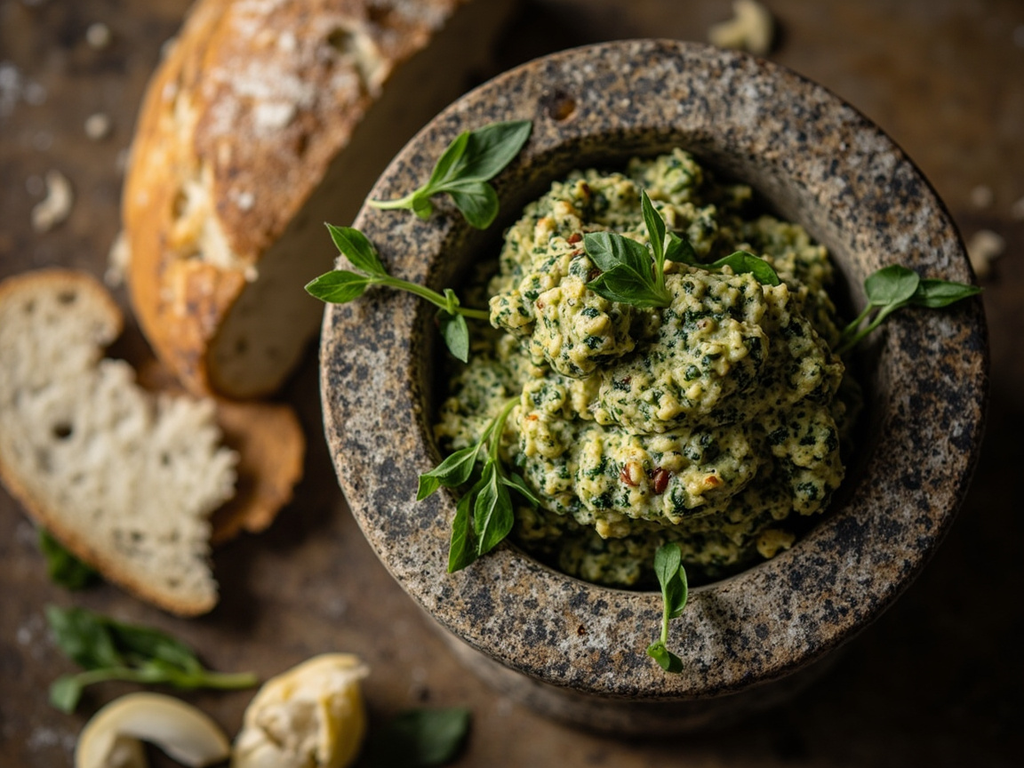
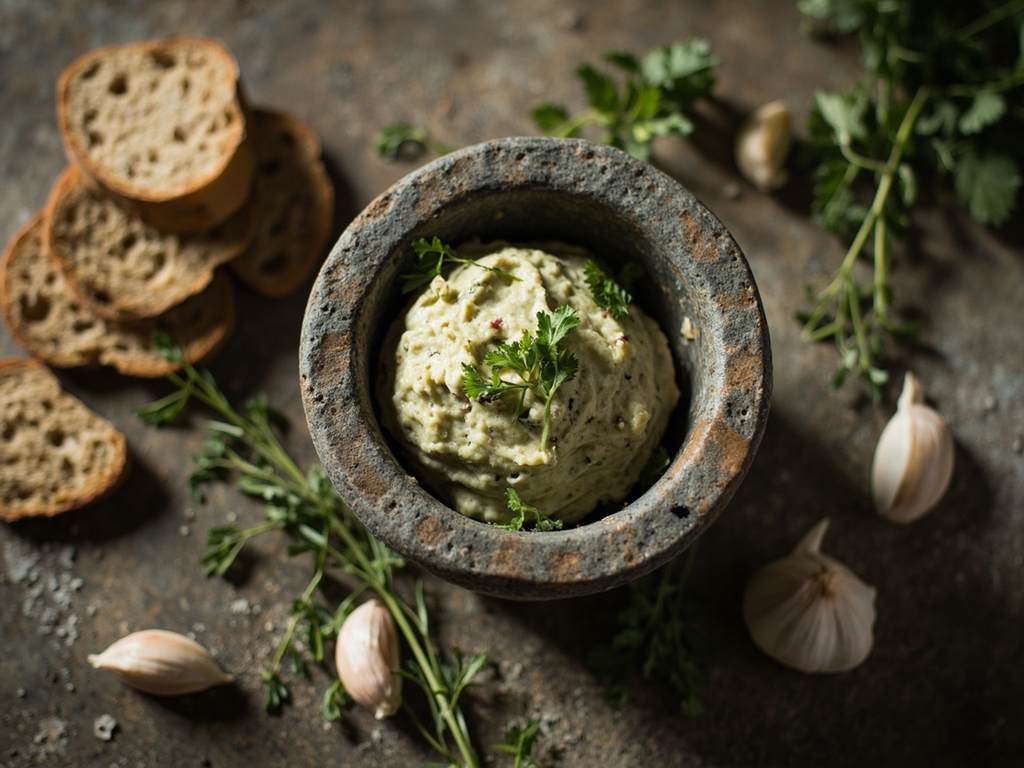
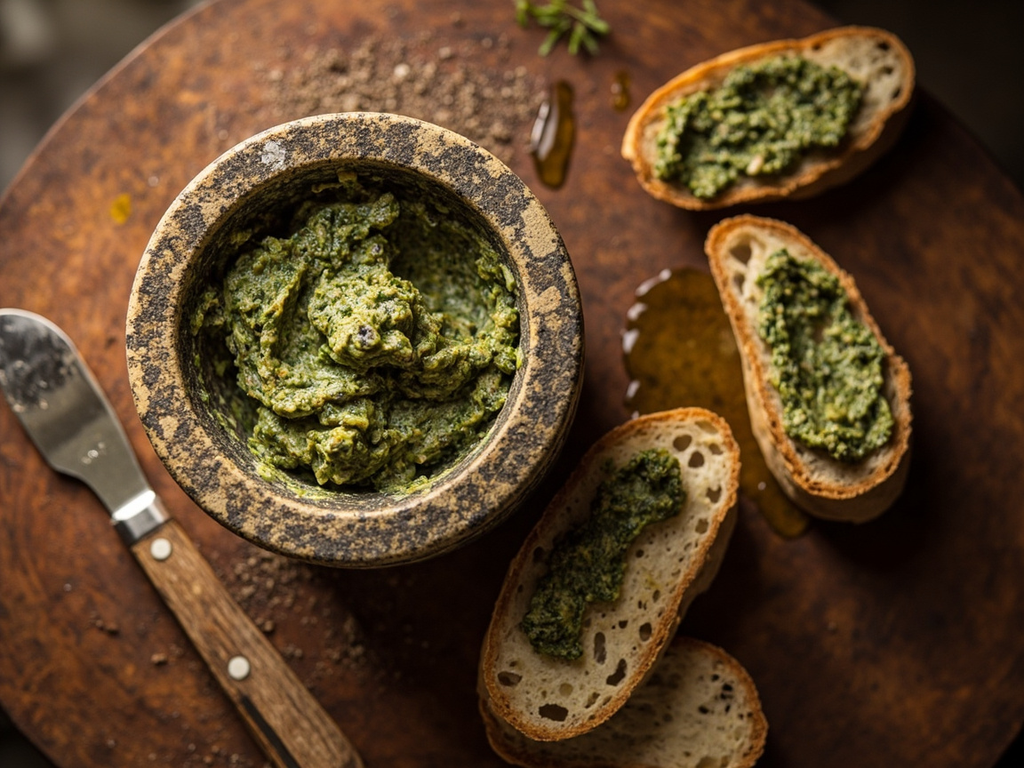
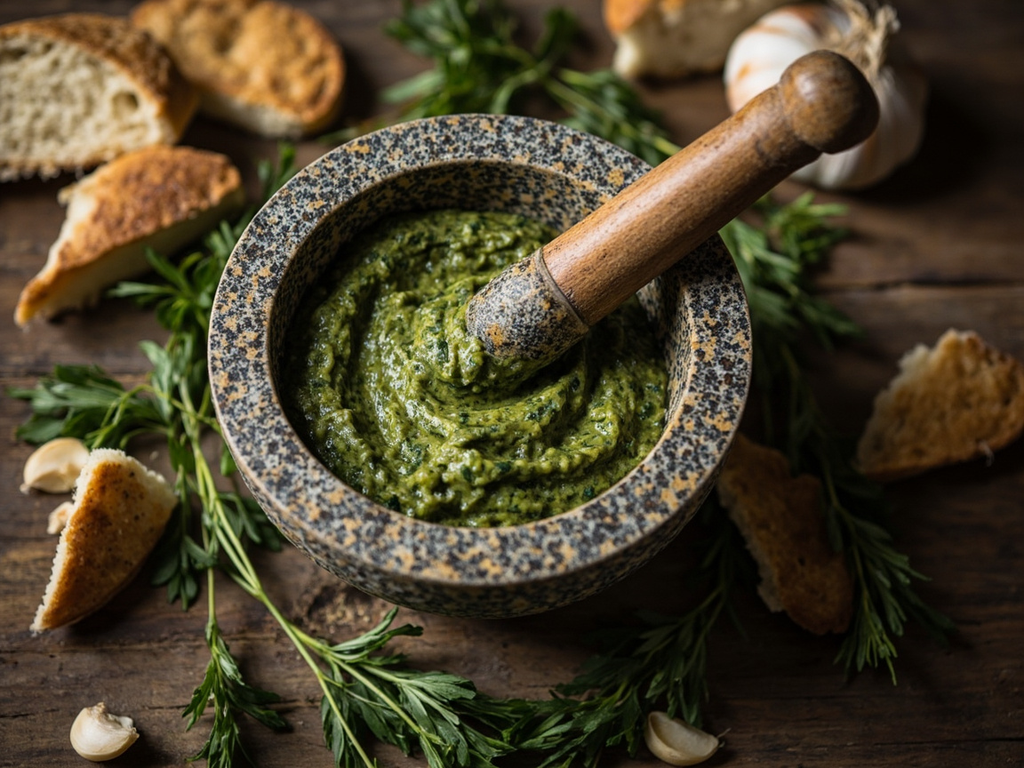
A creamy paste of fresh cheese crushed with garlic, fresh herbs, salt, vinegar, and olive oil. Spread on bread: it is the Roman ancestor of herb cheese—sharp, garlicky, and full of character.
Do you think an emperor cannot eat simply? Seneca, my teacher, repeated that a prince worthy of the name must know how to taste the soldier's bread. Here, then, is moretum: in the mortar we pound the cheese, garlic, garden herbs, pour in oil and vinegar, and turn until all becomes one green and fragrant flesh. Spread it on your bread, plebeian or patrician—on this day, at my table, we are equal before the mortar.
- •Salted fresh cheese (sheep's milk) — a good piece (creamy base)
- •Garlic — a few cloves (aromatic punch)
- •Fresh coriander, celery, rue, parsley — a mixed handful (herbs)
- •Vinegar — a dash (acidity)
- •Olive oil — as needed (fat binder)
- •Salt — a pinch (seasoning)
Moretum, Fresh Cheese Spread with Herbs and Garlic
A creamy paste of fresh cheese crushed with garlic, fresh herbs, salt, vinegar, and olive oil. Spread on bread: it is the Roman ancestor of herb cheese—sharp, garlicky, and full of character.
Why this dish? Under the Stoic influence of his tutor Seneca, Nero experienced phases of asceticism where he shunned the excesses of the imperial table. The moretum, a robust and frugal peasant spread, embodies this sober Rome that philosophers contrasted with the luxury of banquets.
Do you think an emperor cannot eat simply? Seneca, my teacher, repeated that a prince worthy of the name must know how to taste the soldier's bread. Here, then, is moretum: in the mortar we pound the cheese, garlic, garden herbs, pour in oil and vinegar, and turn until all becomes one green and fragrant flesh. Spread it on your bread, plebeian or patrician—on this day, at my table, we are equal before the mortar.
Ingredients (period version)
- Salted fresh cheese (sheep's milk) — a good piece (creamy base)
- Garlic — a few cloves (aromatic punch)
- Fresh coriander, celery, rue, parsley — a mixed handful (herbs)
- Vinegar — a dash (acidity)
- Olive oil — as needed (fat binder)
- Salt — a pinch (seasoning)
Ingredients
- Fresh cheese (sheep or goat fresh cheese) — 200 g (creamy base)
- Garlic — 2 cloves (aromatic punch)
- Chopped coriander, parsley, and celery stalk — 1 large handful (herbs (omit rue, not widely available))
- Wine vinegar — 1 tsp (acidity)
- Olive oil — 2 tbsp (fat binder)
- Salt — 1 pinch (seasoning)
- Country bread — as desired (support)
Method
- Peel the garlic and pound it with a pinch of salt until a paste forms (mortar or food processor).
- Add the chopped herbs and crush further.
- Incorporate the fresh cheese and work the mixture.
- Pour in the vinegar, then the olive oil in a stream, turning constantly, to obtain a homogeneous green paste.
- Adjust salt and serve chilled, spread on toasted bread.
How it was made : The Latin poem *Moretum* (from the Appendix Vergiliana) describes in detail a peasant preparing this dish at dawn: he pounds garlic, herbs, cheese, salt, vinegar, and oil in his mortar. It was the food of the humble, but its preparation is one of the best-described ancient recipes that have come down to us.
The contemporary twist : Serve as an appetizer spread in the style of a *Roman pesto*, in a small stone mortar with breadsticks—the moretum reimagined as a sharing board.
Sources : “Moretum,” Appendix Vergiliana · Columella, De re rustica, XII (cheese and herb preparations)
Nero · Charactorium