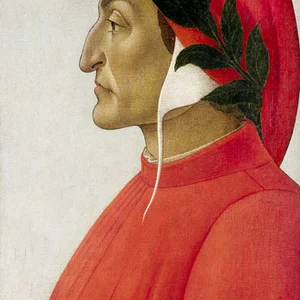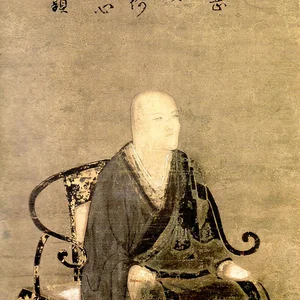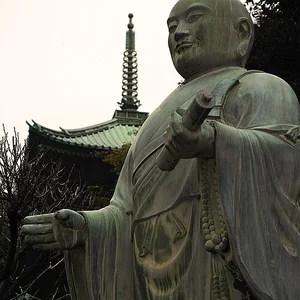

Nichiren (1222-1282) was a 13th-century Japanese Buddhist monk, founder of the Nichiren-shū school. He taught that the Lotus Sūtra contained the ultimate essence of the Buddha's teaching and advocated reciting the mantra “Namu Myōhō Renge Kyō.”
Nichiren(1222 — 1282)
Nichiren
Japon
6 min read
Frequently asked questions
Key Facts
- Born in 1222 in Awa Province, Japan, into a family of fishermen
- Proclaimed his new doctrine in 1253, centered on the Lotus Sūtra and the chant “Namu Myōhō Renge Kyō”
- Wrote the Risshō Ankoku Ron in 1260, a treatise addressed to the authorities of the Kamakura shogunate
- Was exiled several times (Sado Island in 1271) for his criticism of other schools and of those in power
- Died in 1282, leaving behind the Nichiren-shū school, which would spread throughout Japanese Buddhism
Works & Achievements
His most famous treatise, addressed to the authorities, linking Japan's calamities to the abandonment of true Buddhism.
Work written in exile on Sado, asserting his mission as the savior of Japan through the Lotus Sūtra.
Doctrinal treatise presenting the Gohonzon as the central object of practice.
Calligraphic mandala created by Nichiren, which became the object of devotion of his school.
Practice of reciting the title of the Lotus Sūtra, accessible to all, the heart of his teaching.
Treatise on teaching adapted to the age of the “End of the Law” (mappō).
Late text summarizing his doctrine and expressing his gratitude toward his teachers.
Anecdotes
In 1260, Nichiren presented to the shogunal regent his treatise *Risshō Ankoku Ron*, in which he argued that the disasters striking Japan — earthquakes, famines, epidemics — stemmed from the abandonment of true Buddhism. This boldness earned him many persecutions.
In 1271, condemned to be beheaded at Tatsunokuchi, Nichiren escaped death according to tradition: just as the executioner raised his sword, a brilliant light (sometimes described as a comet or a meteor) streaked across the sky and terrified the soldiers, who did not dare carry out the sentence.
Nichiren was exiled twice: first to the Izu Peninsula (1261), then to the icy island of Sado (1271–1274), where he lived in extreme destitution, in a dilapidated hut exposed to the snow, yet where he wrote some of his most important texts.
Convinced that reciting the title of the *Lotus Sūtra* was enough for salvation, Nichiren taught the *daimoku*: the formula “Namu Myōhō Renge Kyō,” accessible to all, the learned and the unlettered alike, which broke with the scholarly practices reserved for the monastic elite.
Nichiren predicted a foreign invasion of Japan; the Mongol attempts by Kublai Khan in 1274 and 1281, repelled by the famous “divine winds” (kamikaze), were seen by his disciples as confirmation of his warnings.
Primary Sources
If one wishes to bring peace to the country and to pray for the present as well as the future, one must first carefully examine the origin of the troubles and remedy it.
I will be the pillar of Japan, I will be the eyes of Japan, I will be the great ship of Japan: such is my vow, and I will never break it.
In the very title of the Lotus Sūtra is contained the whole doctrine of the Buddha; to recite it with faith is equivalent to embracing the entirety of the teachings.
The snow falls without end and provisions run short, but my faith in the Lotus Sūtra does not waver, for hardships are the proof of the rightness of the Law.
Key Places
Fishing village where Nichiren was born in 1222. A temple, the Tanjō-ji, now commemorates his birth there.
Monastery in Awa Province where Nichiren received his Buddhist training and first proclaimed his teaching in 1253.
Capital of the shogunate where Nichiren preached, confronted the authorities, and was nearly executed at Tatsunokuchi in 1271.
Remote island in the Sea of Japan where Nichiren was exiled from 1271 to 1274. There he wrote his major doctrinal works despite very harsh conditions.
Mountain in Yamanashi where Nichiren withdrew from 1274 onward to teach; the Kuon-ji temple became the center of his school.
Place, near present-day Tokyo, where Nichiren died in 1282. A great temple there perpetuates his memory.
Typical Objects
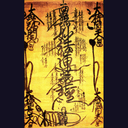
Mandala calligraphed by Nichiren representing the universe of the Lotus Sutra, with the daimoku inscribed at its center. It serves as an object of veneration for the practice.
📷 Domaine public · Wikimedia Commons ↗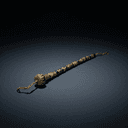
String of beads used to count recitations of the daimoku. The beads slip between the fingers during prayer.

Manuscript of the Saddharma Puṇḍarīka Sūtra, the central text of Nichiren's teaching. He regarded its title as the ultimate essence of the Buddha.

Buddhist monk's garment worn by Nichiren, a symbol of his renunciation of the world. Often patched and dark-colored among ascetics.

Calligraphy instruments with which Nichiren wrote his treatises and his letters to his disciples, as well as the Gohonzon mandalas.
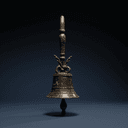
Instruments that set the rhythm of the collective recitation of the daimoku in Nichiren temples. The drum marks the cadence of the prayers.
School Curriculum
Vocabulary & Tags
Key Vocabulary
Daily Life
Morning
The monk rose before dawn for the morning recitation (gongyō), reading passages from the *Lotus Sutra* and chanting the daimoku. Meditation and prayers filled the early hours, often in the cold of a temple or a hut.
Afternoon
The afternoon was devoted to writing treatises, letters to disciples and mandalas, as well as to teaching. **Nichiren** also debated publicly with monks from other schools, which sparked fierce controversy.
Evening
In the evening came another session of recitation and meditation by the light of an oil lamp. Disciples would sometimes gather to listen to his commentaries on the sacred texts.
Food
As a Buddhist monk, **Nichiren** followed a frugal vegetarian diet: rice, vegetables, miso soup, sometimes offered by his followers. In exile on **Sado**, he endured shortages and survived on very little food.
Clothing
He wore the dark monastic robe and the kesa of Buddhist monks, often worn and patched, a reflection of his voluntary poverty and the hardships of exile.
Housing
**Nichiren** lived in temples, but also in precarious conditions during his exiles: a dilapidated, freezing hut on **Sado**, then a simple mountain retreat on **Mount Minobu**, surrounded by forests.
Historical Timeline
Period Vocabulary
Liens externes & ressources
Références
Œuvres
Risshō Ankoku Ron (Traité sur la pacification du pays)
1260
Kaimoku Shō (Ouvrir les yeux)
1272
Kanjin no Honzon Shō (L'objet de vénération)
1273
Le Gohonzon
vers 1273
Fondation du daimoku « Namu Myōhō Renge Kyō »
1253
Senji Shō (Sur le choix du temps)
1275
Hōon Shō (Sur le remboursement des dettes de gratitude)
1276