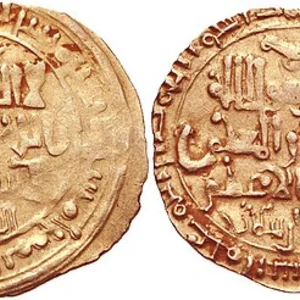

Nizam al-Mulk was the grand vizier of the Seljuk sultans Alp Arslan and Malik-Shah I in the 11th century. A brilliant administrator, he equipped the Seljuk Empire with lasting institutions and founded a network of madrasas, the Nizamiyya, which left a deep mark on the teaching of Sunni Islam.
Nizam al-Mulk(1018 — 1092)
Nizam al-Mulk
califat abbasside, Empire ghaznévide, Empire seldjoukide
6 min read
Frequently asked questions
Key Facts
- Born in 1018 near Tus, in Khorasan (Persia), into a family of civil servants
- Became grand vizier of Sultan Alp Arslan around 1064, then of Malik-Shah I
- From the 1060s onward, founded the network of madrasas known as the Nizamiyya, the most famous of which was in Baghdad (1067)
- Appointed the theologian Al-Ghazali as head professor at the Nizamiyya of Baghdad in 1091
- Wrote the Siyasatnameh (Book of Government), a major mirror for princes, and was assassinated in 1092, probably by a Nizari (the Assassins)
Works & Achievements
A treatise on the art of governing in fifty chapters, blending practical advice, historical anecdotes, and reflections on justice; a masterpiece of Persian political literature.
A network of higher-learning schools founded in the major cities of the Empire, providing free funding for students and teachers and structuring the teaching of Sunni Islam.
The most famous of the madrasas, where great scholars such as al-Ghazali taught; a model educational institution for the entire Muslim world.
The organization of the chancellery, the finances, and the iqta system (land grants) that gave the Seljuk Empire lasting institutions.
Patronage of astronomical work, notably that of Omar Khayyam, resulting in a solar calendar of great precision.
Support for Sunni orthodoxy and the Shafi'i school against Ismaili Shiism, reinforcing the authority of the Abbasid caliphate under Seljuk protection.
Anecdotes
Nizam al-Mulk rose through every rank of the administration before becoming grand vizier: the son of a civil servant from Khorasan, he first served local governors before entering the service of the Seljuks, where his genius for organization made him the most powerful man in the Empire after the sultan.
He founded a network of institutions of higher learning, the Nizamiyya madrasas, in major cities such as Baghdad and Nishapur. The Nizamiyya of Baghdad, inaugurated in 1067, offered free instruction, housing, and stipends to its students, a model that inspired the organization of universities.
The famous theologian and mystic al-Ghazali taught at the Nizamiyya of Baghdad thanks to the support of Nizam al-Mulk, proof that the vizier knew how to surround himself with the greatest minds of his time in order to strengthen Sunni Islam.
Toward the end of his life, Nizam al-Mulk wrote a genuine manual of government for Sultan Malik Shah, the Siyasat-nameh (“Book of Government”), filled with anecdotes and practical advice for administering an empire well.
In 1092, while traveling toward Baghdad, Nizam al-Mulk was assassinated by a man disguised as a Sufi. Tradition attributes the murder to the Assassins (Nizaris) of Hassan-i Sabbah, of whom the vizier was a fierce opponent; Sultan Malik Shah died a few weeks later.
Primary Sources
In every age and every time, God — may He be exalted — chooses one man from among men and, having adorned him with kingly and worthy qualities, entrusts to him the interests of the world and the peace of His servants.
A kingdom may endure in unbelief, but it cannot endure in injustice.
Nizam al-Mulk was killed by a member of the Batiniyya disguised as a Sufi, who presented him with a petition and then struck him with his dagger; he was one of the finest viziers and the most just of men.
Key Places
Birthplace of Nizam al-Mulk, a great cultural hub of Khorasan that produced many Persian scholars.
Cultural capital of Khorasan where Nizam al-Mulk founded one of his Nizamiyya madrasas and supported Sunni education.
Capital of the Seljuk Empire under Malik Shah, the seat of power where the vizier ran the administration of the state.
Seat of the Abbasid caliphate where the vizier inaugurated the prestigious Nizamiyya madrasa in 1067.
The place where Nizam al-Mulk was assassinated in 1092 while travelling with the court toward Baghdad.
The city where the grand vizier was buried, keeping alive the memory of one of the greatest administrators of the medieval East.
Typical Objects
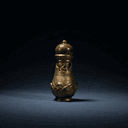
Official seal used to authenticate decrees, letters, and administrative orders issued in the sultan's name. A symbol of the grand vizier's delegated authority.

A trimmed reed and inkwell used by chancellery secretaries to write official state correspondence in Persian and Arabic.
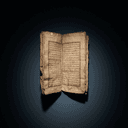
A handwritten political treatise composed by the vizier, copied and illuminated, passing down his precepts of governance to later generations.

Ledgers in which the chancellery recorded taxes, iqta lands, and army expenditures — the foundation of the Empire's centralized administration.
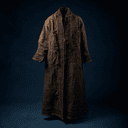
A prestigious garment bestowed by the sultan or caliph to mark a favor or an investiture. Nizam al-Mulk received such robes as a sign of his high standing.
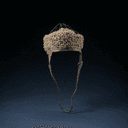
A carefully wound turban worn by high officials and scholars, a sign of their status and religious learning.
School Curriculum
Vocabulary & Tags
Key Vocabulary
Tags
Daily Life
Morning
The grand vizier began his day with the dawn prayer, then received secretaries and messengers to review the dispatches arriving from the provinces. He dictated orders and replies to the chancery before the morning audience.
Afternoon
The afternoon was devoted to affairs of state: receiving emirs, managing taxes and the army, and arbitrating disputes. The vizier also oversaw the smooth running of the madrasas he had founded.
Evening
In the evening, Nizam al-Mulk enjoyed conversing with scholars, theologians and poets, and listening to readings of historical chronicles. It was in these moments that he gathered the anecdotes that fed his *Siyasat-nameh*.
Food
The table of a Seljuk dignitary offered rice, bread, lamb and poultry, dried fruits, melons and honey sweets. Spices and rose water perfumed refined dishes inspired by Persian and Arab cuisines.
Clothing
He wore long robes of silk and fine cotton, belted and topped with a neat turban, a mark of his rank and his learning. For ceremonies, he donned the robe of honor (*khil'a*) bestowed by the sultan.
Housing
The vizier resided in vast dwellings with inner courtyards and gardens, near the sultan's palace in **Isfahan**. These residences included chancery offices, libraries and reception halls.
Historical Timeline
Period Vocabulary
Liens externes & ressources
Références
Œuvres
Siyasat-nameh (Livre du gouvernement)
vers 1091
Réseau des madrasas Nizamiyya
à partir de 1067
Nizamiyya de Bagdad
1067
Système administratif seldjoukide
1063-1092
Soutien à la réforme du calendrier Djalali
1079
Politique religieuse sunnite
1063-1092