 flip
flipIyán àti obè ilá — Pounded Yam and Okra Soup with Seafood
Iyán àti obè ilá — Pounded Yam and Okra Soup with Seafood
Why this dish? The everyday meal on the Yoruba coast: yam is pounded into a smooth, elastic paste that is dipped into a slimy okra soup, thickened with seafood. For Olokun, the soup is loaded with shrimp and shellfish — everyday life itself pays homage to the one who populates the waters.
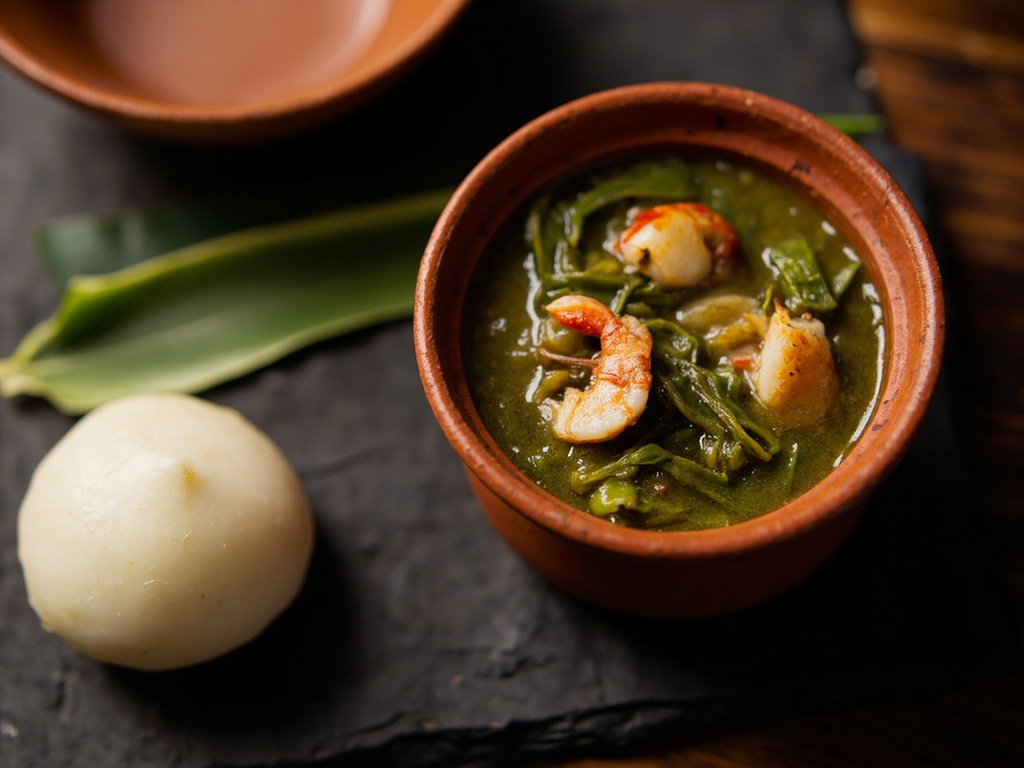
A ball of pounded yam, silky and warm, pinched between the fingers to plunge into a slippery, marine okra soup. Stringy texture, deep taste of sea and fermented locust bean.
The ordinary day also belongs to me, know this. No need for a great feast: let them pound the yam in the mortar until it stretches like seaweed, let them cut the okra fine so it slides like water between your fingers. Dip the ball into the soup, do not chew too much — let it go down, soft, as the diver descends to me. And let the shrimp within remind you of who fills your nets.
- •White yam (isu) — two tubers (pounded staple)
- •Fresh okra (ilá) — about ten (slimy thickener)
- •Shrimp and small crabs — according to the catch (marine protein)
- •Red palm oil — a drizzle (fat)
- •Iru and ground dried crayfish — a spoonful of each (umami)
- •Sea salt, alligator pepper — to taste (seasoning)
Iyán àti obè ilá — Pounded Yam and Okra Soup with Seafood
A ball of pounded yam, silky and warm, pinched between the fingers to plunge into a slippery, marine okra soup. Stringy texture, deep taste of sea and fermented locust bean.
Why this dish? The everyday meal on the Yoruba coast: yam is pounded into a smooth, elastic paste that is dipped into a slimy okra soup, thickened with seafood. For Olokun, the soup is loaded with shrimp and shellfish — everyday life itself pays homage to the one who populates the waters.
The ordinary day also belongs to me, know this. No need for a great feast: let them pound the yam in the mortar until it stretches like seaweed, let them cut the okra fine so it slides like water between your fingers. Dip the ball into the soup, do not chew too much — let it go down, soft, as the diver descends to me. And let the shrimp within remind you of who fills your nets.
Ingredients (period version)
- White yam (isu) — two tubers (pounded staple)
- Fresh okra (ilá) — about ten (slimy thickener)
- Shrimp and small crabs — according to the catch (marine protein)
- Red palm oil — a drizzle (fat)
- Iru and ground dried crayfish — a spoonful of each (umami)
- Sea salt, alligator pepper — to taste (seasoning)
Ingredients
- White yam — 800 g (staple)
- Okra — 250 g (thickener)
- Peeled shrimp — 250 g (protein)
- Crab meat — 150 g (marine protein)
- Red palm oil — 2 tbsp (fat)
- Iru — 1 tbsp (fermented umami)
- Ground dried shrimp — 1 tbsp (marine base)
- Sea salt + ground alligator pepper — to taste (seasoning)
Method
- Peel the yam, cut into large chunks, and cook in salted water for 20 minutes until tender.
- Pound the hot yam in a mortar (or process in a mixer) until smooth, elastic, and lump-free; form into a ball.
- Slice the okra finely. Heat the palm oil, add the iru, dried shrimp, and a little water.
- Add the okra and cook for only 5 minutes to keep its sliminess, then stir in the shrimp and crab; season with salt and alligator pepper.
- Serve the yam ball alongside the soup, to be eaten by hand, dipping each mouthful.
How it was made : Iyán is pounded by two people in a large wooden mortar, one turning the paste while the other strikes; it is a daily, communal gesture. Okra, an ancestral African vegetable, is cut at the last moment to preserve its mucilage. Iyán and obè are eaten without utensils, the ball serving as an edible spoon.
The contemporary twist : Serve the iyán ball molded into a polished pebble shape, placed on a dark slate like a stone pulled from the ocean floor.
Olokun · Charactorium