 flip
flipQuince jam
Quince jam
Why this dish? Preserving autumn fruits with sugar was the household art that allowed one to survive winter and uncertain times. For a foresighted woman navigating the Revolution and its shortages, a store of jam was independence in a jar.
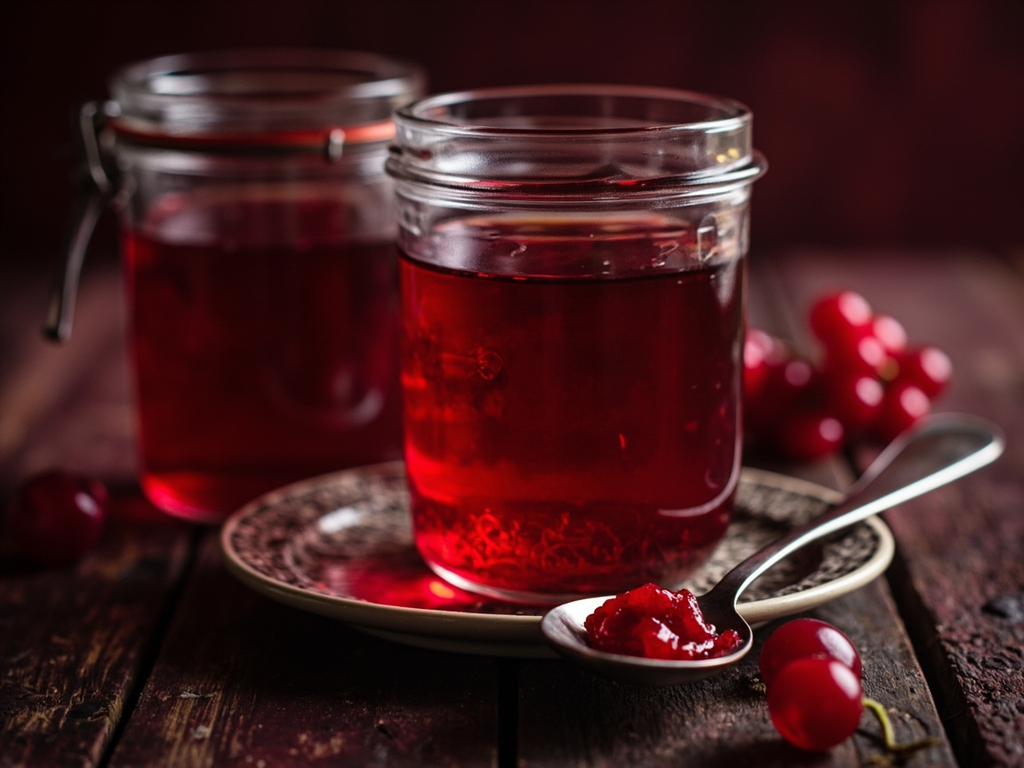
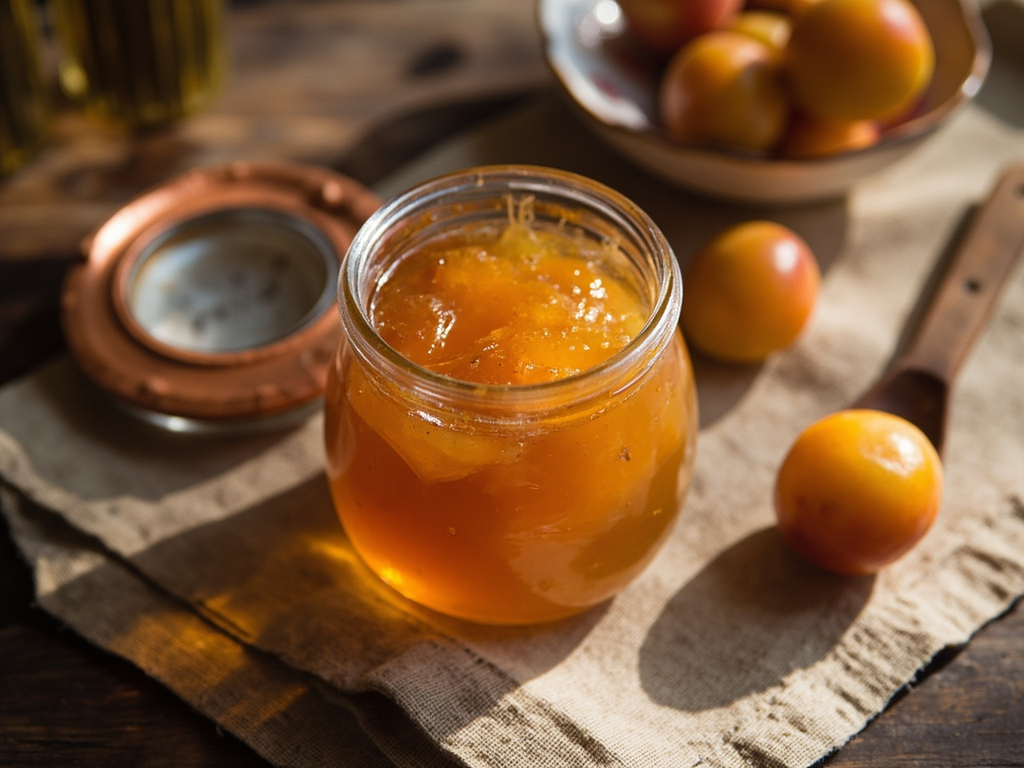
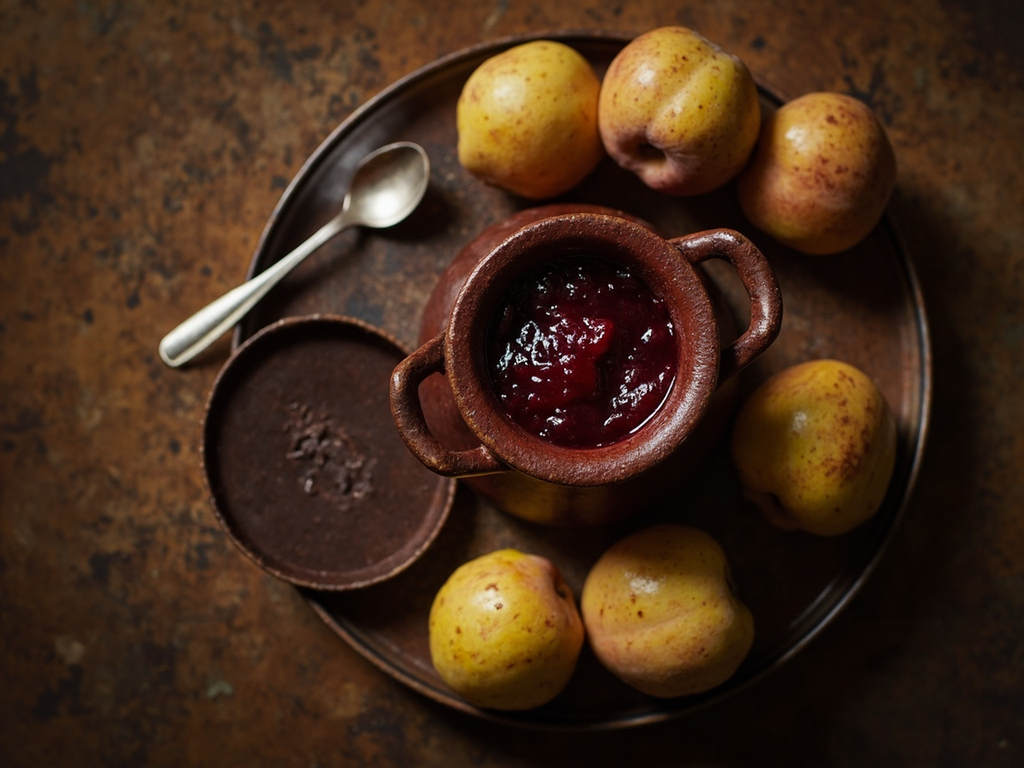
A thick, fragrant jam made from quinces, autumn fruits rich in pectin, which sets into a ruby paste or translucent jelly and keeps all winter.
A wise household wastes nothing of the season's gifts. When quinces came, hard and fragrant, I cooked them long with sugar until they took that beautiful ruby color. You fill your pots, cover them with paper, and all winter long you have at hand something to sweeten a meager meal or comfort a friend. To plan ahead, my friends, is already to be free.
- •Ripe quinces — as many as you have (fruit, pectin)
- •Sugar — equal weight to fruit (preservation and sweetness)
- •Water — for the first cooking (to soften the fruit)
Quince jam
A thick, fragrant jam made from quinces, autumn fruits rich in pectin, which sets into a ruby paste or translucent jelly and keeps all winter.
Why this dish? Preserving autumn fruits with sugar was the household art that allowed one to survive winter and uncertain times. For a foresighted woman navigating the Revolution and its shortages, a store of jam was independence in a jar.
A wise household wastes nothing of the season's gifts. When quinces came, hard and fragrant, I cooked them long with sugar until they took that beautiful ruby color. You fill your pots, cover them with paper, and all winter long you have at hand something to sweeten a meager meal or comfort a friend. To plan ahead, my friends, is already to be free.
Ingredients (period version)
- Ripe quinces — as many as you have (fruit, pectin)
- Sugar — equal weight to fruit (preservation and sweetness)
- Water — for the first cooking (to soften the fruit)
Ingredients
- Quinces — 1 kg (peeled, cored) (fruit, pectin)
- Sugar — 800 g (preservation and sweetness)
- Water — 300 ml (first cooking)
- Lemon juice or verjuice — 1 tbsp (acidity, fixes color)
Method
- Peel the quinces, remove the cores (keep seeds and peels in a muslin bag: they are rich in pectin), cut the flesh into pieces.
- Cook the flesh in water with the bag for 20 minutes until tender.
- Remove the bag, add the sugar and acid, bring to a boil.
- Cook for 30 to 40 minutes, stirring, until the jam coats a spoon and takes on an amber to ruby color.
- Test the set (a drop sets on a cold plate).
- Pour into sterilized jars, seal immediately, and turn the jars upside down until cool.
How it was made : The quince, very rich in pectin, has been the quintessential jam fruit since the Middle Ages; the word 'marmalade' comes from Portuguese 'marmelo', quince. Before cheap sugar, honey was used for preserves; in the 18th century, cane sugar (and later beet sugar) made jams more accessible. They were stored under oiled paper in stoneware pots.
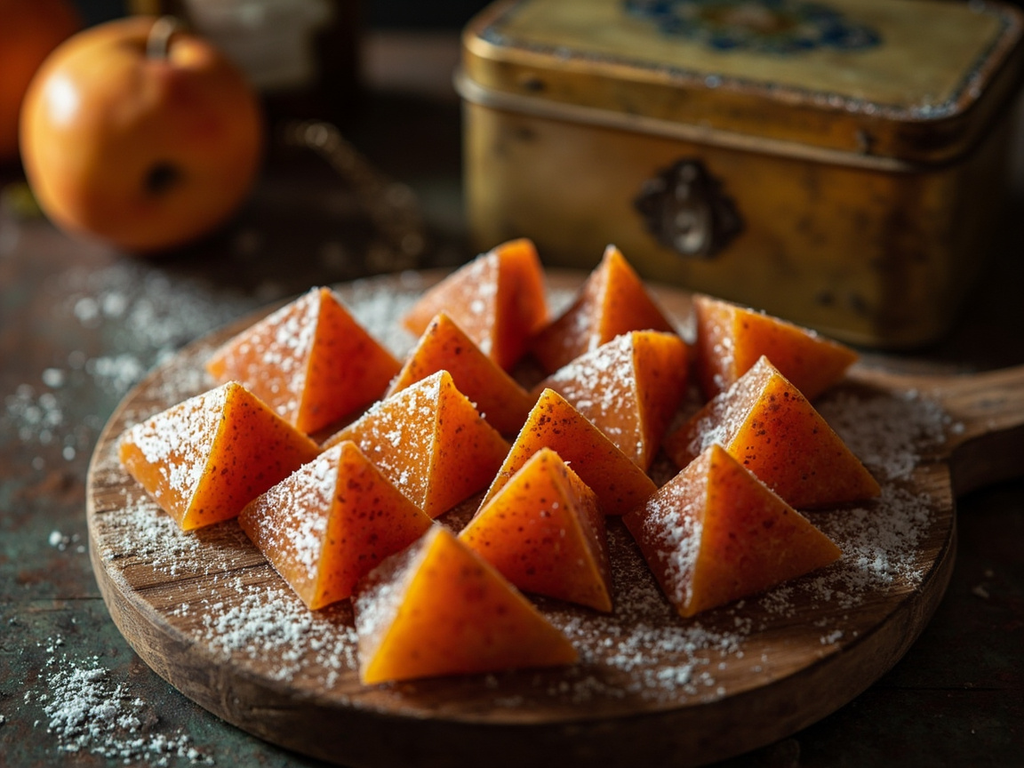
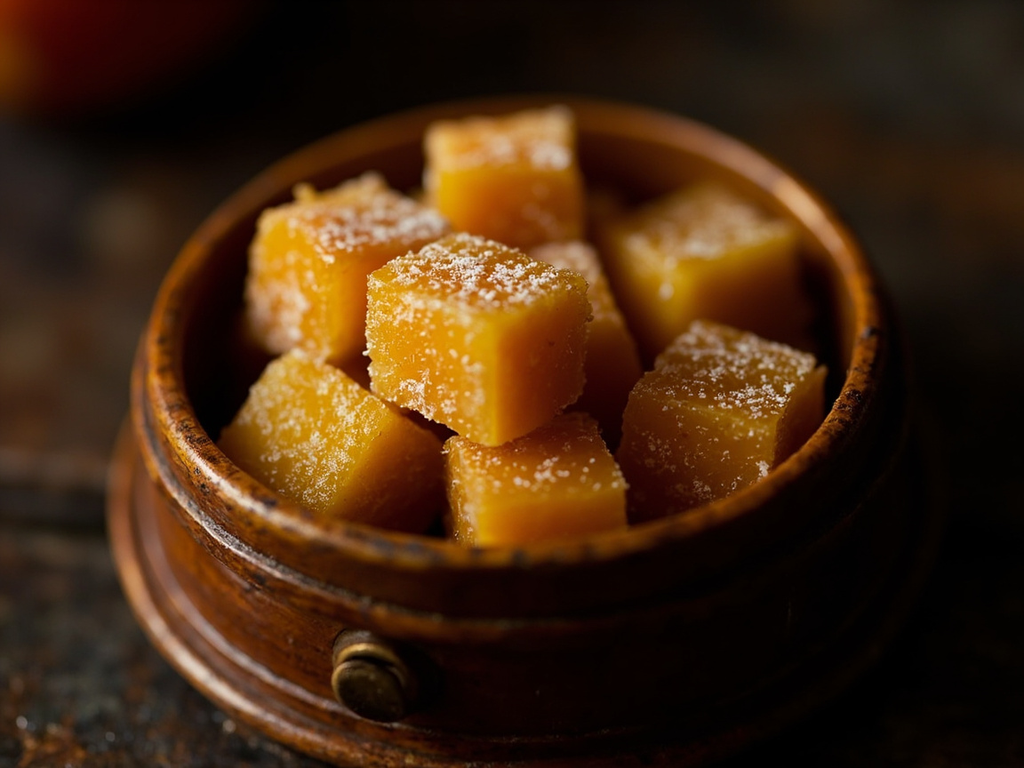
The contemporary twist : Pour part of the mixture into a flat mold to obtain 'quince paste' to cut into cubes rolled in sugar, served with cheese.
Sources : Menon, La Cuisinière bourgeoise, 1746
Olympe de Gouges · Charactorium