 flip
flipLa carbonade flamande de la rue des Brasseurs
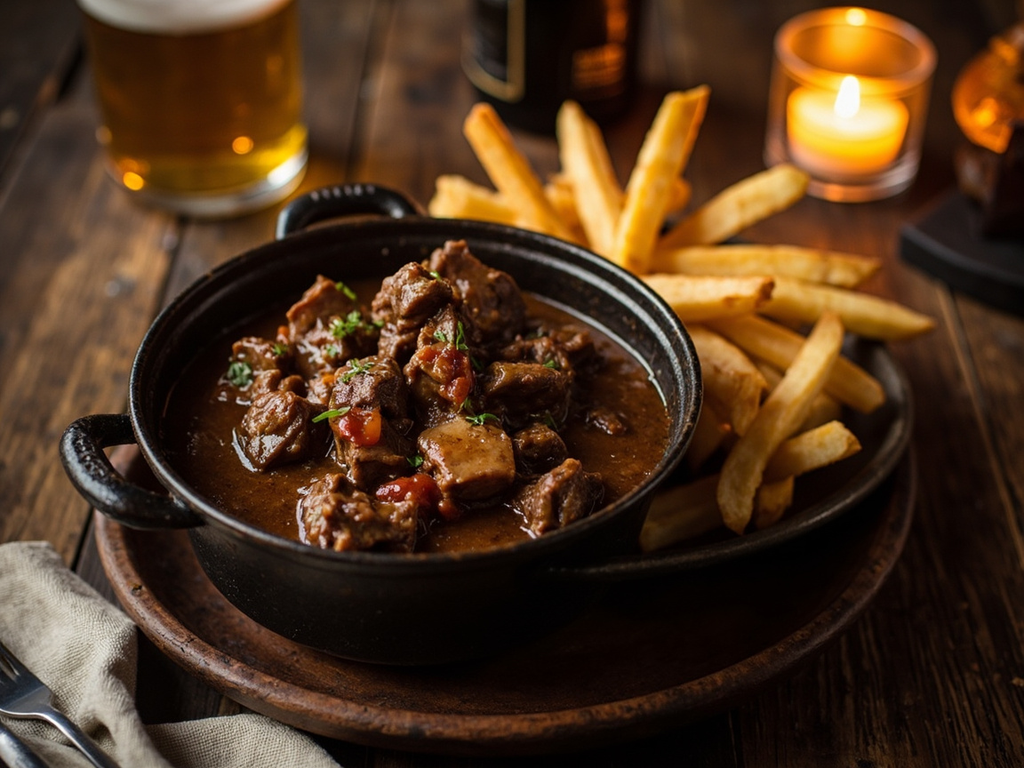
La carbonade flamande de la rue des Brasseurs
Why this dish? Verlaine lived his most famous Belgian episode in Brussels, rue des Brasseurs (where he wounded Rimbaud with a pistol shot in 1873), before the prison of Mons. Flemish carbonnade, beef stewed in brown beer and spiced bread, is THE dish of the Belgian brasseries he frequented.
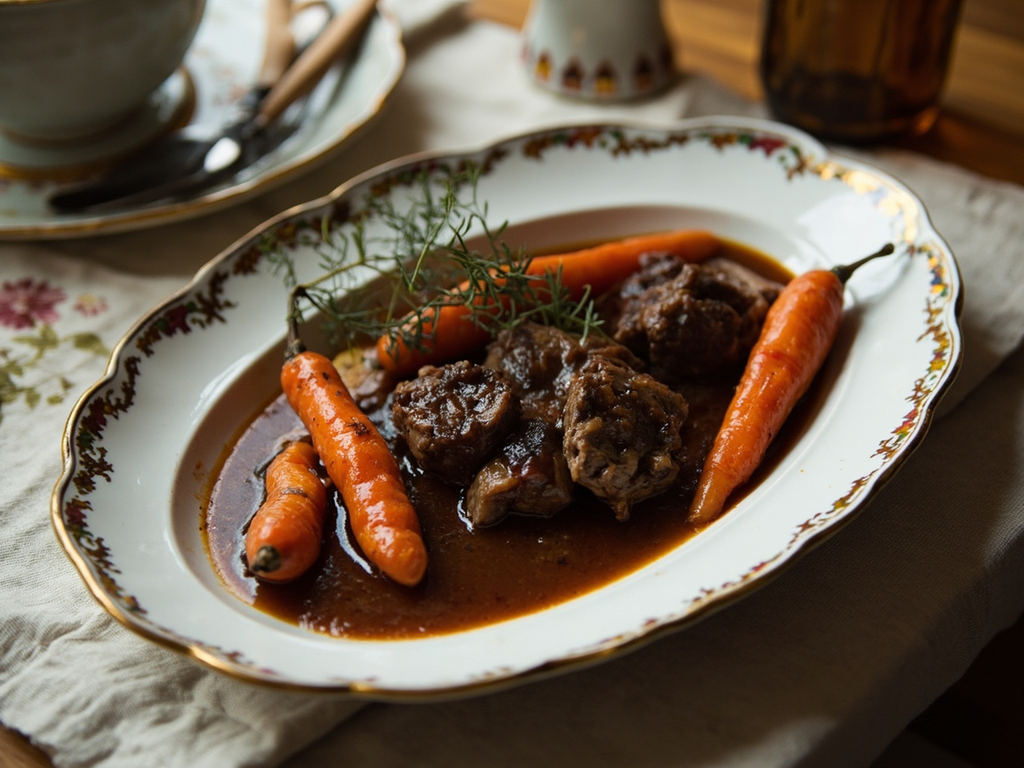
Beef long braised in brown beer, sweetened with brown sugar and a slice of mustard-spiced bread that melts and thickens the sauce. Deep, malty, both sweet and bitter.
In Brussels, on days when luck smiled on me a little, we would sit down at the brasserie for carbonnade. The beef has simmered for hours in brown beer, and you slip into the pot a slice of spiced bread spread with mustard, which melts and gives the sauce that bittersweet velvet the Flemish have the secret of. It's heavy, it's honest, it fills a man — and after so much dry bread, believe me, it was a true feast for me.
- •Beef for braising — a nice piece (base)
- •Brown beer — enough to cover (malty and bitter moistening)
- •Onions — several (sweet base)
- •Spiced bread (pain d'épices) — one slice (bittersweet thickening)
- •Mustard — a little (lift)
- •Brown sugar — a pinch (balance)
La carbonade flamande de la rue des Brasseurs
Beef long braised in brown beer, sweetened with brown sugar and a slice of mustard-spiced bread that melts and thickens the sauce. Deep, malty, both sweet and bitter.
Why this dish? Verlaine lived his most famous Belgian episode in Brussels, rue des Brasseurs (where he wounded Rimbaud with a pistol shot in 1873), before the prison of Mons. Flemish carbonnade, beef stewed in brown beer and spiced bread, is THE dish of the Belgian brasseries he frequented.
In Brussels, on days when luck smiled on me a little, we would sit down at the brasserie for carbonnade. The beef has simmered for hours in brown beer, and you slip into the pot a slice of spiced bread spread with mustard, which melts and gives the sauce that bittersweet velvet the Flemish have the secret of. It's heavy, it's honest, it fills a man — and after so much dry bread, believe me, it was a true feast for me.
Ingredients (period version)
- Beef for braising — a nice piece (base)
- Brown beer — enough to cover (malty and bitter moistening)
- Onions — several (sweet base)
- Spiced bread (pain d'épices) — one slice (bittersweet thickening)
- Mustard — a little (lift)
- Brown sugar — a pinch (balance)
Ingredients
- Beef for braising (chuck, shin) — 800 g (base)
- Belgian brown beer — 50 cl (moistening)
- Onions — 3 large (base)
- Spiced bread (pain d'épices) — 2 slices (thickening)
- Mustard — 2 tbsp (lift)
- Brown sugar — 1 tbsp (bittersweet balance)
- Butter, bay leaf, thyme, salt, pepper — to taste (seasoning)
Method
- Cut the beef into large cubes and sear in butter in a Dutch oven; set aside.
- Cook the sliced onions in the same pot until colored.
- Return the meat, pour in the brown beer, add brown sugar, bay leaf, and thyme; salt and pepper.
- Spread the spiced bread slices with mustard and place them on top.
- Cover and simmer over very low heat for 2.5 to 3 hours, until the meat shreds and the sauce coats.
- Serve with fries or steamed potatoes.
How it was made : Flemish carbonnade is the great stewed dish of the brasseries of Flanders and Brussels since the 19th century. Beer replaces the wine of French cuisine, and mustard-spiced bread is the local trick to thicken and sweeten the sauce.
The contemporary twist : Dressed as a parmentier topped with beer-infused mashed potatoes, or served with homemade oven fries: Belgian brasserie at the family table.
Paul Verlaine · Charactorium