 flip
Poularde rôtie à la sauce verjutée et aux herbes
Poularde rôtie à la sauce verjutée et aux herbes
Why this dish? When Fermat received his colleagues from the Parliament or a visiting correspondent, the roast poultry was the centerpiece of the meal, as befits a counselor's rank. The verjus sauce, tangy and refined, marked elegant 17th-century tables.
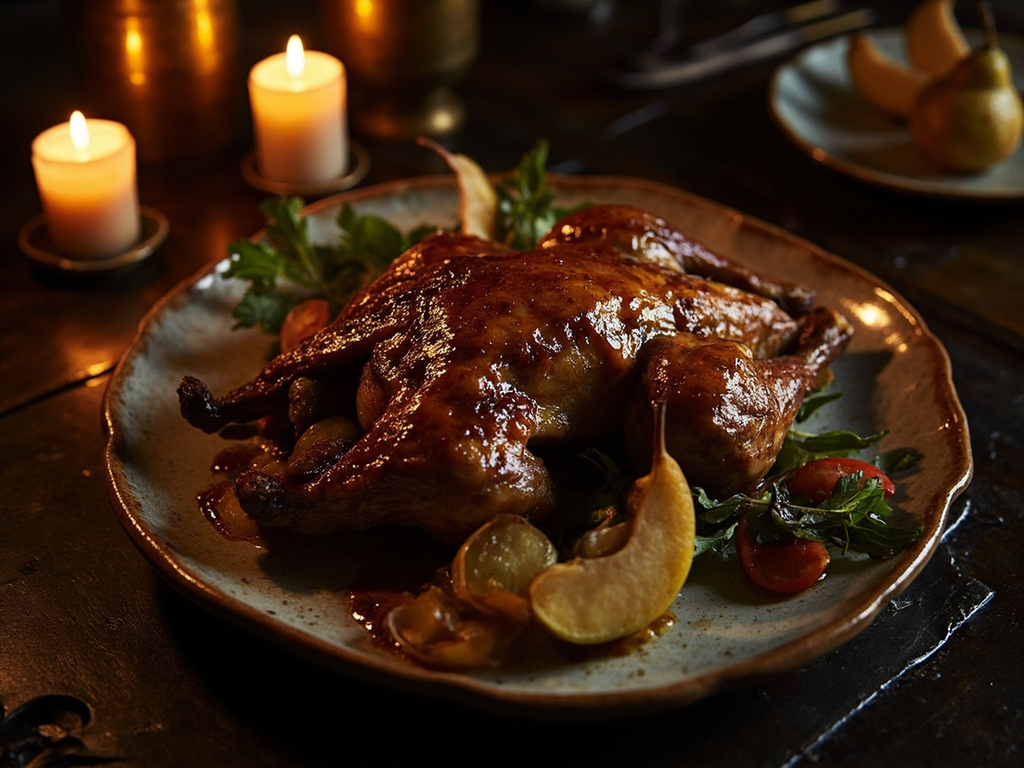
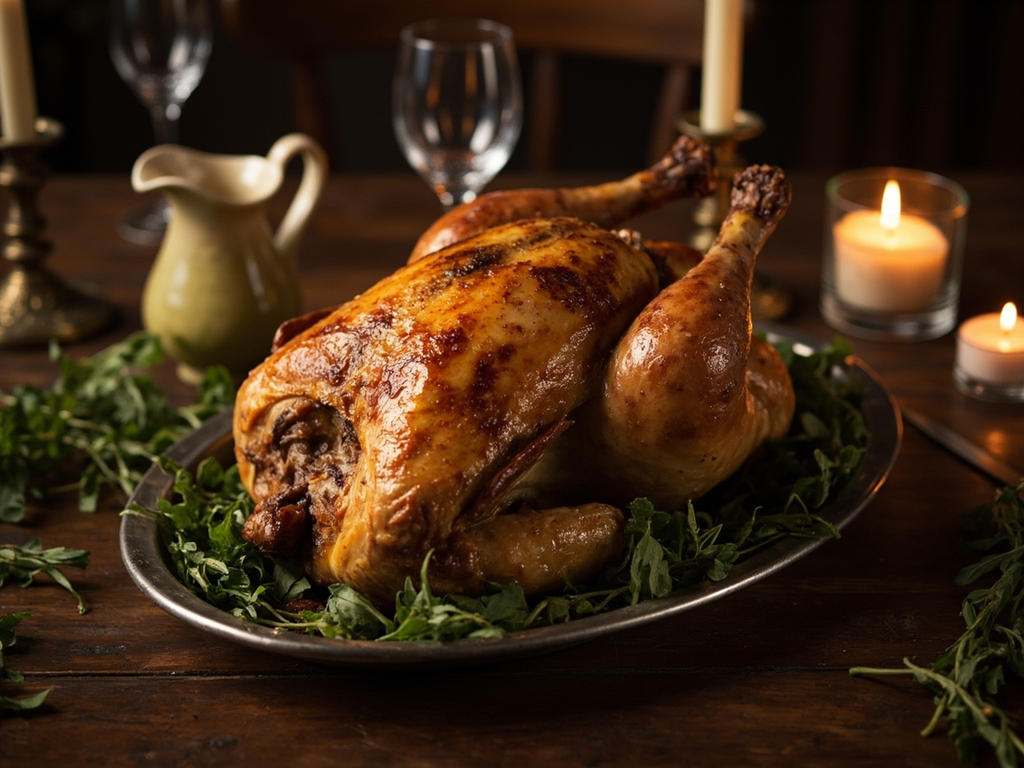
A golden roast hen, basted with its own fat, accompanied by a short sauce of verjus, parsley, and fine herbs — the delicate acidity that replaced lemon in French cuisine of the time.
My friends from the Parliament, come close: here is my hen, which I consider the finest piece of my supper. It is turned on the spit, basted with its own fat until the skin is golden like a wax seal. For the sauce, no lemon — we have something better here: verjus, that juice of unripe grapes, which stings just enough and lifts the flesh without overwhelming it. A little parsley, a pinch of sweet spice, and you have a dish worthy of a well-conducted demonstration: simple in appearance, perfect in its balance.
- •Fat hen — a fine piece (main meat)
- •Goose fat or lard — for basting and barding (roasting)
- •Verjus — half a glass (sauce acidity)
- •Parsley and fine herbs — a handful (aromatics)
- •Sweet spices (nutmeg, ginger) — a pinch (flavor)
- •Salt — to taste (seasoning)
Poularde rôtie à la sauce verjutée et aux herbes
A golden roast hen, basted with its own fat, accompanied by a short sauce of verjus, parsley, and fine herbs — the delicate acidity that replaced lemon in French cuisine of the time.
Why this dish? When Fermat received his colleagues from the Parliament or a visiting correspondent, the roast poultry was the centerpiece of the meal, as befits a counselor's rank. The verjus sauce, tangy and refined, marked elegant 17th-century tables.
My friends from the Parliament, come close: here is my hen, which I consider the finest piece of my supper. It is turned on the spit, basted with its own fat until the skin is golden like a wax seal. For the sauce, no lemon — we have something better here: verjus, that juice of unripe grapes, which stings just enough and lifts the flesh without overwhelming it. A little parsley, a pinch of sweet spice, and you have a dish worthy of a well-conducted demonstration: simple in appearance, perfect in its balance.
Ingredients (period version)
- Fat hen — a fine piece (main meat)
- Goose fat or lard — for basting and barding (roasting)
- Verjus — half a glass (sauce acidity)
- Parsley and fine herbs — a handful (aromatics)
- Sweet spices (nutmeg, ginger) — a pinch (flavor)
- Salt — to taste (seasoning)
Ingredients
- Hen or large free-range chicken — 1.8 to 2 kg (main meat)
- Goose fat — 3 tbsp (roasting and basting)
- Verjus (or substitute: 50% white wine + 50% green grape juice) — 100 ml (sauce acidity)
- Flat-leaf parsley, chives, chervil — 1 small bunch (aromatics)
- Nutmeg and ground ginger — 1 pinch each (flavor)
- Salt and pepper — to taste (seasoning)
Method
- Salt the hen inside and out, brush with melted goose fat.
- Roast in the oven at 200 °C (or on a spit) for about 1 hour 15 minutes, basting regularly with its juices and fat until well colored.
- Collect the degreased cooking juices in a saucepan, deglaze with verjus, and reduce by half.
- Add the chopped herbs and pinch of sweet spices off the heat; adjust salt.
- Carve the hen, coat with the verjus sauce, and serve immediately, very hot.
How it was made : Verjus, the juice of unripe grapes, was the king of souring agents in French kitchens before lemon became widespread. La Varenne and 17th-century cookbooks abound with roast poultry 'à la sauce' short, perfumed with herbs and sweet spices, and basted on the spit.
The contemporary twist : Present the hen on a bed of fresh herbs and serve the verjus sauce in a small pitcher, a 'just balance' — a nod to Fermat's taste for elegant solutions.
Sources : François Pierre de La Varenne, Le Cuisinier françois, 1651
Pierre de Fermat · Charactorium