 flip
flipQuince Paste, Loire Valley Style
Quince Paste, Loire Valley Style
Why this dish? The orchards of Vendômois and Orléanais were full of quinces, a tart fruit eaten only cooked. Reduced to a sweet paste, cotignac kept for months and appeared on fine tables, like those Ronsard frequented at court.
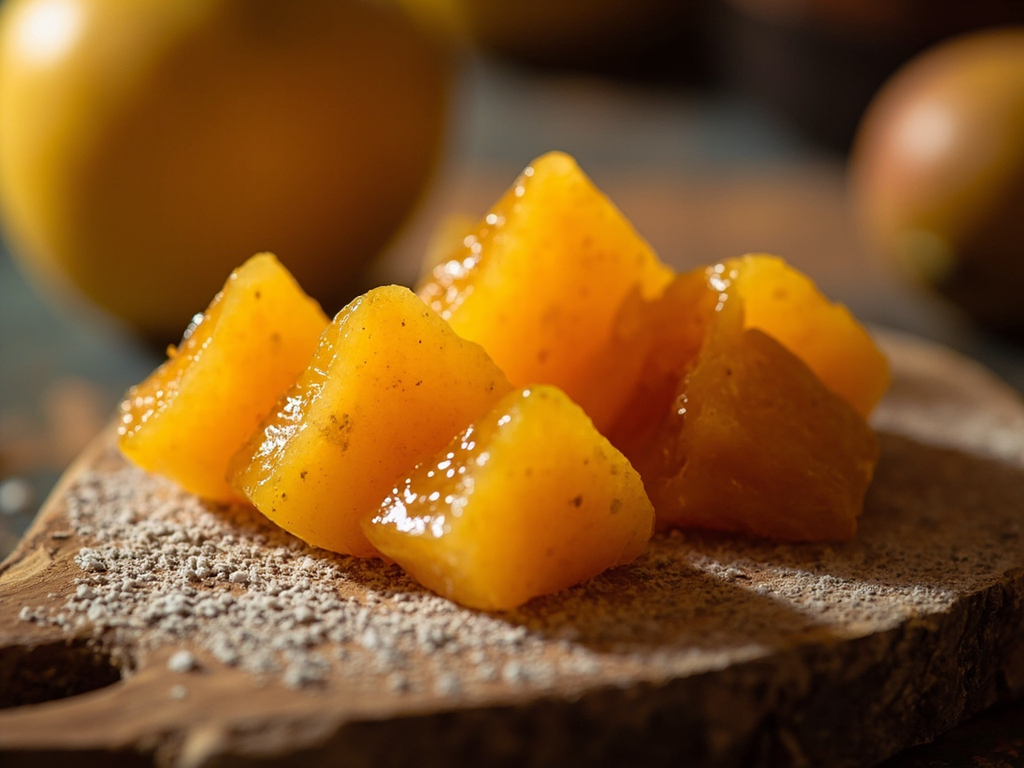
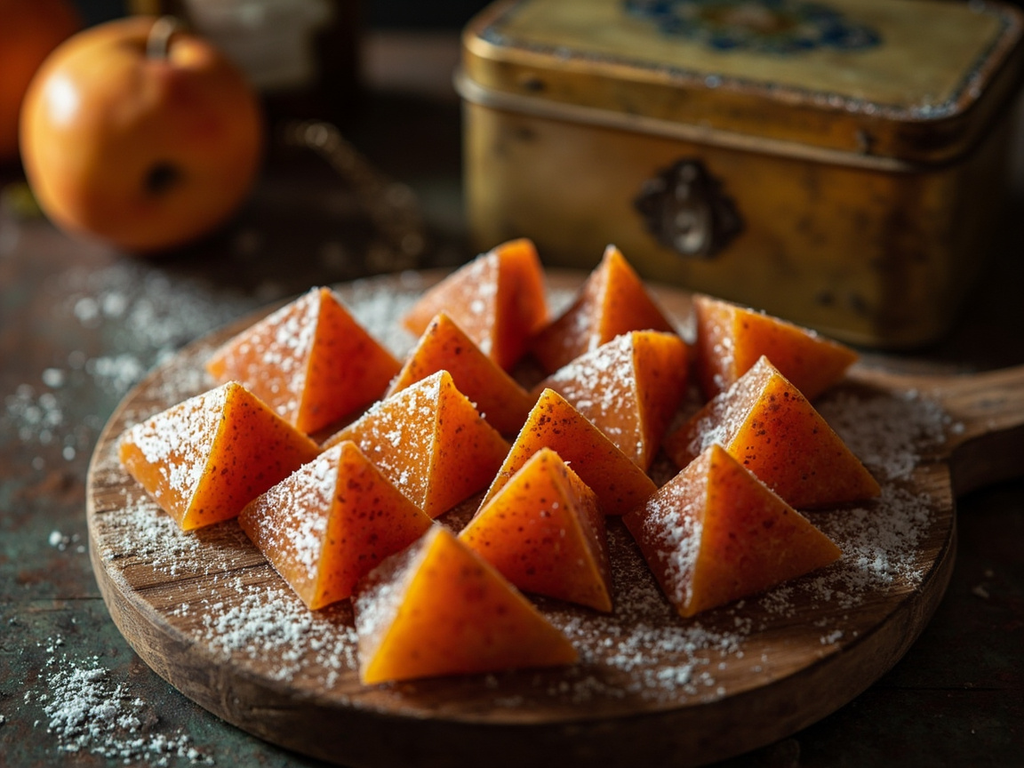
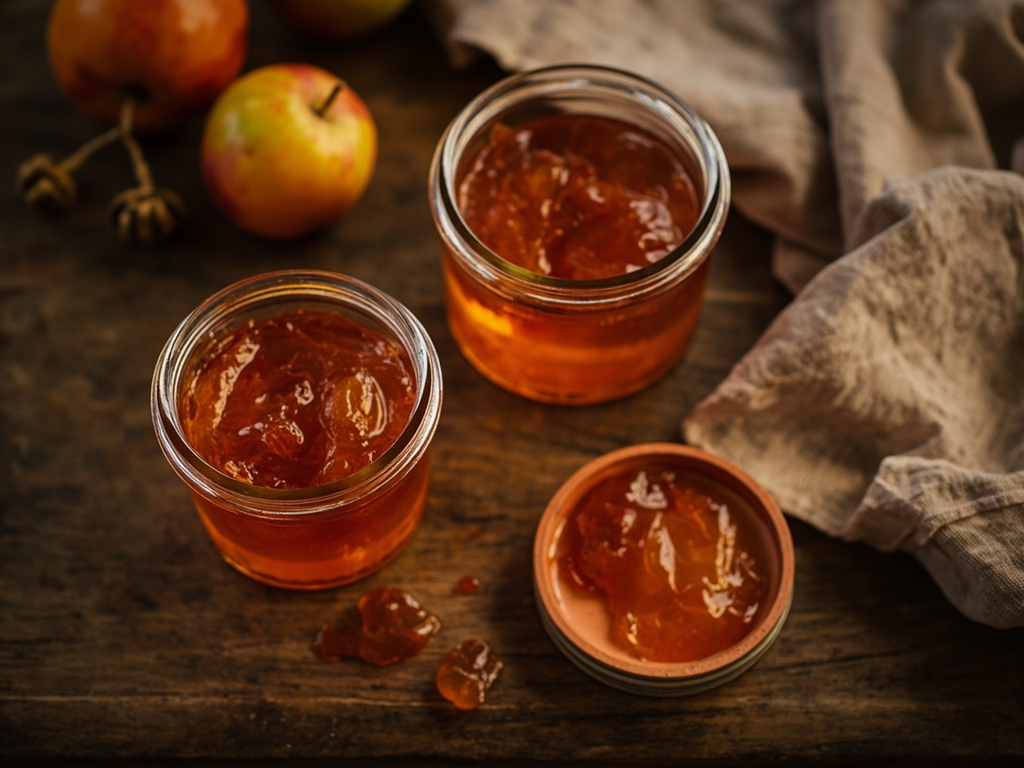
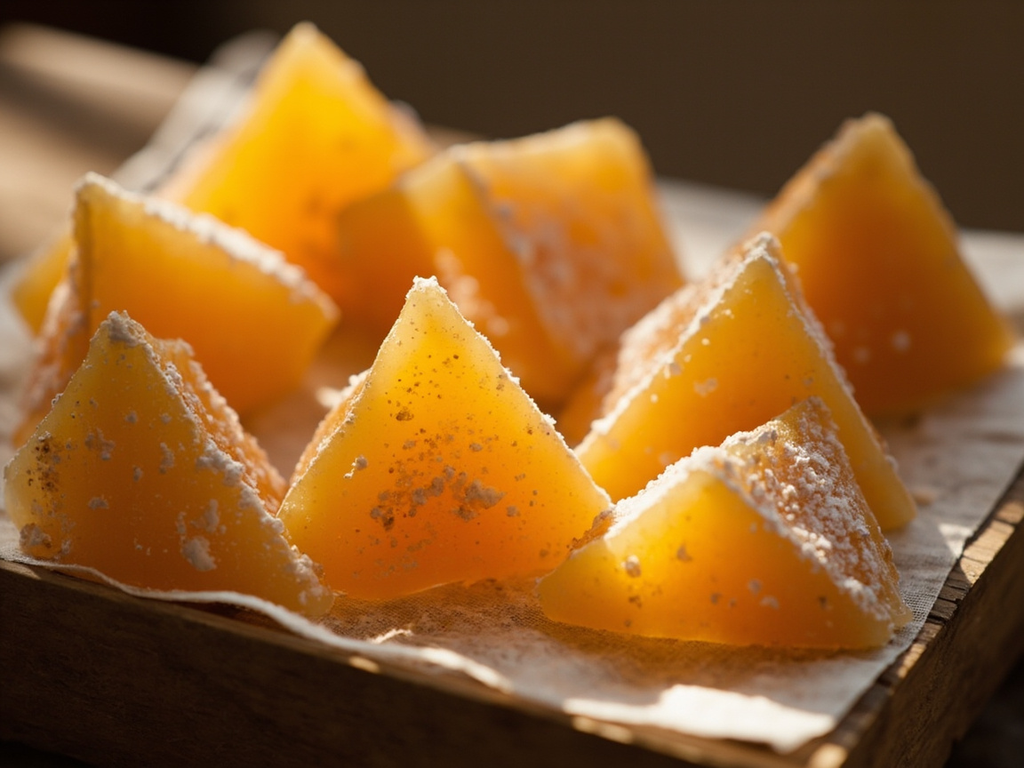
A dense, translucent quince paste cooked with sugar until set, dried, then cut into fragrant diamond shapes. A keeping sweet, amber and delicately tangy.
When autumn came, and the quince yellowed and perfumed the whole cellar, I had it cooked into that paste called cotignac. Patience: you stir, you stir the paste over the fire until the spoon leaves its furrow. Then you dry it, cut it into little diamonds, and you are provided with sweets for the whole winter. At court they offered them in thin wooden boxes — a modest gift, but of a flavor that keeps its promise until the cold.
- •Ripe quinces — a basket (fruit)
- •Sugar — equal weight to cooked fruit (preservation and sweetness)
- •Water — for first cooking (cooking)
Quince Paste, Loire Valley Style
A dense, translucent quince paste cooked with sugar until set, dried, then cut into fragrant diamond shapes. A keeping sweet, amber and delicately tangy.
Why this dish? The orchards of Vendômois and Orléanais were full of quinces, a tart fruit eaten only cooked. Reduced to a sweet paste, cotignac kept for months and appeared on fine tables, like those Ronsard frequented at court.
When autumn came, and the quince yellowed and perfumed the whole cellar, I had it cooked into that paste called cotignac. Patience: you stir, you stir the paste over the fire until the spoon leaves its furrow. Then you dry it, cut it into little diamonds, and you are provided with sweets for the whole winter. At court they offered them in thin wooden boxes — a modest gift, but of a flavor that keeps its promise until the cold.
Ingredients (period version)
- Ripe quinces — a basket (fruit)
- Sugar — equal weight to cooked fruit (preservation and sweetness)
- Water — for first cooking (cooking)
Ingredients
- Quinces — 1.5 kg (fruit)
- Sugar — same weight as pulp obtained (~700 g) (preservation and sweetness)
- Quince juice or water — a little (cooking)
Method
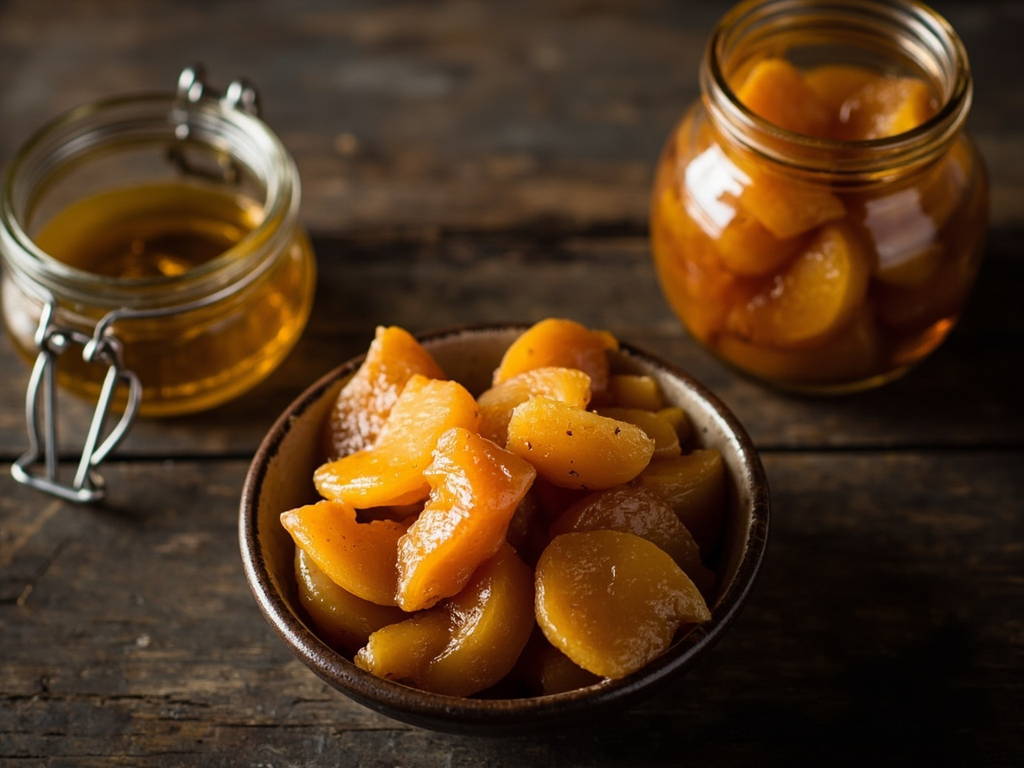
- Wash and rub the quinces, cut into quarters (with skin and seeds, rich in pectin), cook in water until tender.
- Pass the pulp through a sieve or food mill to obtain a smooth puree.
- Weigh the pulp, add an equal weight of sugar, then cook over low heat, stirring constantly.
- Continue until the paste pulls away from the bottom and the spoon leaves a clean trail (20-40 min).
- Spread in a 1 cm layer on parchment paper, let dry 24-48 hours in a dry place.
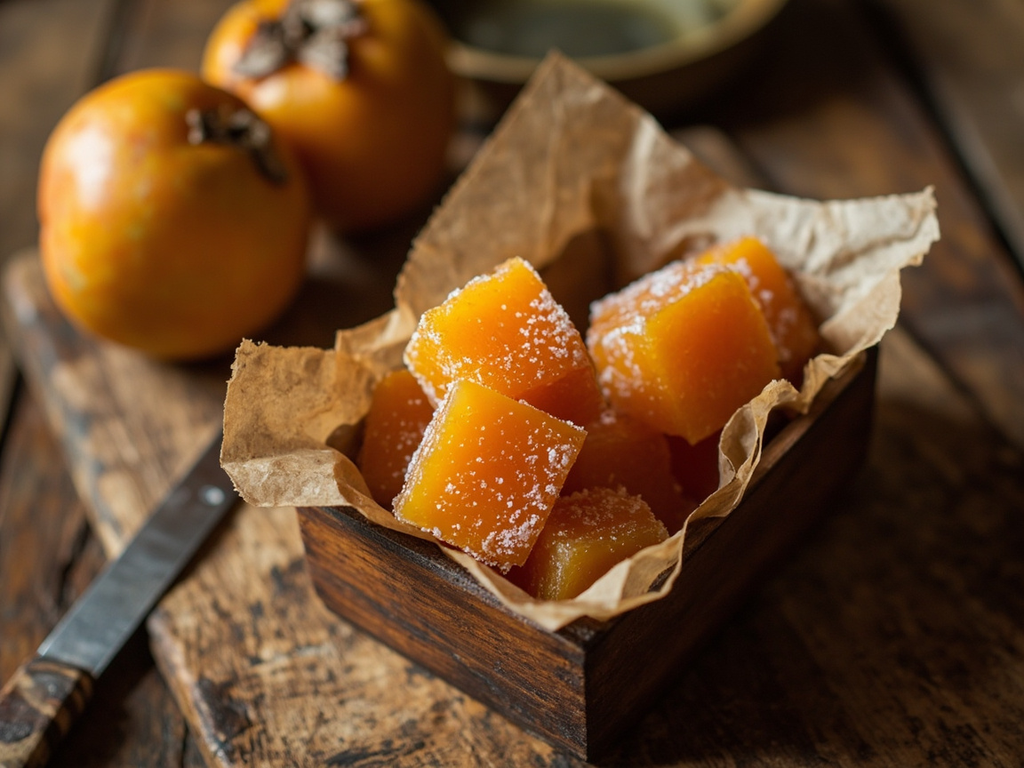
- Cut into diamonds, optionally roll in sugar, and store in an airtight container.
How it was made : Cotignac (from 'coing', quince) was a renowned specialty of Orléans, offered as a gift in small spruce boxes. Dry preserves, lavish with still-rare sugar, were a luxury of the 'issue de table' and a method of preserving fruit for winter.
The contemporary twist : Serve the quince paste diamonds with an aged Loire goat cheese (Sainte-Maure): the sweet-sour-dairy pairing would do honor to a Vendômois gentleman's table.
Sources : Nostradamus, Traité des fardements et confitures (1555) · Tradition du cotignac d'Orléans
Pierre de Ronsard · Charactorium