 flip
flipQuince paste (cotignac)
Quince paste (cotignac)
Why this dish? Cotignac — solid quince paste — is the quintessential keeping preserve of the Renaissance, offered as a gift and stored for months. For a man torn between Anjou, Paris, and Rome, traveling and crossing the Alps, it is the sweetness that travels and does not spoil. The quince, fruit of the Loire orchards as well as Italian gardens, connects his two homelands.
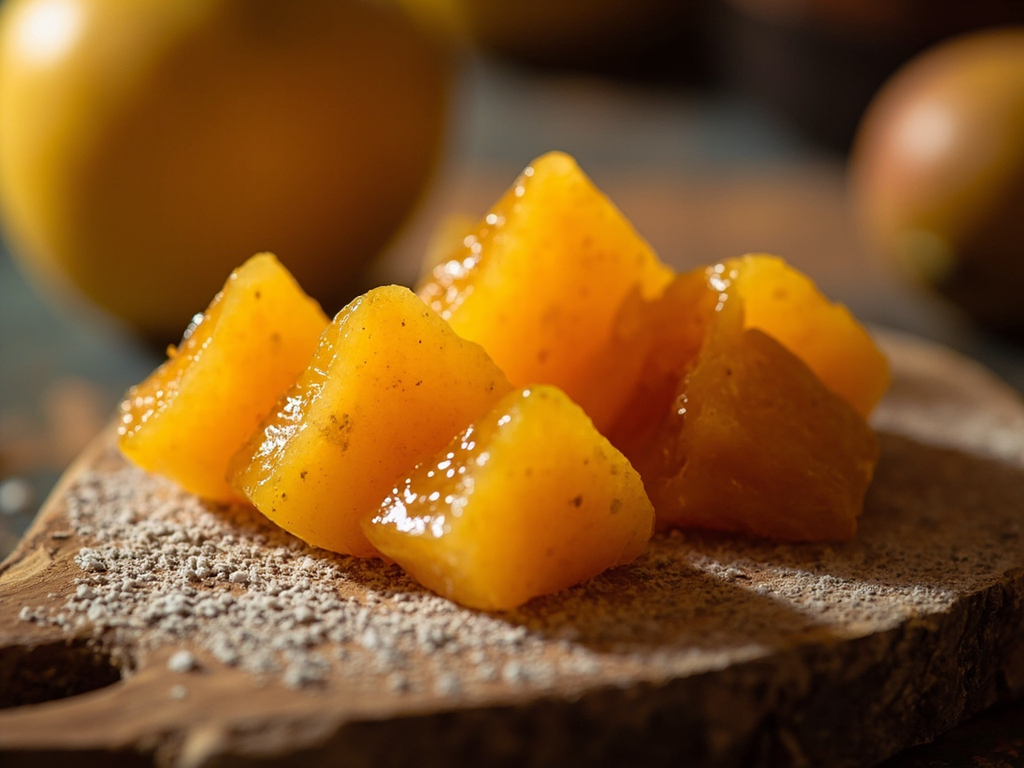
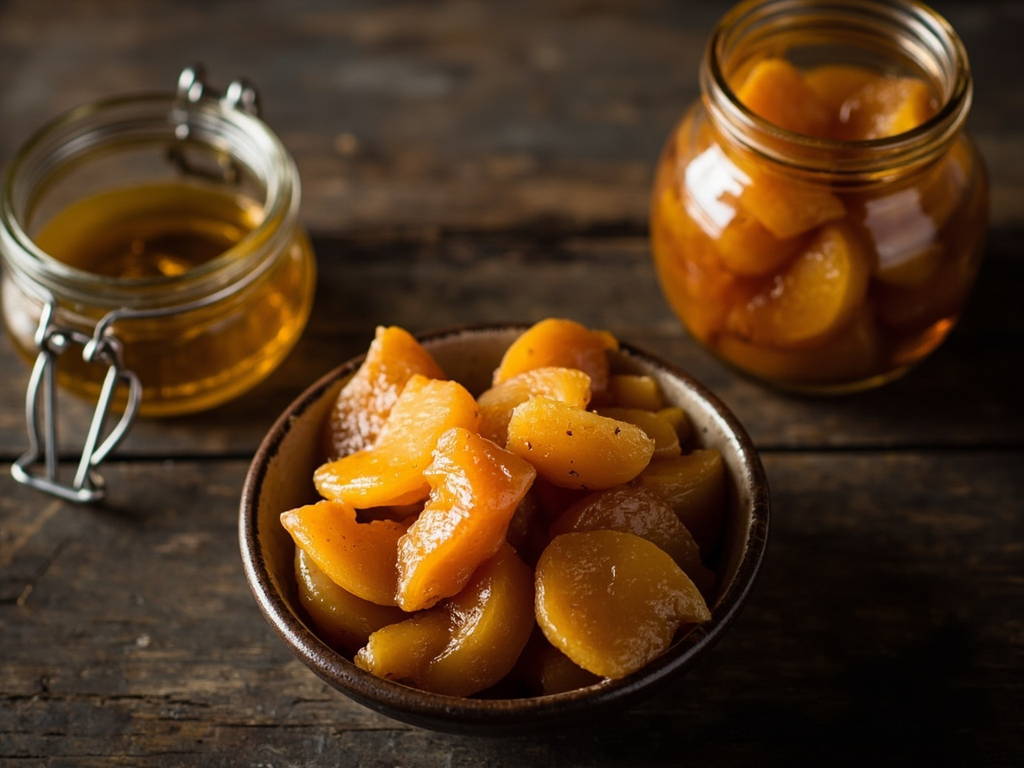
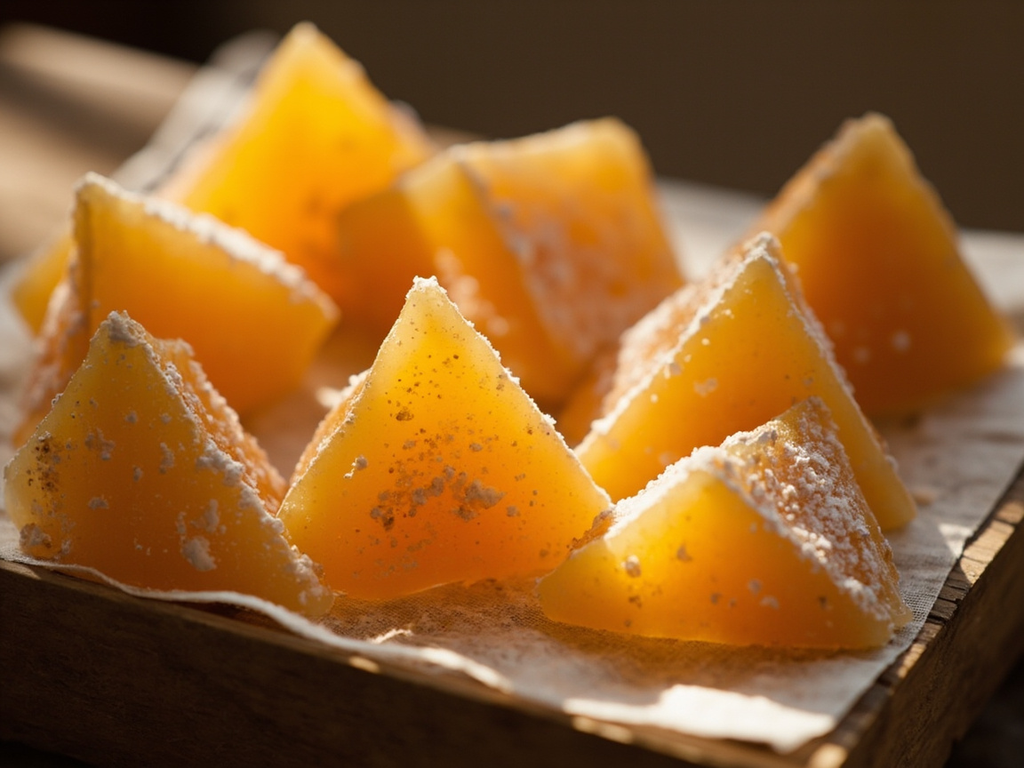
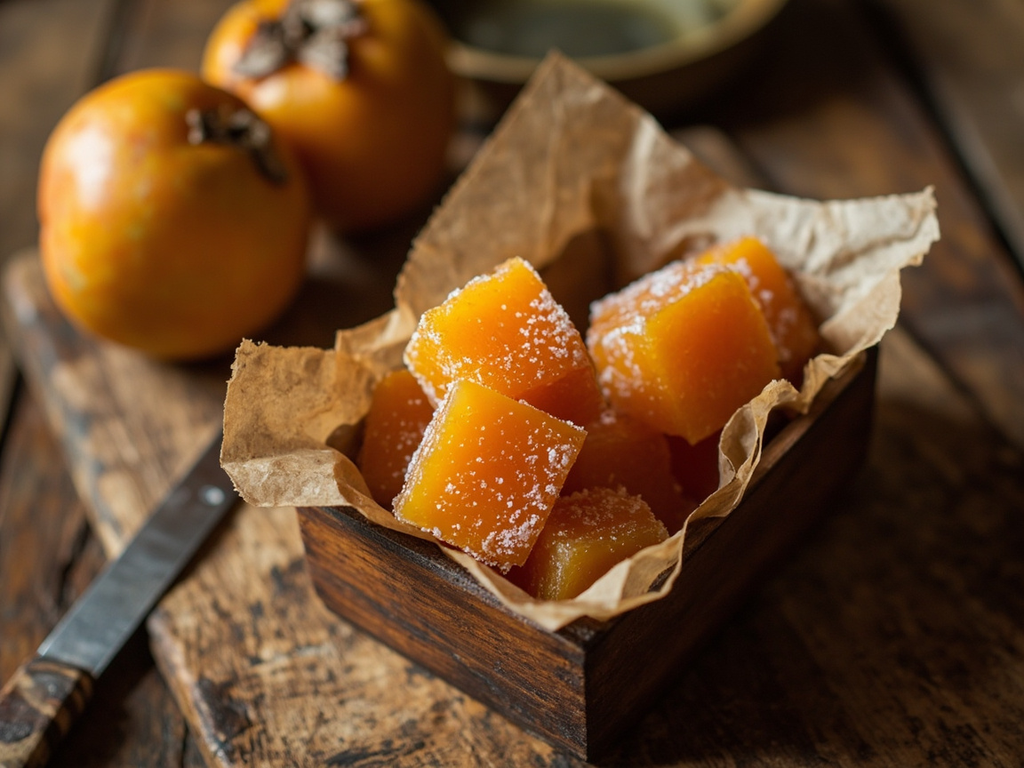
Firm paste of quince slowly cooked with its weight in sugar (or honey), until it can be cut into translucent cubes. Tart and fragrant, it keeps for months and is enjoyed at the end of a meal or as a travel snack.
Here, my friend, is the most faithful of sweets: cotignac. Peel the quinces, cook them into compote, strain them, then give them their weight in sugar and stir without pause over the fire until the paste releases from the bottom as if reluctantly. Poured into wooden boxes, it keeps all winter. I used to slip a few cubes into my luggage to cross the mountains into Italy: a taste of Anjou that fears neither time nor travel.
- •Ripe quinces — as many as you have (base fruit)
- •Sugar or honey — weight of the pulp (preservation and sweetness)
- •Water — as needed (initial cooking)
Quince paste (cotignac)
Firm paste of quince slowly cooked with its weight in sugar (or honey), until it can be cut into translucent cubes. Tart and fragrant, it keeps for months and is enjoyed at the end of a meal or as a travel snack.
Why this dish? Cotignac — solid quince paste — is the quintessential keeping preserve of the Renaissance, offered as a gift and stored for months. For a man torn between Anjou, Paris, and Rome, traveling and crossing the Alps, it is the sweetness that travels and does not spoil. The quince, fruit of the Loire orchards as well as Italian gardens, connects his two homelands.
Here, my friend, is the most faithful of sweets: cotignac. Peel the quinces, cook them into compote, strain them, then give them their weight in sugar and stir without pause over the fire until the paste releases from the bottom as if reluctantly. Poured into wooden boxes, it keeps all winter. I used to slip a few cubes into my luggage to cross the mountains into Italy: a taste of Anjou that fears neither time nor travel.
Ingredients (period version)
- Ripe quinces — as many as you have (base fruit)
- Sugar or honey — weight of the pulp (preservation and sweetness)
- Water — as needed (initial cooking)
Ingredients
- Quinces — 1 kg (yields ~700 g pulp) (main fruit)
- Sugar — 650 to 700 g (≈ weight of pulp) (setting and preservation)
- Lemon juice (optional, for gelling) — 1 tbsp (acidity and firmness)
- Water — for cooking (softening the fruit)
Method
- Peel, core, and chop the quinces, then cook them in a little water until very tender.
- Purée the pulp finely (through a sieve or blender) and weigh it.
- Return the pulp to the pan with an equal weight of sugar, add the lemon juice, and cook over medium heat, stirring constantly, for 30 to 45 minutes, until the paste thickens and releases from the bottom.
- Spread to 1.5 cm thick in a paper-lined mold, let dry for 24 to 48 hours, then cut into cubes and store in a dry place.
How it was made : The cotignac of Orléans was already famous in the 16th century. Nostradamus, in his *Treatise on Cosmetics and Preserves* (1555), gives recipes for quince with sugar and honey. Solidified, quince paste was a long-keeping confit, offered during royal entries and carried on journeys.
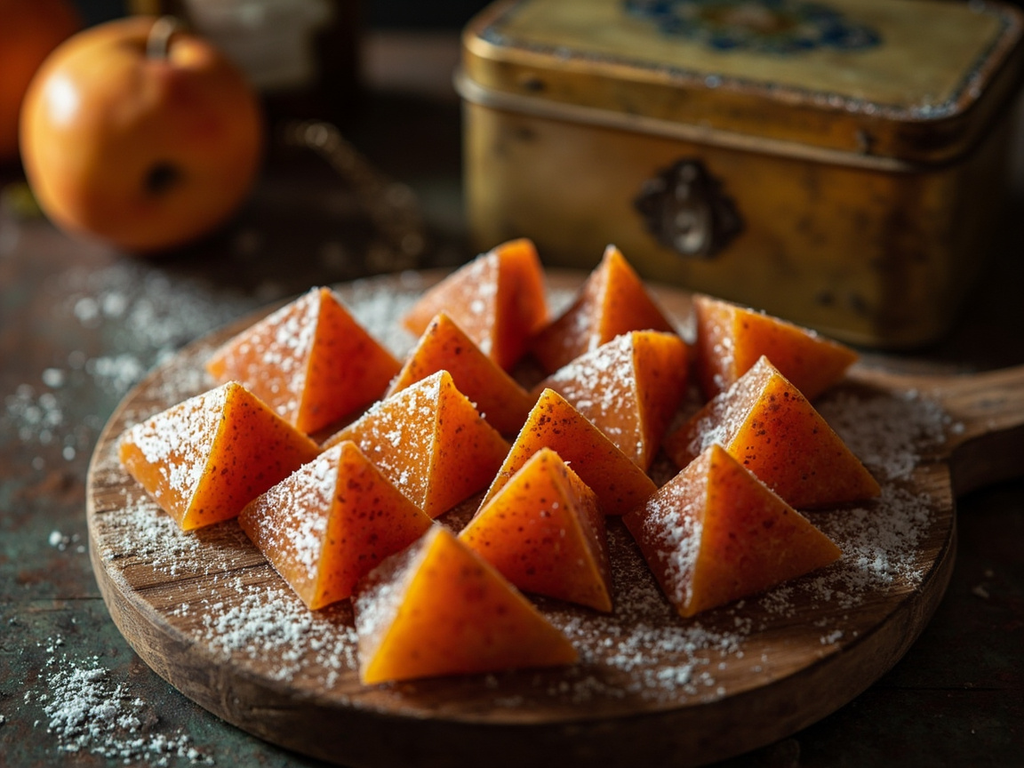
The contemporary twist : Cut with a cookie cutter into feather or diamond shapes, roll in crystal sugar, and present in a small wooden box like a Renaissance gift.
Sources : Nostradamus, Traité des fardements et confitures (1555) · Tradition du cotignac d'Orléans (16th century)
Joachim du Bellay · Charactorium