 flip
flipHen in Verjuice, the Hen Stolen from Chanticleer
Hen in Verjuice, the Hen Stolen from Chanticleer
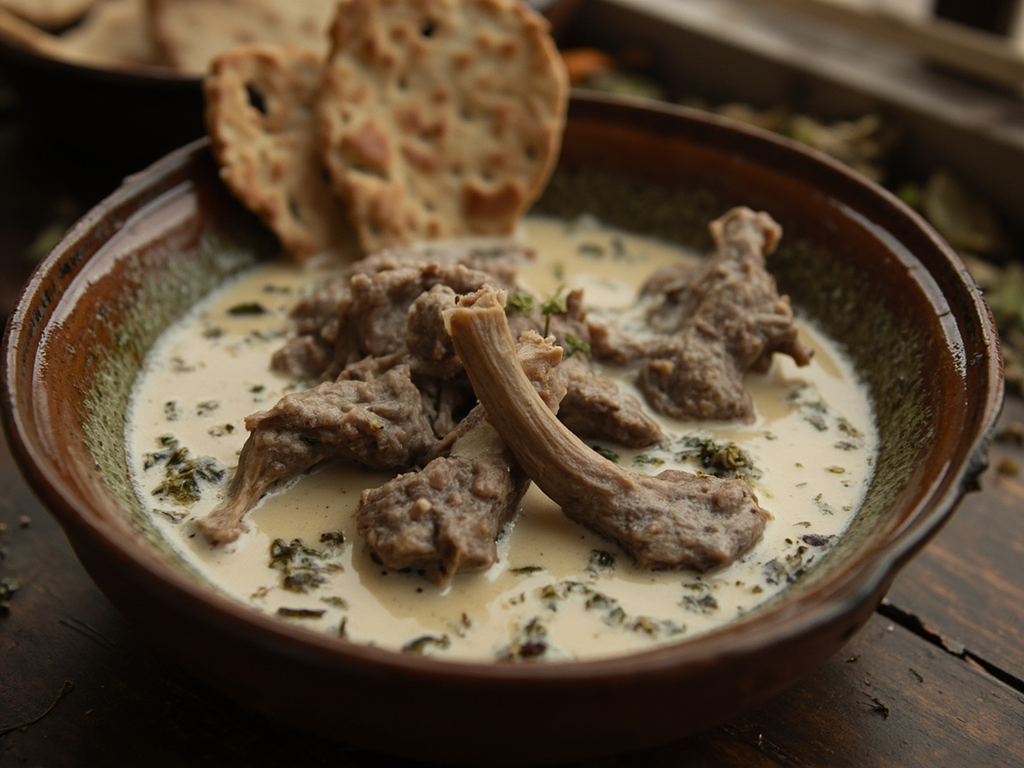
Why this dish? Renart spends his time watching the henhouse and coveting Chanticleer the rooster and his hens. Here is the most natural dish for the fox: a stolen hen, quickly stewed in the depths of a den or an abandoned kitchen, sharpened with the tart verjuice found in every medieval farm.
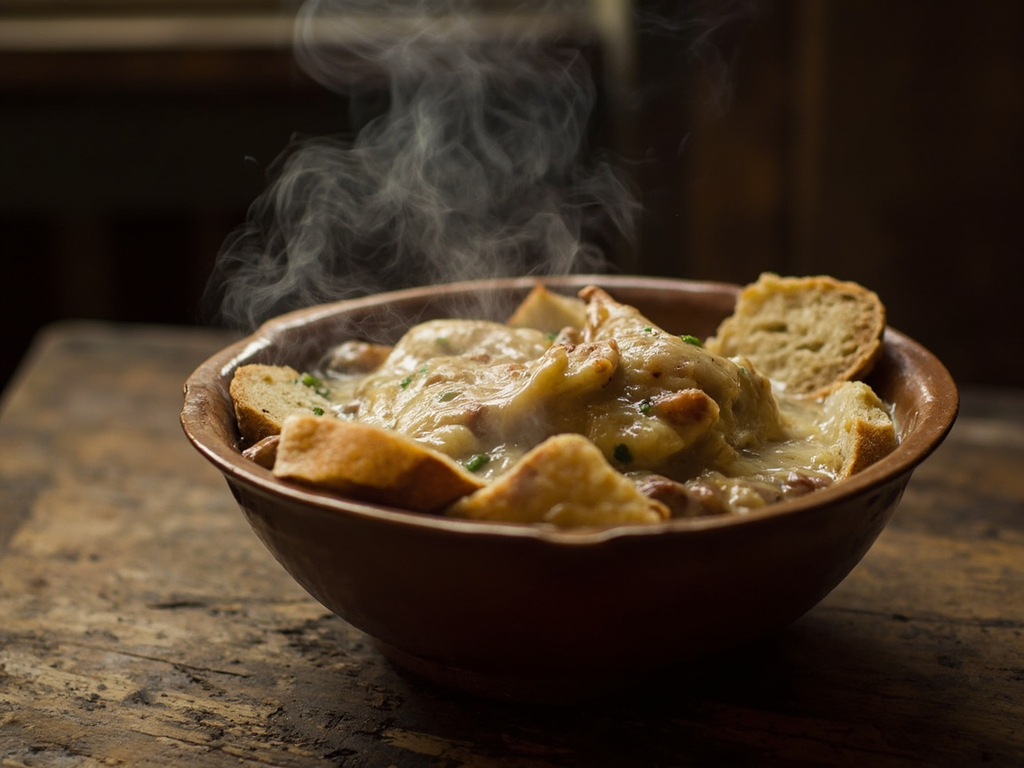
A farm hen poached then bound in a sauce of verjuice, ginger, and toasted bread. An everyday dish for both peasant and minor lord: economical, tangy, comforting, without the spice extravagance of great tables.
Come closer, friend, and lower your voice: this hen I plucked from the perch while that fool Chanticleer sang in the sun. We put her in the pot with a little water, splash on some good green verjuice to cut the fat, a pinch of ginger, and sun-dried bread crushed to bind it all. Patience, my fox: cunning cooks slowly, never at a rolling boil. And when the farmer returns to count his hens, I am already far away, belly full and muzzle laughing.
- •Hen (farm hen) — one (base meat)
- •Verjuice (green grape juice) — a good cupful (signature acidity)
- •Ginger — a little (warm spice)
- •Stale toasted bread — two slices (thickener without flour)
- •Onions — two (aromatic base)
- •Salt — to taste (seasoning)
Hen in Verjuice, the Hen Stolen from Chanticleer
A farm hen poached then bound in a sauce of verjuice, ginger, and toasted bread. An everyday dish for both peasant and minor lord: economical, tangy, comforting, without the spice extravagance of great tables.
Why this dish? Renart spends his time watching the henhouse and coveting Chanticleer the rooster and his hens. Here is the most natural dish for the fox: a stolen hen, quickly stewed in the depths of a den or an abandoned kitchen, sharpened with the tart verjuice found in every medieval farm.
Come closer, friend, and lower your voice: this hen I plucked from the perch while that fool Chanticleer sang in the sun. We put her in the pot with a little water, splash on some good green verjuice to cut the fat, a pinch of ginger, and sun-dried bread crushed to bind it all. Patience, my fox: cunning cooks slowly, never at a rolling boil. And when the farmer returns to count his hens, I am already far away, belly full and muzzle laughing.
Ingredients (period version)
- Hen (farm hen) — one (base meat)
- Verjuice (green grape juice) — a good cupful (signature acidity)
- Ginger — a little (warm spice)
- Stale toasted bread — two slices (thickener without flour)
- Onions — two (aromatic base)
- Salt — to taste (seasoning)
Ingredients
- Stewing hen or farmer's chicken thighs — 1.2 kg (base meat)
- Verjuice (or, failing that, half cider vinegar + half grape juice) — 150 ml (signature acidity)
- Fresh grated ginger — 1 teaspoon (warm spice)
- Rustic stale bread — 2 slices (thickener)
- Onions — 2 medium (base)
- Broth or water — 1 liter (cooking liquid)
- Salt — to taste (seasoning)
Method
- Sauté the sliced onions in a large pot, add the hen, cover with water or broth, and poach at a gentle simmer for 1 to 1½ hours until the meat pulls away from the bone.
- Meanwhile, toast the bread until very dry, then soak it in a ladleful of hot broth and mash into a paste.
- Remove the hen, take a few ladles of broth, and stir in the mashed bread, ginger, and verjuice.
- Return this mixture to the pot, put the hen pieces back in, add salt, and let thicken for 10 minutes over low heat without boiling.
- Taste and adjust acidity with more verjuice: the sauce should be tangy but not sharp.
How it was made : Verjuice was the universal souring agent of the Middle Ages, long before the rare and expensive lemon. Toasted bread, crushed, thickened sauces, as roux-based flour was not yet in use. Such a hen was a daily dish on farms and in modest manors alike.
The contemporary twist : Serve as a 'fox's snack': shred the hen into the sauce and stuff it into a hollowed-out rustic loaf, eaten on the go like a hurried thief.
Sources : Le Ménagier de Paris (c. 1393), recipes for hens and verjuice broths · Le Roman de Renart, branches of Chanticleer the rooster
Renart · Charactorium