 flip
flipBarley porridge with butter and berries (grautr)
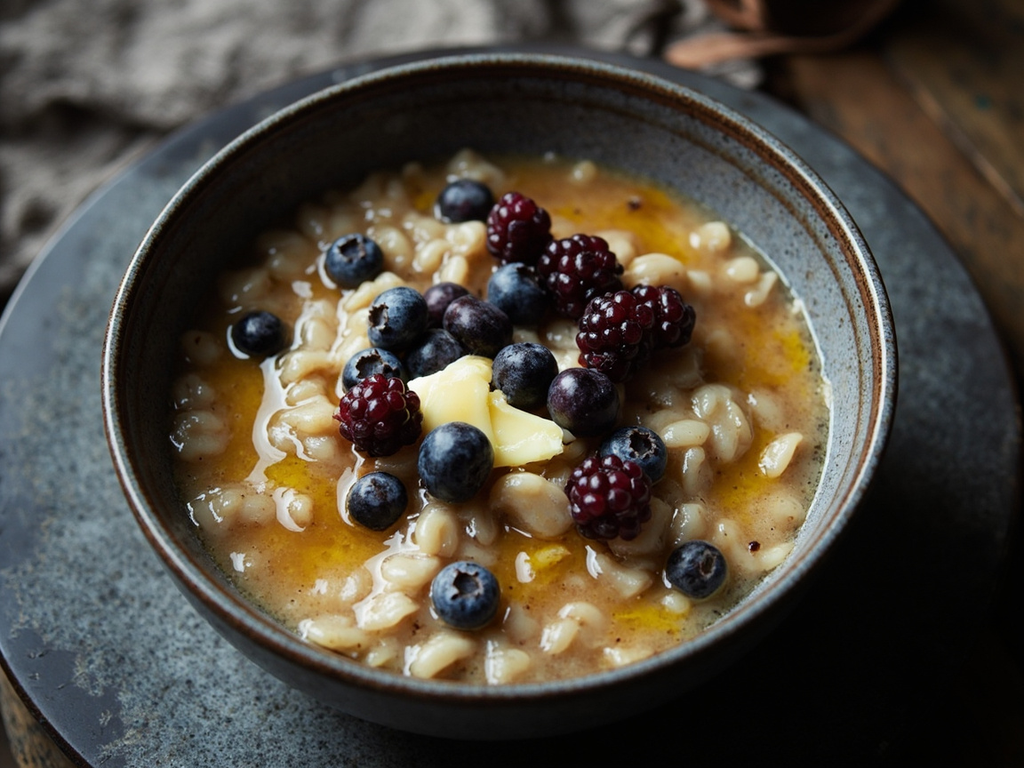
Barley porridge with butter and berries (grautr)
Why this dish? Before glory and the pyre, Brynhildr is also a queen who runs her household. Barley porridge is the nourishing foundation for all, from king to servant — the daily bread of northern lands shared by warriors and weavers before setting off to battle.
A thick barley porridge cooked slowly in milk, melted with butter and crowned with wild berries and a drizzle of honey. Nourishing and comforting, it is the meal that starts the day.
Eat first, you will speak afterward. One cannot hold a spindle or a sword on an empty stomach, and barley feeds both maid and queen. I cook it in milk until it sings softly over the fire, then I drown a pat of morning-churned butter and a few berries gathered on the forest slope. This is what we eat at my home in the grey dawn — nothing royal, and yet it is what keeps an entire estate standing.
- •Hulled barley — two handfuls per mouth (staple grain)
- •Milk (cow or sheep) — as needed (creamy cooking)
- •Churned butter — a pat (richness)
- •Wild berries (bilberries, lingonberries) — a handful (sweet-tart garnish)
- •Honey — a drizzle (sweetness)
Barley porridge with butter and berries (grautr)
A thick barley porridge cooked slowly in milk, melted with butter and crowned with wild berries and a drizzle of honey. Nourishing and comforting, it is the meal that starts the day.
Why this dish? Before glory and the pyre, Brynhildr is also a queen who runs her household. Barley porridge is the nourishing foundation for all, from king to servant — the daily bread of northern lands shared by warriors and weavers before setting off to battle.
Eat first, you will speak afterward. One cannot hold a spindle or a sword on an empty stomach, and barley feeds both maid and queen. I cook it in milk until it sings softly over the fire, then I drown a pat of morning-churned butter and a few berries gathered on the forest slope. This is what we eat at my home in the grey dawn — nothing royal, and yet it is what keeps an entire estate standing.
Ingredients (period version)
- Hulled barley — two handfuls per mouth (staple grain)
- Milk (cow or sheep) — as needed (creamy cooking)
- Churned butter — a pat (richness)
- Wild berries (bilberries, lingonberries) — a handful (sweet-tart garnish)
- Honey — a drizzle (sweetness)
Ingredients
- Pearl barley (or barley flakes) — 200 g (staple grain)
- Whole milk — 700 ml (cooking)
- Butter — 30 g (richness)
- Blueberries and lingonberries — 1 generous handful (garnish)
- Honey — 2 tbsp (sweetness)
- Pinch of salt — 1 (balance)
Method
- Rinse the pearl barley, then cook it gently in the milk with a pinch of salt over low heat, stirring often.
- Allow 40 to 50 minutes until you get a thick, creamy porridge (add milk if it sticks).
- Off the heat, stir in the butter and let it melt.
- Divide into bowls, top with fresh berries and a drizzle of honey.
- Serve hot, first thing in the morning.
How it was made : Barley, more cold-resistant than wheat, was the dominant cereal in medieval Scandinavia. Porridge (grautr) was the most common preparation, cooked in water or milk in a cauldron suspended over the hearth. It was eaten plain on weekdays, enriched with butter, berries, or honey on feast days.
The contemporary twist : Serve as a 'Nordic porridge' bowl in a stoneware bowl, with lightly compoted lingonberries and toasted hazelnut flakes.
Sources : Archaeobotanical studies on Viking diet (barley dominant)
Brynhildr · Charactorium