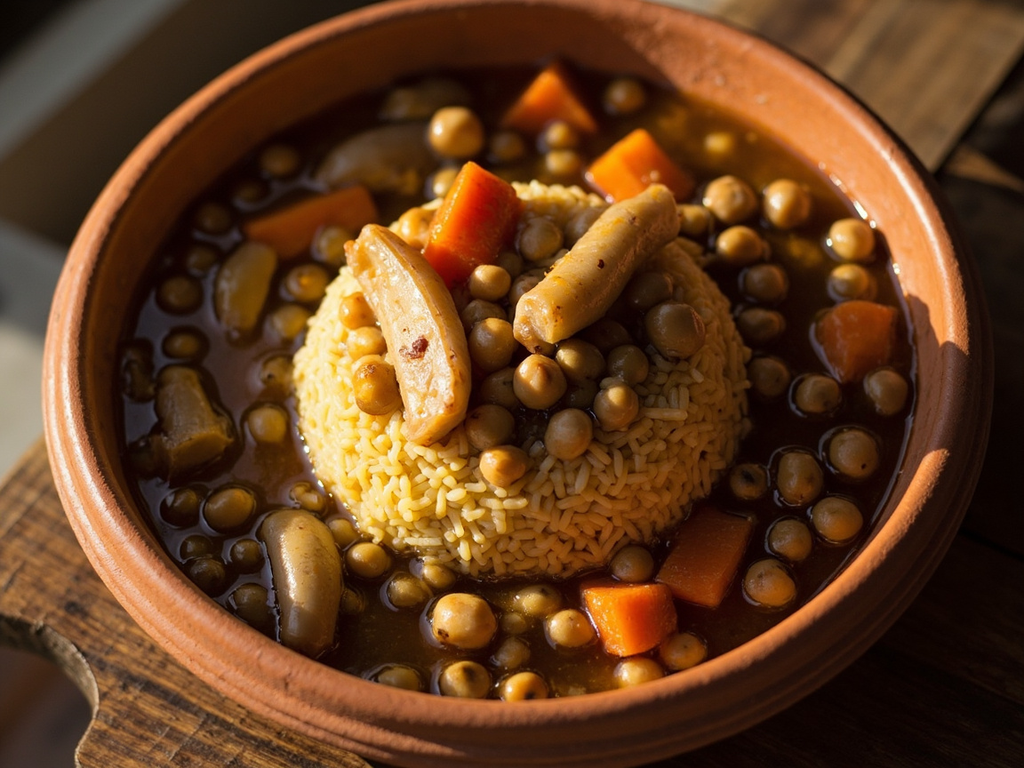
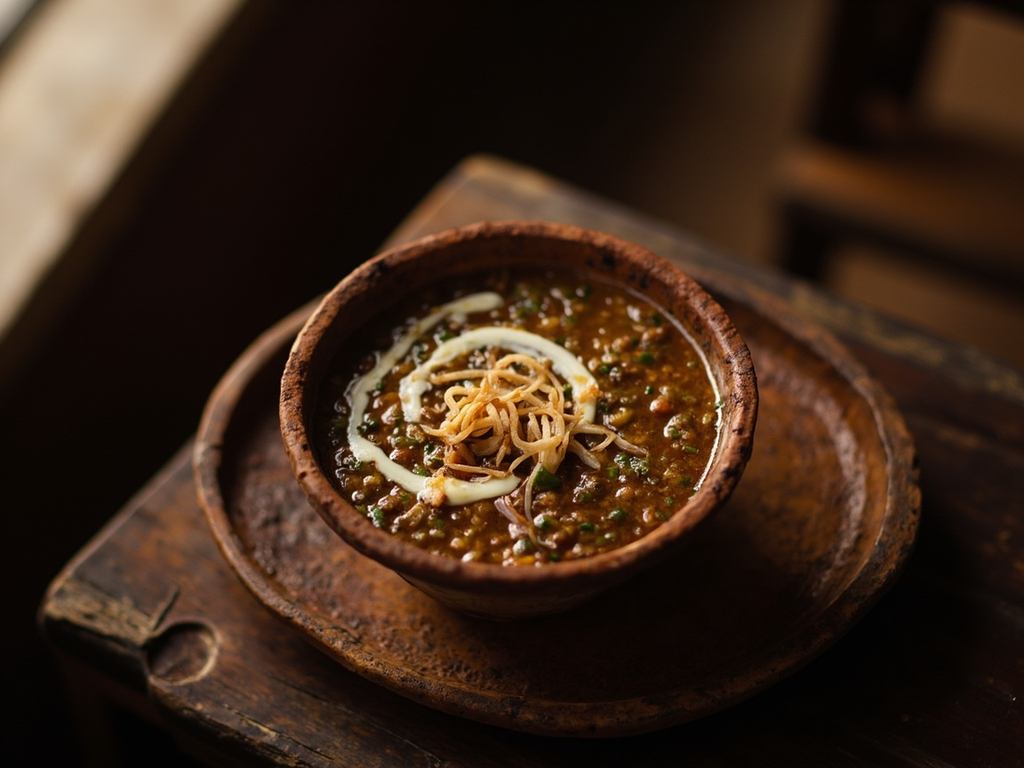
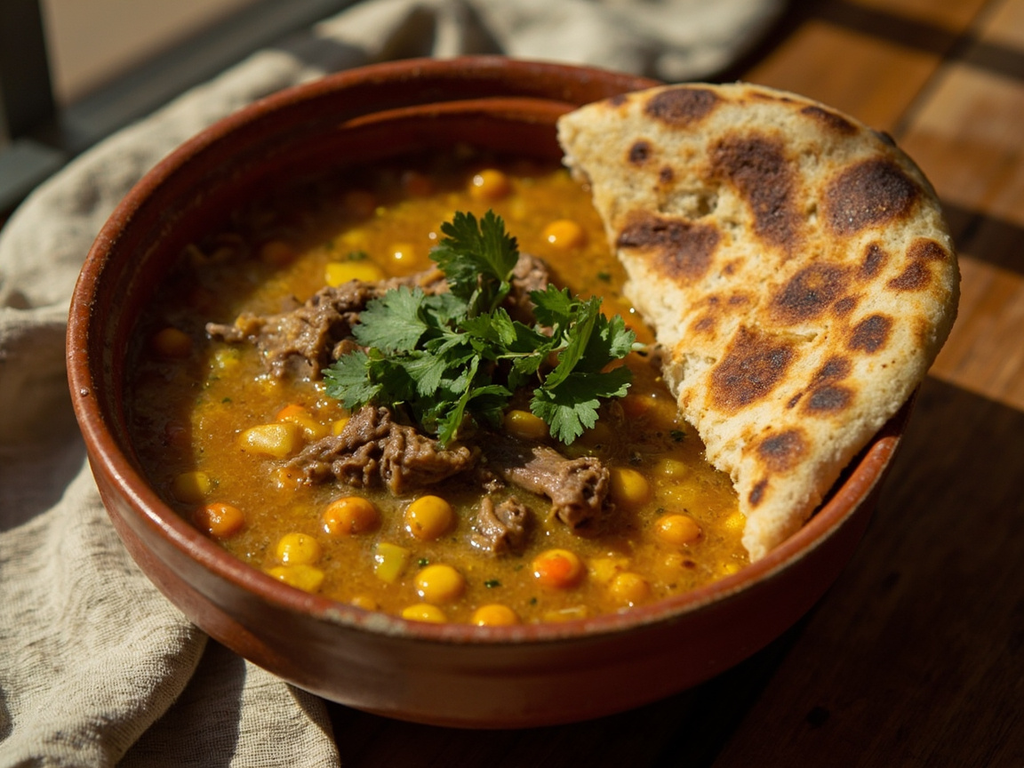
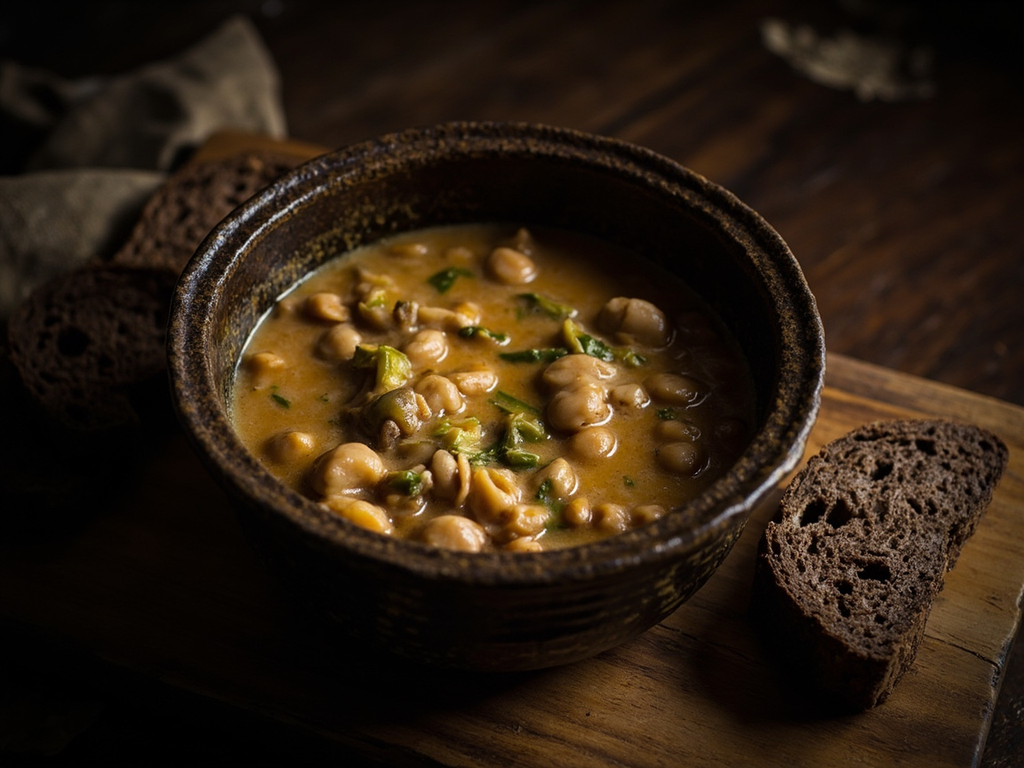
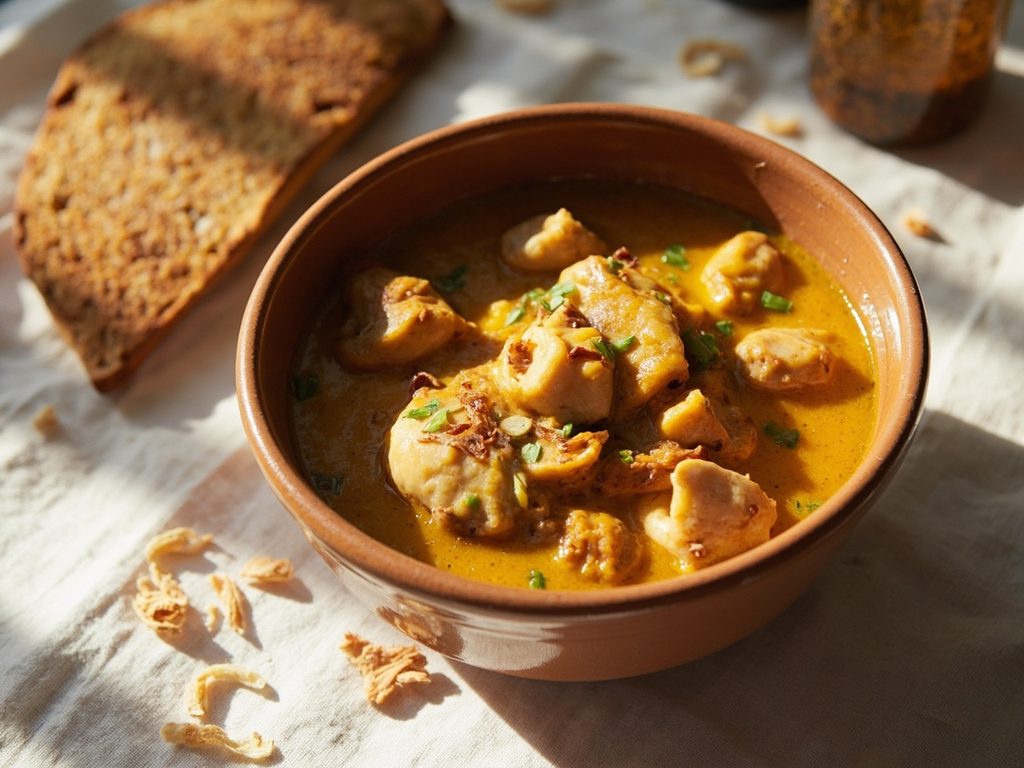
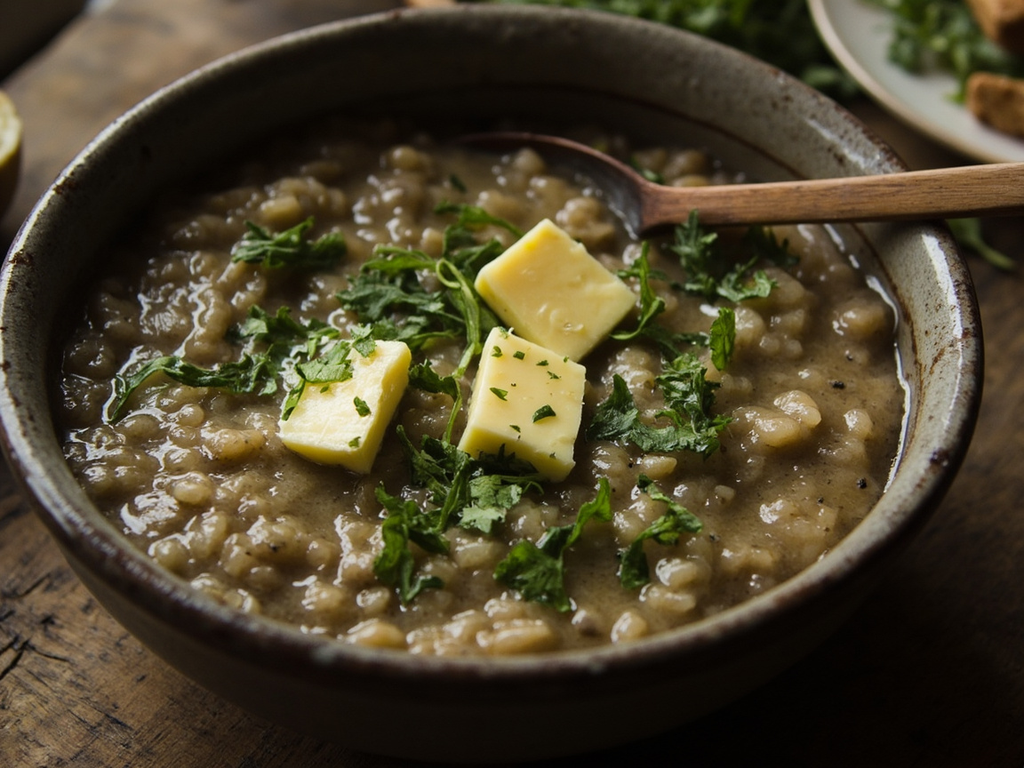
Harîsa-ye gûsht (wheat and lamb porridge)
A creamy, comforting porridge of cracked wheat cooked slowly with lamb until the meat falls into fibers. Flavored with cinnamon and clarified butter, it is a deeply nourishing winter dish.
A creamy, comforting porridge of cracked wheat cooked slowly with lamb until the meat falls into fibers. Flavored with cinnamon and clarified butter, it is a deeply nourishing winter dish.
In my village of Rudak, at the foot of the mountains, my mother would set the wheat to cook at dawn with a sheep's shank, and by evening the pot was still singing. We would pound it all in a wooden mortar until grain and flesh became one — a porridge thick as the snow of Panjakent, smooth as a well-turned verse. In Bukhara, the emir has it served with a drizzle of melted butter and cinnamon, but I tell you: the truest harîsa is the one shared in the cold, with those you love. It is the first dish I knew, and it is the one I will remember last.
- •Cracked wheat (or hulled whole wheat) — one large measure (Thickening base)
- •Mutton shank or shoulder — a good piece on the bone (Melting meat)
- •Clarified butter — a piece for serving (Richness at serving)
- •Cinnamon stick — one stick (Warm aroma)
- •Salt — to taste (Seasoning)
- •Water — plenty (Long cooking)
Harîsa-ye gûsht (wheat and lamb porridge)
A creamy, comforting porridge of cracked wheat cooked slowly with lamb until the meat falls into fibers. Flavored with cinnamon and clarified butter, it is a deeply nourishing winter dish.
Why this dish? Harîsa, a thick porridge of cracked wheat and long-simmered meat, is one of the oldest and most documented dishes of the medieval Persian world. For Rûdakî, an itinerant poet before entering the court, it was the food of caravanserais and humble Khorasan homes — a dish that warmed the cold nights of the Panjakent mountains, his native village.
In my village of Rudak, at the foot of the mountains, my mother would set the wheat to cook at dawn with a sheep's shank, and by evening the pot was still singing. We would pound it all in a wooden mortar until grain and flesh became one — a porridge thick as the snow of Panjakent, smooth as a well-turned verse. In Bukhara, the emir has it served with a drizzle of melted butter and cinnamon, but I tell you: the truest harîsa is the one shared in the cold, with those you love. It is the first dish I knew, and it is the one I will remember last.
Ingredients (period version)
- Cracked wheat (or hulled whole wheat) — one large measure (Thickening base)
- Mutton shank or shoulder — a good piece on the bone (Melting meat)
- Clarified butter — a piece for serving (Richness at serving)
- Cinnamon stick — one stick (Warm aroma)
- Salt — to taste (Seasoning)
- Water — plenty (Long cooking)
Ingredients
- Coarse cracked wheat (or pearled spelt) — 250 g (Thickening base)
- Lamb shoulder on the bone — 500 g (Melting meat)
- Clarified butter (ghee) — 30 g + a drizzle for serving (Richness)
- Cinnamon stick — 1 (Warm aroma)
- Salt — 1 tsp (Seasoning)
- Water — 1.5 litres (Long cooking)
Method
- The night before, soak the cracked wheat in cold water overnight. Drain.
- Place the lamb in a large heavy-bottomed pot, cover with cold water, bring to a boil, and skim thoroughly.
- Add the drained wheat, cinnamon stick, and salt. Reduce heat to low, cover, and cook for 3–4 hours, stirring regularly to prevent sticking.
- When the meat falls apart at the touch, remove it, discard the bones, and shred the meat. Remove the cinnamon stick.
- Return the shredded meat to the porridge and beat vigorously with a pestle or wooden spoon to obtain a homogeneous, creamy texture.
- Adjust seasoning, pour into bowls, and drizzle with melted ghee. Sprinkle with a pinch of ground cinnamon.
How it was made : Harîsa is documented in the oldest Arabic-Persian cookbooks, notably al-Warraq's Kitab al-Tabikh (10th century) and al-Baghdadi's (13th century). It is described as a popular winter dish, eaten from Baghdad to Khorasan. The very long cooking and pounding to fuse wheat and meat are characteristic.
The contemporary twist : Serve in a terracotta bowl with a spiral of melted ghee and a pinch of cinnamon — like a medieval winter cappuccino.
Sources : Nawal Nasrallah, Annals of the Caliph's Kitchens: Ibn Sayyār al-Warrāq's Tenth-Century Baghdadi Cookbook (Brill, 2007) · Charles Perry, A Baghdad Cookery Book (Prospect Books, 2005)
Rudaki · Charactorium