 flip
flipCastagnaccio (chestnut flour cake)
Castagnaccio (chestnut flour cake)
Why this dish? In Florence, the "castagnacciai" sold this chestnut flour cake on street corners—popular, cheap food. Botticelli, son of a modest merchant background before fame, surely nibbled this rustic treat perfumed with rosemary while crossing the city to his workshop.
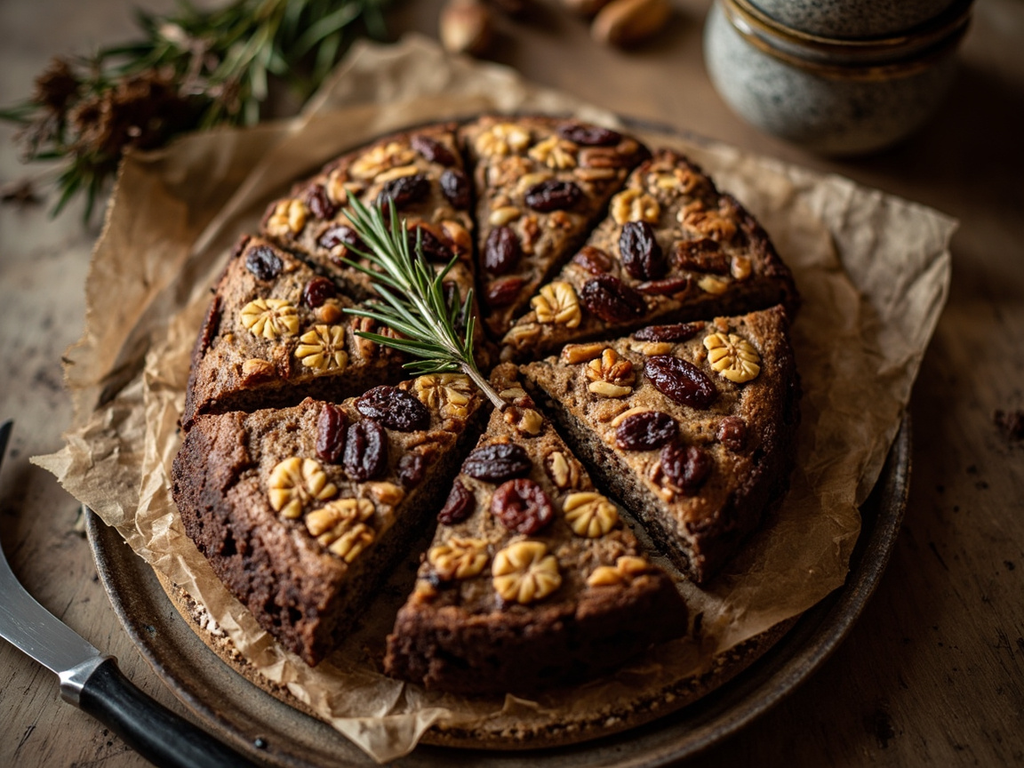
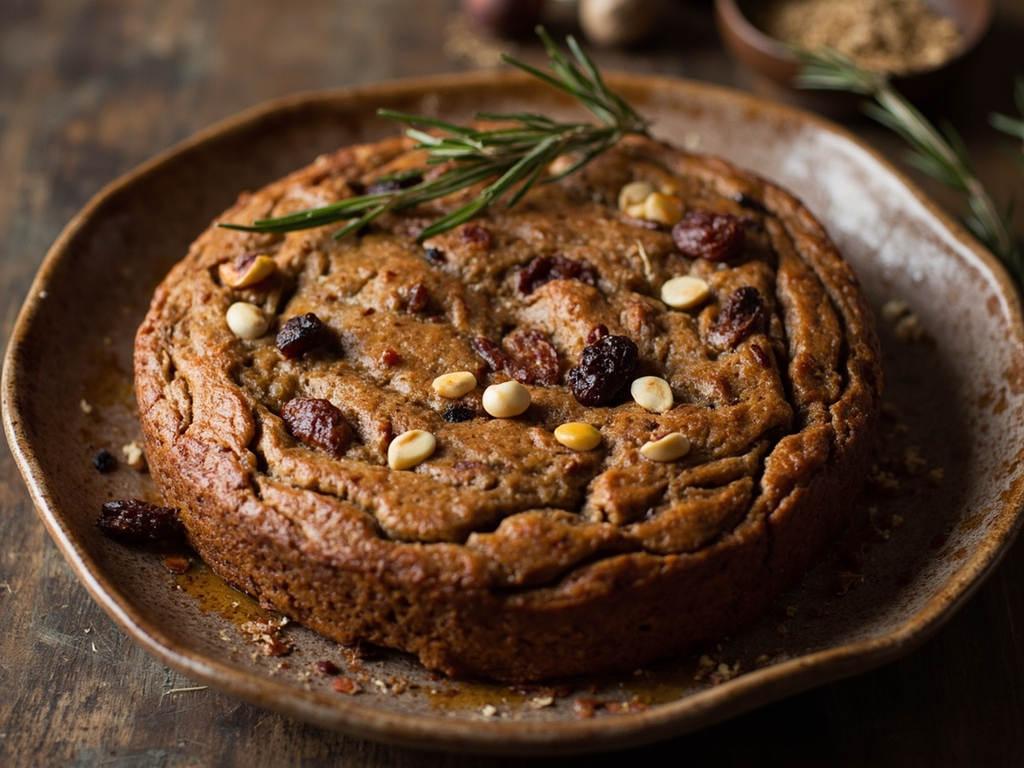
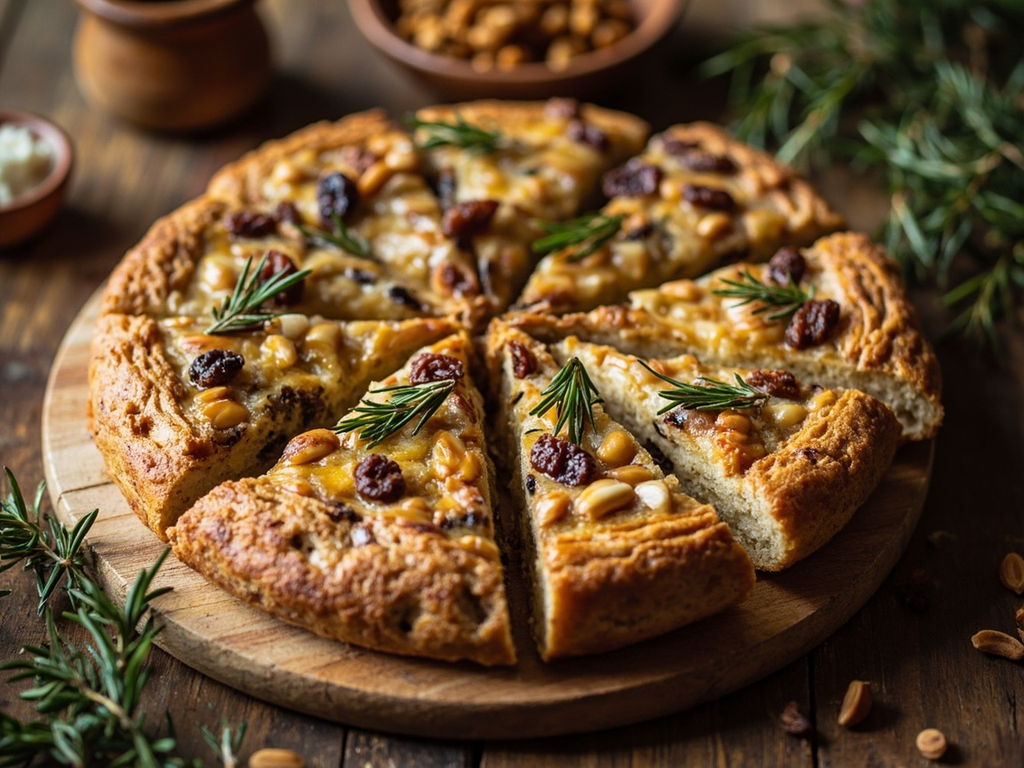
A flat cake made from chestnut flour, naturally sweet, topped with pine nuts, raisins, and rosemary, baked until the surface cracks. No added sugar, no leavening: the sweetness of the Tuscan hills, eaten warm on the go.
Ah, castagnaccio! That's what I slipped into my hand as a child running through the alleys. Chestnut flour is sweet on its own—no need for costly sugar—we mix it with water and a thread of oil, scatter pine nuts, raisins, and rosemary sprigs on top, and bake until the crust cracks like dry earth. The rosemary leaves a bitter note that answers the sweetness. It is the treat of poor and rich alike, and tastes even better set on a windowsill in the Florence sun.
- •Chestnut flour — plenty (sweet base)
- •Water — as needed (liquid)
- •Olive oil — a drizzle (fat)
- •Pine nuts — a handful (topping)
- •Raisins — a handful (sweetness)
- •Fresh rosemary — a few sprigs (bitter aroma (signature))
Castagnaccio (chestnut flour cake)
A flat cake made from chestnut flour, naturally sweet, topped with pine nuts, raisins, and rosemary, baked until the surface cracks. No added sugar, no leavening: the sweetness of the Tuscan hills, eaten warm on the go.
Why this dish? In Florence, the "castagnacciai" sold this chestnut flour cake on street corners—popular, cheap food. Botticelli, son of a modest merchant background before fame, surely nibbled this rustic treat perfumed with rosemary while crossing the city to his workshop.
Ah, castagnaccio! That's what I slipped into my hand as a child running through the alleys. Chestnut flour is sweet on its own—no need for costly sugar—we mix it with water and a thread of oil, scatter pine nuts, raisins, and rosemary sprigs on top, and bake until the crust cracks like dry earth. The rosemary leaves a bitter note that answers the sweetness. It is the treat of poor and rich alike, and tastes even better set on a windowsill in the Florence sun.
Ingredients (period version)
- Chestnut flour — plenty (sweet base)
- Water — as needed (liquid)
- Olive oil — a drizzle (fat)
- Pine nuts — a handful (topping)
- Raisins — a handful (sweetness)
- Fresh rosemary — a few sprigs (bitter aroma (signature))
Ingredients
- Chestnut flour — 250 g (base)
- Water — about 40 cl (liquid)
- Extra virgin olive oil — 4 tbsp (fat)
- Pine nuts — 40 g (topping)
- Raisins (soaked) — 40 g (sweetness)
- Fresh rosemary — 2 sprigs (aroma)
- Salt — 1 pinch (balance)
Method
- Sift the chestnut flour into a bowl, add a pinch of salt.
- Gradually whisk in water to obtain a smooth, lump-free batter, then 2 tbsp of oil.
- Oil a wide baking pan, pour batter to 1 cm thickness.
- Scatter pine nuts, drained raisins, and rosemary leaves over the top; drizzle with remaining oil.
- Bake at 200°C for about 30 minutes, until the surface is cracked and dark brown. Serve warm, cut into pieces.
How it was made : Castagnaccio is an ancient Tuscan preparation, born from chestnut flour that nourished the Apennine mountains when wheat was scarce. Pine nuts, raisins, and rosemary are traditional toppings. Sold by street vendors, it was an accessible street snack. No New World ingredients: a pure medieval Mediterranean product.
The contemporary twist : Serve warm with a spoonful of fresh ricotta whipped with honey and an orange zest: the creamy-rustic contrast appeals to modern palates.
Sources : Tradition culinaire toscane (farine de châtaigne, Apennin) · Pellegrino Artusi, La scienza in cucina (1891), recipe n°705 (late attestation of an ancient dish)
Sandro Botticelli · Charactorium