 flip
flipCastagnaccio (chestnut flour flatbread)
Castagnaccio (chestnut flour flatbread)
Why this dish? Michelangelo spent months in the Carrara quarries, high in the Tuscan mountains: there, as in all the Apennines, the chestnut was the "bread tree" of the poor. *Castagnaccio*, a flatbread made from chestnut flour, is the quintessential frugal treat — naturally sweet without a penny of sugar, befitting his austerity.
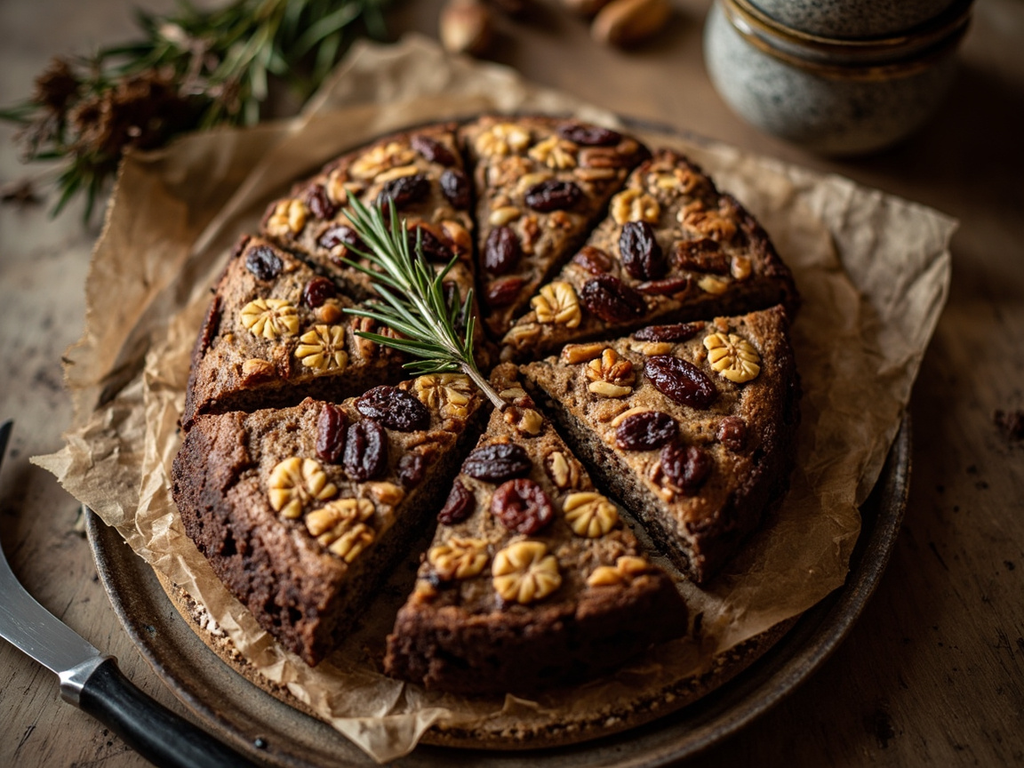
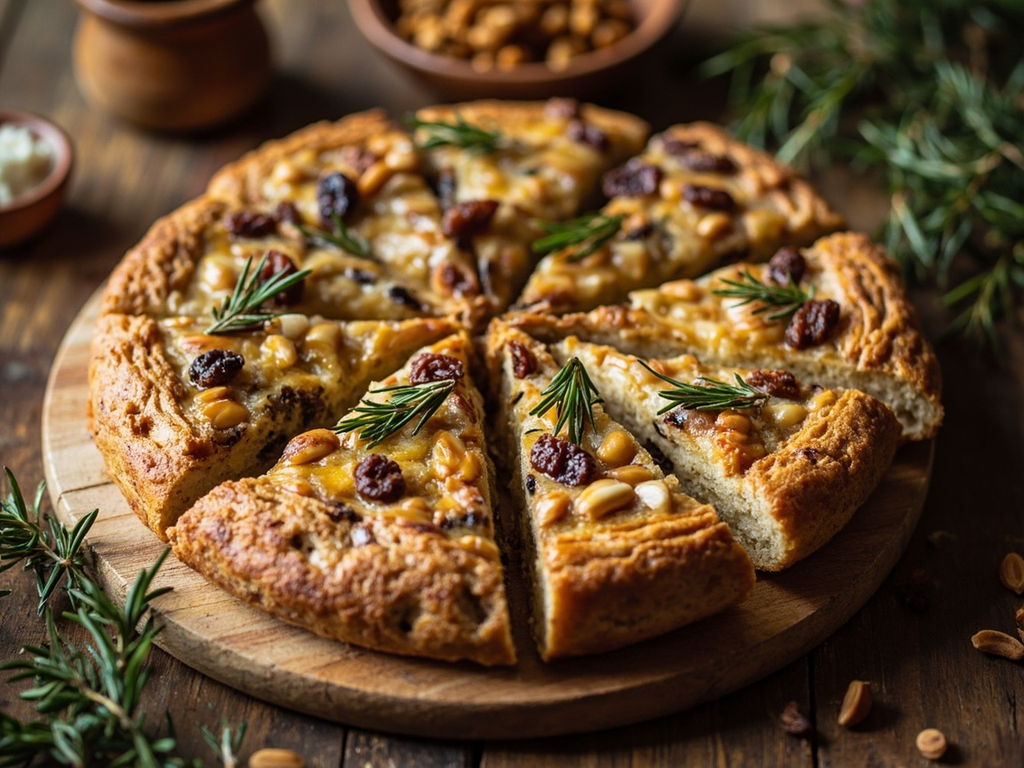
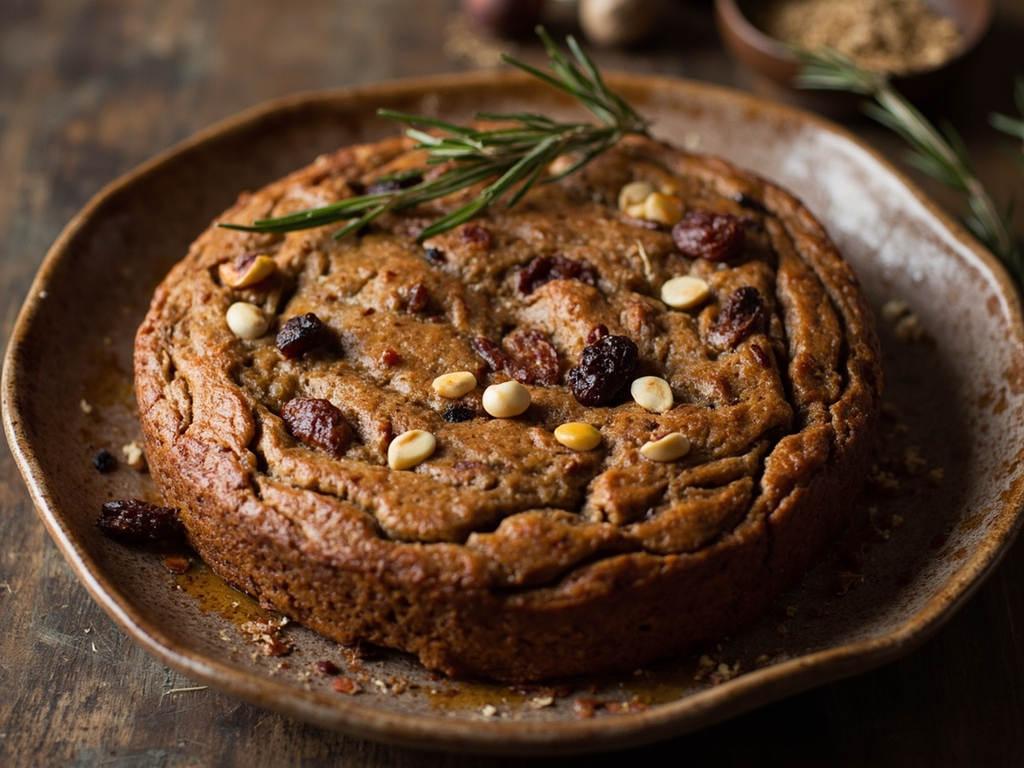
A flat, soft cake of chestnut flour, scattered with pine nuts, raisins and rosemary, baked until the surface cracks.
In Carrara, among the marble blocks and mountain men, we know the virtue of the chestnut tree: it feeds when wheat fails. You mix its flour with water to a soft batter, toss in raisins, pine nuts and a little rosemary, then oil, and into the oven until the crust cracks like dry earth. It is sweet without honey or sugar — the very sweetness of the tree. I ate it standing, my hands still white with marble dust.
- •Chestnut flour — two handfuls per person (base)
- •Water — as needed (batter)
- •Raisins — a handful (sweetness)
- •Pine nuts — a handful (garnish)
- •Fresh rosemary — a few needles (flavor)
- •Olive oil — a drizzle (binding)
Castagnaccio (chestnut flour flatbread)
A flat, soft cake of chestnut flour, scattered with pine nuts, raisins and rosemary, baked until the surface cracks.
Why this dish? Michelangelo spent months in the Carrara quarries, high in the Tuscan mountains: there, as in all the Apennines, the chestnut was the "bread tree" of the poor. *Castagnaccio*, a flatbread made from chestnut flour, is the quintessential frugal treat — naturally sweet without a penny of sugar, befitting his austerity.
In Carrara, among the marble blocks and mountain men, we know the virtue of the chestnut tree: it feeds when wheat fails. You mix its flour with water to a soft batter, toss in raisins, pine nuts and a little rosemary, then oil, and into the oven until the crust cracks like dry earth. It is sweet without honey or sugar — the very sweetness of the tree. I ate it standing, my hands still white with marble dust.
Ingredients (period version)
- Chestnut flour — two handfuls per person (base)
- Water — as needed (batter)
- Raisins — a handful (sweetness)
- Pine nuts — a handful (garnish)
- Fresh rosemary — a few needles (flavor)
- Olive oil — a drizzle (binding)
Ingredients
- Chestnut flour — 250 g (base)
- Water — about 350 ml (batter)
- Raisins (rehydrated) — 50 g (sweetness)
- Pine nuts — 40 g (garnish)
- Fresh rosemary — 1 tsp needles (flavor)
- Extra virgin olive oil — 3 tbsp (binding and baking)
- Salt — 1 pinch (balance)
Method
- Soak the raisins in warm water for 15 minutes, then drain.
- Mix the chestnut flour with water and a pinch of salt until smooth and fluid, add 1 tbsp oil.
- Oil a wide dish, pour the batter to a depth of 1 cm.
- Scatter with raisins, pine nuts and rosemary needles, drizzle with remaining oil.
- Bake in a hot oven (200°C) for 30 to 35 minutes, until the surface cracks and browns.
- Let cool slightly and cut into pieces; eat by hand.
How it was made : In the Tuscan Apennines, dried and ground chestnuts yielded a flour that saved mountain folk in years of poor wheat harvest. *Castagnaccio* was cooked over a wood fire in a wide, shallow dish, without sugar — unnecessary, as chestnuts are already sweet. It is classified as "reconstruction": the precise recipe was only written down later, but its ingredients and principle are indeed those of the period.
The contemporary twist : Served warm with a spoonful of whipped ricotta and a drizzle of honey, it becomes a table dessert without losing its humble soul.
Michelangelo · Charactorium